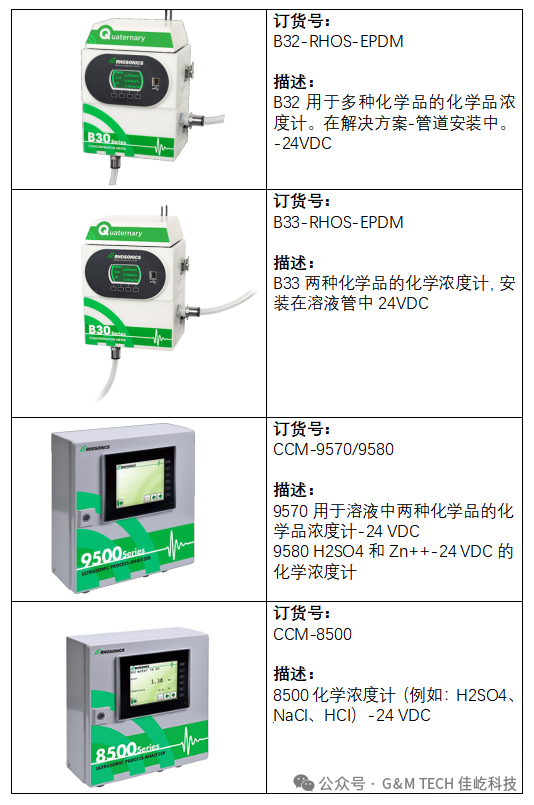
Ultrasonic sensors can be used for concentration measurement of multicomponent mixtures. The principle is based on the changes in acoustic properties of the mixture as ultrasonic waves propagate through it, which vary with different components and concentrations (Henning et al., 2000)[1].
By measuring these changes in acoustic parameters, the concentrations of the various components in the mixture can be inferred. Concentration measurement of multicomponent mixtures is generally more complex than that of single-component measurements, as the acoustic properties of the mixture depend not only on the concentrations of the individual components but also on the interactions between them.
Basic Principles
The concentration measurement of multicomponent mixtures is based on the relationship between the speed of sound, attenuation, and acoustic impedance of the ultrasonic waves in the mixture and the concentrations of the components. These parameters are influenced by the physical and chemical properties of the mixture, such as density, viscosity, and compressibility, which are closely related to the concentrations of the components. By establishing mathematical models relating these parameters to component concentrations, concentration measurement of multicomponent mixtures can be achieved.
Measurement Methods
1. Speed of Sound Method
1
Principle:Measure the speed of ultrasonic waves propagating through the mixture. The speed of sound in the mixture is a function of the concentrations of the components and their respective speeds of sound.
2
Method:Use time-of-flight or pulse-echo methods to measure the propagation time of ultrasonic waves over a fixed distance and calculate the speed of sound. The pulse-echo method is a technique for assessing acoustic properties using high-frequency transducers (Li et al., 2020)[2].
3
Applicability:Suitable for mixtures with significant differences in component sound speeds, providing high measurement accuracy.
2. Attenuation Method:
1
Principle:Measure the degree of attenuation of ultrasonic waves as they propagate through the mixture. The degree of attenuation is related to the viscosity of the mixture, the content of suspended particles, etc., which are also related to the component concentrations.
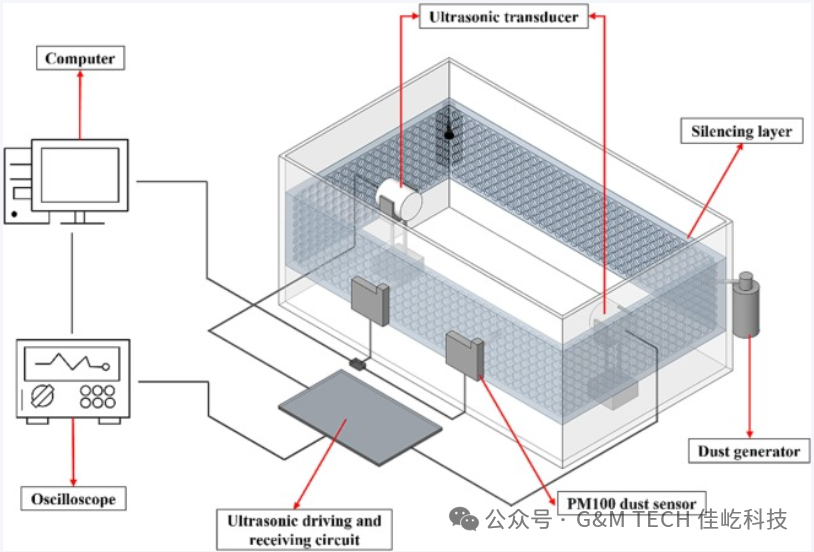
Environmental factors in coal mine tunnels, including coal dust, atmospheric pressure, temperature, and relative humidity, can affect the attenuation and reception of low-frequency ultrasonic signals (Wang et al., 2024)[3].
2
Method:Measure the intensity attenuation of ultrasonic signals after traveling a certain distance and establish a model relating attenuation to component concentrations.
3
Applicability:Suitable for mixtures containing suspended particles or bubbles, such as emulsions and slurries.
3. Acoustic Impedance Method:
1
Principle:Measure the reflection coefficient of ultrasonic waves at the interface of different media. The reflection coefficient is related to the acoustic impedance of each medium, which is the product of density and speed of sound, and is related to component concentrations.
2
Method:Measure the reflection coefficient of ultrasonic waves at the interface between the mixture and a reference medium, calculate the acoustic impedance of the mixture, and infer the component concentrations. Using multiple reflected echoes, the characteristic acoustic impedance and concentration of high-attenuation fluids can be measured (Ruifeng et al., 2011)[4].
3
Applicability:Suitable for multiphase mixtures, such as emulsions and suspensions, allowing simultaneous measurement of multiple component concentrations.
4. Multi-Parameter Method:
1
Principle:Combine multiple parameters such as speed of sound, attenuation, and acoustic impedance for measurement, using multivariate regression, neural networks, etc., to establish a relationship model between parameters and component concentrations.
2
Method:Simultaneously measure multiple ultrasonic parameters, using computers for data processing and model calculations to improve measurement accuracy and reliability. High-dimensional model representation (HDMR) can be used for ultrasonic assessment of superalloy grain sizes (Zhang et al., 2022)[5].
3
Applicability:Suitable for complex multicomponent mixtures, capable of eliminating errors caused by single-parameter measurements and improving measurement accuracy.
Sensor Design
1. Piezoelectric Ultrasonic Sensors:
1
Principle:Utilize the piezoelectric effect of piezoelectric materials to achieve conversion between electrical signals and ultrasonic signals.
2
Advantages:Simple structure, low cost, easy to miniaturize and integrate.
3
Disadvantages:Susceptible to temperature, pressure, and other factors, with relatively low measurement accuracy.
2. Microelectromechanical Ultrasonic Sensors (MEMS):
1
Principle:Manufactured using micro-machining technology, including capacitive (CMUT) and piezoelectric (PMUT) types.
2
Advantages:Small size, high sensitivity, low power consumption, easy to integrate.
3
Disadvantages:Higher manufacturing costs and stringent environmental requirements.
3. Fiber Optic Ultrasonic Sensors:
1
Principle:Utilize fiber optics to transmit and detect ultrasonic signals for measuring the concentration of mixtures.
2
Advantages:Resistant to electromagnetic interference, corrosion-resistant, suitable for harsh environments.
Ultrasonic technology is increasingly being used in in-situ chemometrics for reaction monitoring and control (Henning et al., 2000)[1]. By using phononic crystal structures, sensors can be designed for microfluidic applications (Barrias et al., 2024)[6].
Acoustic cavitation has been used to prepare catalysts for various reactions (Bonrath, 2005)[7].
The agricultural sector is also increasingly adopting ultrasonic technology. For example, measuring soil drying depth can be achieved by reflecting ultrasonic waves (Liang et al., 2023)[8].
In large agricultural systems, IoT systems based on sound analysis use sound analysis for pest detection, prevention, and control (Ali et al., 2024)[9] (Ali et al., 2024)[10].
These systems can utilize acoustic sensors to detect pest sounds and use ultrasonic generators to drive pests away (Ali et al., 2024)[9] (Ali et al., 2024)[10].
To improve measurement accuracy, the following methods can be employed:
1
Temperature Compensation:Since temperature affects the speed and attenuation of ultrasonic waves, temperature compensation is necessary to eliminate errors caused by temperature variations.
2
Pressure Calibration:Pressure also affects the propagation of ultrasonic waves, especially in high-pressure environments, requiring pressure calibration of the sensors.
3
Multi-Sensor Fusion:Combine different types of ultrasonic sensors to utilize complementary information to improve measurement accuracy and reliability.
Conclusion
Ultrasonic sensors are a promising tool for concentration measurement of multicomponent mixtures. By selecting appropriate measurement methods, sensor designs, and data processing techniques, accurate measurement of various mixture concentrations can be achieved.

Jia Yi Technology

Official Website |gmtechcn.com
Sales Department Email |sale@gmtechcn