
The future of 3D printing is closely linked with artificial intelligence, promising advancements in automation, design optimization, and materials science. AI will revolutionize the 3D printing industry by implementing intelligent slicing algorithms, predicting material behavior, and automating the entire additive manufacturing workflow. This integration will lead to more efficient, precise, and personalized manufacturing processes across various industries.
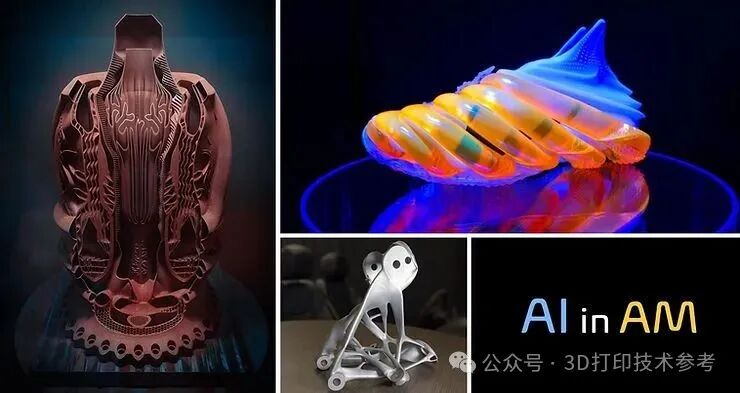
Key Advantages of Integrating AI into Additive Manufacturing
➡️ AI-Driven Design and Optimization
AI algorithms can analyze vast amounts of material properties and printer performance data to optimize the design of 3D printed parts, while predicting material performance under different conditions and optimizing printing parameters for maximum efficiency.
➡️ Intelligent Slicing
AI slicing software can comprehensively consider factors such as material melting points, layer temperatures, and part orientations to generate optimal printing paths. This can shorten printing times, reduce material waste, and improve part quality. AI can also monitor the printing process in real-time, detect anomalies, and automatically adjust parameters to ensure print quality.
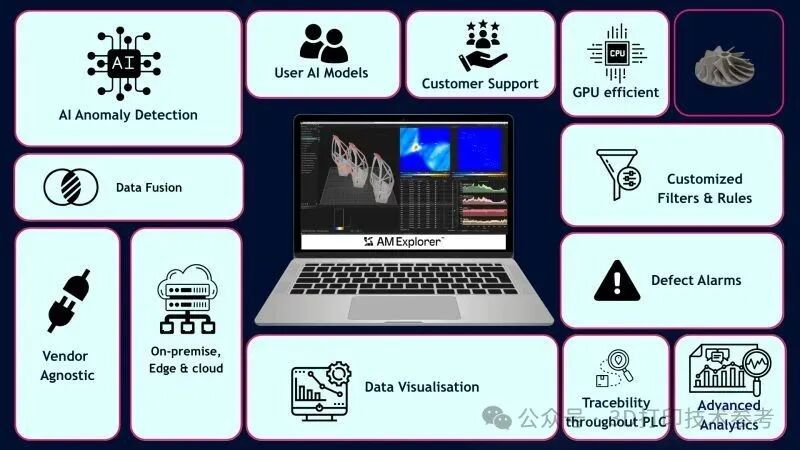
➡️ Automation and Efficiency
AI can automate many aspects of the 3D printing process—from design and slicing to printing and post-processing. This significantly increases production speed and efficiency, making 3D printing more competitive than traditional manufacturing. AI robots can also assist in material handling and part finishing, further automating workflows.
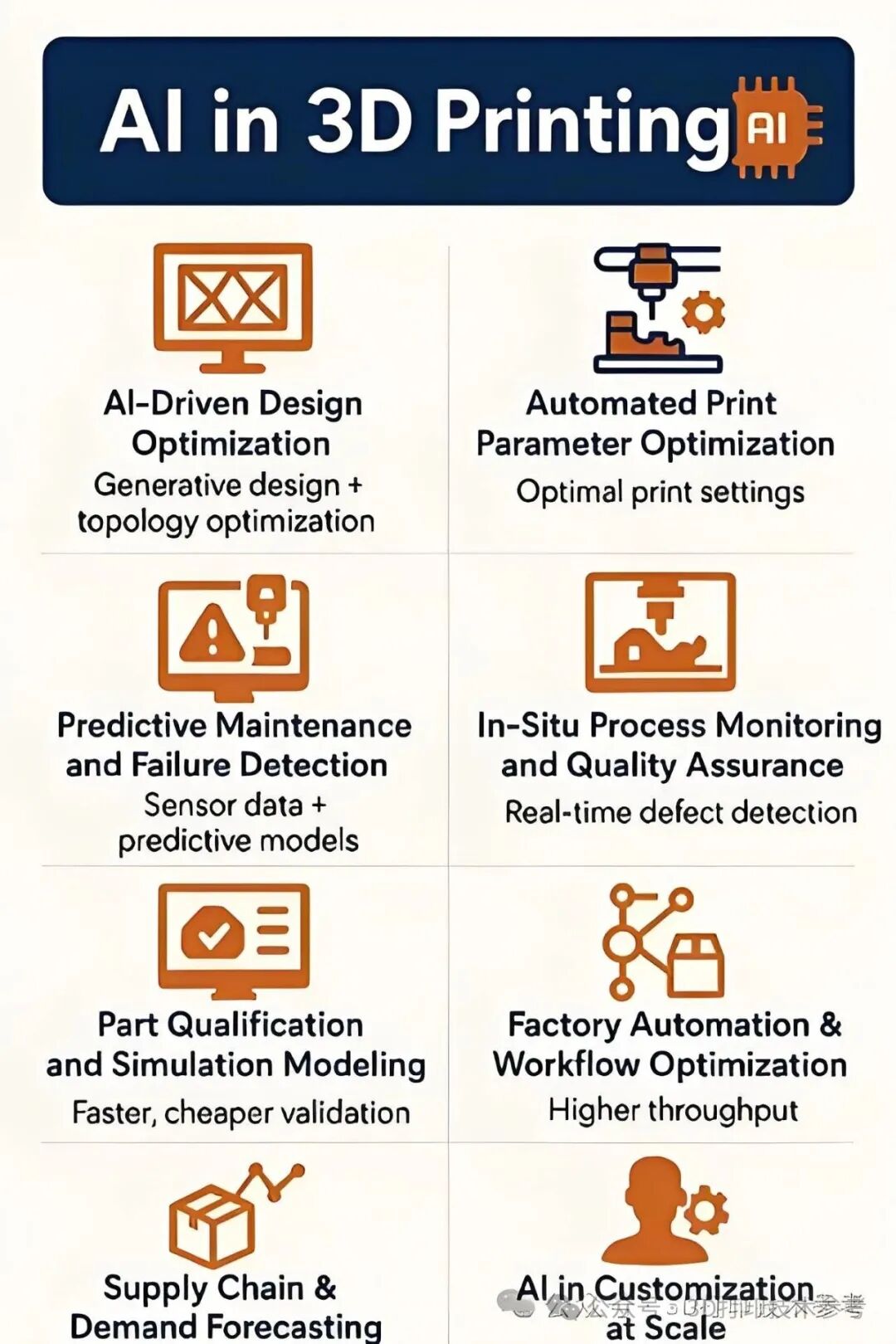
Combining AI with 3D Printing
Disruptive Project Showcases
The following three groundbreaking projects demonstrate how AI enhances product innovation through additive manufacturing:
1. NIKE AIR—AI Reshaping Footwear Manufacturing
The NIKE AIR (AI Reshaping) project is a visionary footwear initiative aimed at exploring how to combine AI design with 3D printing to redefine the way shoes are made—performance, personalization, and sustainability.
Nike utilized a machine learning model trained on vast amounts of athlete movement, pressure mapping, biomechanics, and user preference data. AI generated unique shoe geometries and optimized cushioning patterns, energy return zones, breathability, and structural support.
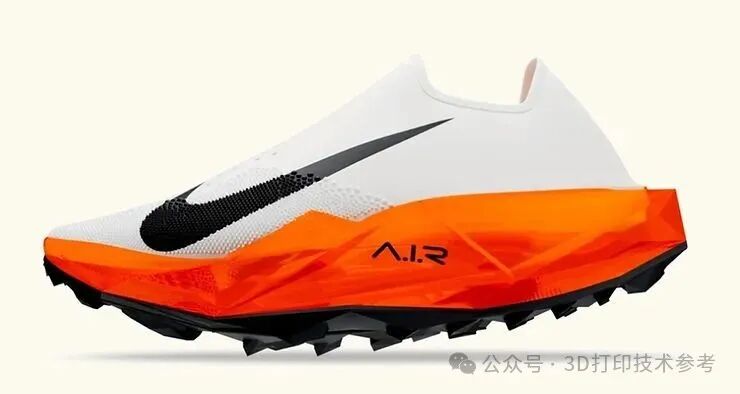
AI-designed features include:
➡️ Cushioning patterns
➡️ Energy return zones
➡️ Airflow and breathability
➡️ Structural support
3D printing brings these functional geometries to life:
➡️ Optimized pressure and rebound in lattice structures
➡️ Rapid prototyping without tools
➡️ Potential for mass customization
These complex geometries would be nearly impossible to manufacture using traditional methods.


2. AI-Designed Pure Copper Rocket Engine
AMCM collaborated with the German software company Hyperganic to showcase a groundbreaking example of how AI-driven design and industrial 3D printing can revolutionize aerospace engineering, particularly in the development of copper rocket engines.
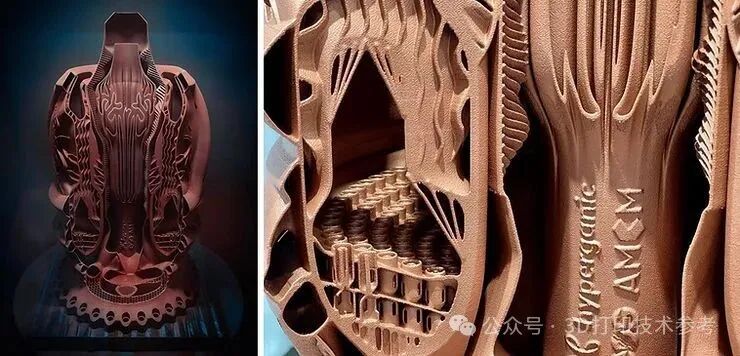
Hyperganic used its algorithmic design engine to automatically generate the geometry of a rocket engine. The design was not hand-drawn but programmed to evolve complex geometries based on performance standards, optimizing internal flow channels, cooling structures, and nozzle shapes.
Main Innovations:
➡️ Hyperganic’s algorithm generates the entire engine geometry based on performance objectives.
➡️ The design includes internal cooling channels and curved nozzle geometries, optimized through AI.
➡️ The engine utilizes AMCM’s metal 3D printing system and pure copper 3D printing—ideal for thermal management in aerospace.
This project demonstrates how AI can design complex propulsion systems and enable digital validation and on-demand manufacturing.
3. General Motors Seat Bracket
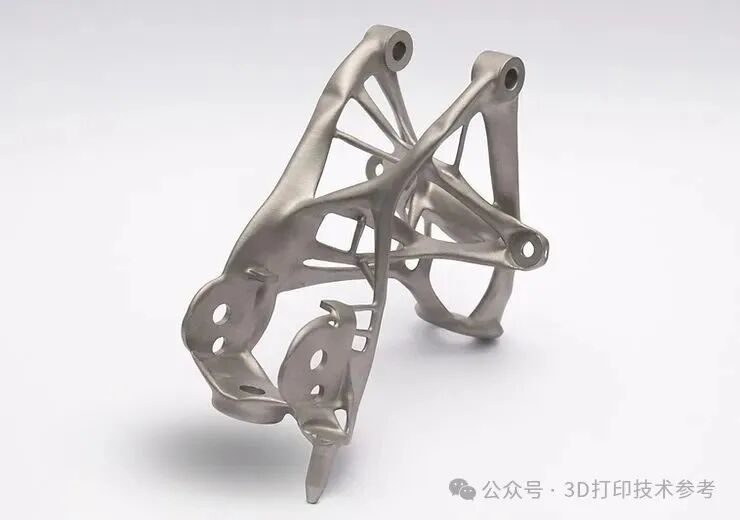
General Motors engineers collaborated with Autodesk to design a functionally optimized new seat bracket using generative design technology in Fusion360, which is a standard automotive component that secures the seatbelt buckle to the seat and the seat to the floor.
While a typical seat bracket consists of eight welded square components, the software provided over 150 alternative designs that resemble metallic objects from outer space. The design chosen by General Motors is made from a single stainless steel component (instead of eight), reducing weight by 40% and increasing strength by 20%.
Why It Matters:
➡️ Fewer parts = fewer failure points, simplified assembly, and lighter vehicles.
➡️ This design could not have been conceived manually or manufactured using traditional methods.
➡️ Achieved through 3D printing—capable of handling complex organic geometries.
Broader Implications:
➡️ One of General Motors’ goals is to reduce vehicle weight, improve fuel efficiency, and accelerate development cycles.
➡️ Demonstrates the automotive industry’s shift towards AI-driven engineering workflows and digital manufacturing.
Future Vision
The combination of AI and 3D printing has created a new type of digital manufacturing system:
➡️ Autonomous: From design to production
➡️ Adaptive: Learning from each build
➡️ Agile: Rapidly responding to new designs, materials, and market demands
Thus, AI will not only improve 3D printing but transform it into a truly intelligent, scalable manufacturing platform, which seems inevitable.
Note:This article was created by 3D Printing Technology Reference and is not authorized for reproduction without contact..Feel free to share
Further Reading:
1. New Trends in Watch Manufacturing: 3D Printing, Generative Design, Titanium Alloy, Weighing Only 38 Grams!
2. Dassault launches a 3D printed folding chair, validating the powerful capabilities of its latest design platform
3. Part Integration and Integrated Manufacturing, 3D Printing Brings Huge Benefits to Production
4. Generative/Creative/Derivative Design, Is There a Difference? How to Empower 3D Printing