 Click above“Blue Text”, follow for more exciting content
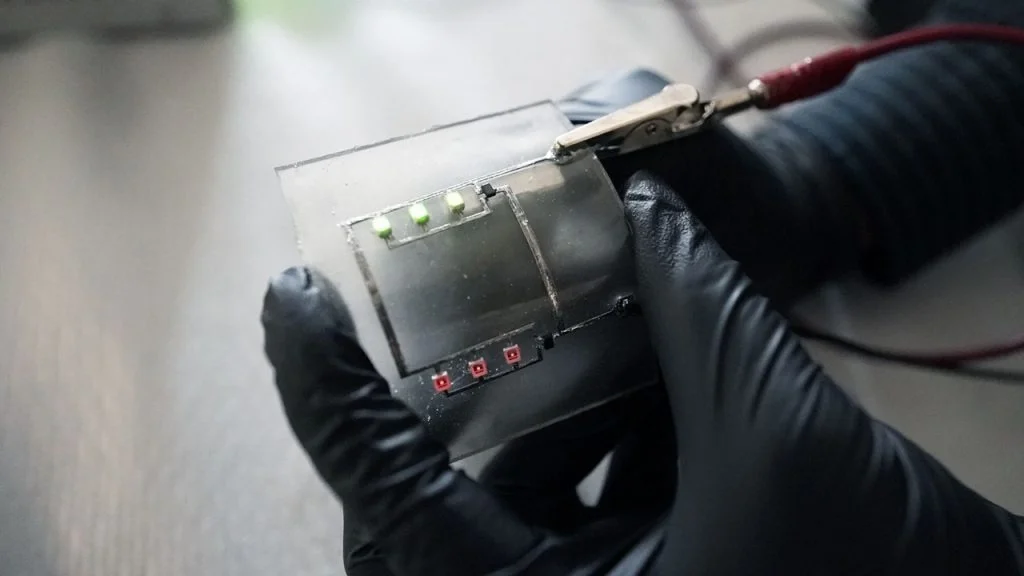
Two research teams from Virginia Tech recently published a study in Advanced Materials, proposing a recyclable material that can help make electronic devices easier to disassemble and reuse.
The frequent upgrades and failures of smartphones, tablets, laptops, and home appliances have led to a continuous increase in the amount of discarded electronic products, commonly referred to as e-waste.
According to a United Nations study in 2024, global e-waste has nearly doubled in the past 12 years, increasing from 34 million tons to 62 million tons. This is roughly equivalent to the weight of 1.55 million transport trucks. It is projected that by 2030, the total global e-waste will reach 82 million tons.
It is estimated that only about 13.8 million tons (approximately 20% of the current total) will be recycled. This proportion has remained relatively unchanged in recent years.
In short, an increasing number of devices are being discarded, while recycling efforts have not kept pace.
Chemistry and Engineering Have the Answer
Associate Professor of Mechanical Engineering Michael Bartlett and Assistant Professor of Chemistry Josh Worch collaborated to develop a new type of circuit material. Despite their different disciplinary backgrounds, they worked together on this project.
These circuits were developed by a team of postdoctoral researchers and graduate students, including Dong Hae Ho, Meng Jiang, and Ravi Tutika. The circuits are designed to be recyclable, conductive, reconfigurable, and capable of self-repairing after damage. They also retain the strength and durability of traditional circuit board plastics, which are typically not combined in a single material.
The basis of this new material is Vitrimer, a reprocessable and recyclable dynamic polymer. This polymer is combined with liquid metal droplets, which serve as conductive elements, similar to the way traditional circuits use rigid metals.
This approach differs from previous methods used to manufacture recyclable or flexible electronics. By combining adaptive polymers with conductive liquid metals, the resulting circuits can withstand a range of mechanical and environmental challenges.
Our materials are different from traditional electroniccomposites. The circuit boards exhibit excellent elasticity and functionality. They can still operate normally even under mechanical deformation or damage..
Michael Bartlett, Associate Professor of Mechanical Engineering at Virginia Tech
A Second Life
The recycling of traditional circuit boards involves multiple energy-intensive steps and still generates a significant amount of waste. During this process, valuable components made of precious metals worth billions of dollars are often wasted.
In contrast, the team’s circuit boards can be recycled using simpler methods and offer greater flexibility in material recovery.
Traditional circuit boards are made from permanent thermosetting materials, making them extremely difficult to recycle. Our dynamic composite materials can be repaired or reformed even if thermally damaged, without affecting their electrical performance. Modern circuit boards simply cannot achieve this..
Josh Worch, Assistant Professor of Chemistry at Virginia Tech
Vitrimer circuit boards can be disassembled through alkaline hydrolysis at the end of their lifespan. This process can recover key components such as liquid metals and LEDs. Ongoing research aims to develop a fully closed-loop system that allows all conductive composites to be reused.
Although it may not be possible to stop consumers from continuing to discard electronic devices, this work represents a step towards reducing the number of electronic products that ultimately end up in landfills.
The research was supported by the Virginia Tech Institute for Critical Technology and Applied Science and the Bartlett National Science Foundation CAREER Award.
Journal Reference:
Ho, DH et al. (2025) Liquid Metal-Vitrimer Conductive Composites for Recyclable and Elastic Electronics.Advanced Materials. doi.org /10.1002/adma.202501341.
Original link: https://www.azom.com/news.aspx?newsID=64624
Content translated by translation software, please forgive any errors!
Editor | Liu XinxingEdited | Zhang XuanSource | AZo ▶ 28th China International Composite Materials Industry Technology Exhibition


Be a Beacon in the IndustryPATHFINER
Consulting Services Technical Services
Standard Drafting Research Application
Communication Activities Business Promotion