Click the blue text to follow us

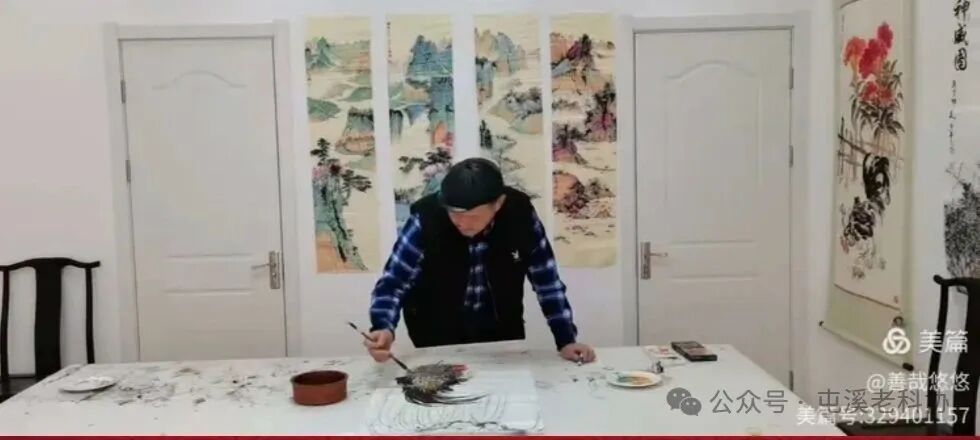
In Liu Xiaoping’s studio on Tunxi Old Street, the 63-year-old retired electronic engineer dips his brush in ink, and the mist of Huangshan Mountain quietly spreads on rice paper. On his desk, there are no circuit diagrams, only ink wash landscapes. His life trajectory resembles a peculiar function curve—measuring the precision of electronic components in the first half of his life, while indulging in the ethereal charm of Chinese painting in the latter half. When technological thinking collides with artistic soul, Liu Xiaoping, with the brushstrokes of the Xin’an School, paints the most brilliant dawn in the twilight of his life.
Liu Xiaoping was born into a revolutionary family, with his father, a cadre who went south, instilling loyalty and diligence into his blood. During his childhood in Hefei, his youthful spirit subtly wandered between electronic manufacturing and painting art. However, the path assigned to him by the times was clear and rigid—over thirty years, he adhered to his position on the production line of theTunxi Electronics Factory, until the wave of enterprise restructuring pushed him to a crossroads in life.
Under the fluorescent lights of the factory, Liu Xiaoping’s life was divided into dual narratives. By day, he debugged instruments and calibrated parameters, his fingertips stained with the scent of metal and machine oil; at night, however, he delved into the world of ink fragrance, clumsily searching for the dreams of his childhood on rice paper.
In 1987, a friend of his father’s, Mr. Lai Shaoqi—a master in the field of Chinese printmaking—came to Huangshan for sketching and accidentally caught sight of Liu Xiaoping’s practice works. A spark flashed in the master’s eyes as he saw through the “technologist” shell to the artistic soul lying dormant within. This friendship across generations was thus forged, with Lai Shaoqi, like a torchbearer, solemnly passing on the millennia-old principles of the Xin’an School, “depicting the local scenery and expressing emotions through borrowed views,” to those hands that had long been debugging instruments.
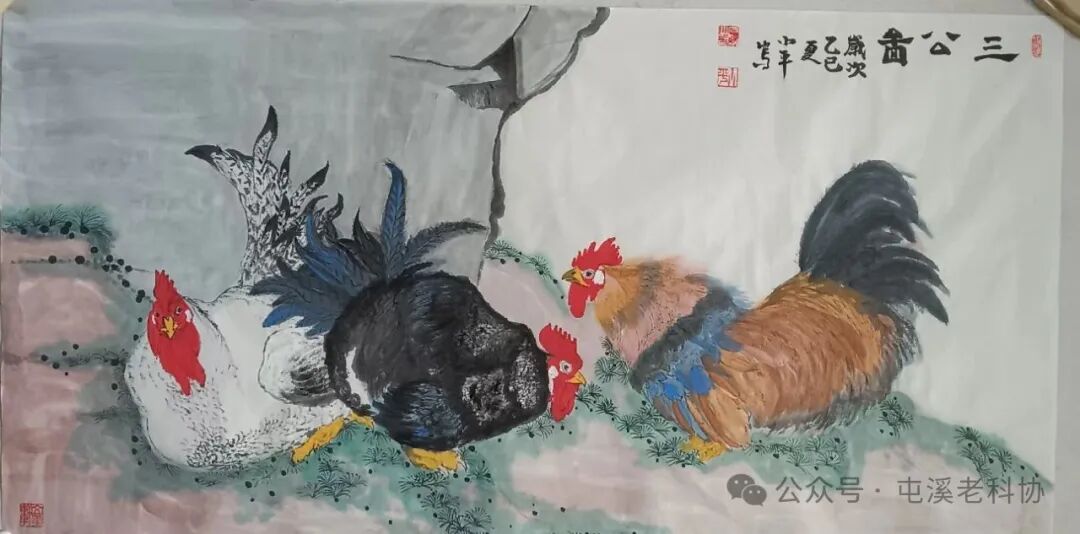
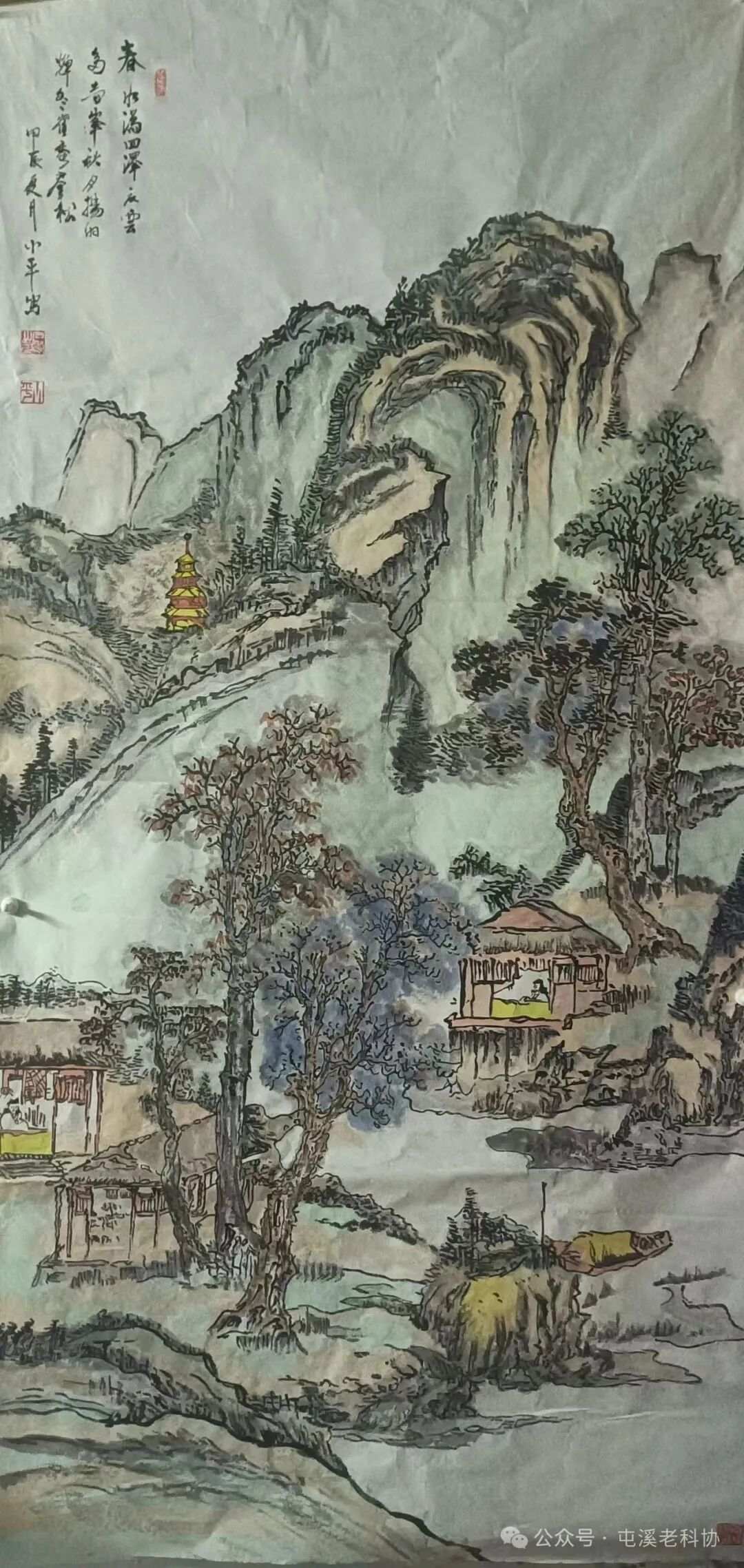
Lai Shaoqi’s guidance was like a spark, while the continuous advice from mentors at the Central Academy of Fine Arts acted like a strong wind to fuel the flames. Liu Xiaoping’s pursuit of art became increasingly resolute, as he began to seek a subtle balance between technological rationality and artistic sensibility. The precision of electronic components and the flow of ink wash seemed like two extremes, yet in Liu Xiaoping’s creations, they formed a strange symbiosis. He seemed to internalize the sense of order from circuit diagrams, and when he applied his brush, every stroke had its purpose, with clear layers. The clouds and seas of Huangshan he painted not only possessed the unique ethereal quality of the Xin’an School but also concealed the engineer’s precise grasp of structural relationships— the rugged texture of rocks and the flowing layers of clouds all contained rational control within emotional rendering.—
Liu Xiaoping calls himself “Shixi Mountain Man,” a name that precisely encapsulates his artistic soul. He is rooted in Huangshan, viewing it as an endless source of inspiration. As Shitao said, “Search for the extraordinary peaks to draft,” Liu Xiaoping understands this well. He has traversed the peaks of Huangshan, observing the shifting light and shadows throughout the seasons. The Huangshan in his paintings is not a mechanical imitation but a poetic condensation after a deep dialogue between the soul and nature. The clouds and mists in his works sometimes hang like a silk curtain, and at other times, they seem to entwine the peaks as if alive. This embodies the highest realm of the Xin’an School—”free brushwork, not seeking likeness”—conveying the infinite spirit of mountains and waters with limited brush and ink.
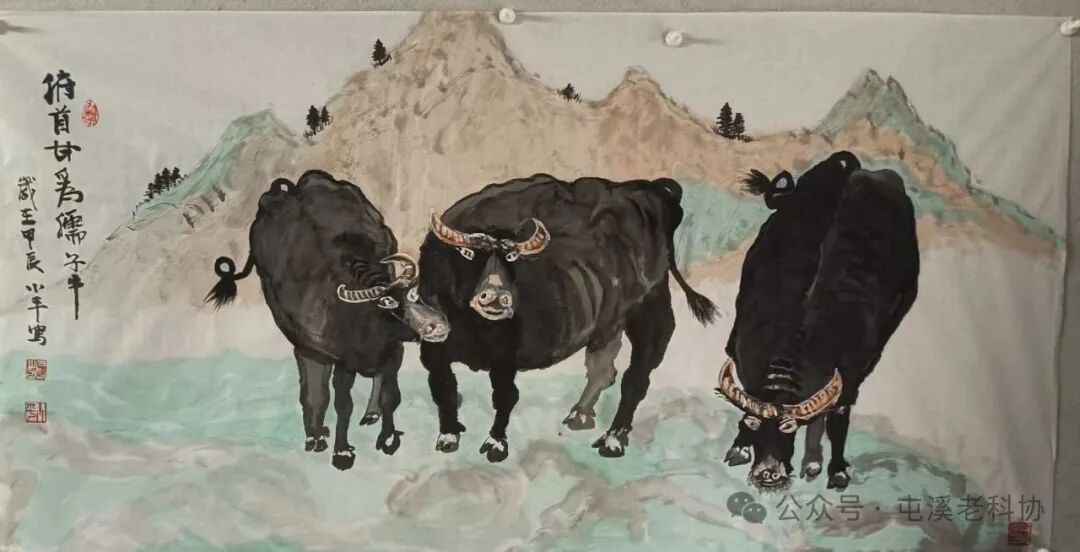
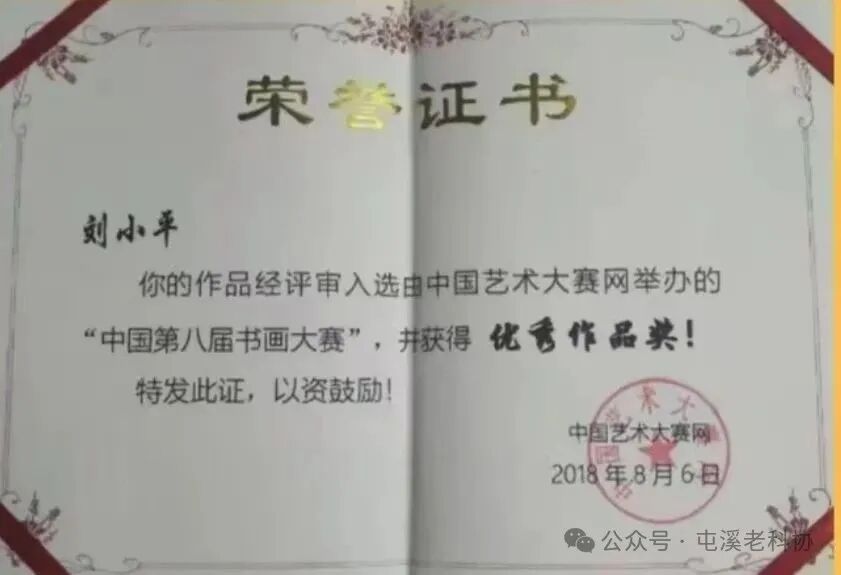
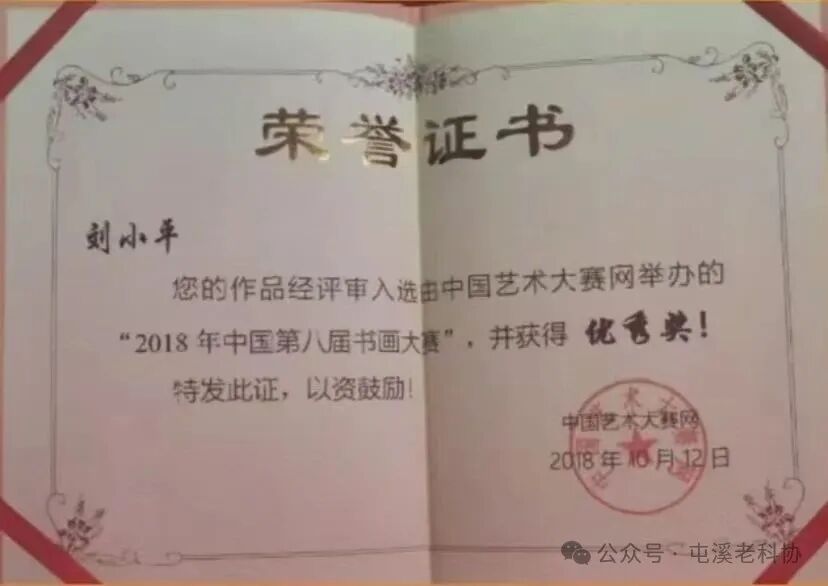
In 2018, at the exhibition hall of the China Art Network’s calligraphy and painting competition, Liu Xiaoping’s works won the Excellence Award twice. His paintings flow quietly like deep waters, gradually crossing provincial borders, and are solemnly collected by museums and archives in Shandong, Jiangsu, Zhejiang, Inner Mongolia, and other places. These honors are not dazzling medals but a profound echo of his thirty years of silent cultivation. In the Year of the Ox 2021, Liu Xiaoping announced his artistic rebirth to the world with a personal exhibition, stubborn as an ox, tirelessly cultivating.
Liu Xiaoping’s rise reflects the resilient vitality of the Xin’an School in contemporary times. This ancient artistic tradition, which once waned under the impact of globalization, has been revitalized by steadfast guardians like Liu Xiaoping, deeply rooted in local cultural soil, allowing the ancient seeds to sprout anew in the new era. His artistic journey powerfully proves the core spirit of the Xin’an School—”Learning from nature externally, obtaining the source of the heart internally”—possessing timeless value that transcends time and space.—
From the intricate world of circuit boards to the vast landscapes on rice paper, Liu Xiaoping has completed a breathtaking cross-disciplinary writing with his life as the pen. His story reveals that the boundaries of life have no fixed limits; true passion can melt away any seemingly solid barriers. When an old technologist reshapes his life trajectory with the clouds and mists of Huangshan, he not only recovers the lost dreams of his youth but also offers a profound testimony to the era with ink wash—artistic creation is a self-redemption of vitality, the most heartfelt attempt for mortals to transcend their limited bodies and touch eternity.—
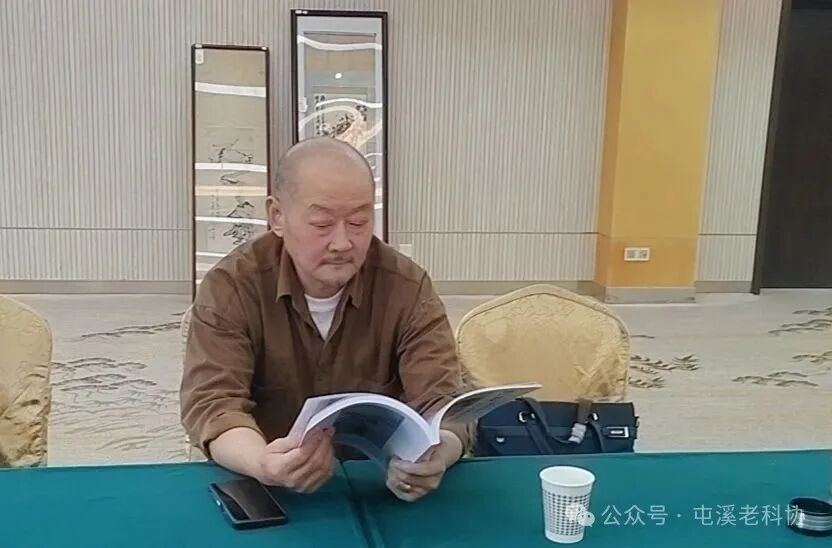
Liu Xiaoping’s scroll of paintings is still unfolding, with each stroke being the gentlest resistance against time, and every drop of ink expanding the possibilities of life.