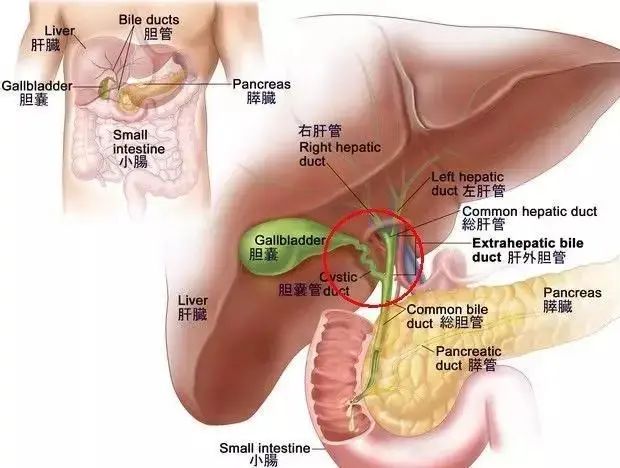
Intrahepatic cholangiocarcinoma (ICC) accounts for approximately 10% to 15% of primary liver cancers, and its incidence has been on the rise globally in recent years. The causes and risk factors for ICC are complex, with established risk factors including age, intrahepatic bile duct stones, liver fluke disease, bile duct adenoma, bile duct papillomatosis, bile duct cysts, and Caroli’s disease. Recent advancements in whole-genome sequencing technology and in-depth studies of ICC gene expression profiles have provided new clues for molecular targeted therapy, which is expected to become a breakthrough treatment method for ICC. ICC has a high degree of malignancy and often presents insidiously, with many patients already at mid to late stages of the disease when they seek medical attention, losing the opportunity for curative surgical treatment. Additionally, the clinical lack of effective tumor screening and diagnostic markers leads to difficulties in the diagnosis and treatment of ICC patients and results in poor prognosis. Radical surgical resection is currently the only effective treatment method, but the high recurrence rate post-surgery results in a 5-year survival rate of 20% to 40% for ICC patients. Therefore, how to effectively provide comprehensive treatment for ICC has become a significant challenge for clinicians.
The establishment of a multidisciplinary team (MDT) has provided systematic and individualized treatment plans for patients with intrahepatic cholangiocarcinoma. Its one-stop medical service and multidisciplinary collaborative diagnosis and treatment can offer reasonable treatment advice for liver cancer patients, avoiding the limitations of single-discipline treatment, and represents the future direction of liver cancer diagnosis and treatment models. The MDT for ICC should consist of at least one representative from each specialty, including hepatobiliary surgery, oncology, pathology, interventional therapy, transplantation, radiotherapy, gastroenterology, and radiology, providing services to patients in specific medical institutions and regularly meeting as a group to provide consistent diagnosis and management recommendations for patients.
Currently, the focus of the MDT work for ICC is mainly divided into three steps: First, actively adopting a comprehensive treatment approach centered on surgical resection—comprehensively assessing whether the patient is operable; second, actively preventing postoperative recurrence and metastasis—formulating a postoperative comprehensive treatment plan; third, for patients who cannot achieve radical resection—formulating palliative treatment plans. For some patients in mid to late stages, conversion or downstaging treatment can be conducted to achieve surgical resection, while for those who cannot be converted, non-surgical comprehensive treatment should be actively pursued to control disease progression.
Our hospital’s hepatobiliary tumor MDT outpatient service has conducted a total of 36 sessions from the end of May 2018 to now, formulating reasonable and effective individualized treatment plans for patients with intrahepatic cholangiocarcinoma. For patients with high malignancy ICC, the MDT model can bring many clinical benefits. The MDT model aids in the early diagnosis and treatment of hepatocellular carcinoma, saving medical costs. Furthermore, in liver cancer diagnosis, research from the University of Texas Southwestern Medical Center found that compared to conventional treatment models, the MDT model significantly increases the early diagnosis rate of liver cancer, markedly shortens the waiting time for treatment, and significantly extends the survival time of liver cancer patients.
1. Surgical Treatment of ICC
1. Prognostic Model for Clinical Staging of ICC: The clinical staging of ICC helps guide clinical treatment. The staging of ICC primarily employs the eighth edition staging criteria from the American Joint Committee on Cancer/International Union Against Cancer (AJCC/UICC). The seventh edition TNM staging system first proposed independent staging for ICC, and the eighth edition, which began use in 2018, incorporated tumor diameter as a factor, providing a more comprehensive understanding of the pathological characteristics of ICC. Our Chinese team has established a nomogram model based on tumor volume, CA19-9, and CEA levels, which has independent predictive value for the prognosis of ICC liver resection, with a good prognostic prediction ability, achieving an AUC area of 0.74. Its accuracy has been confirmed and recognized by multiple international research teams, providing a new reference for prognostic judgment in ICC patients, with some viewpoints adopted by the AJCC and reflected in the latest eighth edition TNM staging. Subsequently, research teams from China and the United States have established a series of prognostic staging models, providing new references for the prognosis, staging, and treatment of ICC.
By accurately staging ICC and studying its immune and molecular typing, different treatment strategies can be selected for patients, facilitating the optimization and collaboration of multiple treatment plans, improving the quality of clinical research on ICC, and achieving the goal of prolonging patient survival and improving quality of life.
2. Preoperative Assessment: A reasonable and comprehensive assessment of the patient preoperatively is crucial, as the ability to undergo radical surgery mainly depends on the residual liver volume (FLR) and the metastatic status of the tumor. Generally, patients with normal liver need at least 20% FLR to prevent postoperative liver failure. For patients with fatty degeneration or fatty liver disease, this ratio rises to 30%, and for those with potential cirrhosis, it increases to 40%. For ICC patients who do not meet FLR requirements, preoperative procedures such as portal vein embolization (PVE) or staged liver resection (ALPPS) involving liver partitioning and portal vein ligation can induce normal liver regeneration to meet surgical requirements. The presence of distant lymph node metastasis or major vascular invasion typically indicates a loss of surgical significance. For patients with multiple tumors, liver resection can be performed as long as the multiple liver cancer foci are adjacent and liver function is good; however, multiple tumors in both lobes of the liver are an absolute contraindication for surgery. Currently, there is significant controversy regarding the short-term postoperative complications and long-term survival time for ICC patients with multiple cancer foci.
Routine laparoscopic staging assessments for intraoperative evaluation in ICC surgical treatment remain controversial, with diagnostic compliance rates ranging from 27% to 38%, but generally recommended for high-risk patients, such as those with elevated preoperative serum CA19-9 and CEA markers, multiple cancer foci, and suspected vascular invasion. 3. Surgical Resection: Currently, the most effective treatment for ICC is liver resection, and radical R0 resection can improve patient prognosis and prolong survival time. However, due to the highly invasive biological characteristics of ICC, the actual proportion of patients who can achieve radical resection is far lower than that for hepatocellular carcinoma, with reports indicating that the proportion of patients achieving radical resection for ICC does not exceed 40%. Even for patients undergoing radical surgical resection, the high recurrence rate of ICC results in a 5-year survival rate of 39% to 41% for patients with negative margins post-surgery. Reports indicate that for ICC patients undergoing radical resection, the average overall survival (OS) can reach 80 months; therefore, adopting appropriate surgical strategies to achieve R0 resection is crucial for prolonging patient survival, yet the actual clinical R0 resection rate remains unsatisfactory. During surgery, considering the prognostic value of lymph node involvement and its potential role in treating high-risk patients, it is strongly recommended to perform local lymph node resection in addition to liver resection. Recent guidelines and expert consensus suggest that, given the significant impact of lymph node metastasis on prognosis, routine regional lymph node dissection should be performed during surgery. 4. Liver Transplantation: The guidelines for the diagnosis and treatment of intrahepatic cholangiocarcinoma by the Chinese Anti-Cancer Association indicate that there is currently a broad consensus that liver transplantation for patients with intrahepatic cholangiocarcinoma is ineffective. Limited clinical practice indicates that the recurrence time of tumors post-transplantation is short, and the survival rate is low. Existing retrospective studies evaluating the outcomes of liver transplantation in ICC patients show that prognosis results vary widely, with postoperative tumor recurrence rates ranging from 33% to 75%, and 5-year survival rates from 34% to 73%. Due to the differing prognoses and recurrence rates, liver transplantation for ICC is not currently a first-line treatment method, requiring prospective studies to further evaluate its effectiveness.
5. Re-resection after Postoperative Recurrence: Given the high recurrence rate post-ICC surgery, re-treatment after recurrence has become a common issue faced by the MDT. Recurrence of ICC most commonly occurs in the liver, accounting for more than 50%, with others including lymph node metastasis, abdominal cavity, and lung metastasis. Currently, for recurrent patients, the MDT prioritizes re-surgical resection; reports indicate that the prognosis for ICC patients undergoing re-resection after recurrence is significantly better than for those receiving TACE and systemic chemotherapy (median survival times of 26.1 months vs. 9.6 months vs. 16.8 months, respectively).
II. Local Treatment
Local treatment is generally applicable to advanced ICC patients who cannot undergo surgery and is significant for reducing tumor burden and prolonging patient survival. Local treatments include transarterial chemoembolization (TACE), transarterial infusion chemotherapy (TACI), transarterial radiotherapy embolization (TRAE), absolute ethanol injection, radiofrequency and microwave ablation. TACE has been shown to extend the survival of non-resectable ICC patients, with studies indicating that the 1-year survival rate for patients after TACE treatment reaches 52%, regardless of the chemotherapy regimen. A recent meta-analysis comparing the treatment of 657 non-surgical ICC patients receiving different treatment modalities showed that TACI outperformed other treatments in tumor response and OS (TACI 22.8 months vs. yttrium-90, TACE, and drug-eluting bead TACE at 13.9, 12.4, and 12.3 months, respectively). Single ICC patients receiving yttrium-90 treatment can achieve significant survival benefits (average survival time of 14.6 months). Microwave ablation and radiofrequency ablation are currently effective minimally invasive treatment methods that can directly target and eliminate tumors under ultrasound or CT guidance, reducing tumor burden, with optimal efficacy for lesions <5 cm and tumors distant from major blood vessels and liver capsule, serving as local treatment options in combination with ICC treatment.
III. Radiotherapy
Various forms of radiotherapy include external beam radiotherapy (three-dimensional conformal radiotherapy, intensity-modulated radiotherapy, stereotactic radiotherapy), brachytherapy, and proton therapy. Studies show that radiotherapy can extend the median survival time of ICC patients and improve their prognosis; additionally, external beam radiotherapy can completely or partially relieve cancer pain and obstructive jaundice symptoms in ICC patients. Due to the poor vascularization of cholangiocarcinoma tissue, it is not particularly sensitive to radiotherapy overall, but studies indicate that postoperative adjuvant radiotherapy patients have better prognoses than those undergoing surgery alone. However, there is currently no strong data to confirm the role of radiotherapy as a standard treatment in advanced ICC patients. A large data-based retrospective study showed that adjuvant radiotherapy could prolong patient survival; therefore, for ICC patients, especially those with positive surgical margins or regional lymph node metastasis, postoperative adjuvant radiotherapy is more effective, as it can kill tumor cells at positive margins, thereby reducing recurrence rates.
IV. Systemic Chemotherapy
Systemic chemotherapy offers certain benefits in treating advanced ICC patients. Research on systemic chemotherapy for ICC is limited and generally derived from studies on advanced biliary tract cancer. Therefore, there is still no clear consensus on standardized chemotherapy regimens for ICC patients. Overall, gemcitabine combined with cisplatin (or oxaliplatin) has been recommended by some researchers as a first-line chemotherapy drug, while there is currently no standard treatment for second-line drugs. Studies indicate that gemcitabine combined with cisplatin can achieve downstaging effects for some unresectable advanced biliary tumor patients. Valle et al. found in a phase III trial involving 410 advanced biliary cancer patients that the survival time for the gemcitabine combined with cisplatin group was significantly longer than that for the gemcitabine alone group (11.7 months vs. 8.1 months), with progression-free survival also better than that for the gemcitabine alone group (8.0 months vs. 5.0 months). These results have also appeared in a randomized trial involving 84 biliary cancer patients reported by Okusaka et al. Sakamoto et al. noted in a 2018 study that the cure rate for gemcitabine combined with cisplatin (GC treatment) in advanced biliary tumor patients was 11.1%, and GC treatment was effective for unresectable and recurrent biliary cancer. The NCCN (2019) guidelines recommend that postoperative adjuvant chemotherapy for ICC should use chemotherapy regimens based on fluorouracil or gemcitabine. Currently, for systemic chemotherapy, doctors and patients need to consider the toxic effects of chemotherapy drugs, such as bone marrow suppression and gastrointestinal adverse reactions.
V. Molecular Targeted Therapy
Biological targeted therapy has developed rapidly in the last decade, detecting key oncogenic targets (antigens, receptors, or gene fragments) on ICC tumor cells and then developing drugs targeting these sites. Targeted drugs enter the body and specifically bind to oncogenic sites, inducing specific necrosis, apoptosis, or phagocytosis of tumor cells by immune cells, while not affecting surrounding normal cells. Currently, ICC-related genes include fibroblast growth factor receptor 2 (FGFR2), IDH1/2, EPHA2, BAP1, etc. Known targeted drugs include epidermal growth factor (EGFR) antibodies (cetuximab, panitumumab, erlotinib, lapatinib, afatinib), vascular endothelial growth factor (VEGF) inhibitors (sorafenib, bevacizumab, sunitinib, regorafenib), IDH1 inhibitors (ivosidenib), FGFR2 inhibitors (infigratinib, pemigatinib, TAS-120), mitogen-activated (MEK1 and MEK2) inhibitors (cobimetinib), and mTOR inhibitors (everolimus). A phase II clinical trial on regorafenib conducted in March 2019 showed that regorafenib has good efficacy in chemotherapy-resistant, advanced/metastatic biliary cancer patients. Cobimetinib is an oral MEK inhibitor, and preclinical studies have shown that cobimetinib combined with gemcitabine has a synergistic effect in treating biliary tumors.
A large number of targeted drugs are currently undergoing basic or clinical research, with some showing promising anti-tumor effects; however, many challenges remain to be overcome. The application of targeted therapy drugs provides new hope for the treatment of ICC patients.
As research into tumor immunity continues to deepen, there has been increasing research on programmed cell death receptor-1 (PD-1) and its ligand (PD-L1) inhibitors and chimeric antigen receptor T-cell immunotherapy (CAR-T) in recent years. Studies suggest that PD-L1 is upregulated in ICC with high-density tumor-infiltrating lymphocytes; thus, PD-1/PD-L1 inhibitors are expected to become immune-targeted therapeutic drugs for ICC patients. Ongoing immunotherapy studies for biliary tumors include K-drug, O-drug, and O-drug + ipilimumab, among others. In 2018, the monoclonal antibody nivolumab targeting PD-L1 completed phase II clinical trials; in May 2019, a non-randomized, multicenter study by Japanese scholars showed that nivolumab had controllable safety in patients with unresectable or recurrent biliary cancer. CAR-T tumor immunotherapy is a novel precision-targeted therapy that has achieved good results in clinical cancer treatment in recent years through optimization and improvement, representing a very promising new type of tumor immunotherapy that can treat cancer precisely, quickly, and efficiently, with the potential for a cure. Currently, most research in this field is exploratory and in clinical trial stages, with no conclusive efficacy results available for reference.
ICC has a high degree of malignancy, is difficult to treat, and generally has a poor prognosis, with limited effective treatment options available; surgery is currently the only method capable of curing ICC. With the ongoing research into molecular targeted therapy, breakthroughs are likely to enhance patient survival rates and even achieve tumor cures in the future. Given the current treatment and prognosis status of ICC, multidisciplinary comprehensive treatment can effectively address the treatment difficulties faced by ICC patients at different stages. With the advancement of biomedical technology, the comprehensive application of surgery, interventional therapy, chemotherapy, targeted therapy, and other treatment methods can bring new hope to ICC patients. We also hope that the MDT treatment model can be promoted to provide more effective, comprehensive, and suitable individualized comprehensive treatment plans for the vast number of ICC cancer patients. At the same time, the implementation of the MDT model faces many issues; how to adhere to evidence-based medical evidence and clinical guidelines while also creating unique individualized treatment plans based on the patient’s conditions tests the capabilities of every MDT healthcare worker and the collaborative level of the entire MDT team. How to standardize promotion and scientifically implement the MDT model is the key to ensuring that patients can benefit to the greatest extent possible, warranting further exploration and research by clinicians.