
Presenter: Dr. Wang Hongwei
Consultation Time: Friday Afternoon
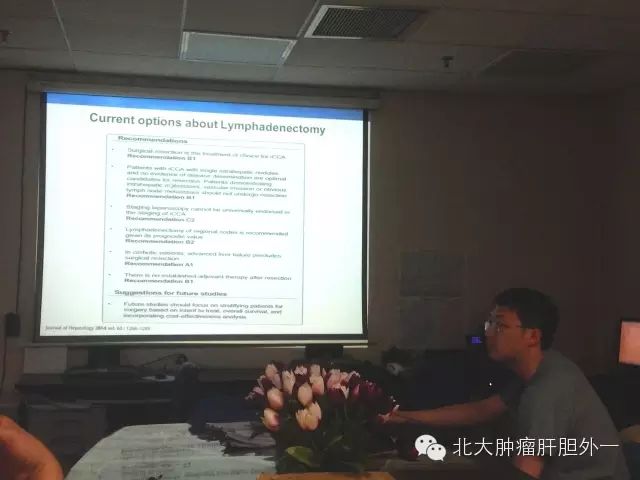
Intrahepatic cholangiocarcinoma (ICC) refers to a malignant tumor originating from the epithelial cells of the intrahepatic bile ducts, particularly the secondary bile ducts and above. The incidence has been rising year by year in recent years. Radical resection remains the only treatment option for ICC patients to achieve long-term survival.
ICC is prone to lymph node metastasis. In the 1990s, the Japanese Liver Cancer Society classified the regional lymph nodes of ICC into three stations, similar to gastric cancer, based on the tumor’s location: if ICC is located in the left liver, its first station lymph nodes, in addition to group 12, include groups 1 and 3, while the second station includes groups 7, 8, 9, and 13, and the third station includes 14 and 16; if ICC is located in the right liver, its first station lymph nodes are only group 12, the second station includes groups 7, 8, 9, and 13, and the third station includes groups 1, 3, 14, and 16. Patients with lymph node metastasis from ICC have a poor prognosis. The seventh edition of the AJCC TNM staging system has included lymph node-positive patients into stage IVa. However, unlike other digestive system tumors such as gastric cancer and colorectal cancer, the lymph node dissection for ICC remains highly controversial. Recent expert consensus and guideline opinions over the past two years vary. For instance, the 2014 consensus from the Chinese Medical Association’s Hepatobiliary Surgery Group only recommends lymph node dissection for stage Iva patients, while other stage patients should only undergo frozen section biopsy during surgery if suspicious lymph node metastasis is found, determining whether to dissect the lymph nodes based on the results. The 2014 EASL ICC guidelines suggested that patients with confirmed lymph node metastasis are not suitable for surgical resection, while those without lymph node metastasis can undergo regional lymph node dissection to further assess the prognosis. The 2015 NCCN guidelines recommended preventive dissection of the hilar lymph nodes, stating that surgical intervention is still possible for hilar lymph node metastasis, but metastasis to other lymph node groups outside the hilum is considered unresectable. The 2015 HPB journal published consensus opinions from several surgical experts from the USA, Japan, and Italy, similar to the NCCN guidelines. From the above literature, it can be seen that the controversies surrounding lymph node dissection for ICC mainly include the following two aspects: 1) Should patients with clear lymph node metastasis still undergo surgery before surgery? 2) Should patients without clear lymph node metastasis undergo preventive lymph node dissection during surgery?
Due to selection bias, previous literature reports the lymph node metastasis rate in surgically resected ICC patients ranges from 17-62%. Given that patients with lymph node metastasis have a poorer prognosis, even those undergoing surgery have a median survival time of only 6-19 months, which is far lower than that of patients without lymph node metastasis. Therefore, some scholars propose that patients with lymph node metastasis are not suitable for surgery. Additionally, some studies have indicated that metastasis to the first station lymph nodes often suggests the presence of distant lymph node metastasis. For example, Shimada et al. reported that among 24 lymph node-positive patients who underwent extensive lymph node dissection at their center, only 3 cases had metastasis confined to the first station, while the other 21 cases had simultaneous metastasis to the second or third stations, with none of these patients surviving beyond 3 years. However, scholars supporting surgery for lymph node metastasis argue that some of these patients can achieve long-term survival after aggressive surgical treatment, and some literature has reported 5-year survival rates. Moreover, how to accurately diagnose lymph node metastasis before surgery is also a clinical challenge. In 2015, Japanese scholars found that among 31 patients with lymph node enlargement identified by preoperative imaging, 15 patients were found to have negative lymph nodes upon postoperative pathology. Therefore, for patients with suspected lymph node metastasis, screening should be performed to determine whether surgery can be conducted. Preoperative neoadjuvant therapy combined with clinical risk factors can serve as screening methods.
Previous studies have suggested that ICC patients with few lymph node metastases, no intrahepatic metastasis, or vascular invasion have a better prognosis, and such patients may attempt surgical resection, but further research is needed to confirm this.
Due to the currently low sensitivity of imaging for detecting lymph node metastasis in ICC, some scholars have suggested performing preventive lymph node dissection for patients in whom neither preoperative imaging nor intraoperative exploration reveals suspicious lymph node metastasis, to better judge prognosis and reduce lymph node recurrence rates. Additionally, some studies have indicated that preventive lymph node dissection can improve prognosis in ICC patients. However, in recent years, an increasing number of articles have begun to question preventive lymph node dissection. Firstly, the most common recurrence site for ICC is intrahepatic, and lymph node dissection does not reduce the risk of intrahepatic recurrence in ICC patients. Secondly, several recent studies have pointed out that preventive lymph node dissection does not improve patient prognosis. Finally, a retrospective study from the Eastern Hepatobiliary Hospital in China reviewed 1333 ICC patients and found that lymph node dissection was performed only for those with lymph node metastasis identified through preoperative imaging or intraoperative exploration, with a lymph node positivity rate of 28.5%, which is not significantly different from the 30% lymph node positivity rate after preventive lymph node dissection reported in the 2011 international multicenter study. Therefore, preventive lymph node dissection may not help to determine the N stage more accurately.
ICC has a poor prognosis, and surgery is the only means of achieving a cure, but there are still some controversial issues regarding ICC surgery, including lymph node dissection. Due to the low incidence of ICC and the fact that most previous literature on ICC lymph node dissection consists of single-center, retrospective studies, the conclusions may be significantly biased. Future multicenter, prospective studies are needed to draw definitive conclusions.

Treatment Feature One: A Strong Surgical Team. Our department can skillfully perform various types of hepatobiliary and pancreatic surgeries, completing an average of over 300 liver resections and over 100 pancreatic resections annually (including over 60 pancreaticoduodenectomies and over 40 distal pancreatectomies with splenectomy), with no perioperative deaths or serious complications in the past four years. We also actively promote the application of new technologies in hepatobiliary surgery, such as laparoscopic liver resection and intraoperative radiofrequency ablation.
Treatment Feature Two: Another advantage is comprehensive standardized treatment. Under the leadership of Professor Xing Baocai, our department actively participates in forming multidisciplinary treatment teams (MDT) for colorectal cancer liver metastasis, neuroendocrine tumors, and more, adopting a comprehensive treatment model combining neoadjuvant chemotherapy, conversion therapy, and surgical treatment, while also collaborating with various domestic and international treatment centers on multiple clinical trials for hepatobiliary and pancreatic tumors, benefiting a wide range of patients.
Consultation Time: