Last autumn, during the Internet Conference in Wuzhen, a group of robots walking on the street left people in awe. Some claimed they were just people in costumes, insisting that engineers had to disassemble the legs on-site to prove otherwise. The robots walked almost like humans, with movements indistinguishable from real ones, which still feels quite eerie to think about. If it weren’t for seeing the screws inside, one might really believe we had entered a future world.
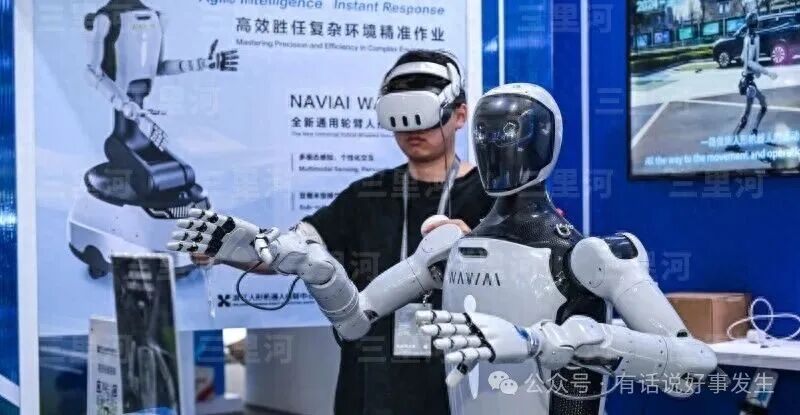
Even more astonishing is the sudden drop in prices; previously, buying a robot was akin to purchasing a house, but now you can take one home for just over ten thousand yuan. I’ve heard that factories in Shenzhen can produce a significant number of units daily, and workshops in the Yangtze River Delta frequently revise their designs, saving a lot of money by using domestic components. Those overseas big brands that used to charge exorbitant prices now face competition from our domestically produced machines, which offer much better cost-performance ratios.
However, companies making robots are not solely focused on profit. For instance, a product called Xiaobumi is inexpensive, but it comes with a complete set of accompanying courses, aiming to attract more people to join in the fun. Currently, over eighty key high schools have integrated robotics into their curricula, and automotive factories are also employing robots to assist with work. Recently, sales on the JD platform have multiplied several times. However, one still wonders whether the robots bought for home use will actually obey commands.
The most impressive aspect is the rapid advancements in AI; a research institute has developed a model that allows robots to learn skills autonomously. The facial recognition machines used in banks can accurately gauge customers’ moods when greeting them. But the problem is, as robots become more human-like, how do we classify them? Legally, the definitions are still unclear, which poses a significant issue.
Currently, the entire industry development resembles that of electric vehicles in the past, with production capacity dominating globally, yet facing regulatory hurdles in exports. Some regions have engaged in price wars to capture market share, resulting in increased quality complaints. Starting next year, the government will introduce new standards for data security, which will keep manufacturers busy for a while.
In the coming years, we may see significant changes, as those involved in elder care and the metaverse are all keeping an eye on robots. Home appliance stores are now setting up experience centers; otherwise, they would have closed down long ago. Today’s young people treat robots like family members, sharing their experiences on social media daily. As sales continue to rise, I worry that an abundance of robots might lead to a lack of suitable applications, which is hard to predict.