
Ambition gives life and inner freedom to humanity.
—— Nietzsche
At the beginning of the year, the Yushu robot, which became a sensation during the Spring Festival Gala, is becoming increasingly impressive.
First, it learned to hand off a silk scarf, then it ran a marathon, and now it has even learned to shoot a basketball.
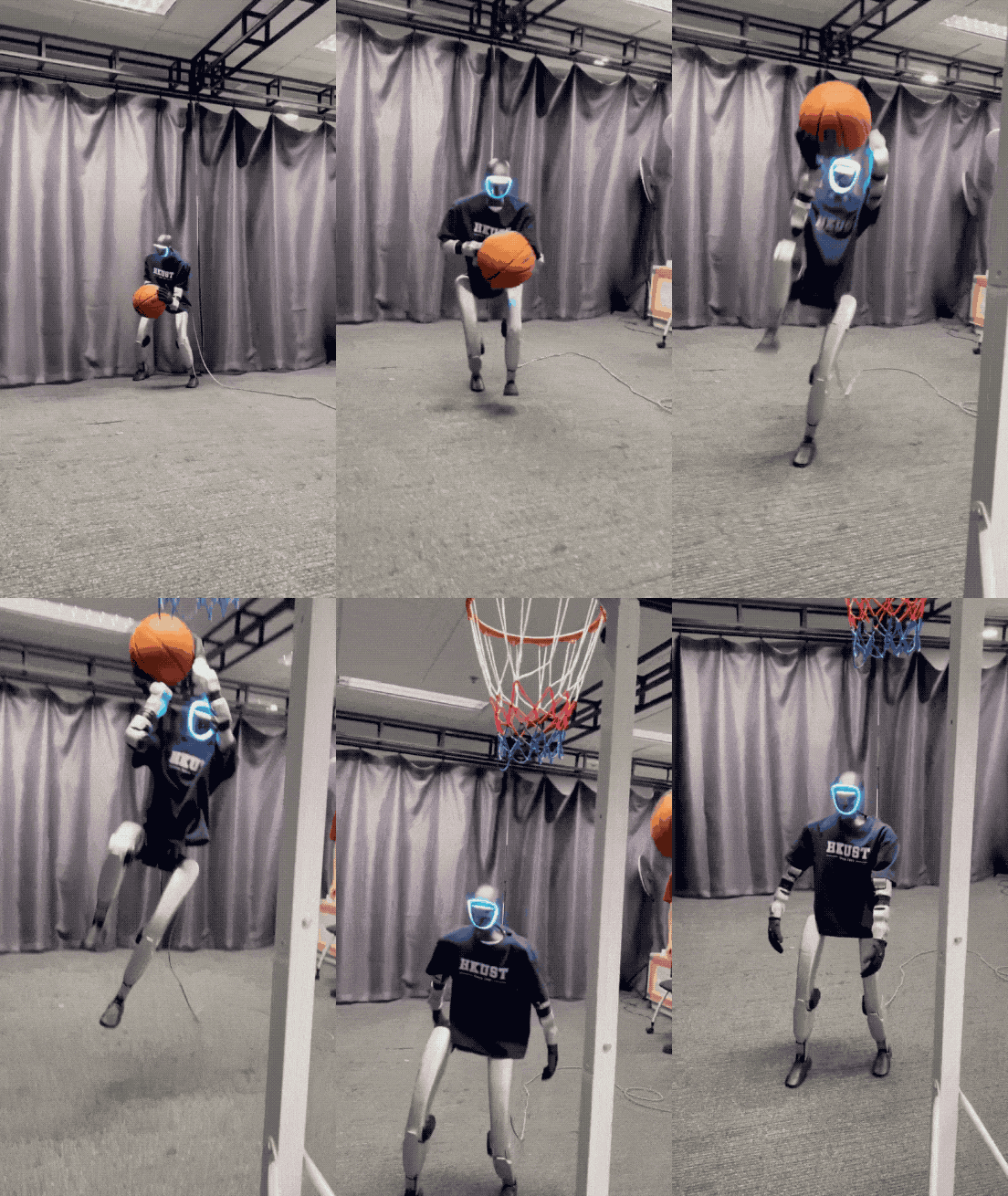
Under the guidance of the research team from the Chinese University of Hong Kong, this 1.3-meter tall Yushu G1 robot completed an impressive aerial basketball shot.
Although it didn’t score, the movement was quite impressive, and it didn’t travel.
Considering the current pace of AI evolution, it may not be long before Chinese robots can participate in the NBA draft.

Laika
OnNovember3, 1957, a dog named Laika was launched into space aboard the Soviet satellite Sputnik 2, becoming the first living being to orbit the Earth.
This was the ultimate romance of humanity, and the “Sputnik moment” is regarded as the beginning of the global technological race.
Sixty years later (in 2017), tech enthusiast Wang Xingxing named his robotic dog Laika, revealing his ambition for the stars and the sea.
Geeks Park founder Zhang Peng was stunned after watching the video of the robotic dog Laika.
In 2015, Zhang Peng visited the “mechanical leopard” designed by a Korean at MIT, which was covered in steel cables and had a very experimental style.
In Zhang Peng’s view, Wang Xingxing’s mechanical dog is more mature and productized than the mechanical leopard, in other words, he sensed the scent of technology and money.
As a media person rooted in the tech circle, Zhang Peng has a keen eye for talent.
Back in 2013, when most people couldn’t see the value of Zhang Yiming, Zhang Peng frequently recommended him to big shots, saying Zhang Yiming was super impressive, and in 2014, he facilitated a stage appearance for Zhang Yiming alongside Elon Musk.
This time, Zhang Peng decided to keep the benefits to himself and acted quickly.
Zhang Peng flew to the Binjiang District of Hangzhou to visit Wang Xingxing’s studio, a shabby room of about 20-30 square meters filled with various parts, and two already assembled robotic dogs.
At that time, Wang Xingxing was running low on funds and had to use his savings to pay his employees.
After several negotiations, Zhang Peng invested in the angel round.
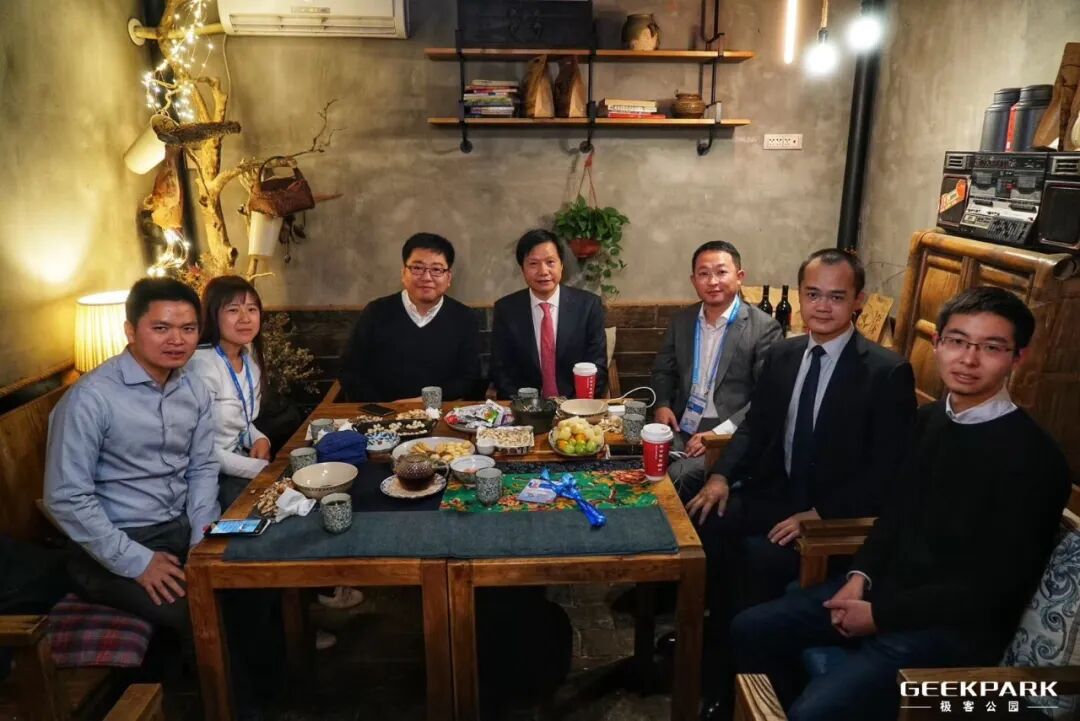
Later, Zhang Peng organized a dinner in Wuzhen, introducing Wang Xingxing to big names like Lei Jun and Wang Xing, and with their investment support, Yushu Technology began to gain traction.

From Dogs to Humans
The entrepreneurial journey of Yushu began with “robotic dogs,” but it gained fame due to its “humanoid robots.”
Because the technology foundation of Yushu’s humanoid robots comes from the robotic dogs, outsiders jokingly say that Yushu’s “robotic dog” standing up becomes a “humanoid robot.”
Wang Xingxing took it lightly and humorously remarked, there’s nothing wrong with that; humans evolve from crawling to standing.
Initially, Wang Xingxing was not optimistic about humanoid robots.
In 2021, when Musk ventured into humanoid robots, someone asked if Yushu would follow suit.
Wang Xingxing replied that he felt indifferent. The concept of humanoid robots had been popular for many years, and before Musk’s involvement, the field had hit a low point, with no one expressing interest in purchasing them, and the atmosphere in the circle was quite pessimistic.
Unexpectedly, just two years after Wang Xingxing expressed his skepticism about “humanoid robots,” in February 2023, Yushu initiated a project for humanoid robots.
The times are changing rapidly.
Yushu’s shift, besides what Wang Xingxing mentioned about the rapid advancements in AI technology represented by Chat GPT, which showed promising results in controlling robots, has another more “hidden” reason.
On New Year’s Eve 2023, Yushu’s robotic dogs appeared on the Spring Festival Gala stage, participating in the performance “Future I Come,” with models including Go1 and B1, marking Yushu’s first appearance on the Spring Festival Gala.
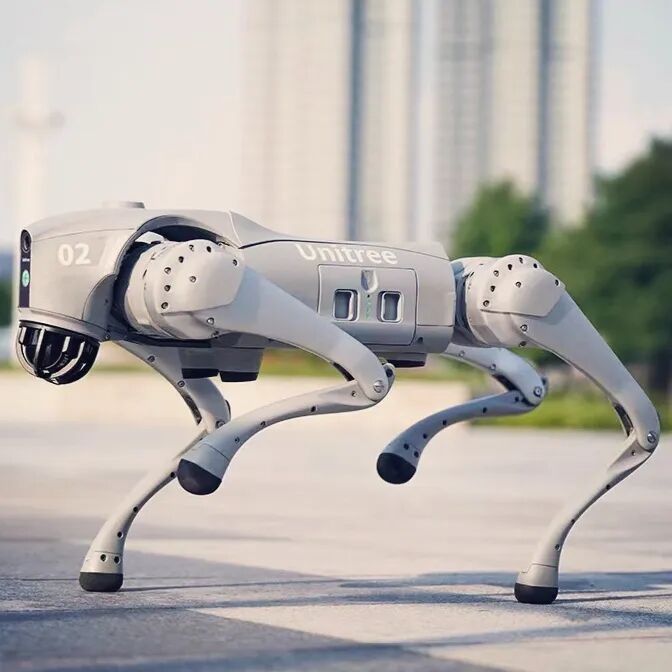
During the program, several robotic dogs performed together, running, rolling, and dancing in perfect unison, showcasing a perfect blend of technology and art.
Although the response was good, it fell short of the “sensational” effect Wang Xingxing expected, and for a tech celebrity company planning to go public, creating a “sensation” is as essential as Zhuge Liang’s east wind.
After the performance fell flat, Wang Xingxing fell into deep thought.
Wang Xingxing is a tech fanatic, and his research method is simple and straightforward: he thinks about it 24 hours a day, awake or asleep, until inspiration strikes.
Soon, Wang Xingxing concluded: the reason for the lack of a major sensation was that it was the “robotic dog” that appeared on the Spring Festival Gala, not the “humanoid robot.”
A few days after the first Spring Festival Gala performance fell short, Yushu Technology initiated the humanoid robot project.

Stars and the Sea
Years ago, Musk mentioned in a conversation with Yang Yuanqing that he dislikes the concept of “marketing.”
In fact, what Musk dislikes is paying others for advertising; he himself is a true master of hype.
As Tesla’s global sales began to decline, to support its valuation, he set his sights on humanoid robots.
Musk’s core strategy is: to attract attention with top-tier IP, maintain interest with gradual “progress,” and uphold valuation with grand narratives.
Musk named his humanoid robot “Tesla Bot” (later changed to Optimus), implying that it is the “Tesla” of the robotics field, inherently suggesting it possesses the same disruptive potential as Tesla in the electric vehicle sector.
Musk has also publicly acknowledged that he drew inspiration from sci-fi epics like “Star Wars,” placing his robot products in the context of “science fiction becoming reality.”
More importantly, Musk continuously paints a picture of a disruptive future for humanity.
At that time, the demand for Optimus robots is expected to reach 10 billion, even 20 billion, fully addressing labor shortages and creating an “era of abundance” for humanity.
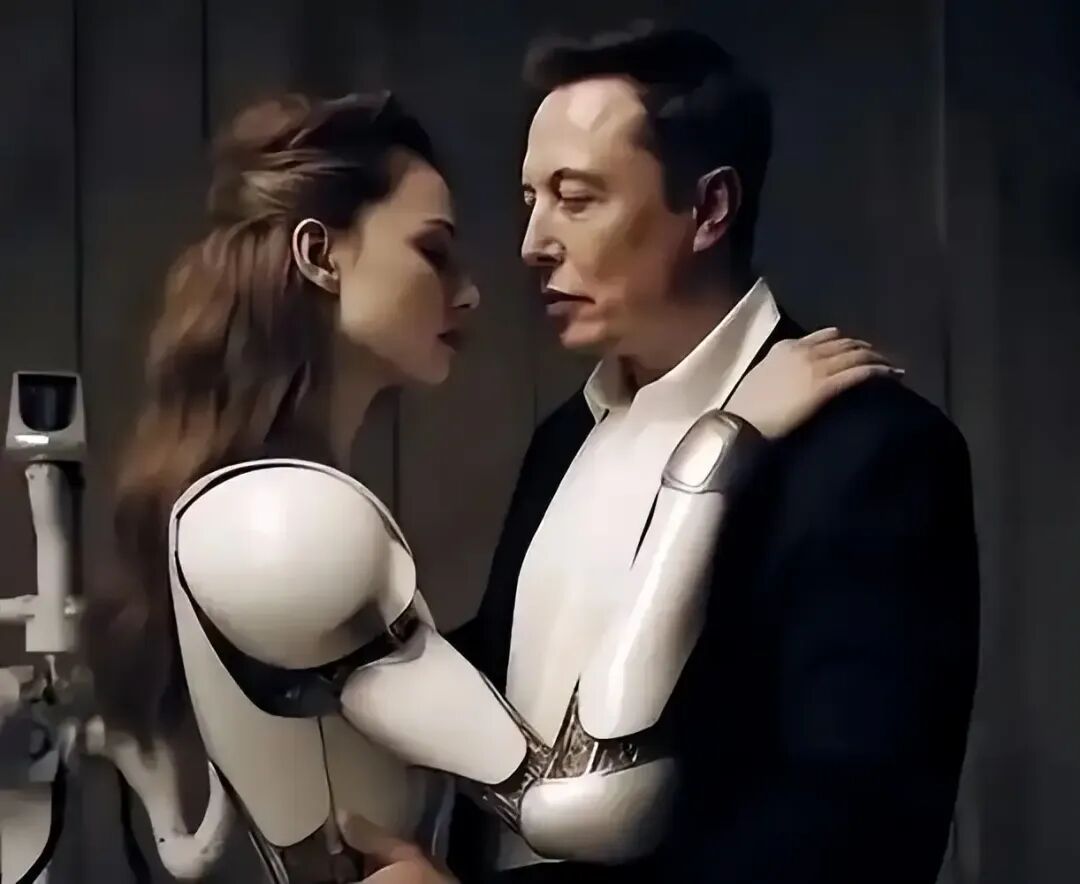
These grand narratives elevate Musk’s robot products to the level of “solving fundamental issues of human civilization,” and this kind of “story power” provides an imaginative valuation anchor for Tesla’s stock price.
Imagine if the humanoid robot were replaced by a robotic dog; the appeal of Musk’s “story” would undoubtedly diminish significantly.
In specific hype scenarios, Musk is also full of tricks.
As early as 2021, when Tesla’s robot was still in its infancy, Musk had a professional dancer wear a robot costume and awkwardly dance on stage, capturing attention and claiming that a similar prototype would be produced the following year.
Since then, Musk has periodically showcased the robot performing tasks, from sorting batteries to doing yoga, with visible improvements each time, generating significant buzz.
Wang Xingxing learned from Musk’s experience; when Yushu Technology’s “robotic dog” performance at the Spring Festival Gala did not meet the sensational expectations, he began to rethink the strategy, aiming to evolve his product from “dog” to “human.”
For Wang Xingxing, this transition was not particularly difficult.
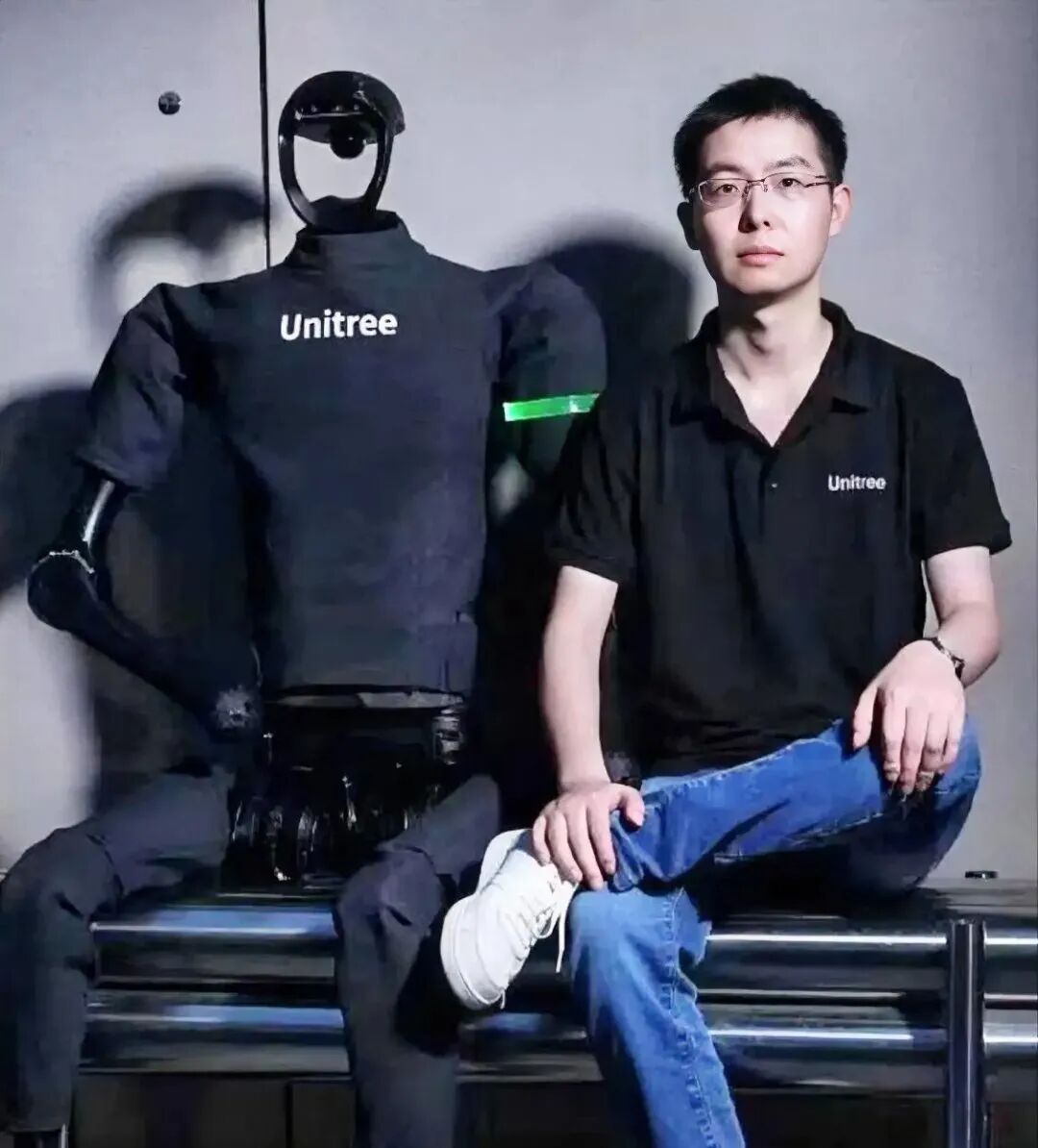
Compared to the concept-driven Silicon Valley Iron Man, Chinese companies are better at turning concepts into reality.
In February 2023, after Yushu initiated the humanoid robot project, within less than six months, it released its first prototype product. What’s even more surprising is that only three people are working full-time on this project.
In Wang Xingxing’s words, everything is readily available; the hardware and software algorithms accumulated by the company in the past can be directly utilized from the robotic dogs. The torque of the joint motors is slightly higher, and the four legs are transformed into two legs, with each leg bearing a greater load.
Upon hearing Wang Xingxing’s words, the reporter was astonished, saying, “So your first humanoid robot is essentially just the robotic dog standing up?”
Wang Xingxing replied, “Pretty much.”
In what seems like a playful jest, Wang Xingxing is secretly preparing a big move; he understands that the current gap between Chinese technology and the top-tier American technology represented by Musk is most evident not only in technical aspects but also in the ability to tell a story.
Accustomed to relentlessly tackling problems 24 hours a day, Wang Xingxing finally had an epiphany regarding this matter.
In March 2024, Yushu released the H1 humanoid robot, which can already perform backflips.
Wang Xingxing knows the timing is right.
On New Year’s Eve 2025, two years later, Yushu will return to the Spring Festival Gala, this time with humanoid robots instead of robotic dogs.
On the Spring Festival Gala stage, Yushu’s 16 H1 humanoid robots, under the direction of “national master” Zhang Yimou, performed a creative dance titled “Yang BOT,” cleverly blending Northeast Yangge with robotic technology, aided by Sa Beining’s “awkward performance,” achieving a complete breakout.
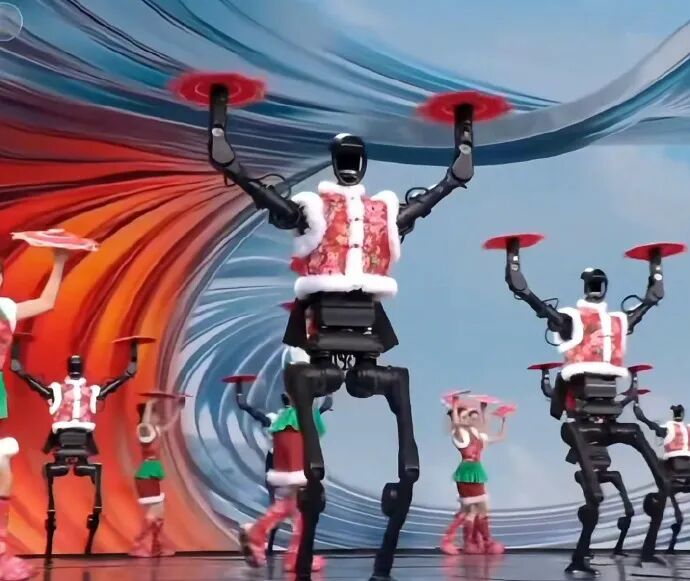
In an instant, Yushu Technology, along with six other Hangzhou companies like Deep Seek, which launched the game technology “Black Myth: Wukong,” stood at the forefront, stirring the global AI landscape and becoming a topic of conversation.
With the boost from this breakout, Yushu Technology plans to issue stocks and go public in China by the end of 2025.
On November 10, 2025, CITIC Securities confirmed that Yushu Technology meets the listing conditions, at which point Wang Xingxing will hold 34.7630% of the shares, the company will have over 1000 employees, and the annual revenue will exceed 1 billion yuan.

Glory and Dreams
On November 6, 2025, Musk achieved a historic milestone.
—— At the Tesla shareholder meeting, a vote was held to decide that Musk would receive a compensation of 1 trillion dollars, setting a historical record.
The condition is that Tesla’s market value must grow to 8.5 trillion dollars over the next decade, delivering 20 million vehicles and deploying 1 million robots.
Wall Street has given astronomical valuations to robots, viewing them as the next baton of artificial intelligence.
Humans are not perfect; humanoid robots have endless commercial potential in aerospace, military, industrial, hazardous work, household chores, and elder care.
To tell this story well, Musk’s humanoid robot Optimus has started practicing “Chinese Kung Fu,” sparring with staff to practice, responding accurately to every move.
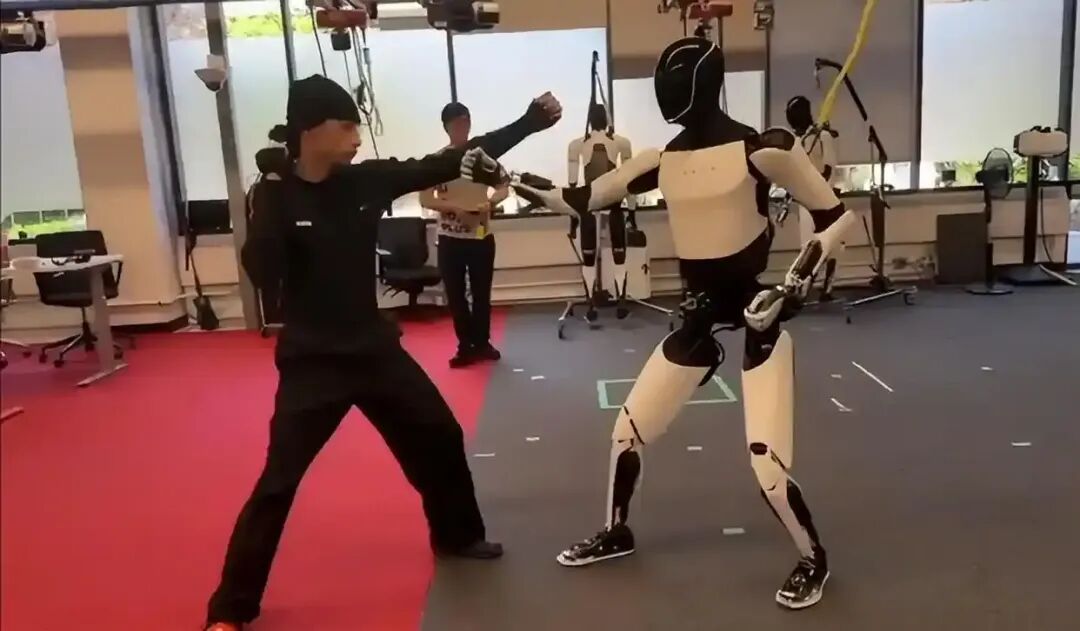
Tesla officially announced that it is working to scale up humanoid robots, planning to produce 1 million units annually before 2030.
What kind of waves will Yushu Technology, soon to become the first publicly traded humanoid robot company, bring?
China is not without good tech companies, but for various reasons, the A-share market has long lacked imaginative tech leaders.
However, in recent years, emerging tech companies like DJI, Deepseek, and Yushu have not only high technological content but also differ from the traditional serious and dull image of Chinese enterprises.
These new companies have young founders, young team members, and products with a trendy vibe, resonating with the tastes of young people, repeatedly sparking global trends and becoming cross-cultural fashion symbols.
Robots are humanity’s dream; in an era when technology was not mature, cultural products had already swept the globe. In the last century, the U.S. had Transformers, and Japan had Gundam, both emerging in the most ambitious and vibrant times of society.
Now, Chinese robots are also taking off, and this time it’s not just animation and figurines; this time it’s for real.
Nietzsche believed that ambition gives life and inner freedom to humanity, helping humanity seize resources and achieve goals.
2026 is destined to be the “year of ambition” for humanoid robots, as well as the “year of explosion,” when Tesla, Yushu, Zhi Yuan, and other strong competitors will be in fierce competition globally.
The grand curtain of stars and the sea is gradually being raised.
-END-Author: Zhe Kong Kong