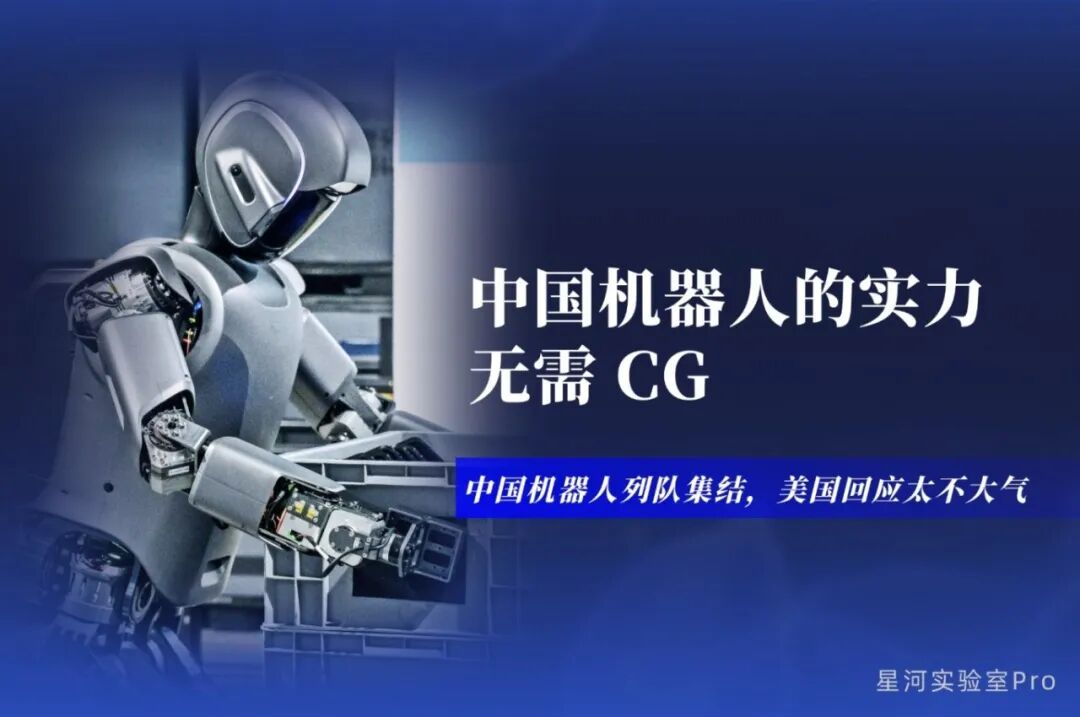
After Goldman Sachs expressed skepticism about Chinese humanoid robots, Chinese robots assembled in formation, delivering a hard-hitting response, only to be met with criticism from the US.
On November 7, Goldman Sachs released a field research report on the “Chinese Humanoid Robot Supply Chain,” stating that “despite supply chain companies actively planning production capacity, no company has confirmed receiving significant orders, nor provided a clear mass production timeline.” The report predicted that the global annual shipment of humanoid robots would be around 12,000 units by 2026. This report dampened the enthusiasm in the booming robotics sector, leading to three consecutive days of declines in stock prices.
Before Goldman Sachs’s pessimistic outlook could fully take effect, Chinese robotics companies responded with concrete actions.
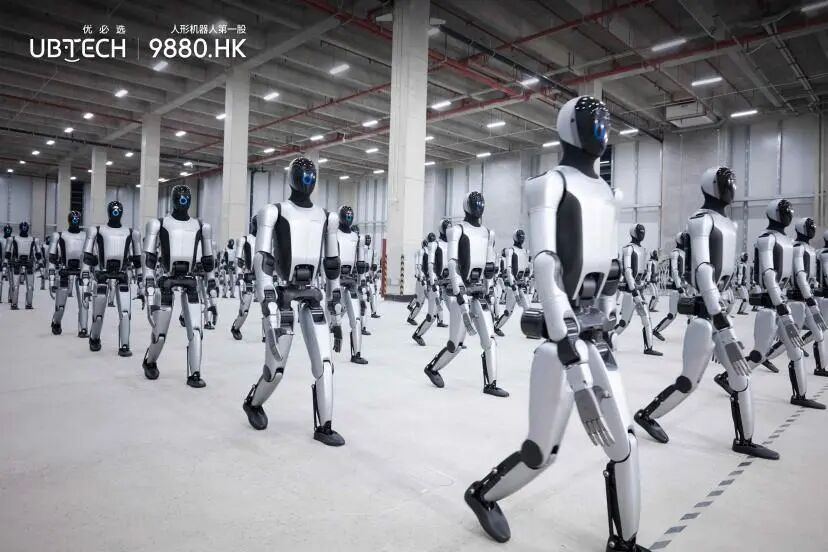
On November 12, Shenzhen-based UBTECH released a video of the mass production delivery of its Walker S2 humanoid robot, which instantly went viral on social media both domestically and internationally. The video showcased hundreds of 1.76-meter tall Walker S2 robots lined up, marching in formation, synchronizing their movements, and autonomously swapping batteries, creating a stunning scene.
According to information released by UBTECH, the first batch of hundreds of full-size industrial humanoid robots Walker S2 has officially commenced mass production and delivery, being gradually deployed in real smart manufacturing scenarios. This marks the first publicly known large-scale delivery of humanoid robots in an industrial setting globally.
In response to the mass production breakthrough of Chinese robots, American counterparts reacted rather “ungraciously.”
Brett Adcock, founder of US-based Figure, dissected the mass production video frame by frame and questioned on X platform:“Fake, the video is CGI effects.”.
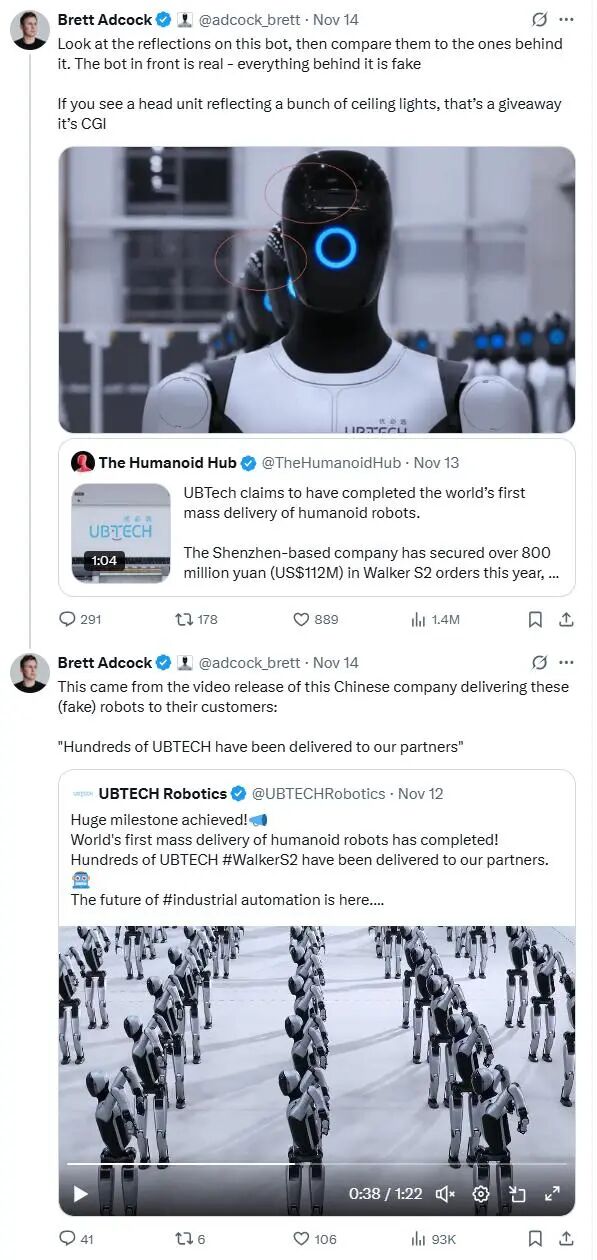
On November 14, UBTECH quickly countered,validating the authenticity of the delivery through “a continuous shot with original sound, drone footage, and spatial reference points.” The purpose was not to “show off muscle,” but to allow the global humanoid robot industry and customers to witness and clearly understand the industry’s development process: the simultaneous mass production and delivery of hundreds of humanoid robots is happening in China, marking the true entry of humanoid robots into the era of bulk supply.
On November 18, UBTECH’s CBO Tan Min candidly stated in a media interview: “Many of the doubts arise from a lack of understanding of China’s intelligent manufacturing capabilities and the collaborative and systematic capabilities of the Chinese supply chain. They should come to China more often to observe the vigorous development of the humanoid robot industry firsthand and engage deeply with the industry chain.”
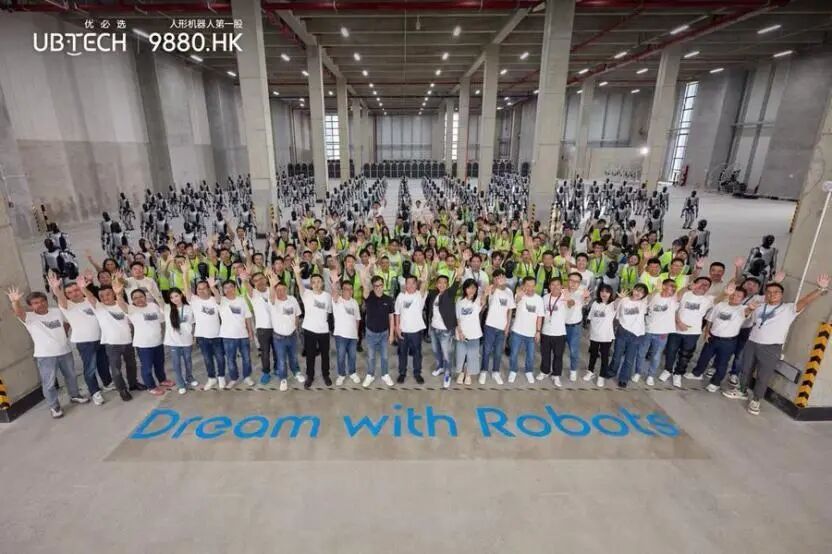
The global attention garnered by the Walker S2 is largely due to its battery technology. The Walker S2 is the world’s first humanoid robot capable of autonomous battery swapping, equipped with a dual-battery system that allows for coordinated operation of its arms, requiring only 3 minutes for autonomous battery swapping without human intervention, enabling it to work continuously 24/7 in a military-like formation. Autonomous battery swapping has thus become a global technological focus.
In terms of intelligent collaboration, the Walker S2 is supported by UBTECH’s self-developed UBNET 2.0 collective intelligence network and Co-Agent intelligent architecture. This is also a significant step for industrial robots entering the era of socialized collaboration.
In contrast to Goldman Sachs’s report stating “no significant orders confirmed,” UBTECH responded with solid order data. As of 2025, the order value for the UBTECH Walker series has exceeded 800 million yuan, with clients including well-known companies such as Zigong Technology, Tianqi Co., Shunfeng, Foxconn, BYD, Geely, FAW-Volkswagen, BAIC New Energy, and China Telecom.
Specifically, projects such as Zigong Technology’s 159 million yuan data collection project, a 250 million yuan procurement contract from a domestic company, a 30 million yuan order from Tianqi Co., and a 126 million yuan project for the Guangxi Embodied Intelligence Data Collection and Testing Center are all substantial orders. The signal they send is clear:Market demand is real and is growing rapidly..
In response to Goldman Sachs’s prediction of 12,000 units in global annual shipments, UBTECH provided its own assessment: delivering 500 units in 2025, with production capacity targets increasing to 3,000-5,000 units in 2026, and reaching a scale of 10,000 units by 2027. Tan Min stated: “The actual orders we have received far exceed the currently announced orders. The core focus is on how to meet the needs of larger clients during the gradual delivery process and demonstrate more capabilities. We believe that 2026 will see a greater core mechanism and application explosion.”
In stark contrast, around the same time, Silicon Valley startup K-Scale Labs announced its closure. This company, once regarded as a “Silicon Valley golden combination,” had open-source culture, solid engineering capabilities, and decent demos, but ultimately fell into the predicament of “products unable to be commercialized, supply chains unable to support, VCs no longer interested in demos, and cash flow unable to sustain, leading to team disintegration.”
UBTECH’s confidence stems from the combination of two dimensions of advantages.
First is the full-stack self-research capability on the technical level, forming a complete technological closed loop from visual recognition, motion control to collective intelligence collaboration. Secondly, and more crucially, is China’s unique supply chain advantage.
In the past two to three years, the rapid advancement of AI technology in China, combined with real industrial demand, has propelled the humanoid robot industry into the fast lane. As Tan Min stated: “The explosive growth of China’s new energy vehicles in the past two years has driven the development of the entire core drive motor industry. The massive market scale of new energy vehicles has nurtured the growth of the entire electric drive field, giving us a globally leading scale effect in the electronic motor industry, which is unique in the world and has become our overwhelming advantage in the next stage of developing embodied intelligence.”
The maturity and scale effect of this supply chain is precisely what Silicon Valley startups like K-Scale Labs lack. Foreign media generally believe that only companies capable of large-scale delivery can truly step out of the laboratory. This comparison of “ice and fire” is fundamentally not a contest of single technologies, but a competition of industrial ecological capabilities. From technological innovation to industrial landing, from order scale to supply chain advantages, foreign media are beginning to reassess the strength of China’s humanoid robot industry.
After experiencing initial skepticism, even Figure founder Brett Adcock changed his attitude, posting: “The opportunities in the humanoid robot field are unprecedented. Now is the time for us to inspire the world and make all humanity truly look forward to the future.”
However, the comments section revealed a hint of jealousy. This subtle shift in emotionprecisely indicates a fact: Chinese humanoid robots from Shenzhen have, for the first time, made the world see the future through large-scale investment in industrial scenarios.
As Tan Min said, they should come to China more often to see.

#UBTECH #HumanoidRobot #Figure