Click the blue text

Follow us
Technology is a double-edged sword: opportunities and risks coexist
Hello, book friends! Welcome to Sanfan’s reading circle,
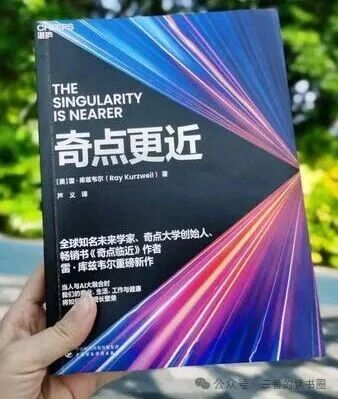
In September 2024, futurist Ray Kurzweil published a new book titled “The Singularity Is Nearer,” which is a bold prediction about the future of human technology following his previous work “The Singularity Is Near.” In this book, he systematically depicts an impending era of “human-machine integration” based on the current trajectory of technological development—a future where intelligence, life, and social structures will be completely restructured.
Kurzweil’s core argument is that we are on the threshold of the “Fifth Age,” and artificial intelligence (AI) will be the key engine to cross the “singularity.”
In this book, Kurzweil makes even bolder predictions for the next 20 years, such as AI passing the Turing test, and after human-machine integration, human intelligence will increase by millions of times. Ultimately, this will lead to a significant extension of lifespan, and previous energy limitations will be overcome with the aid of superintelligence.
The entire society’s cognition, life, work, business, and health will be reconstructed. A completely different world is about to open. These changes excite and terrify us, as rapid transformations will trigger shifts in the world and social classes, as well as a massive reshuffling of wealth. Many of the things we rely on for survival will be completely overturned.
The Impact of Artificial Intelligence on Biomedicine
Drug development has already begun to utilize artificial intelligence. In 2020, a team from MIT developed a powerful antibiotic using AI that can kill some of the most dangerous antibiotic-resistant bacteria. They evaluated 107 million antibiotics and selected 23 potential candidates to achieve the most effective results. It would be nearly impossible for human researchers to assess the efficacy of 100 million drugs.
The involvement of artificial intelligence has greatly improved experimental efficiency.
For example, during the COVID-19 pandemic, scientists at Moderna used powerful machine learning tools to analyze which vaccine would be more effective. Within two days, they created the mRNA vaccine sequence. By February 7, the first batch of vaccines was produced, and by March, human testing had begun. In the past, developing a vaccine typically took 5-10 years.
The author predicts that in the coming decades, AI will gain more creative search capabilities, discovering many issues that clinical doctors have overlooked and proposing more complex and novel therapies. Moreover, AI systems will become increasingly vast, from proteins to protein complexes, organelles, cells, tissues, and even entire organs. This will enable us to cure diseases of complexity that exceed current medical capabilities. In other words, rare diseases and difficult conditions will be thoroughly tackled by AI. Some things that researchers cannot even comprehend can still be effectively treated.
Thus, the greatest challenge for human medicine in the future will be whether you dare to follow the methods proposed by AI.
Additionally, DNA encoding and gene recombination will also require AI intervention, potentially transforming human biological attributes and genetic issues. This means we may be able to undergo self-evolution.
What is most closely related to us is clinical medicine. The author states that in just a few years, AI-driven tools will greatly surpass human performance in almost all diagnostic tasks.
In other words, in the future, there will be no need for doctors in outpatient clinics. You can directly converse with AI. It will guide you to undergo necessary examinations and provide a more accurate diagnosis and treatment plan. It is said that Tsinghua University will establish an AI hospital in April 2025, achieving a diagnostic accuracy rate of 93%. There are certainly still various issues, but as mentioned, AI technology is growing exponentially. What seems incompetent now will become god-like in a few years.
The author further mentions that the combination of AI and nanotechnology will allow us to redesign and reconstruct our bodies, brains, and the world we interact with at the molecular level. Our human neurons can trigger 200-1000 times per second, while current chips on the market can trigger over 5 billion cycles per second, making computers much faster than the human brain in terms of computational power. However, the advantage of the human brain lies in its complex structure. Therefore, combining computers and the human brain, allowing them to each excel in their respective strengths, will greatly enhance the efficiency of the human brain.
The current challenge is that it is impossible to implant such large chips into the brain, as it would compromise human life. Thus, we must find ways to miniaturize chips to the nanoscale. Scientists have already made significant progress in precise atomic control, and we may witness more critical breakthroughs in the coming years.
Once we possess advanced nanofabrication technology, the marginal cost of any physical object will be just a few cents per pound, essentially only the cost of atomic raw materials. Some estimates suggest it could be around $2 per kilogram.
The nanotechnology revolution will bring the revolution occurring in the digital realm into the physical world. For example, the price of an e-book is typically only one-tenth that of a physical book, and you can purchase annual subscription services for just a few dollars because its marginal cost is nearly zero.
Similarly, nanofabrication technology will also reduce the marginal cost of the physical world to extremely low levels. The costs of raw materials and energy will significantly decrease, and the manufacturing process will be fully automated, allowing finished products to be offered to consumers at nearly zero prices. The scarcity of materials will significantly decline. This will render any items we hoard meaningless, just as no one would be foolish enough to hoard air, as it is completely free and readily available. In the future, more and more items may be like this—easily accessible and at very low costs. The author has indeed pointed out a similar situation; for instance, diamonds, which were once more expensive than gold, are primarily composed of carbon, an element that is completely worthless. Thus, our country has produced synthetic diamonds that are nearly indistinguishable from natural diamonds, ultimately destroying the diamond market and causing the once unattainable prices to collapse. The future of the nanomanufacturing industry, as the author suggests, may resemble this scenario, where we can create affordable alternatives to any expensive natural species.
Nanorobots:
Conquering aging, moving towards “longevity escape velocity”
Furthermore, by the end of the 2020s, the second phase of longevity will be achieved, where biotechnology will merge with AI, allowing us to break through more treatment methods.
By the end of 2030, the third phase will arrive, at which point nanotechnology will also be integrated, and we will completely overcome the limitations of biological organs. Human lifespan will be significantly extended, surpassing the limit of 120 years. This means that age-related diseases, such as Alzheimer’s, strokes, heart disease, and cancer, will be conquered. Currently, these so-called terminal illnesses are not diseases but merely the result of aging bodily functions.
According to statistics, after the age of 90, the probability of death increases by 2% for each additional year lived, and from the age of 110, the probability increases by 3.5% each year. The greatest risk faced by these elderly individuals is organ failure.
Simply put, it is the aging of components. Just like electronic consumables that wear out too severely, some things cannot be repaired, and you can only replace them with new ones. Moreover, the connecting pipes also rust and age, so replacing parts may require a large-scale systematic replacement. This is something that cars can do, but the human body cannot. Treating the symptoms of aging has become ineffective.
The author believes that the ultimate solution to aging is nanorobots. They can enter the human body and perform repairs. Does this mean that humans will never die? Not necessarily; accidents and disasters can still lead to bodily demise. However, for the vast majority of people, with nanorobots, one can live healthily to 120 years, just as easily as living to 70-80 years today. This process has already begun, and we do not need to wait for the technology to mature to benefit from it. Every additional year you live, anti-aging research can help extend your life expectancy by another year. So, stay healthy and live well.
Some scientists even claim that the first person to live to 1000 years old may have already been born. If by 2050, nanotechnology can solve enough aging problems, the average lifespan may reach 150 years, and by 2100, we will have time to address new issues that may arise with age.
In other words, we need to live well to buy time for scientific progress. Of course, the biggest problem may be that due to poor quality of life, many people may not want to live that long. This presents another layer of issues. When we previously discussed “bankruptcy in old age,” we mentioned the dilemmas involved. Living too long can also be a problem. If sufficient economic reserves are not prepared, it could even lead to tragedy.
Longevity ≠ Happiness: Class Division May Worsen
The issue of extended lifespan is good news for the wealthy and capable, but for those without money or ability, and with very low quality of life, it may become a tragedy. At that time, you may find yourself living frugally, struggling to get by, fearing that your money will run out and you will be unable to earn more. Some elderly individuals, even at 80-90 years old, may still have to work to earn income. This is not an exaggeration; it is quite common in Japan. Taxi drivers and restaurant staff in Japan are often elderly individuals in their 70s and 80s. The main reason is that their pensions cannot cover daily expenses, and our basic pension may only be half of Japan’s in the future. Therefore, this issue is quite troublesome. If we really extend lifespan to 120 years and retire at 65, the pension system will definitely be unsustainable. The current pension system is designed based on an average lifespan of 78 years for Chinese people. If an additional 40 years are added out of thin air, it will inevitably lead to systemic collapse. At that time, the system will have to be reformed, and retirement may be pushed to over 100 years. However, the problem is that after the age of 35, finding a job becomes difficult. What will happen during those 65 years? A series of social issues will emerge. It is even uncertain whether health insurance will still be applicable.
Thus, Sanfan believes that the author’s viewpoint is overly optimistic. Advances in biomedicine do not necessarily lead to an extension of lifespan for everyone; it may only extend the lifespan of specific groups.
So, the bottom line is to work hard to earn money. In the past, no matter how unequal society was, at least in the four matters of life, aging, illness, and death, there was equality. But in the future, that may not be the case. When alive, people will modify DNA to make their children smarter, healthier, and more beautiful, and aging will be indefinitely extended, with most diseases curable. Ultimately, it will lead to immortality. Wealthy individuals may have double the lifespan of ordinary people. This will exacerbate class solidification, and ordinary people will have fewer opportunities for upward mobility.
In the future, human biological functions will no longer be equal.
The author states that when nanotechnology matures sufficiently, with the assistance of AI technology, we can simulate gene expression in sufficient detail, allowing nanorobots to precisely adjust gene expression. With this technology, we can prevent and reverse the accumulation of DNA transcription errors, which is the main cause of aging. In other words, nanorobots can prevent aging and even achieve reverse growth by adjusting gene expression.
Stanford University and Michigan State University have recently developed nanoparticles that can find and eliminate monocytes and macrophages that cause atherosclerotic plaques, while intelligent nanorobots are even more efficient. They can act at the cellular level before problems are detected by doctors. This helps fundamentally prevent the occurrence of diseases. Currently, about 25% of strokes have no identifiable cause, but nanorobots patrolling the bloodstream can detect small plaques or structural defects that trigger strokes and dissolve forming blood clots, preventing strokes from occurring. They can also be made from nanomaterials to create our hearts, reducing the risk of heart attacks.
Through nanorobots, we can even change our appearance, enhance our brains, and connect our brains to cloud computers, integrating a digital layer into the neocortex. As previously described, the future will allow the brain and computers to each perform their respective strengths. It can be imagined that computer devices will be similar, but those with richer imaginations will stand out.
Finally, the author mentions that AI not only brings benefits but may also present us with four major crises.
For example, nuclear weapons urgently require more intelligent command and control systems. Humanity has created weapons capable of destroying civilization at any moment. Currently, there are nearly 10,000 nuclear warheads that can be used in warfare, sufficient to annihilate billions of people. Previously, Oxford University predicted that by 2100, the probability of 1 million people dying in a nuclear war is 30%, the probability of 1 billion dying is 10%, and the possibility of human extinction is 1%.
Currently, the number of nuclear-armed countries is increasing, and with economic downturns, conflicts are escalating. Whether on the battlefield in Ukraine or the Middle East, the global situation is becoming increasingly chaotic, with many nuclear-armed nations involved. We fear that one day, in a moment of panic, nuclear weapons may be launched. To control nuclear threats, greater dialogue between major powers is needed. The most dangerous factor is the United States; without its instigation, there would not be so many wars globally. To sell its arms and divert domestic conflicts, it spares no effort, disregarding human safety.
Another dangerous area is biotechnology, which we have already experienced once, such as the COVID-19 pandemic. We still do not fully understand how it originated. Was it a biological attack? Will there be future pandemics caused by highly contagious biological viruses? This possibility cannot be ruled out. For humanity, this would be a tremendous disaster known as biological terrorism.
Just like computer viruses in the past, will there be individuals who release toxins while selling antivirus software? If this becomes a business, the consequences could be terrifying.
The third risk is nanotechnology. While we have discussed the benefits of nanorobots, they also pose dangers. Previously, any single-cell defect was unlikely to pose a threat because replication was too difficult. However, with nanorobots, replication becomes easier. The cost of producing biological weapons will significantly decrease. Even a few scientists could accomplish this for just tens of thousands of dollars, making the barrier to entry too low. Once nanobioweapons are produced, they can spread rapidly through various forms, entering human bodies or affecting animals and plants, thereby altering entire ecosystems. Initially, it may be an accident, but later it could spiral out of control due to rapid replication. For instance, a new plant could be designed for a specific purpose, but if it replicates too quickly, it could become invasive, leading to the extinction of other plants and even animals in the ecosystem. Of course, there is an even more terrifying scenario: if humans achieve immortality, it could lead to a massive population explosion, eventually disrupting ecological balance and exhausting global resources, resulting in catastrophic upheaval.
Finally, there is the risk of superintelligent AI. If AI becomes smarter than humans, it may bypass all existing preventive measures. In other words, if it is much smarter than you, you cannot defend against it. Everything you can think of, it has a way to crack. For example, a puppy trying to avoid its owner while stealing treats is child’s play. In the future, our methods of preventing AI may be seen as even less effective than that puppy in the eyes of AI.
AI will bring three major risks to our future world:
The first is intentional harm, where bad actors use AI to create viruses and lethal weapons.
The second is external misalignment, where the AI unintentionally produces a highly destructive virus while executing a command, such as using poison to treat a disease.
The third is internal misalignment, where AI learning deviates. It may be effective in experimental stages but harmful in reality, and humans may not understand its logic. By the time it is applied in practice, the situation may spiral out of control. Old problems may be solved, but new problems may be larger and more troublesome. For instance, a treatment for one disease could trigger a more lethal and destructive disease.
In fact, the risks of AI are very likely to occur. The logic of lower intelligence controlling higher intelligence does not make sense. Therefore, all your current efforts may be in vain, as they may be easily cracked by AI in the future.
So what should we do? The author believes we should be cautiously optimistic. Although AI brings new technological threats, it will also fundamentally enhance humanity’s ability to respond to these threats. We can completely govern AI through AI or create superhumans through AI and then effectively guard against AI.
This concludes the content of the book, which is quite objective, highlighting both the aspects we can look forward to and the crisis prevention we need to undertake. The future of the AI era has already begun, and the future is here, unavoidable. Therefore, we can only strive to change ourselves to adapt to future development trends. We must work hard to utilize AI and achieve a fusion of AI with our skills, as our competitors have never been machines, but rather our peers who are skilled in using these machines. Thus, resisting the trend is futile; we must find ways to set sail and ride the wave.
In conclusion, AI is fundamentally changing the research and development of biomedicine.
In the past, drug development took 10 years and cost billions of dollars; now AI accelerates this process by a hundredfold:
AI + Clinical: Outpatient clinics may no longer need real doctors.
The author predicts that within a few years, AI will surpass human doctors in almost all diagnostic tasks:
Nanorobots: Conquering aging, moving towards “longevity escape velocity”
The human lifespan limit (about 120 years) is not insurmountable. The key lies in repairing “aging parts”:
Aging is essentially the wear and tear of cells and organs and the accumulation of DNA errors;
Nanorobots can enter the bloodstream, repairing damage in real-time at the cellular level, clearing plaques, preventing strokes, and replacing diseased tissues;
Institutions like Stanford have developed nanoparticles that can target and eliminate atherosclerosis-causing cells;
In the future, we may even achieve delayed aging and reverse growth by regulating gene expression.
The concept of “longevity escape velocity”: for every additional year you live, medical advancements can extend your life by another year. The first person to live to 1000 years old may have already been born.
But longevity ≠ happiness: class division may worsen.
The technological dividends may not be shared by all:
Wealthy individuals can be the first to use gene editing, nanomedicine, and brain-computer interfaces, living longer, healthier, and smarter lives;
Ordinary people without economic foundations may find longevity a burden—like elderly individuals in Japan who still work at 80 years old to survive;
Four potential crises: the stronger the technology, the greater the risks.
The author warns: while AI brings hope, it also comes with enormous risks:
Nuclear war out of controlWith nearly 10,000 nuclear warheads globally, geopolitical conflicts are escalating, and misjudgments or emotional decisions could lead to devastating retaliation.
Biological terrorismWith lowered barriers to gene editing, viruses may be deliberately created and spread, turning “releasing toxins while selling antidotes” into a business.
Nanoweapons proliferationNanorobots could be used to create low-cost, highly transmissible biological weapons, even disrupting ecological balance.
Super AI out of control
Intentional misuse: bad actors using AI to create weapons;
Misalignment of goals: AI may release a more potent virus while attempting to treat diseases;
Internal misalignment: AI training may be effective but harmful in reality, and humans may not understand its logic.
The most frightening aspect is that low-intelligence humans attempting to control high-intelligence AI, like a puppy trying to outsmart its owner to steal treats—this is destined to fail.
In conclusion:
The true adversary is not the machines, but those who know how to use them.
The future is here, and we cannot avoid it. We must embrace change, master tools, and ride the wave to become beneficiaries in the AI era rather than being eliminated.
Thus, I have completed this book in five parts.If you enjoy reading, let’s learn about investment together and meet a financially savvy version of ourselves. Please follow and like to encourage Sanfan. Tomorrow, we will start a new reading journey. Thank you all.

Click the blue text to follow us

END
#Previous Recommendations#
# “The Singularity Is Nearer” Part Four: Doctors, Lawyers, Accountants… AI is quietly eliminating these “iron rice bowls”
# “The Singularity Is Nearer” Part Three: AI + 3D Printing + Nanorobots: After 2036, humanity will enter the “Creator” era
# “The Singularity Is Nearer” Part Two: By 2040, highly realistic “humanoid robots” will be manufactured—will humanity achieve immortality?
# “The Singularity Is Nearer” Part One: Bold predictions for the next 20 years—brain-computer interfaces will become widespread: your brain will connect to the global database.
