
 This article is compiled by the Semiconductor Industry Review (ID: ICVIEW).CN101 abandons deterministic logic to train more AI with a lower energy budget.
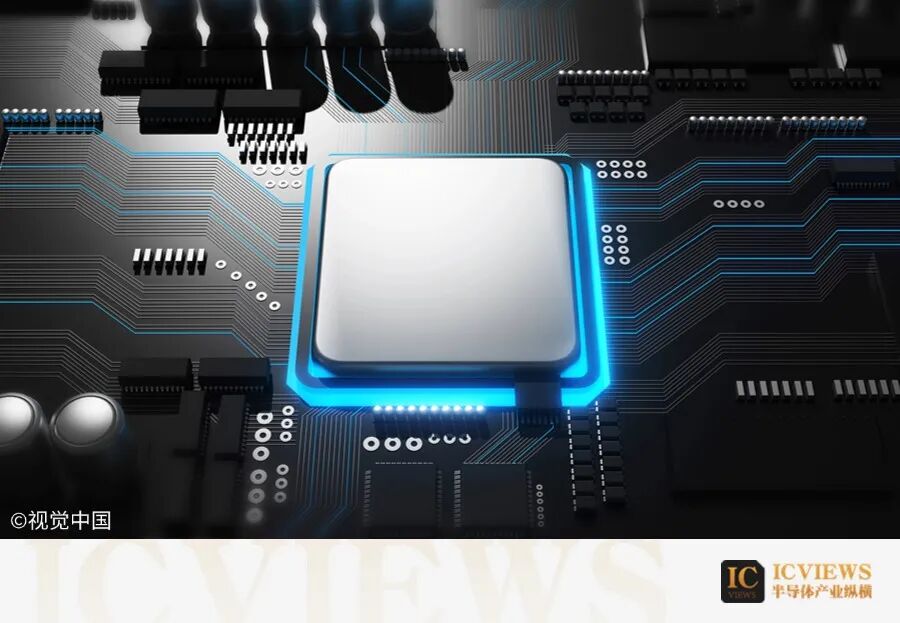
 Recently, Normal Computing announced the successful tape-out of the world’s first thermodynamic computing chip, CN101. This ASIC is designed specifically for AI/HPC data centers and is fundamentally different from traditional silicon computing methods. It achieves computational efficiency that traditional chips struggle to reach by leveraging thermodynamics (and other physical principles). This achievement has stirred significant interest in the semiconductor and computing fields, promising revolutionary changes for the future of artificial intelligence and high-performance computing.
Thermodynamic chips represent a paradigm shift from traditional computing, moving closer to the realms of quantum computing and probabilistic computing in practice. Noise has always been a formidable enemy for standard electronic products, as it can interfere with signal transmission and lead to computational errors. However, in the world of thermodynamic and probabilistic chips, noise is transformed into a valuable asset, becoming a powerful ally in problem-solving. As Zachary Belateche, the silicon engineering lead at Normal Computing, explained in an interview with IEEE Spectrum: “We focus on algorithms that can utilize noise, randomness, and uncertainty. It turns out that the application range of such algorithms is extremely broad, covering everything from scientific computing and artificial intelligence to linear algebra.”
Specifically, the components of the thermodynamic chip start in a semi-random state. When a program is input into the components, over time, these parts gradually reach a state of equilibrium, and the final readout of this equilibrium is the solution to the problem. However, this unique computing method is not suitable for all scenarios; it is only effective for applications involving non-deterministic results. For example, our everyday web browsers cannot operate using thermodynamic chips because their mechanisms rely on deterministic computational results. However, in various artificial intelligence tasks, thermodynamic chips can excel, such as in AI image generation, which requires randomly generating initial image elements and then gradually optimizing them to produce realistic images; other training tasks often need to handle large amounts of uncertain data to adjust model parameters, all of which heavily rely on hardware based on uncertainty like thermodynamic chips.
The latest tape-out of the CN101 chip has a clear functional focus; it is specifically designed for efficiently solving linear algebra and matrix operations while utilizing Normal’s proprietary sampling system to handle other probabilistic computations. These tasks perfectly align with the AI training needs of modern data centers. In practical operation, compared to traditional chips, the CN101 can improve energy efficiency by up to 1000 times under these workloads. This means that when processing AI training tasks of the same scale, the CN101 chip can operate with extremely low energy consumption, significantly reducing operational costs for data centers while minimizing the environmental impact of energy consumption.
Normal has grander goals for thermodynamic computing and its physics-based ASICs (like the CN101). They envision AI training servers that can integrate all necessary components to build a “super computing toolbox,” which includes traditional CPUs, GPUs, thermodynamic ASICs, and even probabilistic and quantum chips. This way, when faced with different types of computational problems, the server can precisely match the most suitable computing chip to find the closest solution to the ideal state.
From a product roadmap perspective, Normal’s CN product line has already planned for the next few years, including new product launches in 2026 and 2028. Future products will focus on expanding into deeper and more commonly used photo and video dissemination models. For example, the product planned for release in 2026 is expected to further leverage the advantages of thermodynamic computing in processing high-resolution images and complex video effects generation, providing stronger computational support for AI applications in related fields.
Currently, silicon computing is continuously approaching its physical limits in terms of minimum size. With the global demand for AI data centers skyrocketing, traditional silicon chips are increasingly struggling with power enhancement and energy consumption control. Against this backdrop, a series of alternative computing technologies have emerged rapidly, attempting to fill the computational gap and meet the market’s thirst for efficient computing.
Among many emerging technologies, silicon photonics has become one of the hottest directions in the field due to its advantages in data transmission speed and energy consumption. By utilizing photons instead of electrons for data transmission, silicon photonics is expected to significantly enhance the data communication rates between chips and reduce energy consumption during the transmission process. Quantum computing, on the other hand, due to its unique computational methods based on quantum mechanics principles, shows potential far exceeding traditional computing when dealing with certain specific complex problems, and is regarded as a shining star in the future of computing. However, quantum computing still faces many technical challenges, such as qubit stability and quantum error correction, making large-scale commercial applications seem like a distant dream.
In this race for innovation in computing technology, Normal’s thermodynamic chip, with its unique computing philosophy and outstanding performance, may soon occupy an important position in the wave of breakthroughs in new chip technology. With in-depth research and optimization of the CN101 chip and the subsequent launch of new products, thermodynamic computing is expected to reshape the landscape of artificial intelligence and high-performance computing, paving a new path for industry development..
*Disclaimer: This article is the original author’s creation. The content reflects their personal views, and our reposting is solely for sharing and discussion purposes, not representing our endorsement or agreement. If there are any objections, please contact us.