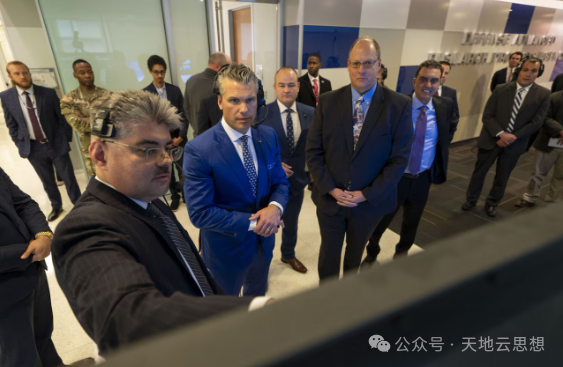
The U.S. Department of Defense reported on November 17 that Defense Secretary Lloyd Austin visited the Defense Advanced Research Projects Agency (DARPA) on November 14, located just a short drive from the Pentagon in Arlington, Virginia. DARPA and industry experts had the Secretary stand in front of two large television screens: one displaying a live feed of a UH-60 Black Hawk helicopter on the runway in Stratford, Connecticut, over 250 miles away; the other was a touchscreen showing the helicopter’s map and control instruments.The “Pilot’s Cockpit Automation System” (ALIAS) developed by DARPA and its commercial partners enables Austin to plot the helicopter’s flight path and parameters, allowing for remote flight. Ultimately, it will enable non-pilots to operate similarly equipped aircraft, including rotary and fixed-wing platforms, without boarding or attending flight school.The ALIAS system is just one of the hundreds of advanced technology projects currently led by DARPA, aimed at providing breakthrough technologies for the U.S. Department of Defense and operational personnel to enhance national security.The Black Hawk helicopter integrates the ALIAS automation system, combining multi-sensor inputs, machine learning flight logic, and a fully digital touch command interface, allowing the helicopter to fly with minimal or even no crew.
 The UH-60 Black Hawk helicopter has served in the U.S. Army for over fifty years as a reliable transport or assault platform. It is equipped with two 7.62mm machine guns and can carry up to 11 soldiers, typically requiring a crew of four, including two pilots and two crew chiefs.Austin’s demonstration represents a significant upgrade for long-serving military aircraft, shifting from traditional joystick controls to touchscreen remote operation.This configuration could make the Black Hawk a stealth platform capable of penetrating high-risk areas without endangering personnel. It may also enable unmanned medical evacuations, transporting injured soldiers from combat zones while minimizing exposure to danger.
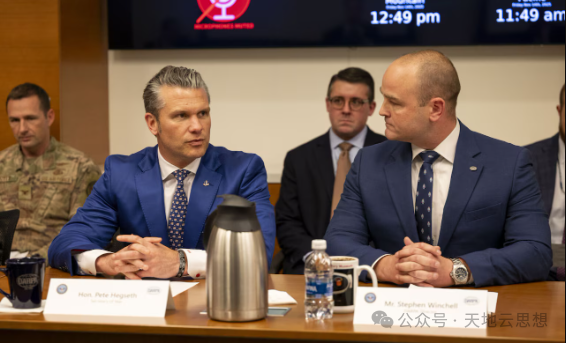
 After meeting with DARPA Director Dr. Stefanie Wich, and project managers to understand how ongoing projects align with his priorities for the department, including restoring warrior spirit, rebuilding the military, and reestablishing deterrence, Austin expressed his impression of what he saw.“This kind of thing is at the core of our advantage,” Austin said, “the best and brightest… come here, choose to serve the nation, and continually push the envelope… solving significant problems. They give leaders more options—that’s the goal: more options, hopefully keeping us out of conflict, deterring adversaries, and ensuring the safety of the American people. What I saw today is the forefront of new options and new capabilities.”
 Austin thanked the DARPA Director and the project managers for introducing him to the current status and capabilities of ongoing projects, expressing gratitude for bringing the best and most advanced capabilities to operational personnel.“As a taxpayer, citizen, and American, I appreciate the existence of such institutions, where patriotic men and women are willing to engage, solve problems, and apply the incredible creativity that America does better than anyone else,” he said.
 Austin added that one of his responsibilities at the Pentagon, as well as one of the responsibilities of Deputy Under Secretary of Defense for Research and Engineering Michael, is to ensure that institutions like DARPA always have the necessary resources to provide operational personnel with the advanced tools needed to conduct operations and win wars.