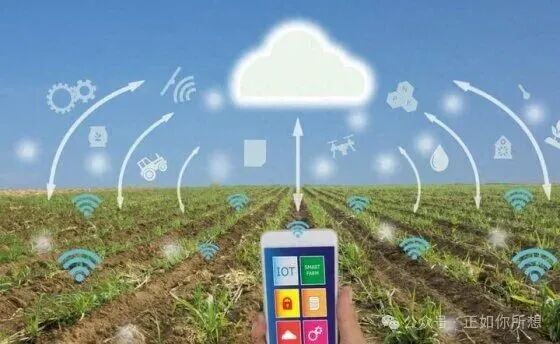
The Agricultural Internet of Things is reshaping the future of farming: smart sensors and AI are ushering agriculture into the 4.0 era.
In this era of digital transformation sweeping across the globe, our farmlands are quietly undergoing revolutionary changes!
Traditional agriculture is experiencing a smart upgrade, and agricultural IoT technology is the core engine of this transformation.
Imagine sensors in the soil working around the clock, with AI systems able to predict crop yields with an astonishing accuracy of 92%. This is not science fiction; it is a technological miracle already realized on our land!
The “nervous system” of digital agriculture has been established.
Walking into a modern farm, you will be surprised to find various micro-sensors scattered throughout the soil, next to crops, and within irrigation systems.
These “little guys” silently collect over 200 key data points daily, including soil temperature and humidity, light intensity, and CO₂ concentration.
Even more impressive, they utilize low-power technologies such as LoRa and NB-IoT, allowing them to operate for 3-5 years on a single charge, perfectly solving the power supply issues in farmlands.
Recently, I visited a smart ranch where electronic ear tags worn by cattle and sheep communicate in real-time with a base station via ZigBee technology. The ranch owner can monitor the location and health status of each livestock simply by checking their phone, showcasing the power of technology!
IoT + AI: Creating Real Value from Data
The strength of these technologies lies in the tangible benefits they bring.
A certain agricultural company’s smart drip irrigation system, combined with soil moisture data, achieves on-demand water supply, with water-saving efficiency reaching 40%.
I also recently experienced a plant protection drone that uses multispectral cameras to assess crop conditions and apply pesticides accurately, reducing pesticide usage by 30%, which is both environmentally friendly and cost-effective!
The transformation in animal husbandry is even more astonishing.
A large livestock group has equipped dairy cows with smart collars that monitor indicators such as rumination frequency and activity levels. AI algorithms can provide a 14-day early warning for disease risks.
What are the results?
Milk production increased by 8%, and veterinary drug costs were directly reduced by 12%.
This is the best proof of how technology changes lives!
I am particularly interested in the agricultural product quality traceability system.
Blockchain + IoT technology has created a “digital ID” for agricultural products, allowing consumers to scan a code to understand the entire process from field to table, knowing exactly what they are eating and where it comes from.
This transparency has led to a 30% premium on products, benefiting farmers and reassuring consumers—a win-win situation!
The future of smart agriculture will be even more exciting.
Looking ahead, the development of agricultural IoT is exhilarating.
The deep integration of 5G and AI is reconstructing agricultural productivity. In a certain experimental field, 5G millimeter-wave technology has achieved millisecond-level data transmission, with pest and disease identification accuracy exceeding 95%.
Imagine when 6G networks combine with quantum computing; data analysis capabilities will soar even higher!
Business models are also innovating rapidly. “Precision Agriculture as a Service” (PAaaS) allows small farmers to access high technology. A digital agricultural service platform has already provided customized services to 200,000 farmers, truly making technology beneficial to the public.
Strong national policy support is also encouraging.
The “Smart Agriculture Action Plan” proposes that by 2025, 80% of towns will be covered by 5G, and 100 AI agricultural parks will be built.
China’s smart agricultural technology has begun to go global, from Southeast Asia to Africa, our drone plant protection and smart irrigation technologies are helping farmers worldwide improve production efficiency.
Standing on the threshold of Agriculture 4.0, I feel that this is not just a tool revolution but a redefinition of the relationship between people and the land. From relying on nature to data-driven precision decision-making, agriculture is becoming smarter, more efficient, and sustainable.
Which of these agricultural IoT technologies do you think is the most disruptive to the development of agriculture in China? Feel free to share your thoughts in the comments!