 Image source: J. Am. Chem. Soc.Introduction:
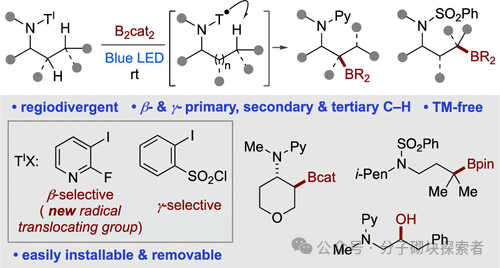
Professor Vladimir Gevorgyan has developed a mild, light-induced, metal-free method for the borylation of β and γ C–H bonds in amines. This method employs a regioselective intramolecular hydrogen atom transfer (HAT) process, successfully obtaining key aminobutyl radical intermediates through commercially available removable iodinated aromatic chains. Notably, this method introduces a novel iodopyridine-based hydrogen atom transfer group that can efficiently capture previously inaccessible β C–H bonds in amines. This versatile and easy-to-operate strategy can broadly activate primary, secondary, and tertiary C–H bonds in acyclic and cyclic secondary amines, providing a new platform for the regioselective and enantioselective synthesis of valuable β- and γ-aminoboronic esters. The practical value of this approach has been fully validated through formal C–H oxidation reactions and various late-stage derivatization experiments.
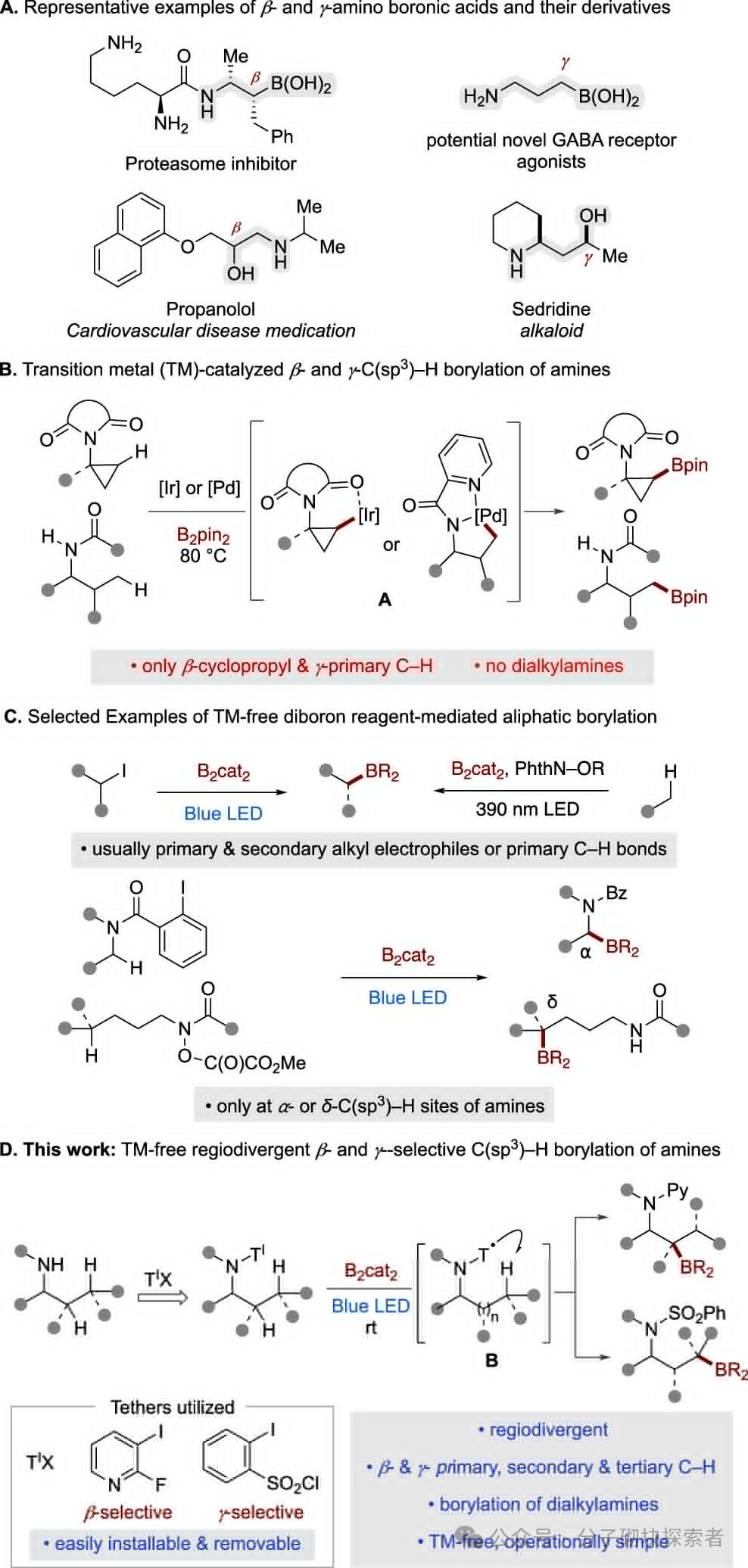
Image source: J. Am. Chem. Soc.
In recent years, metal-free borylation reactions using diboron reagents as radical scavengers have gained widespread attention in organic synthesis, covering the borylation of electrophilic reagents such as halogenated alkanes, as well as unconventional selective borylation of primary C(sp³)–H bonds in aliphatic systems (Scheme 1C). Unlike transition metal-catalyzed C–H functionalization (which is typically limited to primary C–H bonds), the radical C–H functionalization of amines occurs via hydrogen atom transfer (HAT) and tends to favor the activation of weaker secondary and tertiary C–H bonds. However, due to the inherent preferences of radical transfer groups (Scheme 1C), current advancements in amine C(sp³)–H borylation remain limited to the activation of weaker α C–H bonds and remote δ C–H bonds.
Over the past decade, significant progress has been made in achieving regioselective HAT transformations of unactivated C(sp³)–H bonds using removable connecting chains, but existing connecting chains have not effectively realized HAT of β C–H bonds in amines—especially in the presence of more reactive γ C–H bonds. We hypothesized that commercially available 3-iodopyridine-linked amine substrates could achieve elusive secondary β-C–H bond selective activation through a pyridine-based radical-mediated 1,5-HAT process (Scheme 1D, “B”). For the synthesis of γ-aminoboronic esters, we plan to use a 2-iodobenzenesulfonyl connecting chain, which is known to preferentially undergo 1,7-HAT at the γ C–H bond of aliphatic amines. Potential risks of this strategy include premature borylation of highly reactive aryl radicals, cyclization or desaturation of the transferred alkyl radicals, and hydrogenation-dehalogenation due to intermolecular HAT. Therefore, despite recent advancements in aryl radical-mediated remote C–H functionalization studies, successfully capturing these alkyl radicals (Scheme 1D, “B”) for intermolecular functionalization remains a challenge.
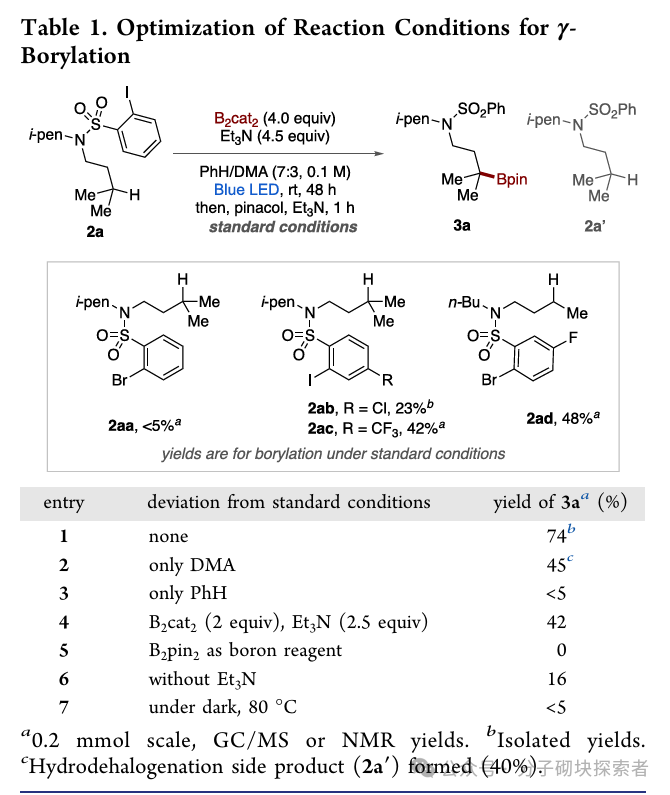
Image source: J. Am. Chem. Soc.
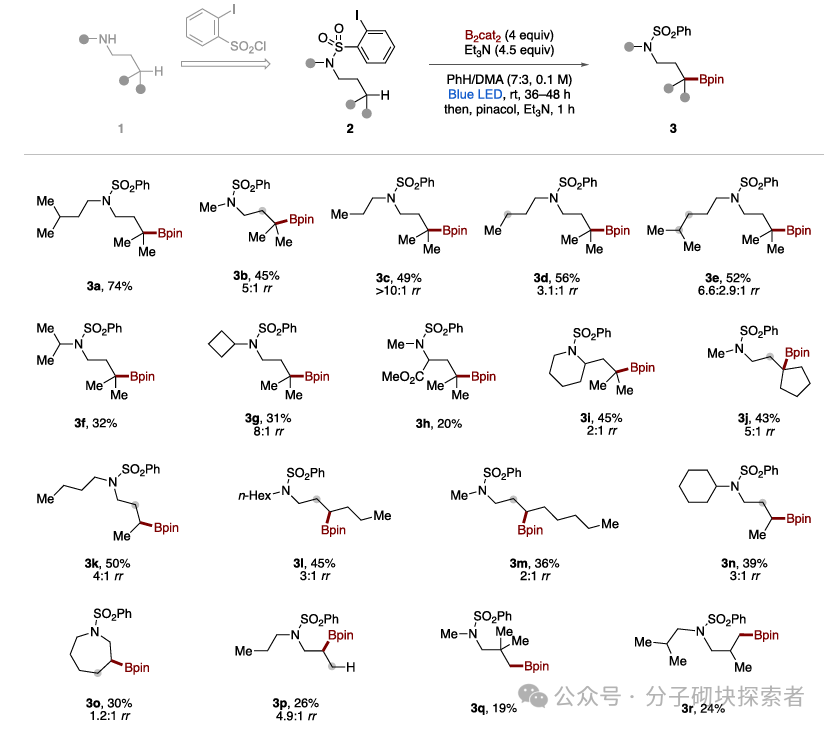
Image source: J. Am. Chem. Soc.
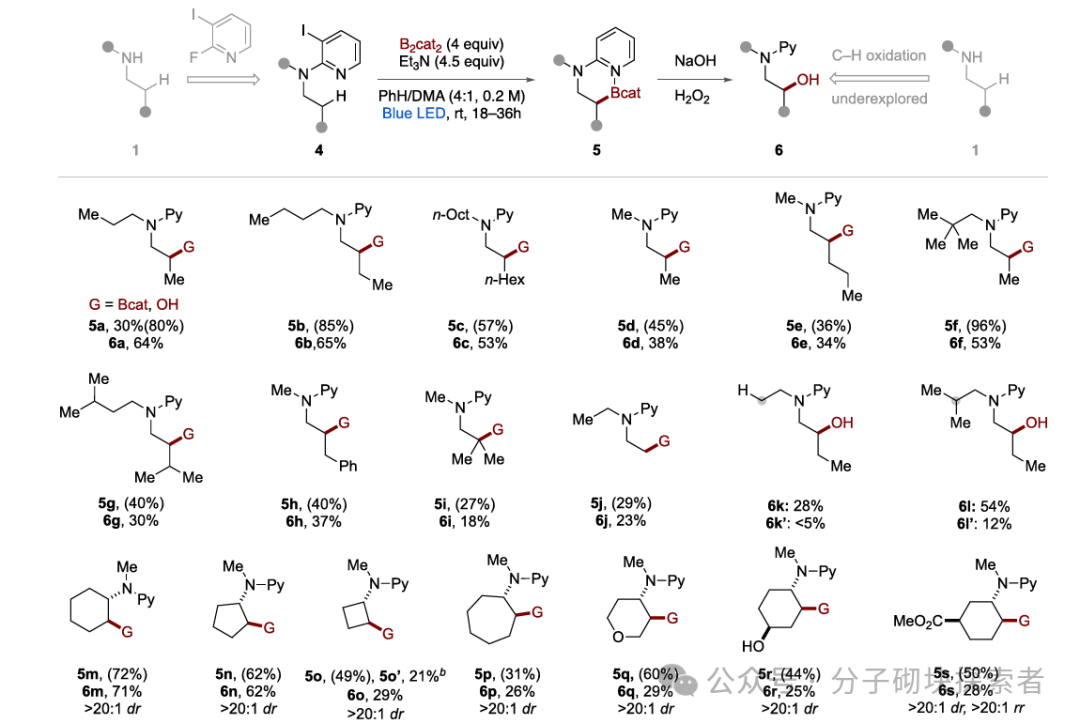
Image source: J. Am. Chem. Soc.
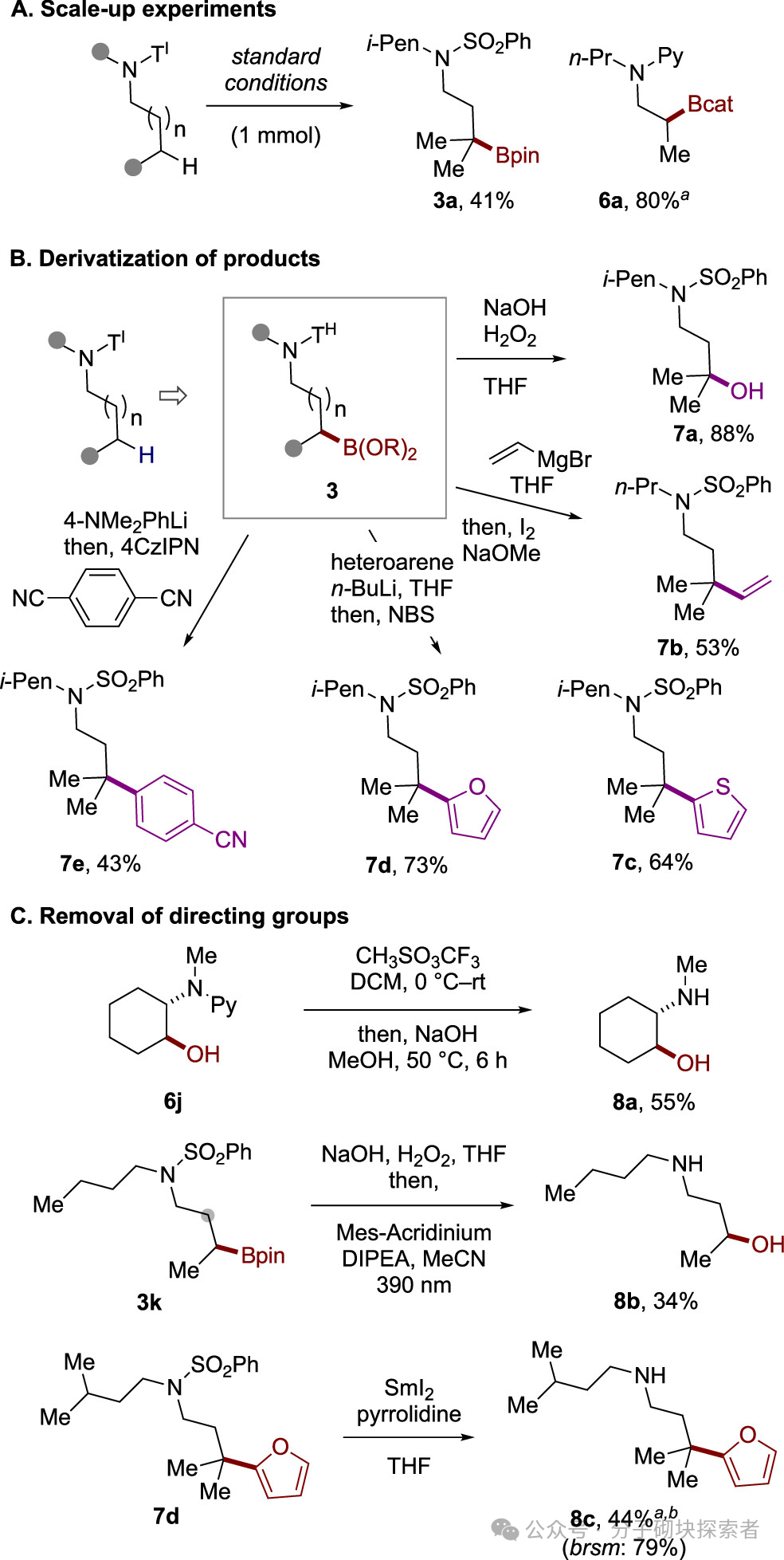
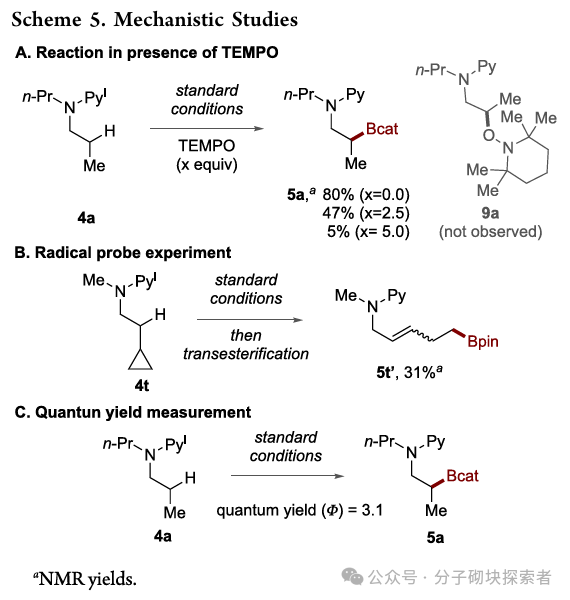
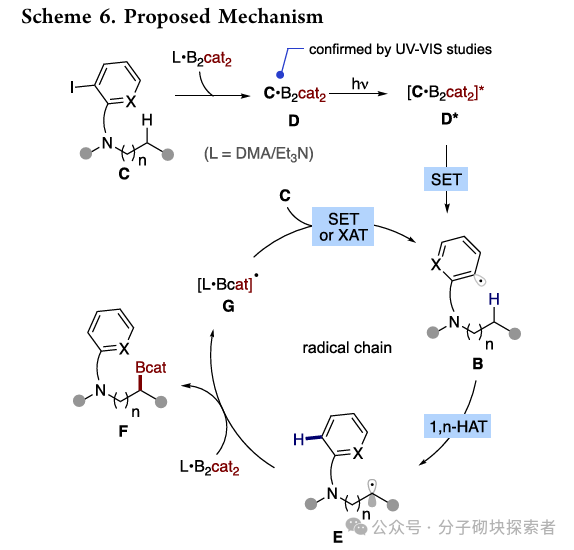
Image source: J. Am. Chem. Soc.
Conclusion:
A universal metal-free strategy has been developed to achieve site-selective β and γ C(sp³)–H borylation of aliphatic secondary amines. This approach generates aryl radicals gently through light-induced diboron reagents and utilizes commercially available removable iodinated aromatic chains to mediate a radical relay process, successfully obtaining the migrated alkyl radicals. Notably, this study introduces 3-iodopyridine as a novel radical transfer group that can selectively activate previously inaccessible β C–H bonds in secondary amines. This method does not require photosensitizers, transition metal catalysts, or harsh reagents, overcoming the long-standing limitations of classical chelation-controlled strategies and direct borylation methods, particularly in the borylation of β and γ secondary/tertiary C–H bonds in amines. This highly site-selective and enantioselective method provides a complementary platform for the efficient site-selective C–H borylation of a wide range of secondary amines and further enables formal C–H oxidation reactions and late-stage derivatization applications.
References:
Transition-Metal-Free Site-Selective β- and γ-C–H Borylation of Aliphatic Amines
J. Am. Chem. Soc. 2025, 147, 40064−40070
https://doi.org/10.1021/jacs.5c12618