“A fully charged battery brings joy, but a battery kept at full charge for a long time becomes waste.”
As an editor with years of experience in the automotive media industry, I am Zhang Keji, and today I want to delve into a controversial technical topic—the real impact of keeping lithium iron phosphate (LFP) batteries at high State of Charge (SoC) for extended periods. This issue not only relates to the daily user experience of electric vehicle owners but also directly affects the vehicle’s resale value and operating costs.Understanding the Working Mechanism of Lithium Iron Phosphate Batteries and the Concept of SoC
First, we need to understand what SoC is. SoC, or State of Charge, refers to the percentage of the battery’s current stored energy relative to its total capacity. When we talk about high SoC, we usually refer to a charge state of over 80%, while a fully charged state is 100% SoC.
Lithium iron phosphate batteries, as the mainstream power battery technology today, operate based on the migration of lithium ions between the positive and negative electrodes. During charging, lithium ions are released from the lithium iron phosphate positive electrode, migrate through the electrolyte to the graphite negative electrode, and embed themselves there. During discharge, this process is completely reversed.This reciprocal migration of lithium ions leads to distinctly different chemical reactions at different voltage states.The Internal Changes of Batteries at High SoC
When lithium iron phosphate batteries are at high SoC, the internal voltage of the battery will correspondingly increase. According to the latest electrochemical research, within the SoC range of 75%-100%, a series of irreversible chemical reactions occur inside the battery. These reactions mainly focus on the following aspects:
The decomposition of the electrolyte is the primary issue. At high voltage states, the organic solvents in the electrolyte undergo oxidative decomposition, producing various harmful byproducts. These byproducts can form an additional SEI (Solid Electrolyte Interphase) film on the surface of the negative electrode, leading to increased internal resistance and reduced effective capacity of the battery. More seriously, the abnormal thickening of this SEI film is irreversible and will permanently degrade battery performance.
The formation of lithium dendrites is another critical issue. During rapid charging at high SoC, the concentration of lithium ions on the surface of the negative electrode increases sharply. Some lithium ions do not have time to embed into the graphite structure and will precipitate on the surface as metallic lithium, commonly known as lithium dendrites.These needle-like metallic lithium not only consume active lithium but may also puncture the separator, posing safety hazards.The Amplifying Effect of Temperature Factors
Temperature significantly amplifies the degradation of batteries at high SoC. Research data shows that at an ambient temperature of 40°C, the oxidation rate of the electrolyte in a fully charged lithium iron phosphate battery increases by 300% compared to room temperature. This explains why electric vehicles left fully charged during the hot summer months often experience sudden drops in range.
Especially in some southern cities, where ground temperatures often exceed 50°C in summer, electric vehicles parked in outdoor lots can easily have battery temperatures exceeding 40°C. If the battery is at full charge at this time, it creates a “deadly combination” of high temperature and high SoC, causing irreversible damage to battery life.The Technical Considerations Behind Charging Recommendations from Automakers
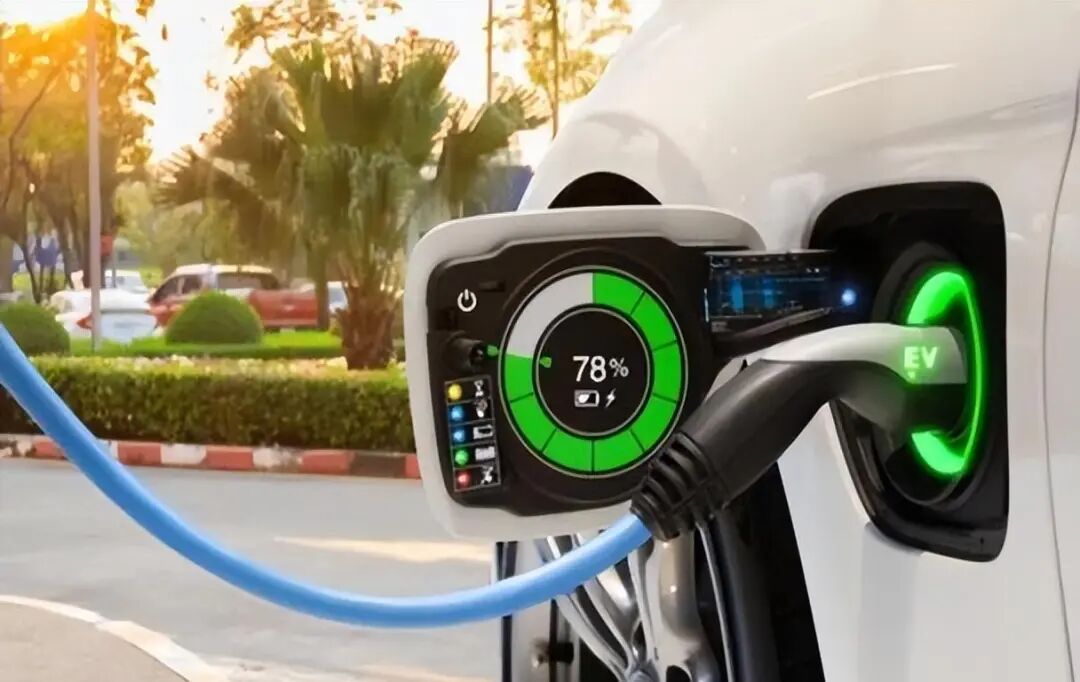
You may wonder why Tesla recommends that Model 3 and Model Y users with LFP versions charge to 100% once a week, and Ford also suggests charging to 100% once a month. Isn’t this contradictory to the principle of avoiding high SoC?This involves the technical requirement for BMS (Battery Management System) calibration. One characteristic of lithium iron phosphate batteries is that their discharge voltage curve is relatively flat, with minimal voltage variation in the 20%-80% SoC range. While this is beneficial for providing stable output power, it poses challenges for the BMS’s SoC estimation.
The BMS needs to recalibrate the actual capacity of the battery through full charge or full discharge to ensure the accuracy of the range display. However, this calibration does not need to be performed frequently; in fact, a full charge calibration once a month is sufficient to maintain the accuracy of the BMS, rather than charging to 100% every day.Actual Degradation Data and User Experience
According to testing data released by CATL, lithium iron phosphate batteries charged in the 25%-75% range can maintain over 80% capacity after 4000 cycles. In contrast, if frequently cycled in the 75%-100% range, the capacity retention drops to the same level after only about 1500 cycles. What does this mean? Assuming a user charges once a day, under a high SoC usage pattern, the battery health will drop below 80% in about 4 years.
A more intuitive representation is the degradation of range. A real data point from a Model 3 owner shows that in the first year of ownership, charging to 100% daily, the range decreased from the nominal 468 kilometers to about 420 kilometers, a reduction of over 10%. However, after adjusting to an 80% daily charging limit, the rate of degradation significantly slowed in the second year.

Scientifically Formulating the Optimal Charging Strategy
Based on extensive experimental data and user feedback, the currently widely accepted optimal charging strategy is: set the charging limit for daily commuting at 80%-90%, and only charge to full before long trips. For vehicles that need to be parked for extended periods, it is recommended to keep the charge level between 50%-60%.
The scientific basis for this strategy is that the 50%-60% SoC range is precisely where lithium iron phosphate batteries are most stable, with moderate internal voltage and minimal side reactions, which helps extend battery life. The 80%-90% daily charging limit meets most travel needs while effectively avoiding the damage caused by high SoC.The Impact of Battery Health on Resale Value in the Used Car Market
The health of the battery significantly affects the resale value of electric vehicles. When battery health drops below 80%, the valuation of used cars typically halves. This is because 80% is viewed as the critical point for battery replacement, and electric vehicles below this threshold will perform significantly worse than expected in terms of range.
Some used car dealers have revealed that battery health is the primary consideration when acquiring electric vehicles. An electric vehicle that has been used for 3 years with a battery health of over 95% may be valued at over 30% higher than the same model with 85% health.This price difference is often enough to purchase a high-end audio system or perform a complete vehicle modification.
Trends in Technological Development and Future Outlook
It is worth noting that with the continuous advancement of battery technology, the new generation of lithium iron phosphate batteries has shown significant improvements in high SoC tolerance. New technologies such as BYD’s blade battery and CATL’s Kirin battery have optimized battery structure and electrolyte formulation, alleviating the degradation issues at high SoC to some extent.
At the same time, intelligent BMS systems are also evolving, capable of more precisely controlling the charging process and reducing the time spent at high SoC. Some automakers have begun integrating adaptive charging algorithms into their BMS, automatically adjusting charging strategies based on user habits and environmental temperatures.Conclusion and Recommendations
As a long-time observer of new energy technology in the automotive media, my advice is: approach the high SoC issue of lithium iron phosphate batteries rationally, neither overly anxious nor completely dismissive. In daily use, appropriately control the charging limit, avoid long-term full charge storage, and regularly perform full charge calibration to effectively extend battery life.
Most importantly, develop a charging strategy based on your actual driving needs. If your daily commute is less than 100 kilometers, there is no need to charge to full every day.What you save is not just electricity costs, but also the substantial future costs of battery replacement.
Do you think these charging strategies are helpful for your driving experience? How do you balance range needs and battery protection in actual use?