At the SID 2025 Technical Symposium, AUO Corporation’s Dr. Jia-Hong Ye team unveiled a new liquid crystal display (LCD) technology achievement. The content shows that the team has developed an integrated new light-shielding metal and sub-pixel design technology, successfully enhancing the transmittance and energy efficiency of a 16 inch WQXGA (2560×1600 resolution) LCD to new heights, injecting momentum into the development of green low-power laptops (Green NB).
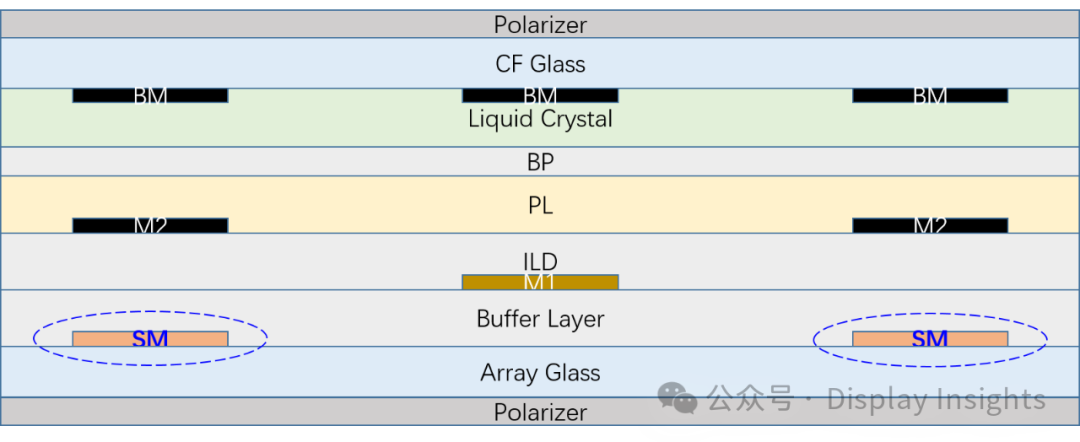
Figure 1. AUO uses a new alloy to create the SM layer in the LCD.
In today’s era of digitalization and mobile office prevalence, laptops have become essential for people’s work and life, with users increasingly demanding better display quality and battery life. Traditional LCD technology, while widely used in displays, still has room for improvement in transmittance and power consumption control. The core breakthrough of AUO’s research lies in the innovative use of a high reflectivity new alloy (new-Alloy) as the light-shielding metal (SM, Shielding Metal), combined with an optimized sub-pixel design, achieving a leap in LCD performance from both material and structural perspectives.
From a material performance standpoint, the new alloy light-shielding metal exhibits particularly impressive results. Through testing with a Perkin Elmer Lambda 800 ultraviolet/visible/near-infrared spectrophotometer, it achieves an average reflectivity of 89.6% in the visible light wavelength range of 400nm – 800nm, which is 1.67 times higher than the reflectivity of traditional molybdenum (Molybdenum), which is 53.7%. A higher reflectivity means more efficient recovery of light emitted from the backlight unit (BLU), reducing light loss.
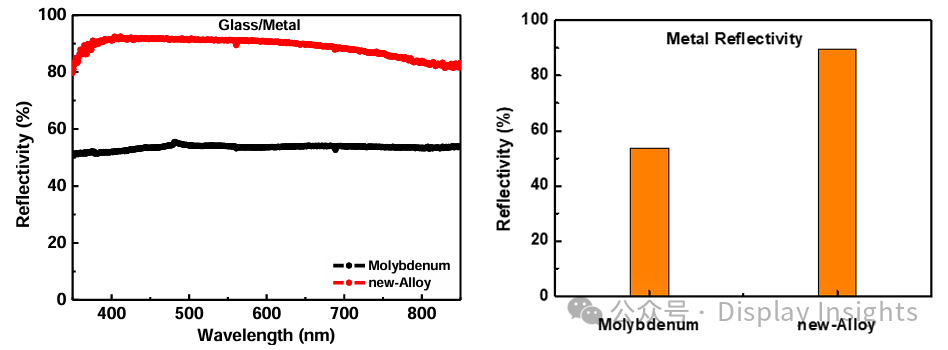
Figure 2. Comparison of performance parameters of different light-shielding metal materials.
At the same thickness (less than 1000Å), the optical density (OD) of the new alloy reaches 3.307, higher than that of molybdenum metal at 2.306, effectively blocking bottom light interference on the thin-film transistor (TFT), preventing leakage current and ensuring stable display quality. Additionally, atomic force microscopy (AFM) tests show that the surface average roughness (Ra) of the new alloy film before and after rapid thermal annealing (RTP) treatment at temperatures below 600℃ is only 1.49nm and 2.64nm, respectively. The extremely low roughness reduces the risk of defects at the interface between the light-shielding metal and the buffer layer, laying a solid foundation for subsequent device fabrication.
In terms of technical integration and performance optimization, AUO has combined this high reflectivity new alloy light-shielding metal with low-temperature polycrystalline silicon thin-film transistor (LTPS TFTs) backplane technology, fast response advanced fringe field switching (AFFS) liquid crystal technology, and multiplexer circuit data driver chips to create a high-performance 16 inch WQXGA LCD product. This product adopts an innovative sub-pixel design, further enhancing light utilization by adding new alloy light-shielding metal areas of different widths beneath the data lines. Among them, Chip 2 design (3μm wide light-shielding metal) and Chip 3 design (5.5μm wide light-shielding metal) sub-pixels achieve brightness gains of 101.96% and 103.66% respectively in optical simulations compared to the traditional Chip 1 design.
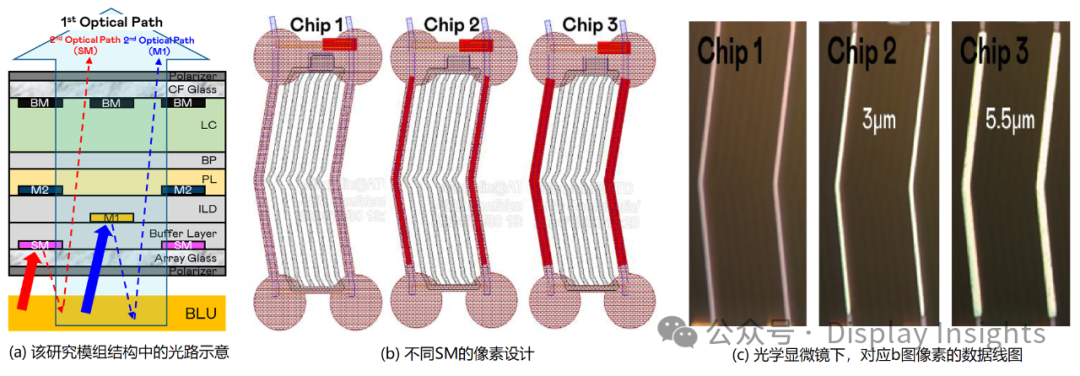
Figure 3. New optical path schematic and different SM pixel design.
Actual test data also confirms the superiority of this technology. Measurements using a goniophotometer (DMS 903) and a luminance meter (Konica Minolta CA – 410) found that panels using Chip 2 and Chip 3 designs achieved actual brightness gains of 101.86% and 103.31%, respectively, closely matching the simulation results. While maintaining 500 nits brightness and 1800:1 high contrast, the total power consumption of the panel decreased from the traditional design of 5.8W to 5.6W, achieving a 3.4% energy saving, perfectly aligning with the trend of green low power consumption. It is worth mentioning that despite the increased light-shielding metal area, the sub-pixel aperture ratio of the LCD was not affected, and the display remains clear and sharp with excellent color performance.
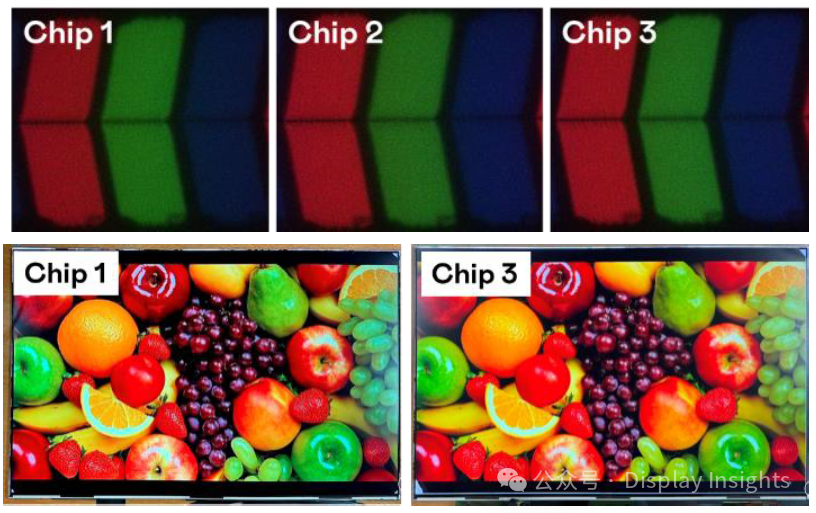
Figure 4. 16 inch WQXGA LCD: Featuring a new alloy light-shielding metal (new-Alloy SM) and a new sub-pixel design, along with sub-pixel images under optical microscopy.
The integrated new light-shielding metal and sub-pixel design technology developed by AUO not only achieves multiple breakthroughs at the technical level but also demonstrates immense value in practical applications. For laptop users, products equipped with this technology will offer superior display quality, longer battery life, and lower power consumption, which can reduce device heating and enhance user comfort. From an industry perspective, this technology opens new pathways for LCD in its competition with OLED , allowing LCD to maintain high image quality while achieving significant energy efficiency advantages through cost-effective materials and structural optimizations, providing new solutions for the green sustainable development of the display industry. In the future, with further promotion and iteration of this technology, it is expected to be applied in more display fields, pushing global display technology towards a more efficient and energy-saving new stage.
Source:Jia-Hong Ye, “Integrated Novel Light-Shield Metal with Sub Pixel Design Technology for High Transmittance Liquid Crystal Display“
To follow this public account, please click below↓↓↓