In the field of industrial automation,
being able to write a PLC program that makes equipment operate is just the beginning.
However, being able to write an excellent program that is stable, efficient, and easy to maintain is the key to distinguishing an ordinary electrician from a programming expert.
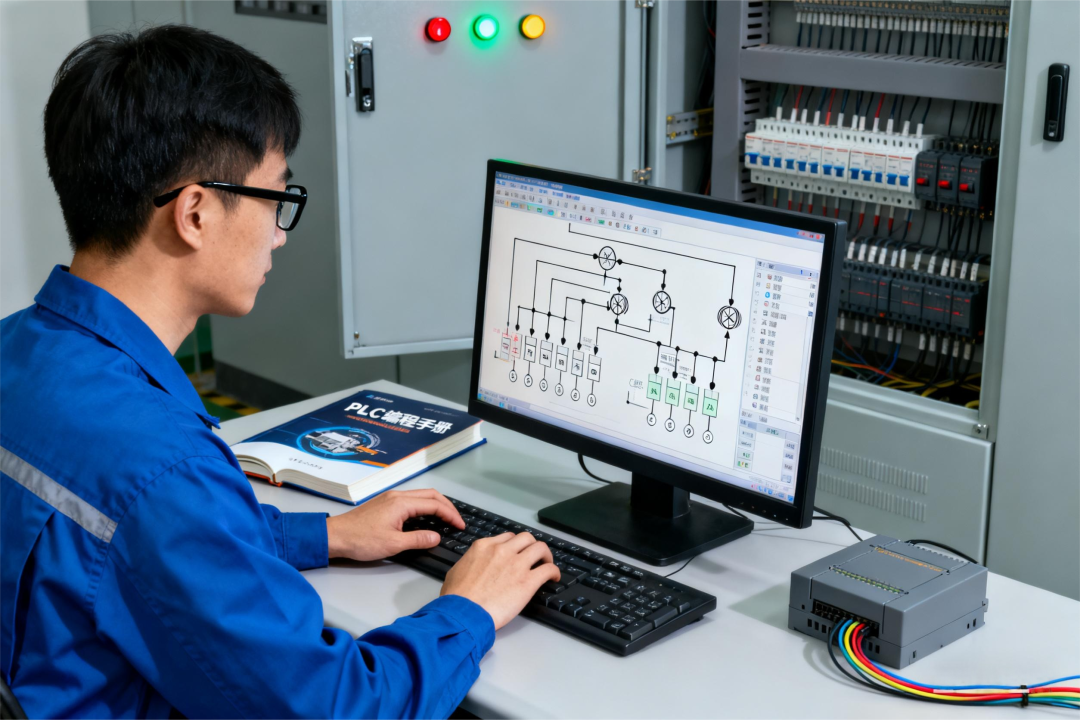
So, what are the characteristics of a top-notch PLC program?
Today, we summarize 6 core standards,
let’s check and see if you have passed?
01Correctness — The Foundation of the Program
-
Core: The program must meet 100% of the control process requirements, ensuring that the equipment operates correctly as expected.
-
Interpretation: This is the bottom line of the program. If it cannot perform the correct actions, everything else such as readability and brevity is irrelevant. It directly determines the cost of the debugging phase and the success or failure of the project.
02Reliability — The Armor of the Program
-
Core: Not only must it be “correct,” but it must also be “stable.” It should withstand the impact of abnormal conditions and illegal operations.
-
Interpretation: A good program can intelligently identify and safely handle situations such as sudden power outages and operator errors (like pressing buttons out of order), rather than simply “crashing.” The extensive use of interlocking logic is a key means to enhance reliability.
03Readability — The Business Card of the Program
-
Core: The program should be like a clearly structured essay, easy to understand and maintain.
-
Practical Tips:
-
Structured and Modular: Functional blocks should be clear and hierarchical.
-
Symbolic Programming: Use meaningful symbolic names for variables instead of dry addresses.
-
Regular Allocation: I/O points and internal addresses should be allocated regularly, with “buffer margins” reserved for expansion.
-
Immediate Setup: Parameters should be set nearby before use to avoid searching everywhere.
-
Detailed Comments: Write a “user manual” for the code.
04Brevity — The Efficiency of the Program
-
Core: Strive for concise code while ensuring functionality.
-
Expert Secrets:
-
Macro Level: Use subroutines and interrupts to reuse code.
-
Micro Level: Make good use of “batch processing” instructions (like word operations, block transfers) to replace numerous scattered instructions, and use high-level instructions instead of basic ones.
05Time-saving — The Performance of the Program
-
Core: Optimize the program scan cycle to improve response speed.
-
Interpretation: Brevity does not equal time-saving. The key to saving time lies in optimizing algorithms and process control. Ensure that critical tasks are prioritized, non-essential tasks are processed in a time-sharing manner, and avoid excessive maximum scan times for the program, allowing the PLC to respond faster.
06Modifiability — The Flexibility of the Program
-
Core: The program should easily adapt to changes in process parameters and adjustments in equipment functions.
-
Design Philosophy:
-
Separation of Parameters and Logic: Place frequently modified parameters (like speed, time) in dedicated data blocks, called by symbolic names.
-
Intermediate Layer Isolation: Use intermediate variables (like M points, W points) as logical bridges to reduce direct binding between I/O points and core logic.
-
Plugin Design: Functional modules should be like building blocks, easy to plug and play, facilitating subsequent addition or removal of functions.
 Becoming a PLC programming expert goes beyond just achieving functionality. It is more like a balanced art, requiring finding the best balance between correctness, reliability, readability, efficiency, brevity, and flexibility.I hope these six standards can serve as a ruler on your programming journey,helping you continuously improve,and transition from a “code worker” to a true “system architect”!
-END-
Central China Advanced Vocational Technical School
 Skills Build Talent, Skills Serve the Nation
Study at Central China Advanced Vocational Technical School
 If you find this useful, please give it a thumbs up!
↓ Click “Read Original” to learn more about the course details~