In today’s manufacturing industry, automated control is indispensable. From simple single-point PLC “start-stop” operations to large-scale, long-distance SCADA (especially in oil and gas transportation) monitoring and control, there is a significant application of DCS, SCADA, and PLC systems. Although DCS and SCADA belong to the same type of control system and have many differences, their core content is essentially the same. Therefore, today we will discuss the differences between DCS and PLC in the simplest terms.If we compare PLC to “special forces,” then DCS can be likened to a “group army,” highlighting the difference between individual combat and group operations. This aligns perfectly with the modern design philosophy of DCS, which has evolved from the original DDC to centralized control, and now to the current model of “distributed control with centralized management,” becoming a complex control network that integrates multiple controllers, sensors, and actuators.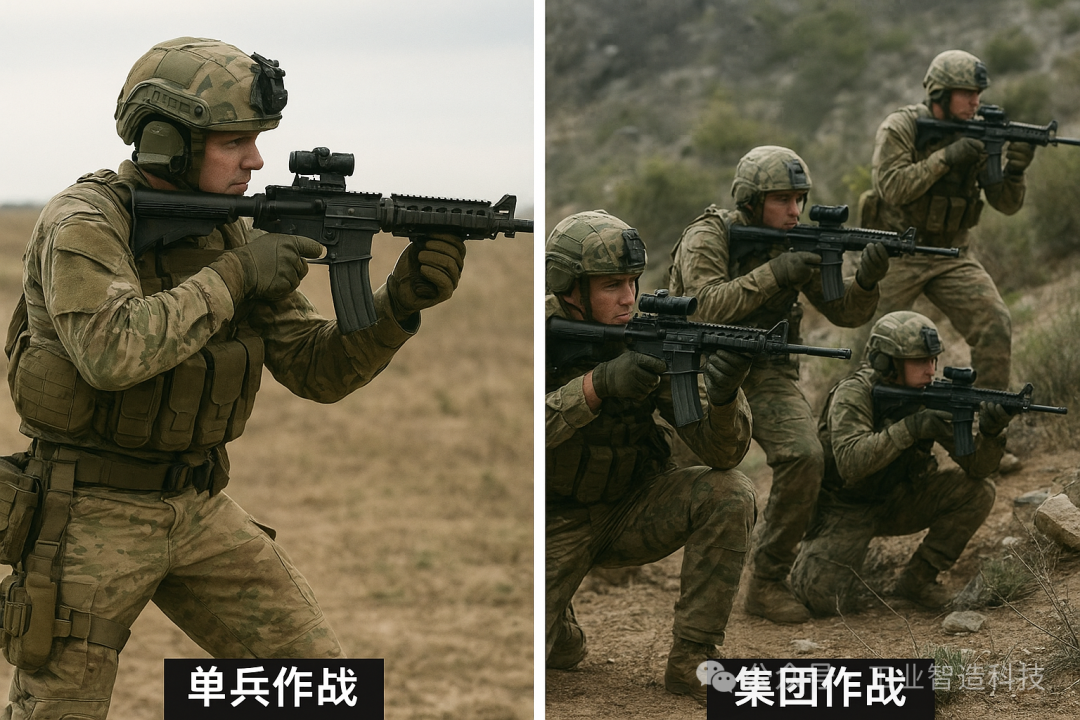 Among these, DCS must include several important components, including IO modules for transmitting inputs and outputs to the control objects, a transmission network for relaying upstream control or monitoring signals from the source to the IO modules, an engineer station for DCS maintenance and configuration, and an operator station for daily monitoring and controlling production and processes. Additionally, DCS has its own historical server for direct access to the upper network and retrieval of past data, similar to SCADA.In contrast, PLC does not possess such a complex structure. Taking the Siemens S7-200 SMART as an example, its key components include IO, serial ports, network ports, and CPU, and it does not actually have operator stations, engineer stations, communication networks, or historical servers (although PLC has its own RAM and ROM, it is not the same as a server). Therefore, the two cannot be directly compared. However, the boundaries between PLC and DCS are gradually becoming blurred, with many functions being interchangeable, adding more convenience when using both. Furthermore, the programming languages used for configuration are also different. For instance, PLC was introduced to completely replace the large-scale relays used in the 20th century, thus it employs ladder logic to replace the relay routes and switches, while DCS uses Function Block Diagrams (FBD) from its library, where function blocks are dragged out and connected with lines during configuration. Therefore, the programming languages of the two are also not the same.