
Malocclusion is one of the most common facial deformities, affecting the aesthetics and function of the jaw, and even impacting the psychological health of patients. Depending on the severity of the malocclusion, treatment options can be categorized into orthodontic treatment, surgical treatment, and combined orthodontic-surgical treatment. There are numerous classification methods for malocclusion, which vary significantly, necessitating the development of personalized surgical plans based on the specific conditions of the patient to achieve a balance between aesthetic harmony and structural stability.
For complex dental and facial deformities, 3D digital scanning equipment is utilized to obtain three-dimensional data of the dental and facial structures. This data, combined with imaging information, allows for the measurement and analysis of the deformity. Through multidisciplinary consultations, personalized diagnosis and treatment plans are developed for patients. Advanced digital technologies can quickly simulate dental corrections and orthognathic surgery, predicting treatment outcomes and allowing patients to visualize the final results that typically take three years to achieve before the actual treatment begins.
Based on digital design and 3D printed surgical guides and fixation plates, precise osteotomy and accurate positioning of the fixation for dental and facial deformities can be achieved, ensuring the reliability and precision of surgical treatment. Subsequently, individualized treatment for dental and facial deformities can be enhanced through techniques such as fat grafting and contour shaping. Endoscopic-assisted transoral distraction osteogenesis for severe pediatric dental and facial deformities features minimal trauma and concealed scarring, which is significant for the physical and mental health of patients.

Figure 1 Preoperative MDT Consultation
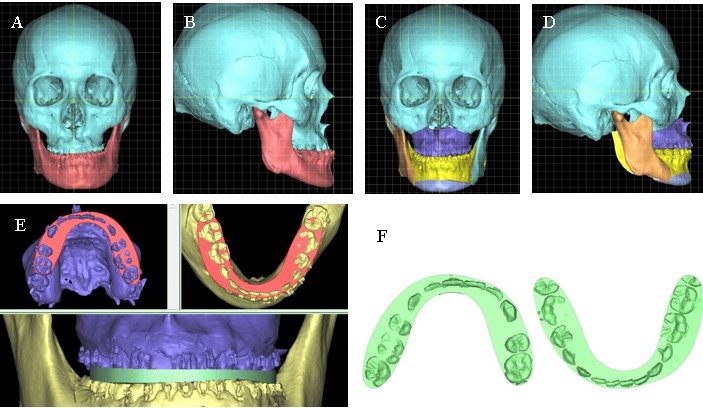
Figure 2 Preoperative Computer Simulation of Facial Shape
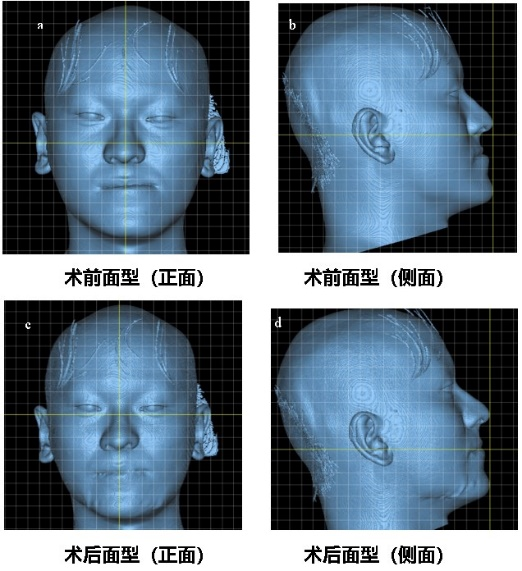
Figure 3 Facial Shape Prediction
The development direction and degree of deformity of the upper and lower jaw bones in patients with facial deformities vary, making it particularly important to develop personalized surgical plans. Currently, computer simulation and 3D printing technology can be utilized, in collaboration with orthodontists, to analyze the patient’s facial shape and occlusion preoperatively, create jaw plates, and surgical osteotomy guides to enhance the precision of the surgery; thus, formulating personalized surgical plans suitable for the patient to achieve the best treatment outcomes.
END
Contributed by丨Trauma and Plastic Surgery, Cui Jiangtao
Edited by丨Chen Yazhao
Chief Editor丨Liu Lu