Abstract
|
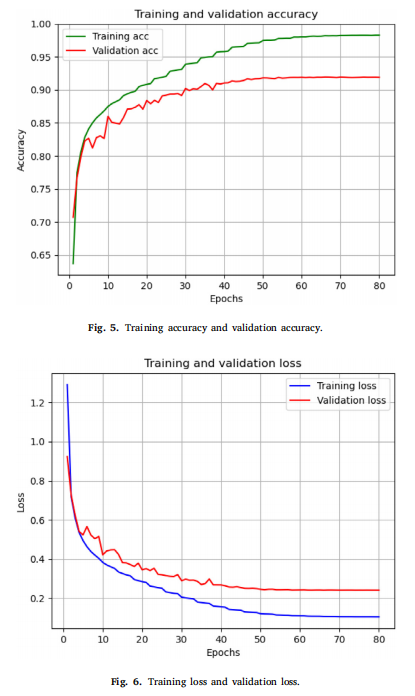
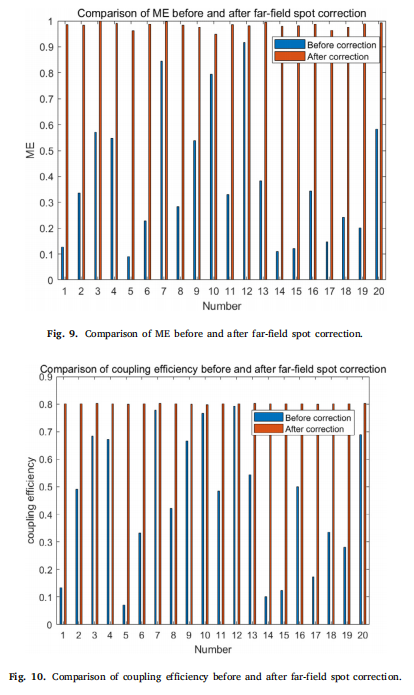
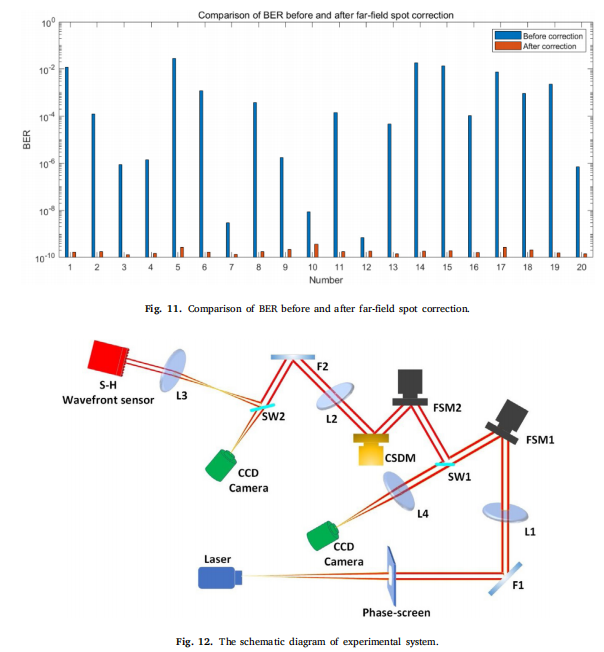
The performance of Free Space Optical Communication (FSOC) is often affected by atmospheric turbulence. Sensorless Adaptive Optics (SLAO) systems are an effective method to overcome the effects of atmospheric turbulence, and the performance of their control algorithms directly determines whether the system can effectively correct wavefront aberrations. This study proposes the use of Residual Networks (ResNet) to replace traditional control algorithms, significantly improving the real-time performance of the FSOC system by reducing the number of iterations. The final trained model achieved an accuracy of 0.98 on the training set and 0.92 on the test set. Simulation results indicate that the Stochastic Parallel Gradient Descent (SPGD) algorithm requires 700 times the number of iterations and at least 500 iterations to achieve performance comparable to ResNet. We experimentally validated the feasibility of the ResNet model. |
Content
Conclusion
|
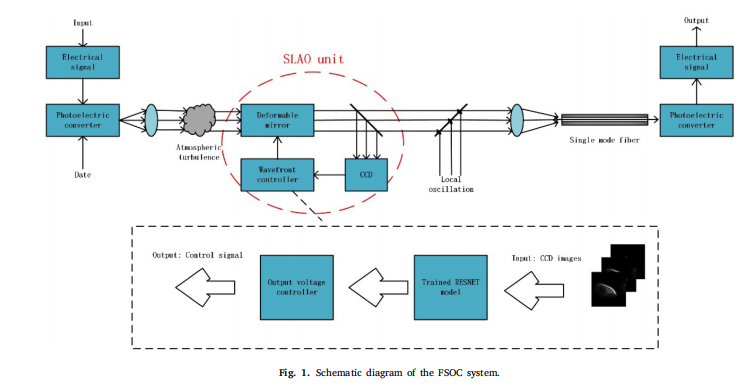
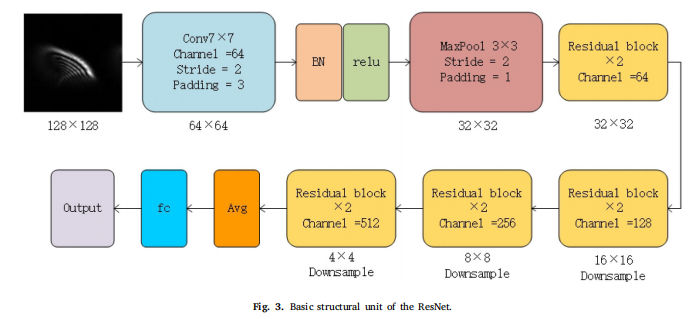
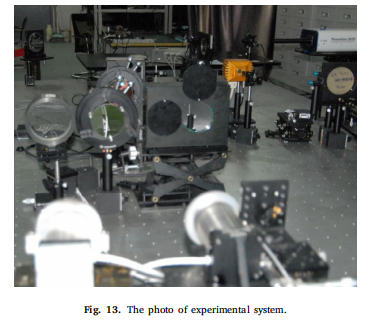
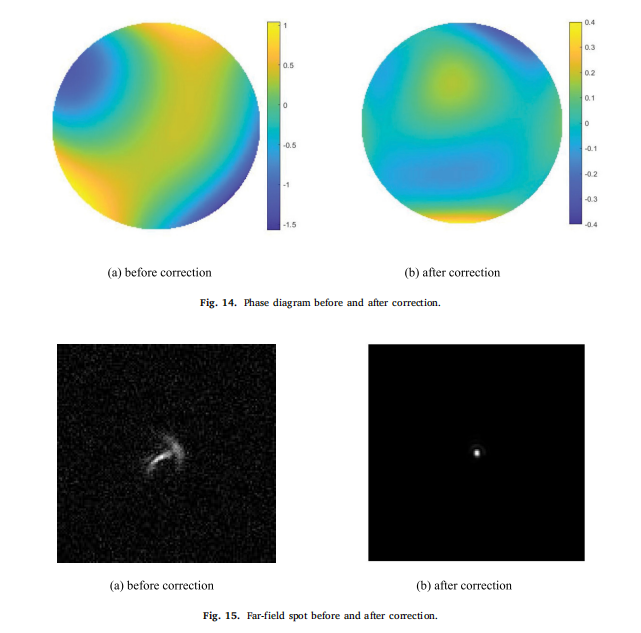
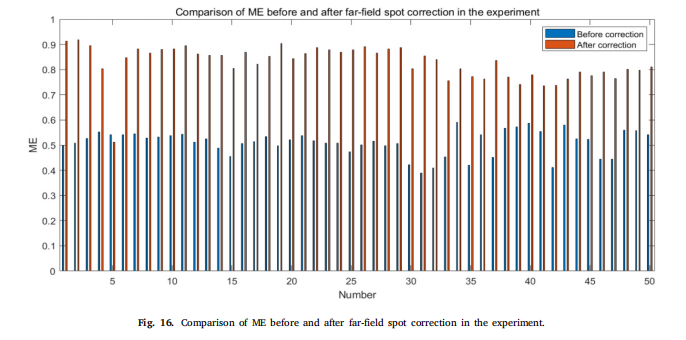
This study applies ResNet as a control algorithm in the Adaptive Wavefront Correction (SLAO) system for Free Space Optical Communication (FSOC) to measure and correct wavefront aberrations. By training a carefully designed ResNet model, this method can directly obtain control signals for the Deformable Mirror (DM) from CCD images. Compared to our previous research, this method avoids iterative calculations and effectively enhances the real-time performance of the FSOC system. Simulation results show that the SPGD algorithm requires 700 times the number of iterations and at least 500 iterations to reach the performance level of ResNet. The ResNet-based SLAO system control algorithm significantly improves the real-time performance of the FSOC system, providing important references for future FSOC system design. Additionally, we can create more targeted datasets for offline training based on actual engineering scenarios to optimize the correction effects of the ResNet algorithm. After verifying the model’s classification ability on a self-made experimental platform, we analyzed the experimental results and existing issues. We believe that the method of dividing the fourth and fifth-order Zernike coefficient intervals in the training model dataset needs improvement, focusing on the turbulence intensity characteristics in weak and moderate turbulence environments. Therefore, how to use ResNet as a wavefront correction control algorithm in strong turbulence environments remains one of the main challenges we face. A more optimal solution currently is to combine ResNet with traditional algorithms like SPGD: using traditional control algorithms to handle a few anomalies caused by inaccurate classification by the ResNet algorithm or strong turbulence interference, while allowing ResNet to manage moderate to weak turbulence and most conventional scenarios. This combined approach ensures the real-time performance of the front-end signal control (FSOC) system while further enhancing wavefront correction effects and system stability. This is indeed the focus of our future research direction. |
| For submissions, please contact the editor via WeChat: 13625574907 |