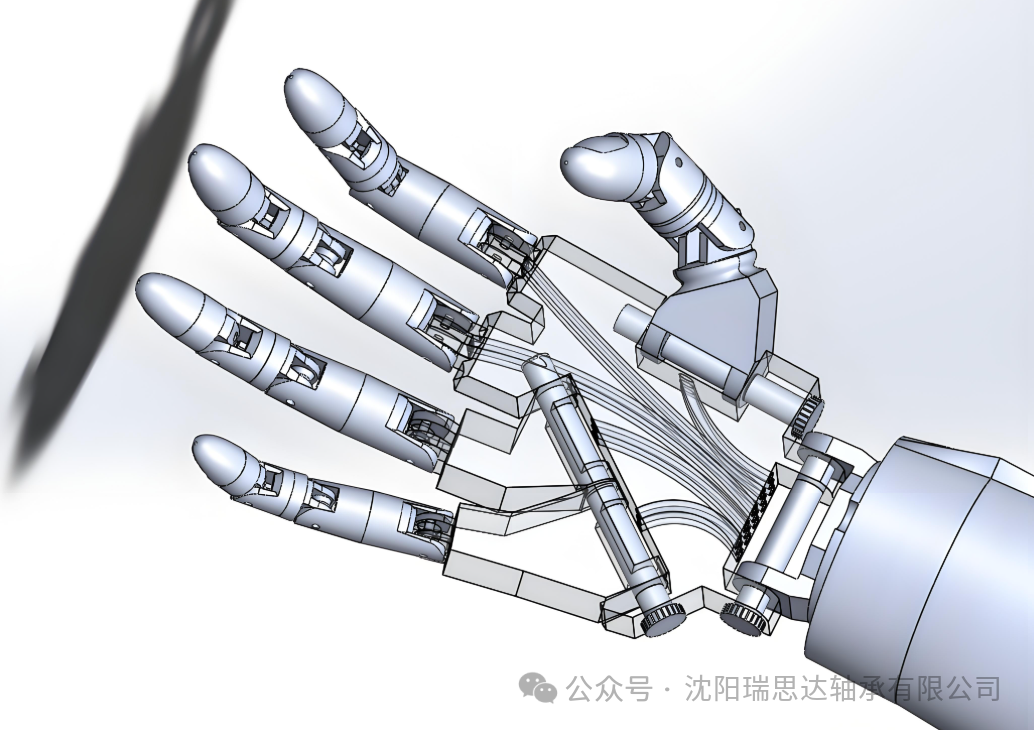
In robotic sensing technology, micro precision bearings are key foundational components for achieving highly dexterous movements. These bearings typically feature inner diameters on the millimeter scale and compact structural designs, making them widely applicable in the finger joints and link mechanisms of humanoid robotic hands, enabling smooth and reliable motion in confined spaces. The bearing structures are often categorized based on application needs into open and shielded types: open designs help reduce friction or accommodate specific lubrication schemes, while shielded types effectively block dust and debris, protecting sensitive actuators. With low friction coefficients and high precision tolerances, these bearings significantly enhance the smoothness of movement and operational accuracy of end effectors such as robotic fingers and grippers.
Meanwhile, force and torque sensing elements further enhance the robot’s perception capabilities. For example, some miniature six-dimensional force/torque sensors are extremely small and can be embedded in the fingertips of robotic hands to directly detect forces and torques in three directions, outputting digitally calibrated and temperature-compensated signals. These sensors feature high resolution, low noise, and large load capacities, ensuring lightweight structures while providing precise tactile feedback and force control, suitable for applications with stringent size and response performance requirements.
In robotic systems, the integration of bearing and sensing technologies supports various high-end applications. For instance, in medical robots, ultra-thin bearings help achieve miniaturization and low-profile designs of instrument joints, while integrated force sensors at the end provide real-time tactile information and force limitation functions to doctors. The fingertips of humanoid robots also rely on bearings for flexible movement, utilizing embedded sensors for fine manipulation and slip detection. Additionally, in the development of small aircraft, these micro bearings and micro force sensing technologies can be used for multi-axis force measurement and stability analysis.
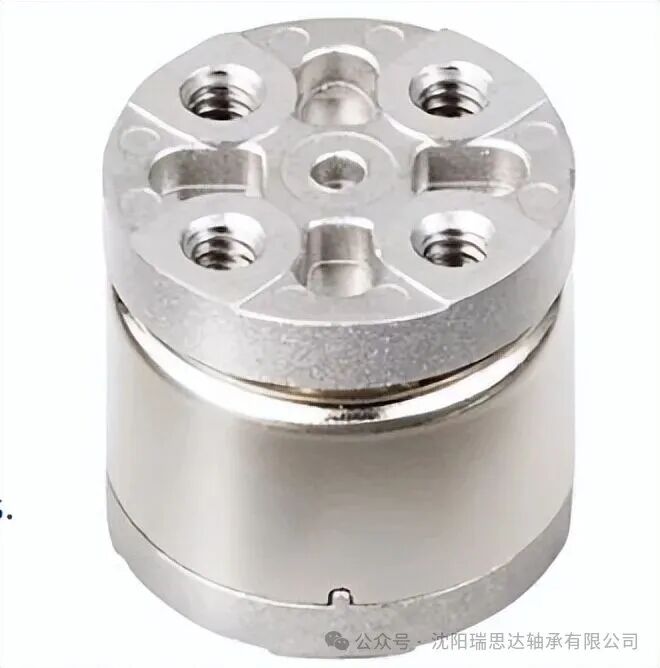
For larger rotating joints in robots (such as shoulders, elbows, and wrists), thin-section wide-diameter bearings are typically required to support high loads within limited spaces while reducing overall mass and rotational inertia, thereby enhancing the system’s dynamic response performance. Shielded or sealed versions of these bearings can further adapt to complex environments, ensuring low friction while extending service life.
END