Original article link: https://doi.org/10.1016/j.egyr.2021.08.113Authors and Affiliations: Highlights of the Article:1. Classification and discussion of online SOC and SOH estimation methods.2. Review and discussion of joint estimation of SOC and SOH.3. Overview of the main advantages and limitations of recent methods.4. Key issues and future prospects for robust online SOC and SOH estimation are proposed.
 AbstractAs electric vehicles (EVs) are widely accepted as a clean technology to address modern transportation carbon emissions, lithium-ion batteries (LIBs) have become the primary energy storage medium for electric vehicles due to their high energy density, long lifespan, and low self-discharge characteristics. Real-time state monitoring of LIBs, especially accurate estimation of State of Charge (SOC) and State of Health (SOH), is crucial for ensuring the safe operation of LIBs and maximizing their performance. However, due to the nonlinear dynamics caused by the electrochemical characteristics of LIBs, accurate estimation of SOC and SOH remains challenging, and many techniques have been developed to address this challenge. This paper reviews and discusses the state-of-the-art online assessment technologies for SOC and SOH published in the last five years, analyzing their advantages and limitations. Given the strong correlation between SOC and SOH, this paper focuses on reviewing and discussing their joint estimation methods. Based on the research, this paper ultimately summarizes key issues and proposes future development directions for real-time battery management technologies. It is believed that this review will provide valuable support for future academic research and commercial applications.1. IntroductionWhy is a BMS needed?With the popularity of electric vehicles, addressing environmental pollution and the energy crisis has become crucial. Lithium-ion batteries have become the preferred power source for electric vehicles due to their high energy density and long lifespan. However, batteries operate under complex conditions, and their internal electrochemical characteristics exhibit high nonlinearity and time-variance, making accurate battery management very challenging.A reliable BMS can provide accurate state estimates for the battery, ensuring its safe operation and maximizing performance.The Core of Battery State Estimation: SOC and SOHThe article points out that battery management technology involves various state estimations, among which State of Charge (SOC) and State of Health (SOH) are the two most important, closely related, and fundamental to ensuring battery reliability and safety.SOC (State of Charge): Similar to a fuel gauge in a car, it estimates the remaining charge of the battery to avoid overcharging and deep discharging. Since SOC changes over time, it is also an important basis for predicting SOH.SOH (State of Health): Measures the overall health status of the battery, predicting its remaining lifespan or charge/discharge cycle count. SOH reflects the aging degree of the battery through parameters such as capacity degradation and internal resistance increase, requiring monitoring over a longer time scale.It is worth noting that both SOC and SOH cannot be directly measured by sensors and can only be indirectly inferred through measurable parameters such as voltage, current, and temperature.Classification of Estimation MethodsThe article classifies battery state estimation methods into two main categories:
- Online Estimation: Suitable for real-time monitoring, with high computational efficiency requirements.SOC Online Methods: Include ampere-hour integration methods, model-based methods, and data-driven methods. Ampere-hour integration is simple but prone to cumulative errors; model-based methods (such as Kalman filtering) are more accurate; data-driven methods utilize techniques such as machine learning.SOH Online Methods: Include differential analysis methods, model-based methods, and data-driven methods.
- Offline Estimation: Not suitable for real-time applications, typically conducted in laboratory environments, requiring specific experimental schemes or high computational costs. For example, assessing SOH by measuring battery capacity or internal resistance requires fully discharging the battery or conducting specific tests.
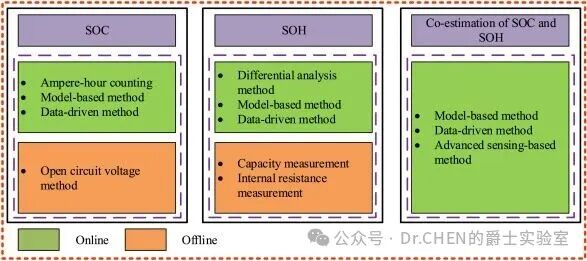 Figure 1. Classification of SOC and SOH estimation methods.(1) SOC/SOH estimation methods are divided into online and offline estimation categories, focusing on promising online estimation methods. Online SOC estimation mainly introduces model-based methods and data-driven methods. Online SOH estimation includes (DA) methods, model-based methods, and data-driven methods.(2) This paper first discusses existing online collaborative estimation strategies for SOC and SOH to fill the gap in joint estimation research. Then, it reviews from three aspects: model-based methods, data-driven methods, and advanced sensor-based methods.(3) Based on the classification of state estimation, the latest research methods in recent years are selected and reviewed in conjunction with their advantages and disadvantages in practical applications.(4) A series of key issues and future work are proposed to promote the development of online SOC and SOH estimation for LIBs.2. Definition of SOC and SOHThe article elaborates on the definitions and importance of lithium-ion battery State of Charge (SOC) and State of Health (SOH).Definition and Challenges of SOC (State of Charge)The article first defines SOC as the percentage of the remaining charge of the battery relative to its maximum available capacity. It can be expressed by the following formula:
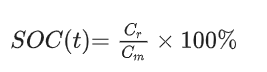 Where, Crem is the remaining capacity, and Cmax is the maximum available capacity.The article also provides another current-based definition, commonly referred to as the “ampere-hour integration method”:
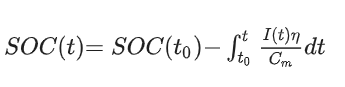 This formula indicates that the current SOC equals the initial SOC plus the amount of charge flowing in or out over a period of time. The discrete form can be described as:
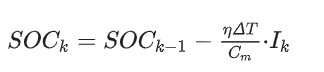 The article points out that although this method is simple, inaccuracies in the initial SOC value and cumulative errors from the measurement system can significantly affect the estimation accuracy, necessitating more advanced methods to address this issue.Definition and Challenges of SOH (State of Health)Next, the article explains the concept of SOH. During use, batteries undergo mechanical and chemical degradation, leading to performance decline, primarily manifested as maximum capacity degradation and internal resistance increase.The end of life (EOL) of a battery is typically defined as a 20% capacity degradation or a 100% increase in internal resistance.SOH can be quantified by the following formula to reflect its current state:
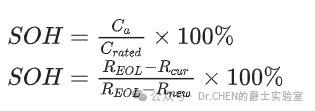 Where, Cactual is the actual capacity, Crated is the rated capacity; Rcurrent is the current internal resistance, Rnew is the internal resistance of a new battery, and REOL is the internal resistance at the end of life.The article emphasizes that SOH monitoring requires a long-term process. Like SOC, capacity and internal resistance cannot be directly measured and can only be indirectly estimated through other parameters such as voltage, current, and temperature. Therefore, developing accurate and effective SOH estimation strategies is crucial for formulating battery replacement plans and fault detection.
 Figure 2. The calculation process of model-based SOC estimation.
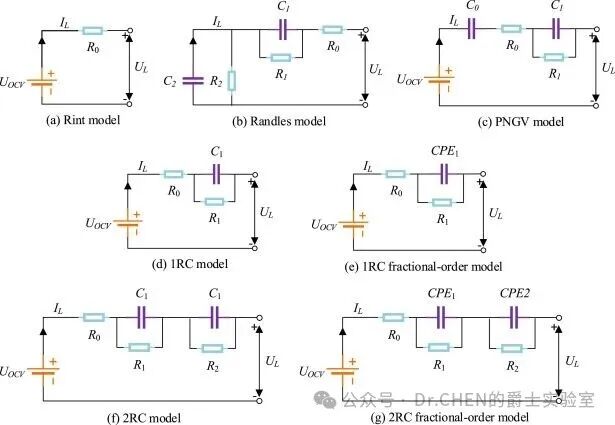 Figure 3. Different EECMs for modeling LIB.
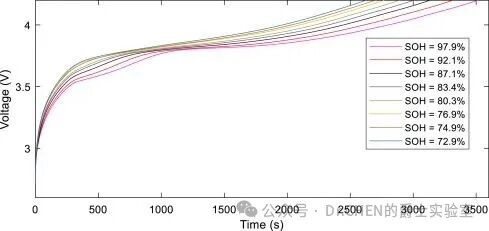 Figure 4. Schematic diagrams of different EECM models. (a) Rint model, (b) Randles model, (c) PNGV model, (d) 1RC model, (e) 1RC fractional-order model, (f) 2RC model, (g) 2RC fractional-order model.3. Overview of Recent SOC and SOH Estimation MethodsReview of SOC Estimation Methods for Battery Charge State
The article mainly reviews advanced technologies for real-time estimation of lithium-ion battery (LIBs) SOC, particularly the two main categories of model-based and data-driven methods.
Model-Based SOC Estimation Methods
Model-based methods are typically divided into four steps:
-
Battery Model Selection:
-
Four models are introduced: empirical models (EM), electrochemical models (ECM), electrical equivalent circuit models (EECM), and electrochemical impedance models (ECIM).
-
Electrical Equivalent Circuit Model (EECM) achieves the best balance between accuracy and computational efficiency, thus being widely discussed.
-
The article particularly emphasizes the impact of temperature on model parameters, especially in low-temperature environments. Therefore, it is necessary to establish an OCV-SOC (Open Circuit Voltage – State of Charge) model that considers temperature effects to improve estimation accuracy. For example, temperature compensation models can be constructed through offline data analysis or neural networks.
Battery Testing:
-
Various tests are required to collect data for model parameter identification.
-
Common tests include Hybrid Pulse Power Characterization (HPPC), Dynamic Stress Testing (DST), and various driving cycle tests (such as FUDS, UDDS, etc.), which can simulate the complex conditions of electric vehicles.
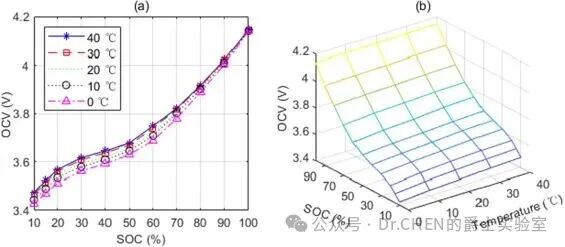
Figure 5.(a) OCV-SOC curves obtained at different temperatures and (b) temperature-based OCV-SOC surface.
Model Parameter Identification:
-
Accurate parameter identification is the foundation of model accuracy.
-
Various parameter identification algorithms are introduced, such as Genetic Algorithm (GA), Particle Swarm Optimization (PSO), and Recursive Least Squares (RLS) and its improved versions (such as FFRLS, RRTLS).
-
Global optimization algorithms like GA and PSO are typically used for offline identification, while RLS and its variants are more suitable for real-time parameter identification.
SOC Estimation Algorithms:
-
Extended Kalman Filtering (EKF): Linearizes through Taylor expansion but may introduce truncation errors.
-
Adaptive Kalman Filtering (AEKF/IAEKF): Capable of adaptively adjusting system noise to improve accuracy.
-
Unscented Kalman Filtering (UKF): Better handles nonlinear problems but is sensitive to initial values. Its improved versions (such as AUKF, IUKF) address this issue.
-
Cubature Kalman Filtering (CKF): Specifically designed to handle high-dimensional and divergent problems, exhibiting higher stability and accuracy.
-
Even accurate models cannot fully simulate battery dynamics, thus filtering algorithms are needed to reduce errors.
-
Kalman Filtering (KF) and its series of algorithms are the most popular online SOC estimation methods.
-
Traditional KF is suitable for linear systems, while batteries are nonlinear, leading to the development of various improved versions, including:
-
In addition to Kalman filtering, the article also mentions Particle Filtering (PF) and Sliding Mode Observers (SMO), as well as hybrid methods that combine the advantages of different algorithms, such as Dual Kalman Filtering (DKF) and Dual Particle Filtering (DPF), which can further enhance estimation robustness and accuracy.
Data-Driven SOC Estimation Methods
These methods do not need to consider the electrochemical mechanisms of the battery but estimate SOC by learning the relationship between inputs (such as current, voltage, temperature) and outputs (SOC).
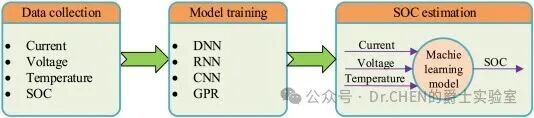
Figure 9. The process of SOC estimation using machine learning methods.
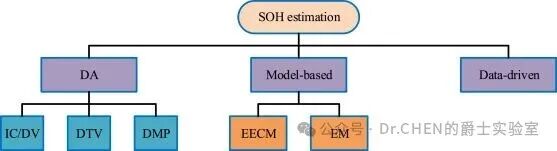
Figure 10. Classification of online SOH estimation methods.

Figure 11. The process of estimating SOH using machine learning methods.
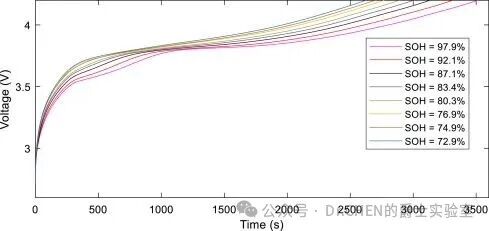 Figure 12. The variation curve of charging voltage over time under different SOH.
-
Advantages: Highly adaptive, strong nonlinear mapping capability.
-
Common Methods:
-
Traditional Machine Learning: Artificial Neural Networks (ANN), Support Vector Machines (SVM), Gaussian Process Regression (GPR), etc.
-
Deep Learning: In recent years, advanced methods such as Deep Neural Networks (DNN), Convolutional Neural Networks (CNN), Recurrent Neural Networks (RNN), and Long Short-Term Memory Networks (LSTM) have been widely applied.
-
Particularly, LSTM and its improved versions (such as Bidirectional LSTM) are capable of capturing temporal dependencies in sequential data, showing excellent performance in handling battery dynamic data.
-
Challenges:
-
These methods require a large amount of historical data during training, which is very time-consuming.
-
They often do not consider the impact of SOH on SOC estimation, which may lead to decreased estimation accuracy as the battery ages.
Next, the article discusses the joint estimation methods for lithium-ion battery SOC (State of Charge) and SOH (State of Health). The article points out that due to the close relationship between SOC and SOH, estimating them simultaneously can improve prediction accuracy.
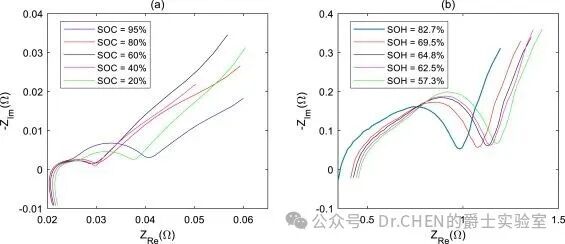
Figure 13. EIS spectra at different (a) SOC and (b) SOH.
Model-Based Joint Estimation Methods
Joint estimation methods based on Electrical Equivalent Circuit Models (EECM) are an effective approach, as the variation of model parameters is closely related to battery life.
-
Traditional Model Methods: Some studies use Kalman Filtering (KF) combined with RC models for joint estimation, but linear estimators may introduce significant errors.
-
Improved Methods: To address uncertainties such as model errors and measurement noise, researchers have proposed various improved methods:
-
Using Smoothing Variable Structure Filter (SVSF), which is more accurate than EKF, but SOH estimation is relatively rough.
-
Adopting Dual Extended Kalman Filtering (DEKF) combined with RC models for joint estimation, but temperature has a significant impact on internal resistance estimation.
-
Combining Adaptive Kalman Filtering (AEKF) and Recursive Least Squares (FFRLS) to estimate SOH by identifying model parameters.
-
Proposing hybrid methods, such as combining Kalman Filtering and Particle Filtering (PF) to improve estimation performance, but the computational burden also increases.
-
For the issue of limited computational capacity of onboard BMS, some studies have explored cloud-based joint estimation strategies, transferring complex computational tasks to the cloud.
Data-Driven Joint Estimation Methods
Data-driven models do not need to consider the electrochemical characteristics of the battery, establishing the mapping relationship between SOC and SOH through data learning.
-
Some studies utilize Least Squares Support Vector Machine (LSSVM) to establish models and combine Unscented Particle Filtering (UPF) to optimize results, reducing estimation errors.
Advanced Sensor-Based Joint Estimation Methods
These methods estimate the state by gaining insights into the internal structure of the battery, potentially providing higher accuracy than traditional electrical parameter measurements.
-
Ultrasonic Detection: The density and elastic modulus of the battery’s active materials change with cycling and aging, affecting the propagation of ultrasound within the battery. By analyzing the time of flight and amplitude of ultrasonic signals, both SOC and SOH can be monitored simultaneously.
-
Electrochemical Impedance Spectroscopy (EIS): A non-destructive testing method that obtains battery impedance through external signal excitation. The battery impedance changes with SOC and SOH. The article demonstrates the differences in EIS spectra at different SOC and SOH, indicating that EIS can be used for joint estimation.
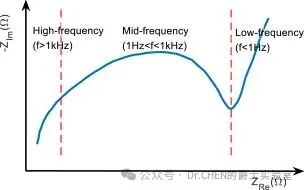
Figure 14. Typical EIS spectra of the battery obtained at a range of excitation frequencies.
Summary and Challenges
-
Model-Based and Data-Driven Methods are highly dependent on the measurement of electrical parameters such as current, voltage, and temperature, and estimation accuracy may be limited.
-
Methods Based on Ultrasonic and EIS can gain insights into the battery’s interior, promising faster and more accurate estimations.
-
However, these advanced sensing technologies require specialized measurement systems, which increases the difficulty of integrating them into BMS, making them more challenging in practical applications (such as at the battery pack level).
-
EIS measurements are often time-consuming, thus requiring sensitivity analysis to select effective excitation frequencies for reliable battery state estimation.
4. Key Issues and Future Work 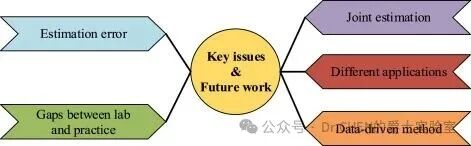 Figure 15. Key issues and future work for online SOC and SOH estimation.
1. Estimation Errors
Current estimation methods have various sources of errors:
-
Model Errors: No model can fully simulate the nonlinear behavior of batteries, such as hysteresis effects. Future research should focus on constructing more accurate multiphysics models (e.g., combining thermal, electrochemical, and circuit models) to replicate battery dynamics more accurately.
-
Parameter Identification Errors: Inaccurate model parameters can affect estimation performance. More optimized parameter identification algorithms need to be developed, considering the physical characteristics of the battery to obtain more accurate parameters.
-
Measurement Noise: Small noise from current, voltage, and temperature sensors can accumulate and lead to estimation drift. Future work needs to improve experimental conditions and estimation methods to minimize these errors.
-
Algorithm Errors: Existing algorithms (such as ampere-hour integration and filtering techniques) introduce system noise in online applications, requiring improvements or combinations to enhance accuracy.
2. Gap Between Laboratory and Practice
Currently, most research remains at the laboratory stage, with a significant gap from practical applications.
-
Temperature Effects: Electric vehicles operate in complex, temperature-variable environments. Since temperature can severely affect the electrochemical dynamics of batteries, future research must consider temperature variations in modeling or estimation methods.
-
Computational Efficiency: Real-time updating of model parameters increases the computational burden on BMS. Therefore, sensitivity analysis of battery model parameters is needed, updating only key parameters that significantly impact estimation accuracy to reduce computational load in online applications.
3. Joint Estimation
Currently, there is more research on estimating a single SOC or SOH, but joint estimation research is relatively limited.
-
Coupling Relationships: The battery is a dynamically coupled system, with a close relationship between SOC and SOH. Accurate SOC estimation requires considering SOH changes due to capacity degradation, while reliable SOH estimation can provide accurate initial values for SOC monitoring.
-
Future Directions: Although joint estimation has a higher computational burden, it can utilize the interdependence of state variables to improve accuracy. Therefore, developing more accurate and computationally efficient joint estimation methods is an important future direction.
4. Different Application Scenarios
Most existing methods lack generality and cannot be effectively applied to all scenarios.
-
Battery Packs and Modules: Current research focuses on individual batteries, while practical applications need to address inconsistencies within battery packs and modules and provide accurate state estimates.
-
Different Operating Conditions: The battery operating conditions in electric vehicles and charging systems differ, requiring targeted development of effective estimation methods.
-
Second Life Utilization: When retired batteries are used for secondary applications (such as energy storage systems), their uncertainty and instability increase, necessitating the development of reliable estimation methods to support their second life utilization.
5. Data-Driven Methods
With the development of cloud computing and big data, data-driven technologies are receiving increasing attention.
-
Advantages: Data-driven methods have self-learning capabilities, enabling better handling of nonlinear problems.
-
Future Directions:
-
Cloud Computing: Utilizing cloud-based big data platforms to collect real-world data can address the limited data from individual vehicles and cover more complex operating conditions, thereby improving the effectiveness of predictions.
-
Feature Selection and Algorithm Improvement: The performance of machine learning methods highly depends on the quality of training data. Therefore, effective features need to be extracted from various sensor signals (such as current, voltage, temperature, ultrasound, and EIS). Additionally, to achieve online estimation, advanced online intelligent learning algorithms with higher requirements for small-scale data need to be developed, potentially combining them with battery models to improve accuracy.
5. Conclusion
Various methods for online SOC and SOH estimation include:
-
Online SOC Estimation Methods:
-
Model-Based Methods: Discussed electrical equivalent circuit models (EECM) and how to estimate through parameter identification and filtering algorithms (such as the Kalman filtering family).
-
Data-Driven Methods: Introduced estimation using machine learning and deep learning (such as neural networks, LSTM).
-
Online SOH Estimation Methods:
-
Discussed differential analysis, model-based, and data-driven methods.
-
SOC and SOH Joint Estimation Methods:
-
Reviewed technologies for simultaneously estimating SOC and SOH, including model-based, data-driven, and advanced sensor-based methods (such as ultrasound and electrochemical impedance spectroscopy, EIS).
The article points out that these methods each have their advantages and disadvantages, but still face significant challenges in practical applications.
Challenges and Future Directions
The article summarizes the main issues encountered by current technologies in practice and provides five future research recommendations:
-
Estimation Errors: Errors exist in the battery model itself, measurement systems, and algorithms, which can accumulate. Future research should focus on constructing more accurate multiphysics models to better adapt to complex external environments.
-
Gap Between Laboratory and Practice: Most research relies on laboratory data and fails to adequately consider the complex and variable conditions in practical applications, such as environmental temperature changes. Therefore, estimation methods that consider temperature and computational efficiency need to be developed.
-
Joint Estimation: Current research on estimating a single state is more prevalent, while joint estimation of SOC and SOH is still insufficient. Joint estimation can utilize the coupling relationships between states to improve accuracy. The article particularly suggests further exploring fast estimation methods based on advanced sensing technologies such as ultrasound and EIS.
-
Different Application Scenarios: Existing methods lack generality, primarily focusing on individual cells rather than battery packs or modules. Future estimation methods should be developed for different application scenarios (such as electric vehicles, charging systems, and second-life utilization of retired batteries).
-
Data-Driven Methods: Although they have great potential, data-driven methods still need improvement. Effective feature selection and prediction methods based on small sample data need to be explored to improve efficiency and accuracy. Additionally, it is recommended to develop cloud-based machine learning methods utilizing big data platforms to better adapt to practical applications.
The article concludes by emphasizing that considering the practical application needs of lithium-ion batteries, SOC/SOH estimation remains a hot and important research direction. Future research should focus on improving practicality to better guide the development and application of BMS.