In everyday life, we find that many PCBs in electronic products or devices are green. Do you know why?
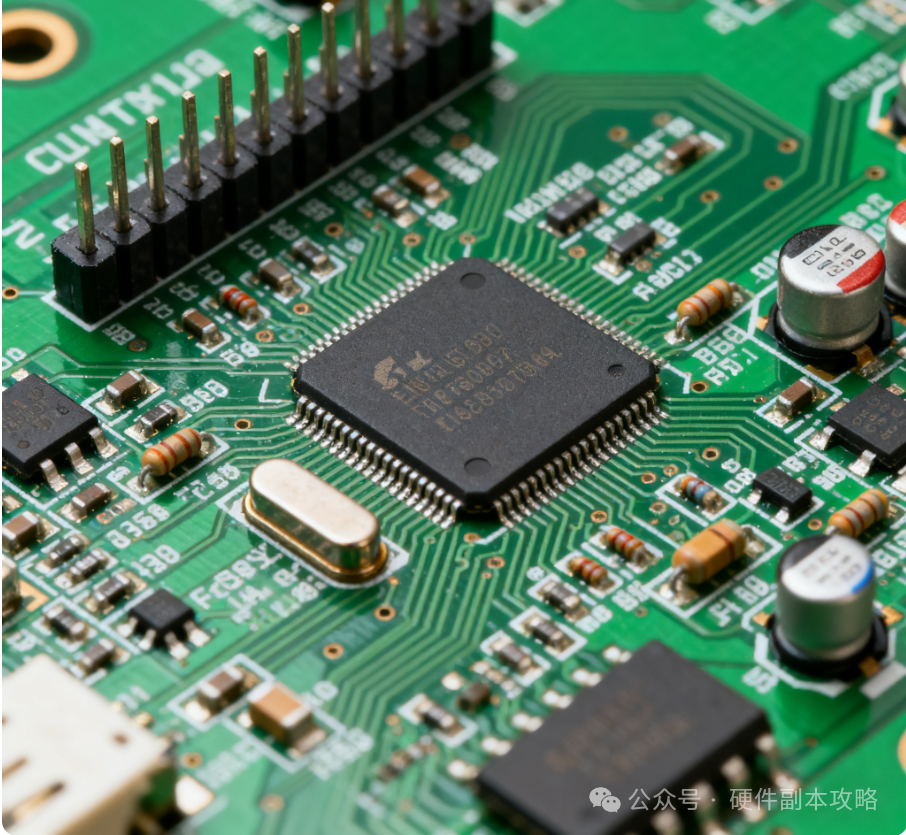
I believe there are several main reasons:
1. History and Tradition (The Core Reason)
Military Origins: In the early stages of PCB development (mid-20th century), the U.S. military was the largest user and standard setter for PCBs. They had extremely high requirements for the reliability and quality of PCBs.
Standard Setting: The military specified various performance indicators for PCB substrates (glass fiber epoxy resin, FR-4) and solder mask inks, such as insulation, chemical resistance, and moisture resistance. The solder mask ink formula that best met these stringent standards happened to cure to a green color.
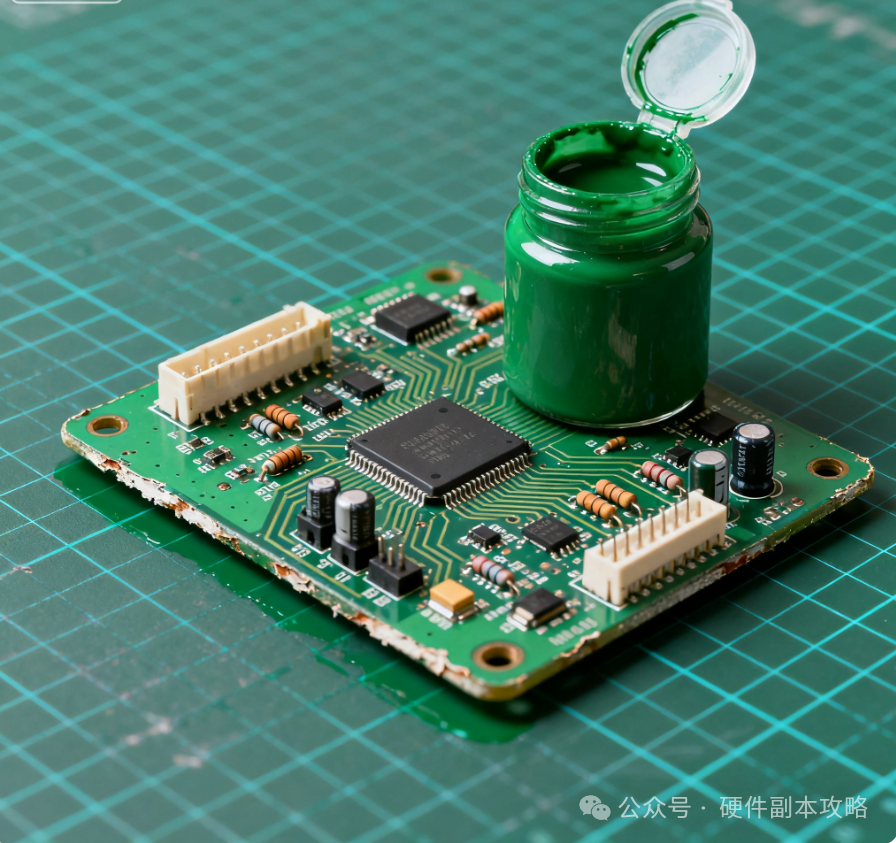
Path Dependence: Due to the military’s extensive use, major PCB manufacturers prioritized the production and stockpiling of this green solder mask ink. This made green the de facto industrial standard, which has continued to this day.
2. Production Process and Cost
Green has always been the absolute mainstream, and the light transmittance of green ink has an inherent advantage over other inks. Additionally, green ink has excellent development effects, which can reduce defect rates during production.
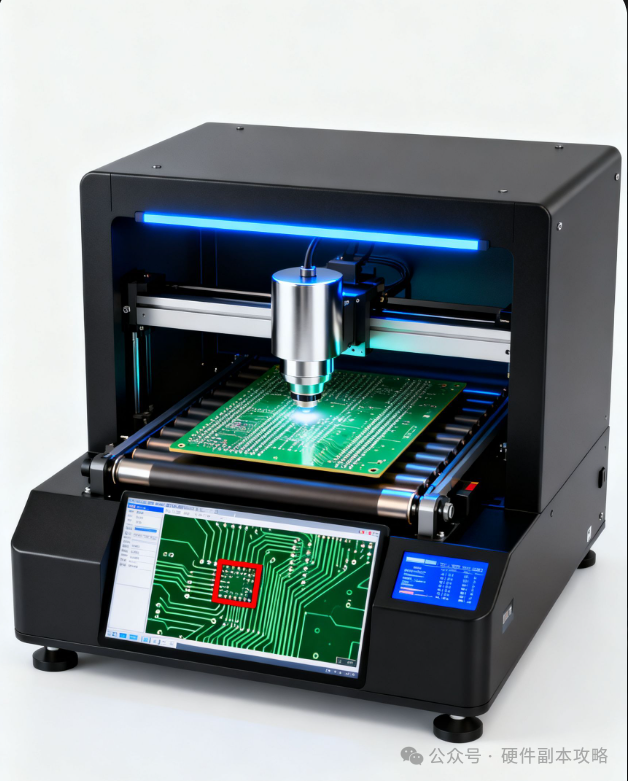
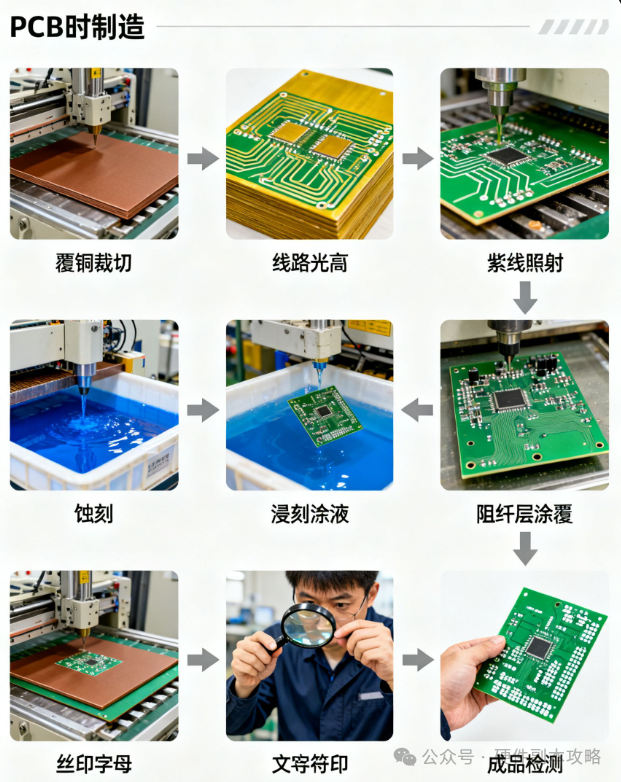
During the manufacturing process, an optical positioning system is used to automatically align the soldering layers and components. The green background provides a very high contrast with the copper traces and silver solder pads, allowing for faster and more accurate identification and positioning, reducing error rates and improving production efficiency.
3. The Birth of the Solder Mask
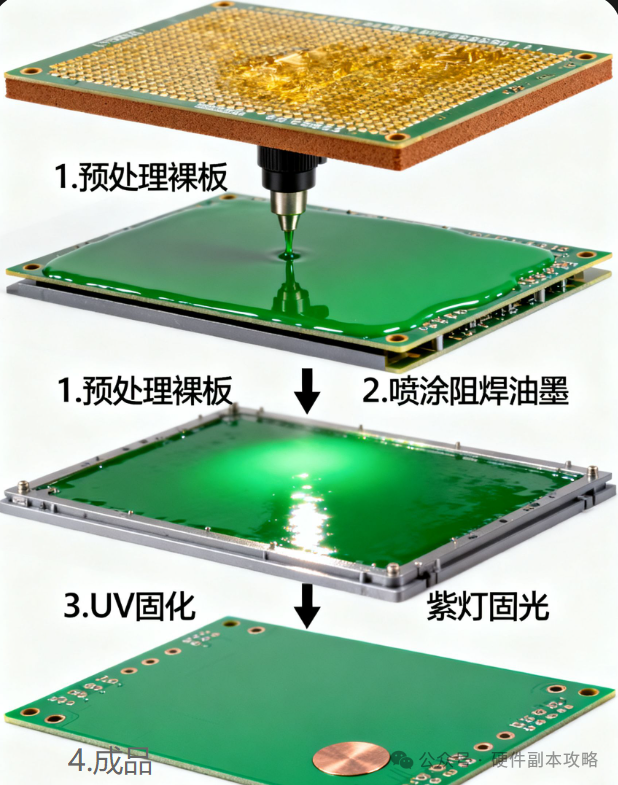
The birth of the green solder mask is like a precise “makeup”:
Cleaning: Removing oil and dirt from the copper surface, like “washing the face” of the circuit board.
Coating: Using screen printing or spraying to cover the ink, controlling the thickness to 20-50μm (thinner than a hair).
Curing: UV light exposure hardens the coating, like “magical exposure” setting it.
Inspection: AOI equipment checks for defects, ensuring a “perfect makeup”.
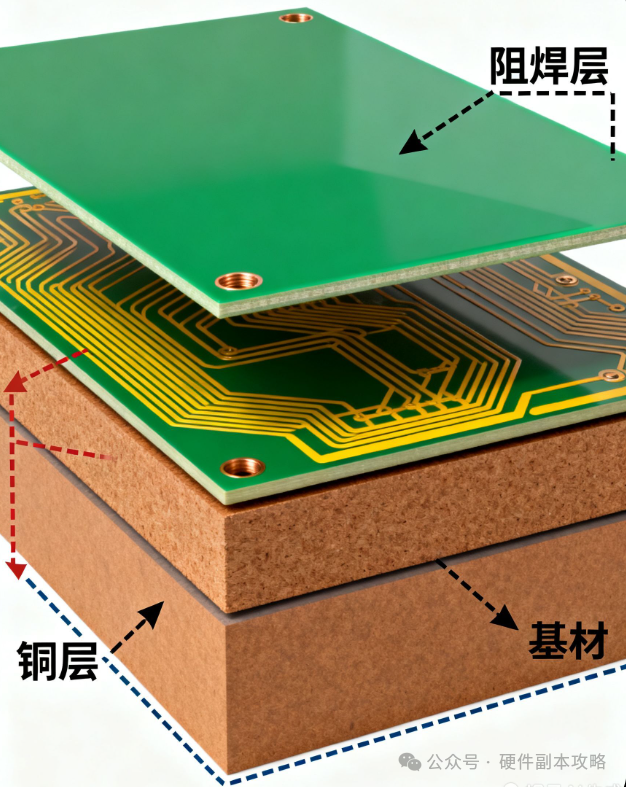
The “Three-Layer Sandwich” of the Circuit Board
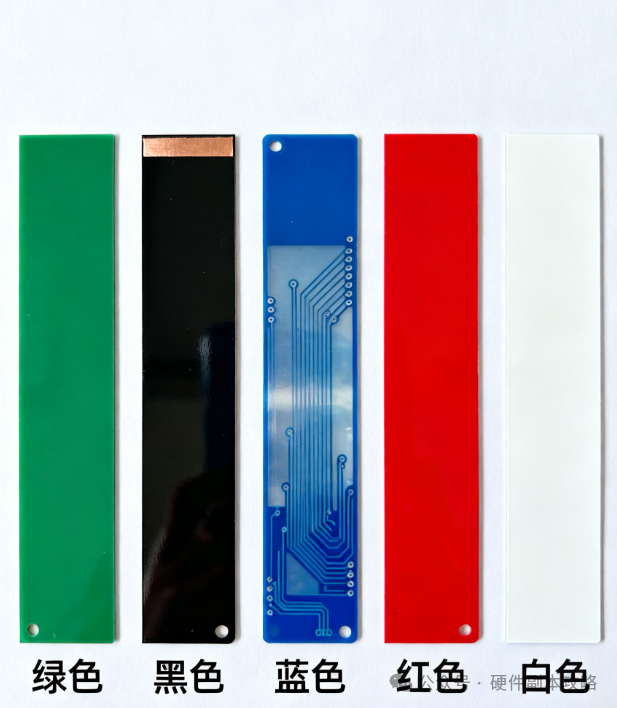
4. What Color Circuit Boards Have You Seen?
Therefore, green is the optimal balance between functionality, cost, and tradition, rather than an arbitrary decision.