
 Recently, the team led by Jiang Bo from the University of Science and Technology Beijing collaborated with the team led by Pei Zhongzheng from CRRC Industrial Research Institute. They solved the traditional problem of the strength-conductivity trade-off in copper-based materials by using a process of “CVD deposition of graphene + vacuum hot pressing + directional cutting + 80% cold rolling” combined with a vertical orientation design of 0.0027 vol% trace graphene.The related results were published in the Journal of Alloys and Compounds under the title “Enabling Synergistic Mechanical Strength and High Electrical Conductivity in Cold-Rolled Graphene/Copper Laminate Composite via Trace Graphene and Controlled Orientation”.
01
Background Introduction
Copper, due to its excellent conductivity and workability, is widely used in fields such as power transmission and integrated circuit lead frames. However, as modern electronic devices trend towards miniaturization and high power density, there is a dual demand for copper-based materials to achieve “high strength + high conductivity.” These two properties inherently conflict in traditional copper-based materials—adding alloying elements to enhance strength introduces lattice distortion, which reduces conductivity; simply enhancing conductivity sacrifices mechanical properties. Graphene, with its ultra-high carrier mobility, is regarded as an ideal reinforcement phase for copper-based composites, but previous challenges such as poor wettability and uneven dispersion of graphene at the copper interface have hindered performance breakthroughs.
02
Highlights of the Article
The core highlights of this research are based on performance breakthroughs and process innovations supported by rigorous experimental data.
First, by using roll-to-roll CVD technology to deposit a single layer of graphene on both sides of copper foil, and after stacking 2000 layers, a composite material was prepared through vacuum hot pressing at 950°C and 130 MPa. With only 0.0027 vol% trace graphene, ultra-high conductivity of 105.78% IACS (horizontal orientation) and 105.86% IACS (vertical orientation) was achieved, far exceeding traditional copper-based composites.
Secondly, after 80% cold rolling treatment, the tensile strength of the horizontally oriented graphene/copper composite (HGCLC-CR80) increased from 175 MPa to 317 MPa, with a yield strength of 301 MPa, while conductivity only slightly decreased to 104.47% IACS, and elongation remained at 10.0%.
More critically, through the vertical orientation graphene design (VGCLC-CR80), under the same graphene content and cold rolling conditions, the tensile strength was further increased to 351 MPa, yield strength to 334 MPa, elongation increased to 11.4%, and conductivity was maintained at 104.27% IACS, achieving strength enhancement with almost no loss in conductivity.
Additionally, this process has good scalability potential, with the prepared bulk composite material reaching sizes of 150mm×50mm×100mm, and graphene uniformly dispersed in the copper matrix, forming atomically clean interfacial bonds.
03
Graphical Analysis
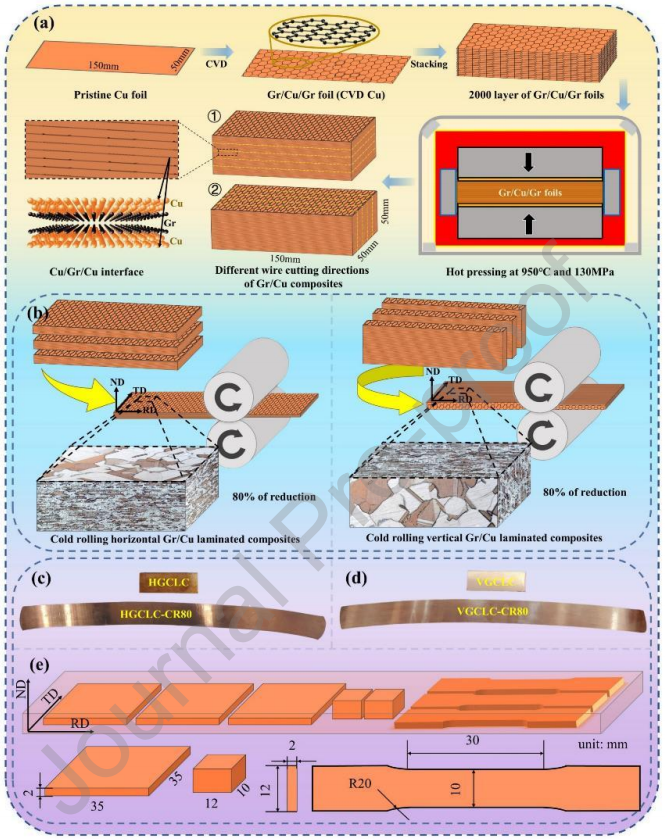 Figure 1. Schematic diagram of the process for preparing high-oriented Gr/Cu composite materials using directional chemical vapor deposition (CVD) combined with subsequent hot pressing (HP) and cold rolling (CR). (a) CVD deposition of Gr on both sides of the original polycrystalline copper foil, followed by stacking 2000 layers of Gr/Cu/Gr foil and hot pressing; (b) cutting the composite material into different orientations for cold rolling; (c, d) actual morphology of horizontally and vertically stacked layered samples at different processing stages; (e) schematic diagram of the samples used for various characterizations.
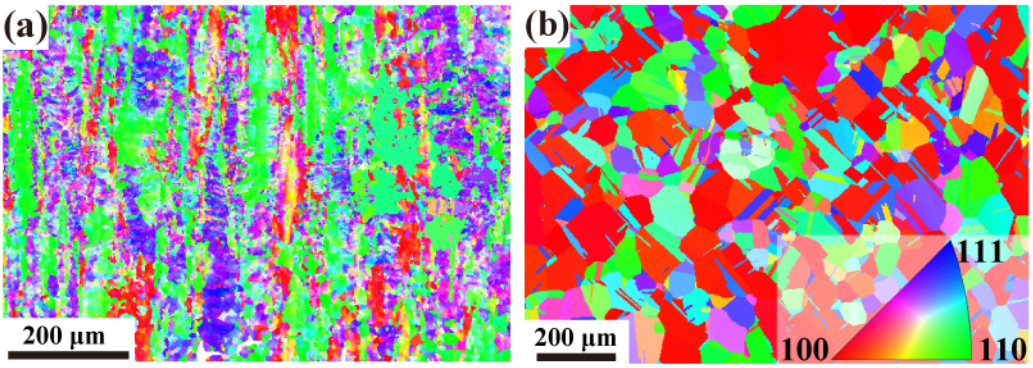 Figure 2. EBSD maps of copper foil before and after graphene chemical vapor deposition (CVD). (a) Before CVD; (b) After CVD.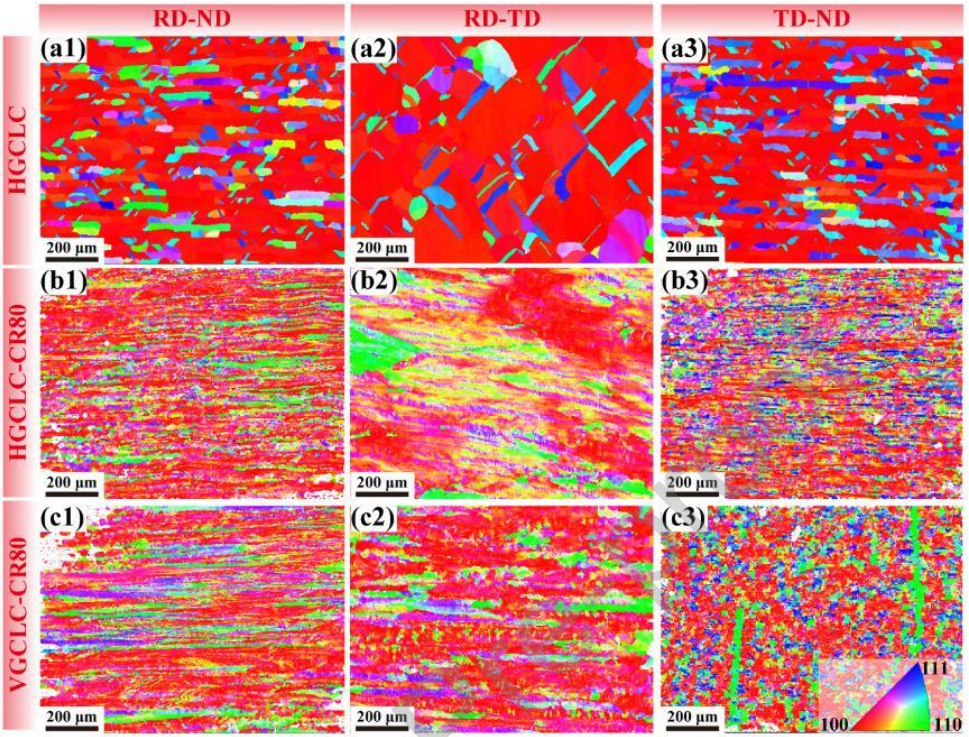
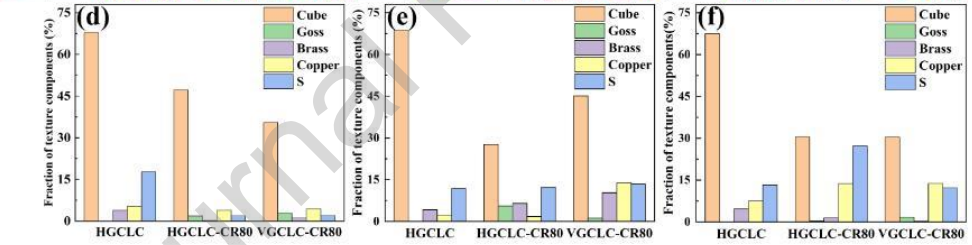 Figure 3. (a1-a3) HGCLC, (b1-b3) HGCLC-CR80, and (c1-c3) VGCLC-CR80 samples’ inverse pole figures (IPF) on RD-ND, RD-TD, and TD-ND planes; (d)-(f) corresponding texture evolution statistics for the above three planes.
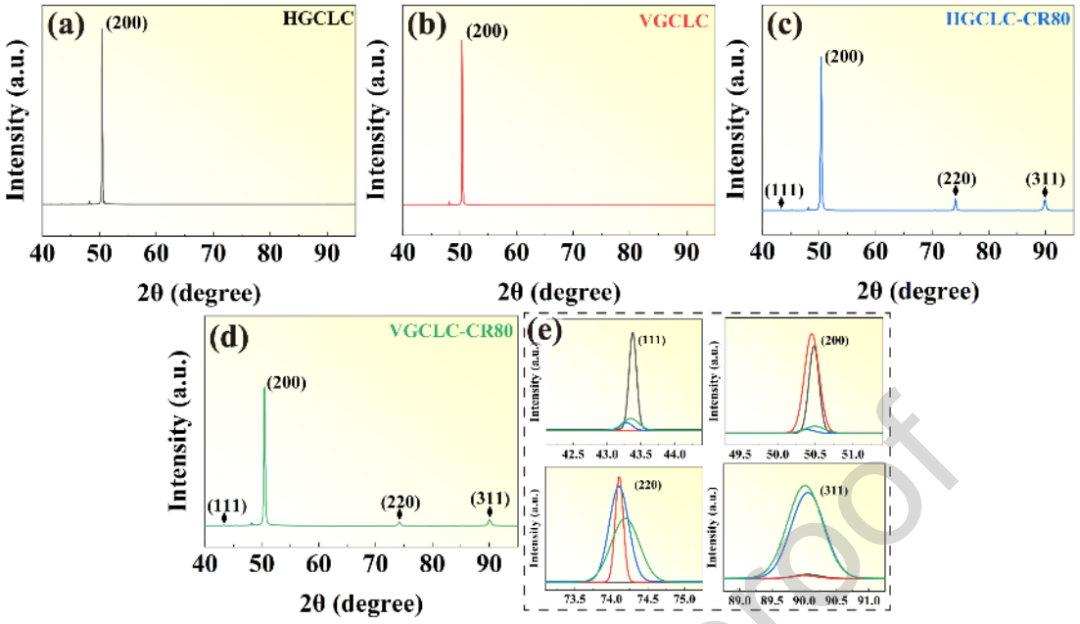 Figure 4. (a) X-ray diffraction (XRD) patterns of (a) HGCLC, (b) VGCLC, (c) HGCLC-CR80, and (d) VGCLC-CR80; (e) enlarged view of characteristic peaks.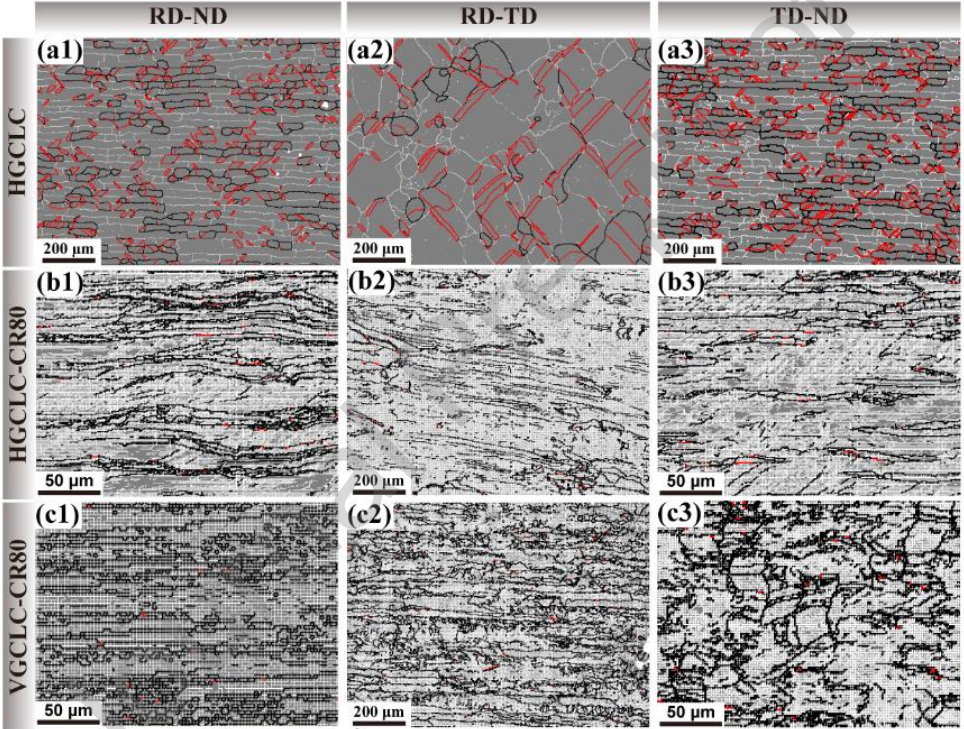
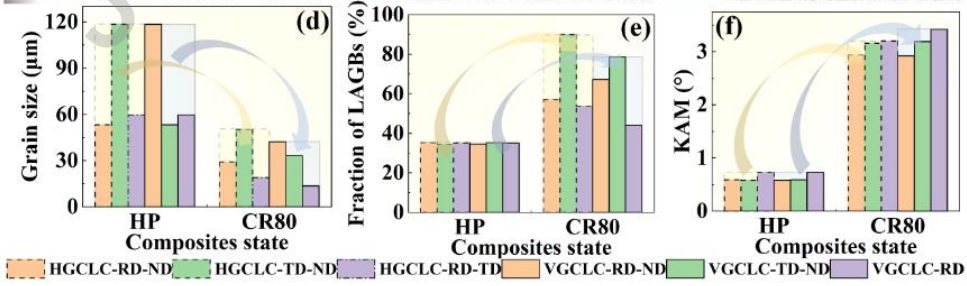 Figure 5. Comparison of three-dimensional EBSD images of HGCLC, HGCLC-CR80, and VGCLC-CR80. (a-c) IPF, grain boundary (GBs) images, and kernel average misorientation (KAM) images of HGCLC; (d-f) IPF, GBs, and KAM images of HGCLC-CR80; (g-i) IPF, GBs, and KAM images of VGCLC-CR80; (j-l) comparison of changes in grain size, low-angle grain boundaries (LAGBs) ratio, and KAM values on different planes.
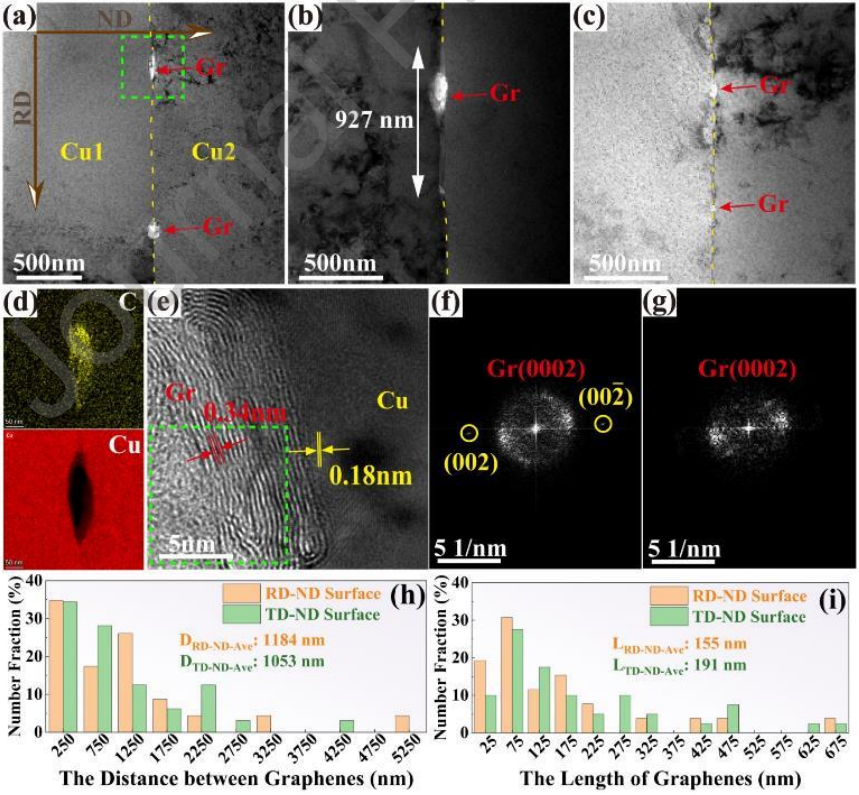 Figure 6. Transmission electron microscopy (TEM) characterization of the interfacial structure of the Gr/Cu composite in the RD-ND plane. (a-c) Low magnification morphology images; (d) energy dispersive spectroscopy (EDS) elemental mappings of Gr; (e) high-resolution TEM image of the Gr/copper interface; (f) corresponding fast Fourier transform (FFT) pattern of (e); (g) FFT analysis results of the marked Gr region in (e); (h) Gr interlayer spacing distribution and (i) Gr size distribution in the RD-ND and TD-ND planes of the Gr/Cu composite.
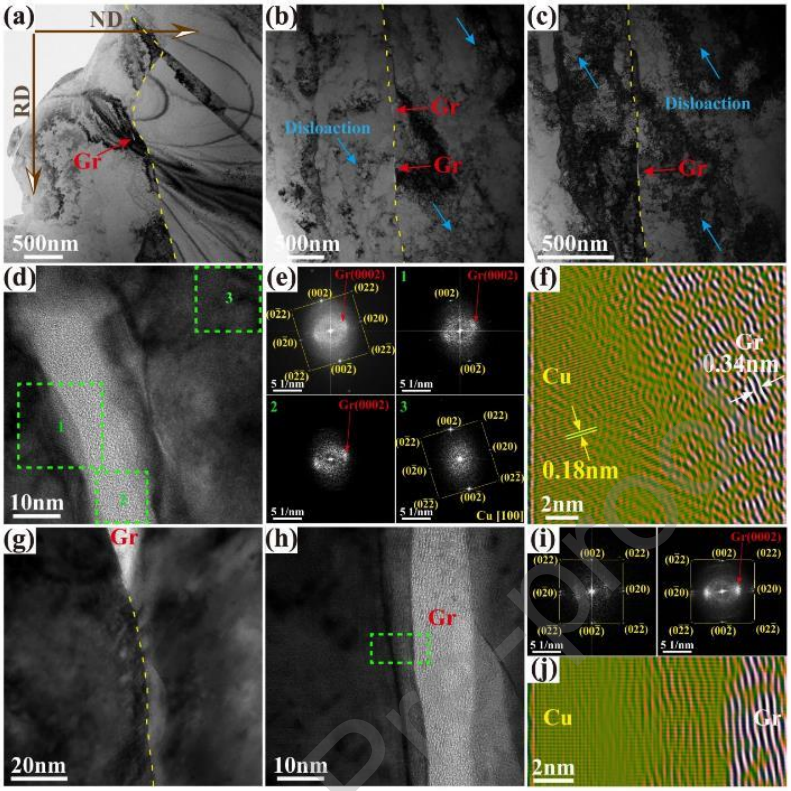 Figure 7. TEM characterization images of the Gr/Cu interface in the RD-ND plane of the HGCLC-80 sample. (a-c) Low magnification morphology images; (d-f) high-resolution TEM images of Gr within the grains and corresponding FFT and inverse FFT patterns; (g-j) HRTEM images of intergranular Gr and corresponding FFT and IFFT patterns. The bright field TEM images in (a-e) were taken near the [011] crystal zone axis under g=[200] double beam conditions to optimize dislocation visibility.
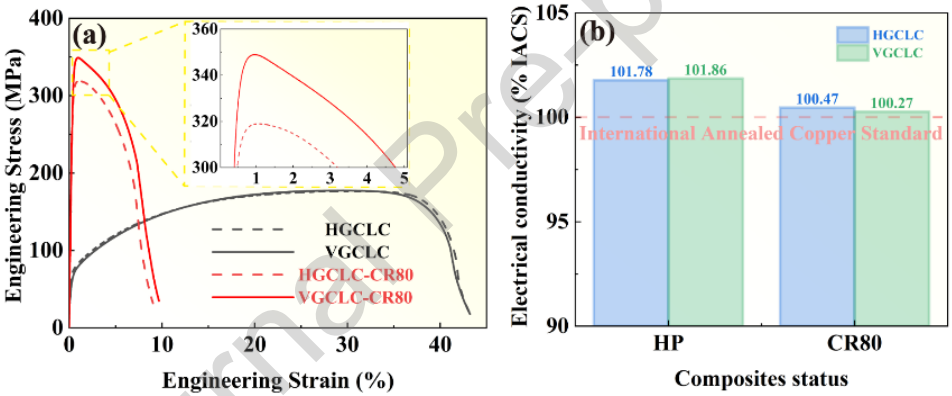 Figure 8. (a) Engineering stress-strain curves and (b) conductivity values of HGCLC and VGCLC after 80% cold rolling (CR) deformation.
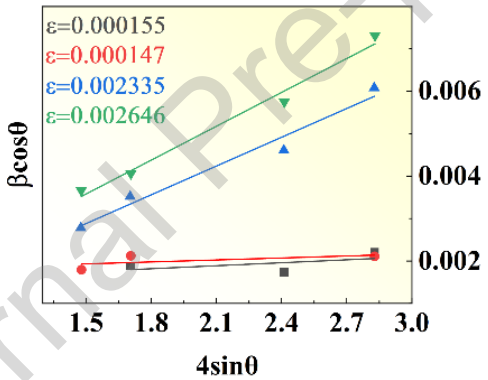 Figure 9. Linear fitting curve of all measured peaks’ 𝜷𝒉𝒌𝒍cos𝜽𝒉𝒌𝒍 and 4sin𝜽𝒉𝒌𝒍.
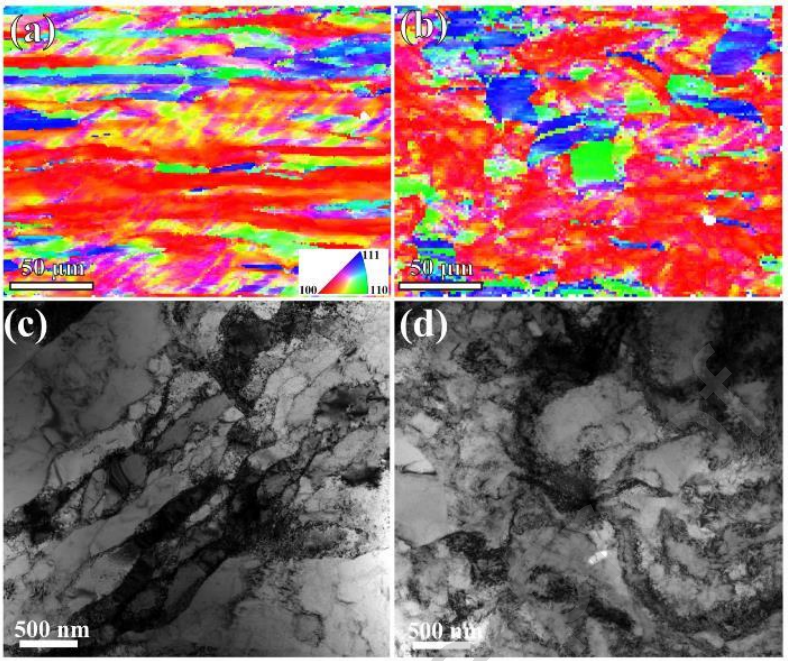 Figure 10. Comparison of microstructure and dislocation features in the TD-ND plane. (a, b) Microstructure comparison of HGCLC-CR80 and VGCLC-CR80; (c, d) comparison of dislocation networks in the corresponding composites.
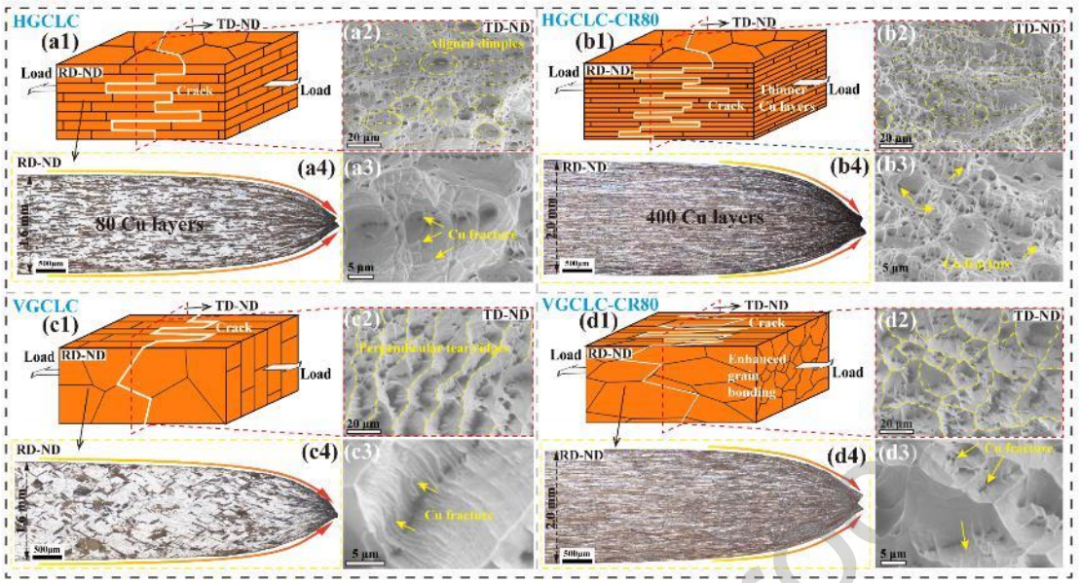 Figure 11. Comparison of fracture morphologies of HGCLC, HGCLC-CR80, VGCLC, and VGCLC-CR80. (a1) Schematic of crack propagation in HGCLC, (a2, a3) fracture surfaces, and (a4) microstructure near the fracture surface; (b1) Schematic of crack propagation in HGCLC-CR80, (b2, b3) fracture surfaces, and (b4) microstructure near the fracture surface; (c1) Schematic of crack propagation in VGCLC, (c2, c3) fracture surfaces, and (c4) microstructure near the fracture surface; (d1) Schematic of crack propagation in VGCLC-CR80, (d2, d3) fracture surfaces, and (d4) microstructure near the fracture surface.
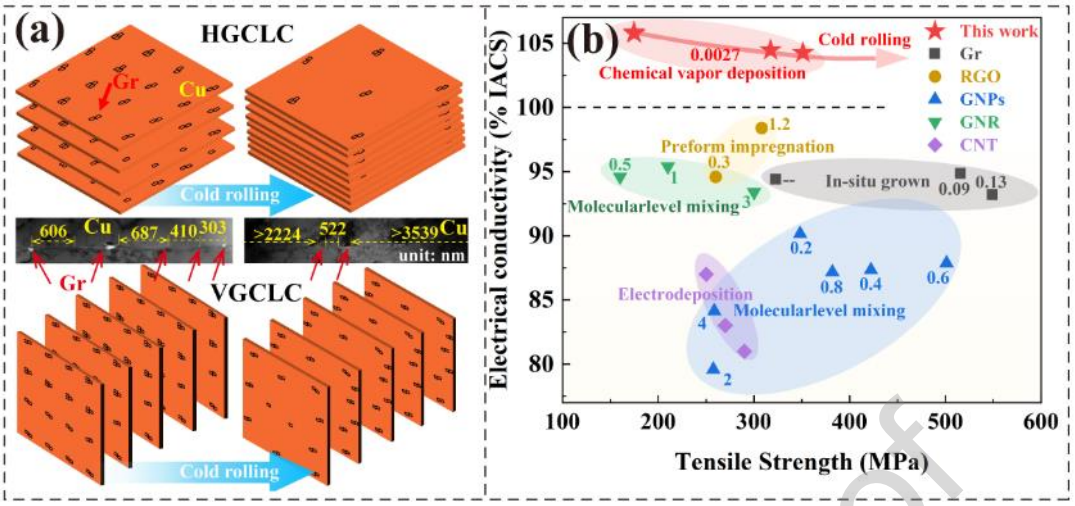 Figure 12. (a) Schematic diagram of the effect of cold rolling (CR) deformation on the distribution of Gr in HGCLC and VGCLC; (b) Comparison of tensile strength and conductivity of Gr/Cu layered composites in this study with other studies.
04
Summary and Outlook
This research successfully broke the performance trade-off of traditional copper-based materials by precisely controlling the orientation of graphene, managing trace addition amounts, and leveraging the synergistic effects of vacuum hot pressing and cold rolling. It utilized the structural advantages of graphene to enhance the mechanical properties of copper-based materials while optimizing interfacial bonding and crystal orientation to maximize the retention of copper’s high conductivity. The results provide a feasible path for the industrial preparation of high-performance copper-based composites, expected to meet the stringent demands for materials in next-generation electronic devices and power transmission, offering important references for the design of multifunctional metal matrix composites.
Reference InformationZhongzheng Pei, Chenxuan Liu, Yujie Bai, Yalun Wang, Juncai Liang, Baishan Liu, Bo Jiang, Enabling Synergistic Mechanical Strength and High Electrical Conductivity in Cold-Rolled Graphene/Copper Laminate Composite via Trace Graphene and Controlled Orientation, Journal of Alloys and Compounds, 2025, 185101, ISSN 0925-8388https://doi.org/10.1016/j.jallcom.2025.185101.Recommended Reading


 Content InformationCover: Article IllustrationSource:Journal of Alloys and Compounds
Editor: Horizon
This content material is intended solely for the transmission and sharing of industry information. Users should carefully consider and independently judge any viewpoints, opinions, and conclusions presented in the text.Contributions are welcome! For inquiries, please contact us:18067212387 (WeChat),[email protected].