
On July 11, according to a report released by The Information, Chinese tech giant Huawei is seeking to change its artificial intelligence chip design strategy, shifting from ASIC (Application-Specific Integrated Circuit) to GPGPU (General-Purpose Graphics Processing Unit) chips in order to capture more market share from NVIDIA.
Despite the U.S. implementing semiconductor export sanctions to prevent NVIDIA from selling its advanced AI chips in mainland China, NVIDIA’s products remain the most sought-after AI chips in mainland China. This is largely due to NVIDIA’s GPGPU architecture and robust CUDA ecosystem.
It is well known that GPUs are designed to support graphical computations, but their powerful parallel computing capabilities allow them to handle various computational tasks. Subsequently, NVIDIA launched GPGPUs tailored for AI applications, which offer strong programming flexibility and adaptability, capable of handling different types of workloads such as graphics rendering, scientific computing, and deep learning.
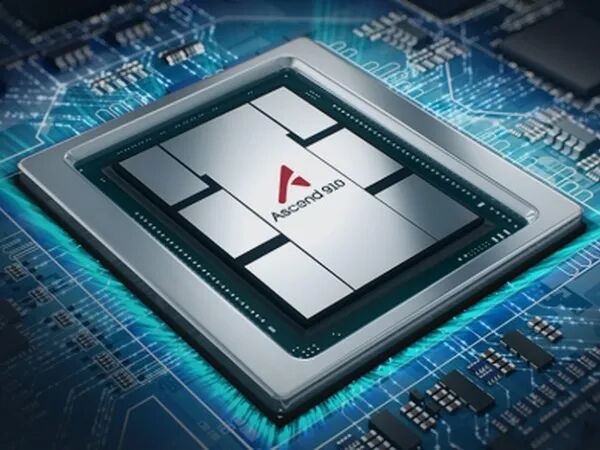
In contrast, Huawei’s Ascend AI chips are ASICs optimized for AI computing, specifically tailored for deep learning inference and training. This customization allows them to achieve higher performance and energy efficiency for specific tasks, but they lack the efficiency and flexibility of GPGPUs for general computing tasks such as graphics rendering, parallel computing, and scientific computing.
For instance, many AI applications (especially deep learning) currently primarily use single-precision (FP32) and low-precision (such as INT8 or FP16) floating-point operations, as these operations provide sufficient precision and can be completed with lower computational resources. The Ascend AI chip’s ASIC architecture can optimize the efficiency of such AI computations, but it cannot support double-precision floating-point (FP64) calculations. In contrast, NVIDIA’s H100/H20 accelerators not only support single-precision and half-precision floating-point calculations but also effectively support double-precision floating-point calculations, making them suitable for a wider range of scientific computing and engineering simulation tasks.
Moreover, in terms of software ecosystem, NVIDIA’s CUDA platform boasts a mature development ecosystem and a wealth of optimized libraries (such as cuDNN, TensorRT) that can support a wide range of application scenarios. Developers can leverage these tools and libraries to significantly simplify their development work.
On the other hand, Huawei’s Ascend AI chips utilize their self-developed CANN (Compute Architecture for Neural Networks) software platform for computing power scheduling and execution. Although Huawei has also launched deep learning frameworks like MindSpore, its ecosystem and developer support are still significantly inferior to NVIDIA’s CUDA ecosystem.
In summary, the advantage of Ascend AI chips as ASICs lies in their high efficiency and low power consumption for AI computing, but they still have certain gaps in flexibility for computing tasks, double-precision floating-point support, and development ecosystem compared to NVIDIA and some domestic GPGPU manufacturers. Currently, other domestic GPGPU manufacturers are developing their own ecosystems while maintaining compatibility with the CUDA ecosystem.
The Information’s report indicates that a major bottleneck Huawei faces in increasing its AI chip market share in mainland China is that Huawei’s AI chips utilize the CANN software platform for computing power scheduling and execution. However, CANN has not received widespread support in the industry, far less than NVIDIA’s CUDA.
It is reported that Huawei’s new AI chips, after shifting to GPGPU, will be equipped with new software that allows users to be compatible with NVIDIA’s CUDA programming language through middleware, and this software can also convert CUDA instructions into a language suitable for Huawei’s AI chips. Sources added that Huawei is also interested in adopting the chip functional models used by NVIDIA and AMD.
The report states that although Huawei’s AI chips are currently ASICs, the company is interested in expanding its general computing products. This shift will enable Huawei’s AI chips to be used more broadly and may help Huawei increase its market share in the Chinese AI chip market.
Source | Chip IntelligenceRecommended Reading——
Broadcom’s stock price skyrockets, but risks of ASIC custom chips remain
Broadcom (AVGO.US) is on fire! Driving global funds to pour into AI ASICs single-handedly
NVIDIA’s lobbying of the U.S. government for relaxed AI chip export controls in the first quarter yielded no results
No price increase for now! U.S. suspends tariffs on GPUs and motherboards for three months
Is the U.S. government about to introduce semiconductor tariffs? TSMC stands firm, while Intel, Micron, and Qualcomm all voice their concerns
The world’s first! Malaysia announces deployment of Chinese AI chips: retracts statement under U.S. pressure
Rumored collaboration between Apple (AAPL.US) and Broadcom (AVGO.US) to develop internal AI chips
OpenAI’s new strategy “blossoming everywhere”! Reportedly plans to collaborate with Broadcom (AVGO.US) to develop AI inference chips
Bold predictions from Broadcom’s CEO regarding chips

 ☞ Business Cooperation: ☏ Please call 010-82306118 / ✐ Or email [email protected]