Indoor dehumidification is not only crucial for health and comfort but also plays a significant role in adapting to climate change and supporting sustainable development. 3D printed biomimetic porous materials have shown application value in this field.
“ 3D Science Valley White Paper Illustrated Analysis
”
In recent years, rapid dehumidification has become a critical demand in various fields such as industrial processing, climate control systems, and indoor air quality management. High humidity indoor environments, especially in enclosed spaces, can lead to issues such as mold growth, material degradation, and discomfort for individuals. Among various dehumidification technologies, the adsorption-based dehumidification technique that captures moisture from the air using hygroscopic materials has gradually emerged as a promising solution. This technology offers advantages such as fast response time, flexible processing capacity, and adaptability to different humidity conditions, but its dehumidification performance highly depends on the adsorption capacity and kinetics of the hygroscopic materials used. Therefore, developing hygroscopic materials that possess rapid moisture absorption and desorption capabilities, along with strong structural stability and ease of scalable synthesis, is expected to meet the demands of efficient large-scale dehumidification applications.
Recently, Professor Wang Ruzhu from Shanghai Jiao Tong University’s Institute of Refrigeration and Cryogenics led the ITEWA innovation team, drawing inspiration from nature. By mimicking the vertically aligned tracheid structures of plants such as black spruce, they developed a biomimetic porous hygroscopic material (CASN-Li) using direct ink writing 3D printing technology to ‘replicate’ its internal water transport channels. This material features both macro-ordered mass transfer channels and micron-sized pore structures, which synergistically accelerate internal moisture transport, achieving a moisture absorption rate of 1.5 g g⁻¹ h⁻¹ (at 90% relative humidity), and at 60% relative humidity (RH), its moisture absorption rate is 2.1 times that of conventional solid hygroscopic materials. A piece of material sized 20×20×3 mm³ can reduce the internal RH of a space 6750 times its volume from 90% to 60% within 25 minutes. The 3D printing technology allows for the customization and mass production of CASN-Li materials, and low-cost components such as sodium alginate and hydrophilic fumed silica make the scalable production cost of this material controllable.
Currently, this research work has been published in the journal Advanced Functional Materials under the title “Biomimetic Porous Hygroscopic Monolith with Vertically Aligned Channels by 3D Printing for Rapid Dehumidification and Regeneration.” PhD student Chen Zhihui from Shanghai Jiao Tong University is the first author of the paper, and Professor Wang Ruzhu is the corresponding author.
【Preparation of 3D Printed Porous Hygroscopic Materials】
The research team selected sodium alginate (SA) as the 3D printing slurry due to its biodegradable nature, low cost, and rapid gelation in the presence of divalent cations, making it easy to form spherical, fibrous, or complex three-dimensional structures with good printability. Additionally, hydrophilic fumed silica (HF-SiO2) nanoparticles were introduced to improve the rheological properties of the slurry, meeting the requirements for shear-thinning and self-supporting printing. Furthermore, boron nitride (BN) was added to enhance the thermal conductivity of the material, accelerating the desorption and regeneration of the adsorbent. The 3D printed material, after being freeze-shaped and chemically cross-linked, was placed in a lithium chloride solution to load hygroscopic factors, enhancing the material’s moisture absorption capacity across a wide humidity range (Figure 1).
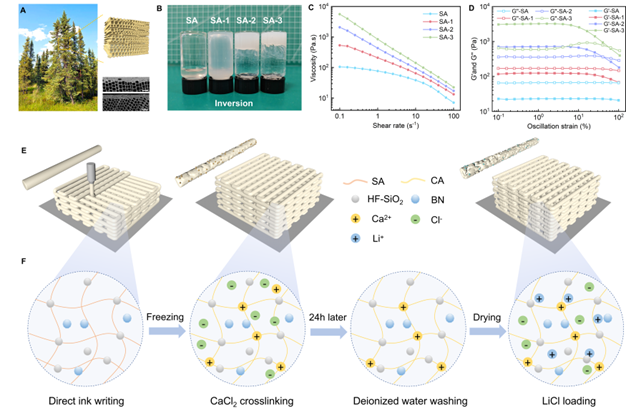
Figure 1. Preparation process of CASN-Li
【Characterization of 3D Printed Porous Hygroscopic Materials】
The 3D printing process endows the hygroscopic material CASN-Li with a uniform macro-porous structure (Figure 2A), with pore sizes of approximately 0.6×0.6 mm². Enlarged scanning electron microscope images further reveal that this porous matrix possesses abundant micron-sized pores, providing space for the loading of hygroscopic salts and the storage of salt solutions. Additionally, the rich pore structure and the introduction of nanomaterials also impart a lightweight characteristic to the hygroscopic material (Figure 2B). The research team further investigated the compressive performance of CASN-Li in both dry and hygroscopic states, with test results indicating that even in a hydrated state, the material can withstand compressive stresses of up to 10 MPa (Figure 2E), demonstrating reliable mechanical strength and structural integrity.
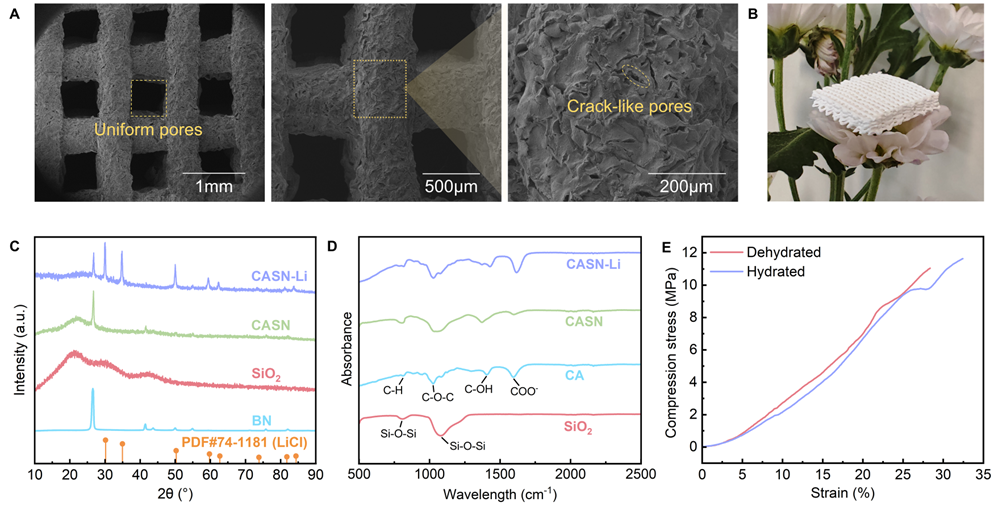
Figure 2. Characterization study of CASN-Li
【Adsorption-Desorption Characteristics of Porous Hygroscopic Materials】
The synthesized porous hygroscopic material CASN-Li exhibits excellent adsorption kinetics. The 3D printing process provides it with macro vertically aligned channels for rapid moisture transport, shortening the moisture diffusion path. Compared to solid block adsorbents, the 3D printed porous structure has a larger specific surface area, exposing more active sites to capture moisture. Additionally, the rough structure of the material’s surface further increases the contact area between moisture molecules and the adsorbent, thereby accelerating the adsorption process. Moreover, CASN-Li demonstrates strong capillary action (Figure 3B), allowing it to timely absorb the salt solution formed during the adsorption process and store it within the pores, effectively preventing leakage of the salt solution, thus achieving efficient and repeatable adsorption-desorption cycles.
Under conditions of 30%, 60%, and 90% RH, the adsorption amounts of CASN-Li after 2 hours were 0.42, 0.76, and 1.18 g g⁻¹ respectively (Figure 3F, solid line), reaching 88.4%, 89.4%, and 64.1% of the corresponding equilibrium adsorption amounts. By comparing the dynamic adsorption curves of micro-scale materials (Figure 3F, dashed line) with those of enlarged synthesized materials (Figure 3F, solid line), the proposed adsorbent structure design can effectively alleviate the deterioration of adsorption kinetics caused by the scale-up effect in large-scale applications. Thanks to its excellent porous structure, CASN-Li exhibits outstanding adsorption kinetics compared to existing lithium chloride-based composite hygroscopic materials (Figure 3I), demonstrating its application potential for achieving rapid dehumidification goals.
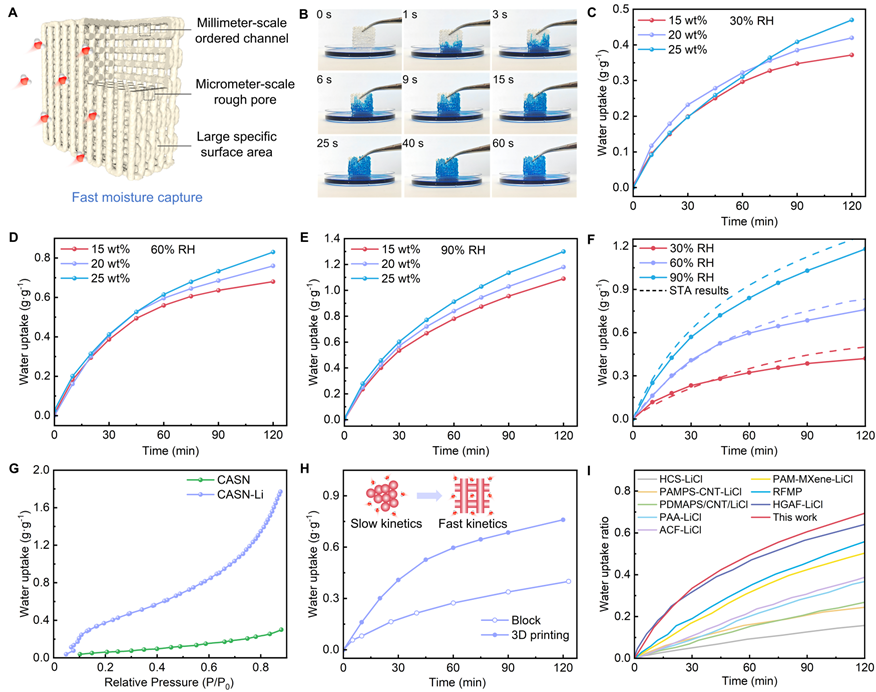
Figure 3. Structural schematic and adsorption performance of CASN-Li
To fully leverage the rapid mass transfer characteristics of CASN-Li, the research team employed a hot air desorption method to achieve rapid desorption and regeneration of the adsorbent. Heating at a supply air temperature of 81.7°C (11 V) for 15 minutes, the material quickly reached a near-equilibrium temperature of approximately 78.4 °C (Figure 4C), and after heating for 20 minutes, its desorption amount reached 81.8% of the initial saturated adsorption amount (Figure 4D), validating the thermal-mass synergistic enhancement design of CASN-Li.
Leveraging digital 3D printing technology, the structure of CASN-Li can be customized according to demand. Its excellent mechanical properties make it easy to handle, suitable for mobile or portable scenarios. Furthermore, this adsorbent also demonstrates good economic feasibility and cost advantages. Sodium alginate is a renewable and low-cost biopolymer material, while hydrophilic fumed silica is widely available and inexpensive; although boron nitride is relatively more expensive, only a small amount is needed. CASN-Li fully utilizes the synergistic advantages of its components, making it potentially suitable for low-cost large-scale production, applicable in scalable and economically sustainable real-world scenarios (Figure 4F).
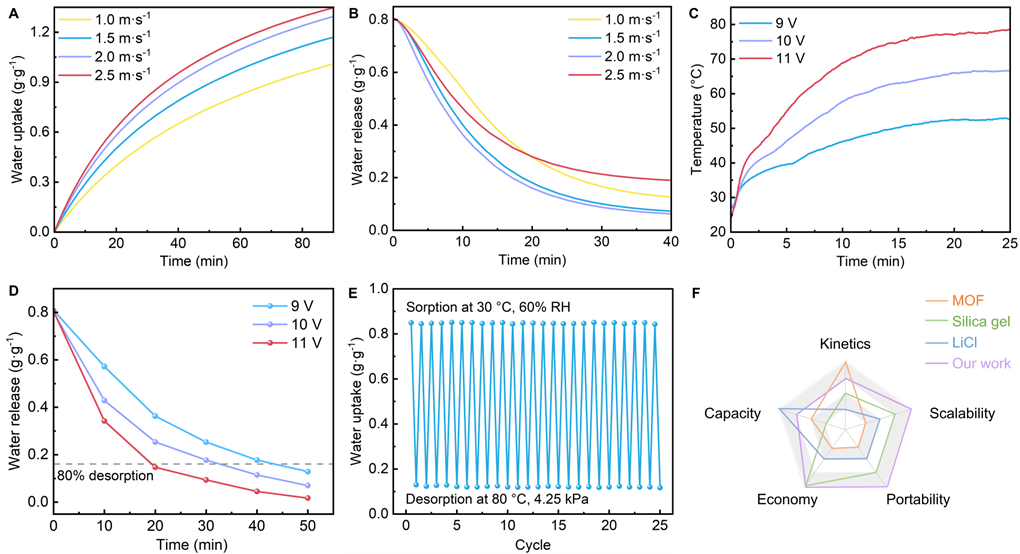
Figure 4. Desorption performance and comprehensive evaluation of CASN-Li
【Testing and Prediction of Dehumidification and Regeneration Performance】
The research team designed a transparent acrylic device (250×180×180 mm³) to verify the effectiveness of CASN-Li in achieving rapid dehumidification and regeneration (Figure 5A), which has a volume 6750 times that of a single piece of CASN-Li. Test results showed that the relative humidity inside the device rapidly decreased from 90% to 60% within 25 minutes. Specifically, within 25 minutes, the relative humidity dropped from 60%, 70%, 80%, and 90% to 39.1%, 45.4%, 53.6%, and 59.9% respectively (Figure 5B). By increasing the amount of adsorbent to two pieces, the time required to reduce the internal RH from 90% to 60% can be halved. The research team further compared the dehumidification performance of CASN-Li with existing reported adsorbents at the device level (see supporting materials), which also indicated that CASN-Li has efficient humidity regulation capabilities. Subsequently, the research team conducted simulation modeling of the dehumidification process inside the device (Figure 5E), exploring the changes in internal relative humidity after 30 minutes of dehumidification based on the amount of adsorbent used and the initial relative humidity inside the device, to select the appropriate amount of adsorbent to achieve ideal climate conditions (Figure 5F).
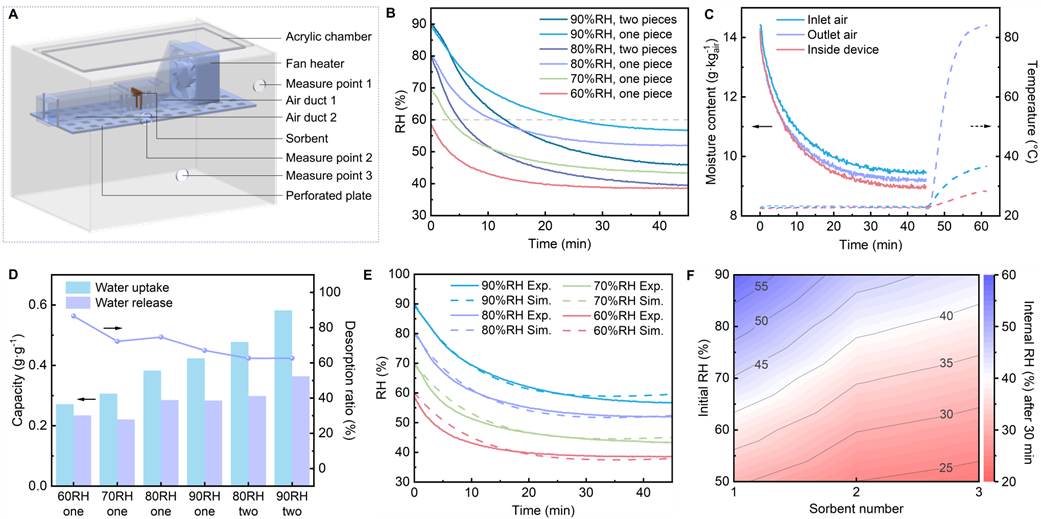
Figure 5. Testing and prediction of dehumidification and regeneration performance of CASN-Li
【Article Summary】
Globally, indoor dehumidification is not only crucial for health and comfort but also plays a significant role in adapting to climate change and supporting sustainable development. The research team proposed a hygroscopic material CASN-Li with a biomimetic porous structure for rapid humidity regulation. By combining direct ink writing 3D printing technology with chemical cross-linking, this material is endowed with millimeter-scale macro-ordered vertical channels and micron-sized porous structures. Especially, the macro channels constructed using 3D printing technology significantly increase the active sites exposed to environmental moisture, effectively enhancing the adsorption-desorption performance of CASN-Li. This research work also validates the broad application prospects of combining 3D printing with adsorption-based atmospheric water utilization technology in achieving efficient humidity control.
Original link:
https://doi.org/10.1002/adfm.202508512
Research Team
“Energy–Water–Air” Interdisciplinary Innovation TeamITEWA
Founded by Professor Wang Ruzhu from Shanghai Jiao Tong University, the team has long been dedicated to solving cutting-edge fundamental scientific problems and key technologies in the interdisciplinary fields of energy, water, and air, aiming to achieve integrated solutions at the material-device-system level through interdisciplinary collaboration, promoting breakthrough progress in related fields. The team has recently published a series of interdisciplinary papers in high-level journals such as Science, Nature Water, Joule, Energy & Environmental Science, Advanced Materials, and Nature Communications.

Graded Porous Structures in Metal 3D Printing: Innovative Breathability Solutions
North University of China, Xi’an Jiaotong University l New Achievements in 3D Printed Metamaterials – Biomimetic Metamaterial Structure Design, Preparation, and Mechanism Research

 ▌3D Science l Infinite PossibilitiesSubmission丨[email protected]
www.3dsciencevalley.com