Low Power Design – Power Switch (2) Adding Switch to the Top Level Block

Low Power Design - Power Switch (2) Adding Switch to the Top Level Block

Classification and application of power switches: Low Power Design – Power Switch In a recent project, with tight deadlines, we ran two versions, differing in whether to use UPF. The block is implemented normally, and the switch is added at the top level. ​1. UPF First, let’s analyze the UPF content related to the power … Read more

Low Power Design of MCUs (Part 3) Products

Low Power Design of MCUs (Part 3) Products

Author:RimeLink Source: http://blog.csdn.net/jiangjunjie_2005/article/details/47700597 Introduction: Power consumption is a significant issue for battery-powered products; once the energy is depleted, the device will “stop working.” In “Low Power Design of MCUs (Part 1) Theory,” we introduced the principles of energy saving; in “Low Power Design of MCUs (Part 2) Practice,” we measured the low power consumption values … Read more

A Simple Written Test Question on Low Power Design

A Simple Written Test Question on Low Power Design

1. Concept Composition of Power Consumption: Three main sources of power consumption: surge, static power, and dynamic power; Surge Current: Refers to the maximum instantaneous input current generated when the device is powered on, known as the inrush current; The surge current is device-dependent; Surge power is not our primary concern, so it is only … Read more

Low Power Design Handbook – Introduction

Low Power Design Handbook - Introduction

1.1 Overview Over the past two decades, the design of complex chips has undergone a series of transformations. In the 1980s, language-based circuit design and synthesis emerged. In the 1990s, design reuse and IP became mainstream design practices. In recent years, low power design has begun to change the way designers handle complex SoC designs … Read more

Low Power Design Techniques: Data Gating and Operand Isolation

Low Power Design Techniques: Data Gating and Operand Isolation

Low Power Design Techniques: Data Gating (Data Gating) and Operand Isolation (Operand Isolation) Previously, we discussed Clock Gating (Clock Gating), which is a well-known low power design technique. It can be easily applied during the logic synthesis stage without requiring changes to the RTL, making it one of the more straightforward methods for achieving low … Read more

Chapter 5: Low Power Design

Chapter 5: Low Power Design

Low Power Design 5.1 Power Consumption Sources Surge、Static Power Consumption and Dynamic Power Consumption are the three main sources of power consumption. • Surge current refers to the maximum instantaneous input current generated when the device is powered on, and is also known as startup current in applications. • Standby current refers to the current … Read more

2023 PMIC Team Building Event Recap

2023 PMIC Team Building Event Recap

In order to allow everyone to relax fully amidst their research work, PMIC organized a team-building event at a camping base in the mountains. Everyone set aside their heavy academic burdens, took a break, deeply felt the gifts of nature, released their inner joy, and enjoyed a day filled with happiness. PMIC Team Building Everyone … Read more

ADAS Triggers a Price War: Over 50% Cost Reduction Behind Domain Controller Upgrades

ADAS Triggers a Price War: Over 50% Cost Reduction Behind Domain Controller Upgrades

Join the professional industry group for intelligent vehicles (autonomous driving, connected cockpit, commercial vehicles) by adding WeChat:17157613659, show your business card, limited to intelligent connected software and hardware suppliers and OEMs. The upgrade of the vehicle electronic architecture (from distributed to centralized) is imperative. However, there are still significant challenges behind it, such as development … Read more

Understanding ECUs: How Much Do You Know?

Understanding ECUs: How Much Do You Know?

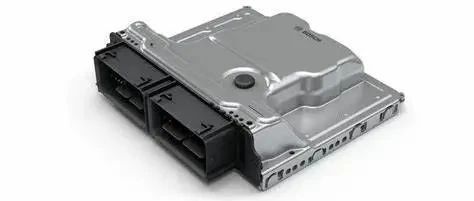
The ECU, or Electronic Control Unit, can be understood as the vehicle’s computer. It is a microcomputer controller specifically designed for automobiles, consisting of a microprocessor (CPU), memory (ROM, RAM), input/output interfaces (I/O), analog-to-digital converters (A/D), and large-scale integrated circuits for shaping and driving. The working principle of the ECU is to collect various operational … Read more

Automotive Grade Testing of ECUs: DV Testing (Part 10: EMC Standards and Testing – 5)

Automotive Grade Testing of ECUs: DV Testing (Part 10: EMC Standards and Testing - 5)

This article is approximately 5,400 words long, recommended for saving and reading. Author | Zuo Chenggang Produced by | Automotive Electronics and Software Introduction: This article is the tenth piece in the series of articles titled “Automotive Grade Testing of ECUs” (click to view all articles). Continuing from the previous articles, there is a lot … Read more