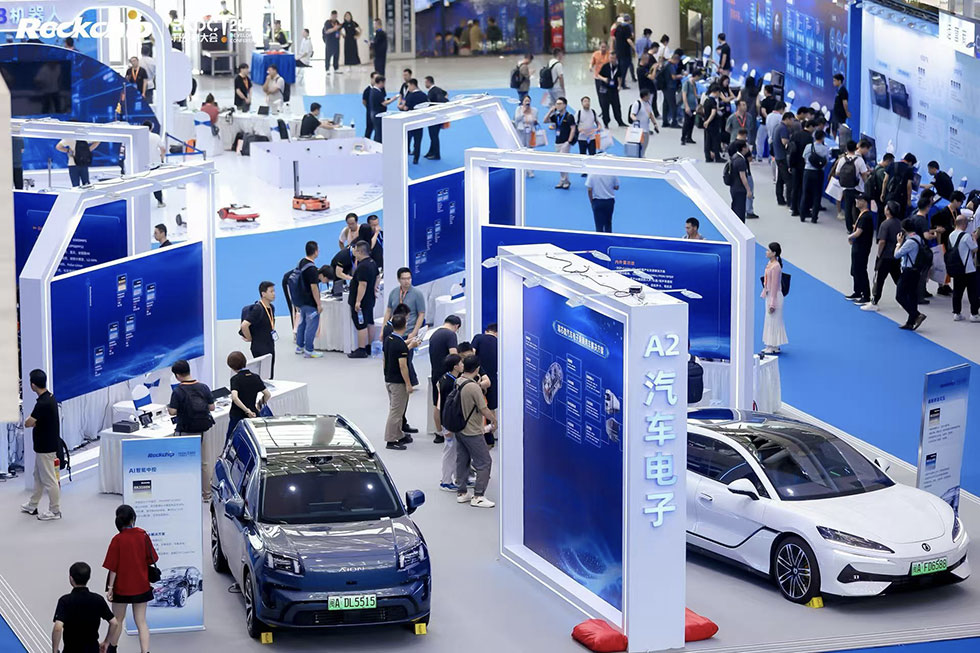
In July 2025, the 9th Developer Conference of Rockchip (RKDC 2025) kicked off at the Fuzhou Strait International Conference and Exhibition Center. This grand event, themed “AIoT Model Innovation Reworking Products,” showcased Rockchip’s comprehensive layout and deep breakthroughs in the field of smart automobiles. From intelligent cockpits to integrated docking, from edge co-processors to in-vehicle visual chips, Rockchip not only launched multiple automotive-grade chips but also collaborated with ecosystem partners to build full-scenario solutions, accelerating the implementation of automotive intelligence innovation.
Types of Rockchip’s Full-Ecosystem ChipsCONTENT
Multi-purpose chips: Mainly used in general scenarios such as educational terminals, information publishing, industrial control, and smart devices, covering computing power needs from entry-level to high-performance.RK3588 and RK3576 are flagship-level, featuring multi-core architecture and AI acceleration capabilities, suitable for edge computing, AR/VR, and complex scenarios such as high-end cockpits.
RK3568,RK3566,RK3368,RK3399,RK3399Pro,RK3288,RK3326,RK3188,RK3128,RK3126,RK3036,RK3229 form the mid-to-low-end product line, widely used in educational tablets, advertising machines, OTT boxes, embedded control, etc., with differentiated deployment based on computing power and interface capabilities.
In-vehicle cockpit chips: PX5, PX3 are chips designed specifically for in-vehicle scenarios, covering needs from central entertainment systems to instrument displays. They typically have stable video output capabilities, CAN bus support, and long lifecycle guarantees, suitable for intelligent cockpits, navigation instruments, in-vehicle entertainment systems, etc.

AI visual chips: RV1126, RV1109, RV1108, RV1106, RV1103, RK1808 are AI visual chips aimed at security monitoring, industrial vision, face recognition, and other scenarios. They generally adopt Cortex-A7 architecture, integrate lightweight NPU, and feature low power consumption and high cost-performance, suitable for deployment in edge devices for localized image processing and intelligent recognition.
Voice chips: RK3308, RK2206, RK2108 and other chips focus on the field of voice interaction, widely used in smart speakers, voice assistants, Bluetooth audio devices, etc. They support far-field voice recognition, low-power wake-up, audio encoding and decoding, forming the foundational platform for voice interaction.
Interface and display bridging chips: RK628E, RK628D, RK628H, RK628F, RK618, RK616 are Rockchip’s interface chips used for HDMI, MIPI, DSI and other video signal conversion and bridging, serving in scenarios such as in-vehicle displays, industrial screens, and multi-screen outputs. These chips typically serve as supporting devices for the main control SoC, enhancing the display compatibility and expansion capabilities of the system.
Power management chips: RK837 and RK835 are Rockchip’s power management chips for SoC power scheduling, responsible for multi-channel voltage output, power consumption control, and system energy efficiency optimization, often used in conjunction with RK series main control chips to ensure stable system operation.
Embedded microcontroller chips: RKNanoC and RKNanoD are low-power embedded MCUs, suitable for IoT controllers, sensor nodes, wearable devices, etc., with audio encoding and decoding and voice control capabilities. They adopt Cortex-M architecture, emphasizing energy efficiency and real-time response capabilities, suitable for building lightweight control systems.
Automotive Industry ChipsCONTENT
In July 2025, the 9th Developer Conference of Rockchip RKDC 2025 was held at the Fuzhou Strait International Conference and Exhibition Center. The conference showcased applications such as intelligent cockpits, edge co-processors, in-vehicle audio, full LCD instruments, in-vehicle vision, and interface chips, as well as full-scenario solutions in collaboration with ecosystem partners, marking Rockchip’s comprehensive layout in the automotive intelligence track, leveraging existing chip systems and long-term evolving product series, software and hardware solutions, and an open ecosystem to jointly accelerate innovation in the automotive industry.
Intelligent cockpit
Rockchip’s RK-M series automotive-grade SoCs have covered hundreds of KDMIPS across various levels, in addition to central control, entertainment domain control, intelligent cockpits, and integrated docking, also promoting projection and tablet products to be integrated into vehicles through a mature AIoT industrial chain.
*Intelligent cockpit chip matrix:
- High-performance series RK3588M, RK3576M, RK3572M: Suitable for central control, instrument, entertainment screens, HUD, DLP, vision, etc., with good inheritance of IP and software can further reduce customer development investment, supporting edge large models, lightweight L2 and APA, and can provide QNX, RAITE, hardware isolation, open source, self-developed Type-I and other multi-system solutions
- Next-generation flagship chips RK3688M and RK3668M: Rockchip continues to invest in advanced processes, with RK3668M at 200KDMIPS+ and RK3688M at 300KDMIPS+ set to launch soon.
- Fully domestically produced SoC RK3568M series: Applied to central control or small domain control with surround view
- Entry-level cockpit chip RK3358M: Applied to central control, armrest screens, headrests, and other independent components
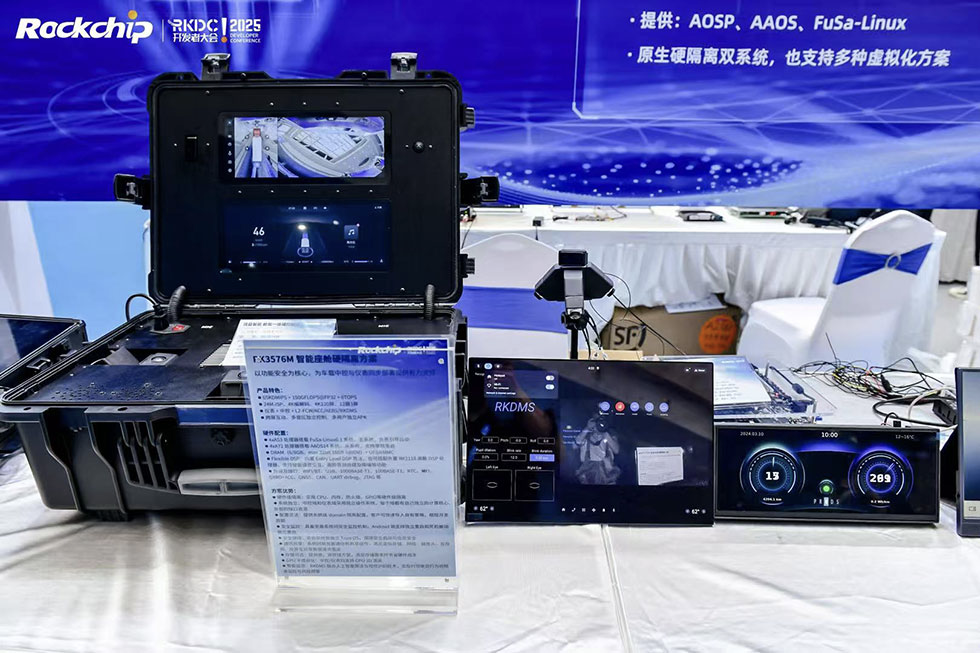
The cockpit entertainment domain control equipped with dual RK3588M has attracted much attention, providing strong performance support and expansion capabilities, supporting up to 9 screens, and has rich peripheral processing capabilities, with the headrest connected to an 800w pixel camera and integrated HDR and multi-frame noise reduction photography algorithms, supporting various game consoles DP in and enjoying game latency as low as 50ms, PCIe3.0 chip cascading can further expand more application scenarios.
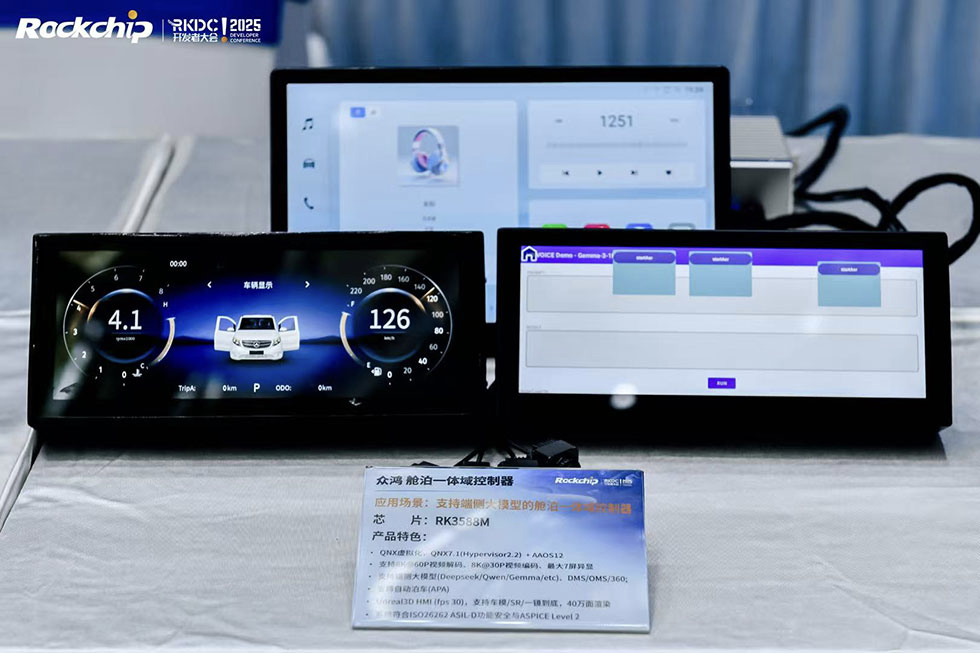
RK3588M‘s integrated docking AI cockpit domain control, equipped with QNX Hypervisor, deeply customizes multiple architectures to significantly improve resource scheduling efficiency, and integrates with the cockpit deeply customized AAOS. The domain control achieves 4V12U parking through the built-in high-performance NPU, supporting edge large models to achieve deep integration of voice, vision, and touch, accurately recognizing driving intentions and actively pushing personalized services based on environmental semantic understanding through the scene perception engine.
Edge co-processors
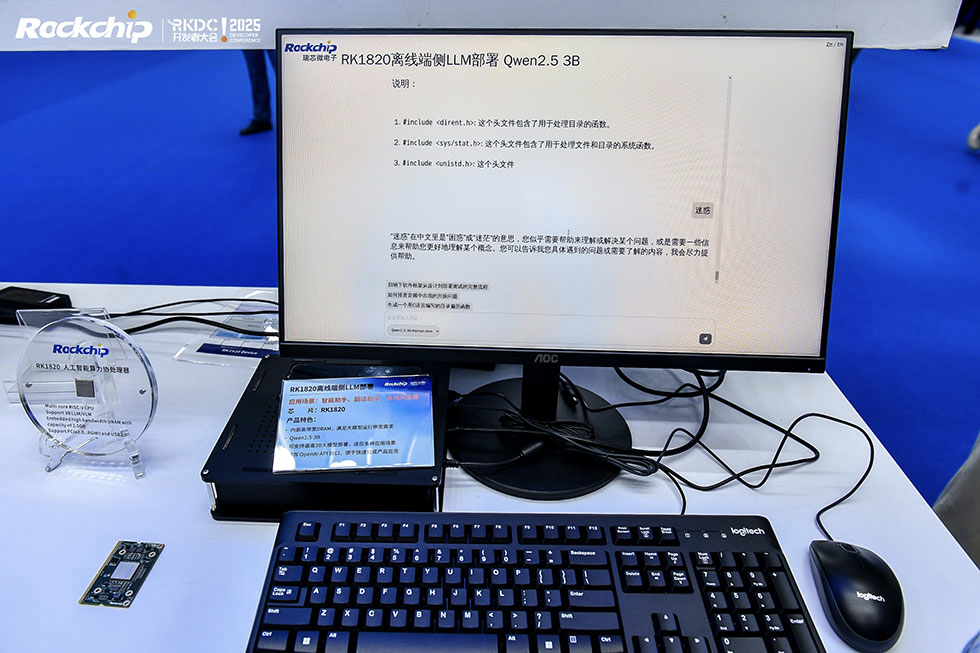
The popularity of edge large models in automobiles is continuously rising, and application scenarios are being continuously explored. With the latest release of Rockchip’s RK182x series co-processors, the in-cabin large models have truly welcomed a chip solution that is suitable in terms of performance, power consumption, cost-effectiveness, and flexibility.
Rockchip’s series of co-processors will become the computing power center in the front cabin of the car, providing AI computing power support for scenarios such as cockpits, in-vehicle vision, and automotive audio. Integrating ultra-high bandwidth on-chip DRAM and multi-core NPU for 3B/7B-LLM/VLM, supporting mainstream model frameworks and providing general API for easy development. They can run independently or flexibly match with various brands of SoC, adding processing capabilities for existing models to increase LLM and VLM capabilities, and also serve as a supplement for new model cockpits, addressing bandwidth shortages, thermal consumption performance drops, costs, and other bottlenecks.
In-vehicle audio
Large audio is the technical strategic foundation of Rockchip, from consumer audio to automotive audio, always maintaining a leading position in technology. Rockchip’s in-vehicle audio solutions provide fully domestically produced DSP+Codec+PA, paired with RKStudio Tool, enabling no-code graphical development and built-in first-party algorithms, providing automotive companies with complete audio system support from hardware to algorithms.
RK2118M innovatively adopts MCU+DSP+NPU high-performance multi-core heterogeneous DSP, with a customized Audio NPU capable of processing AI audio models, achieving: voice separation/ enhancement, music separation, low latency ANC/RNC/ENC, ECNR, spatial audio, and other functions, which have been widely recognized by OEMs and Tier 1s both domestically and internationally.
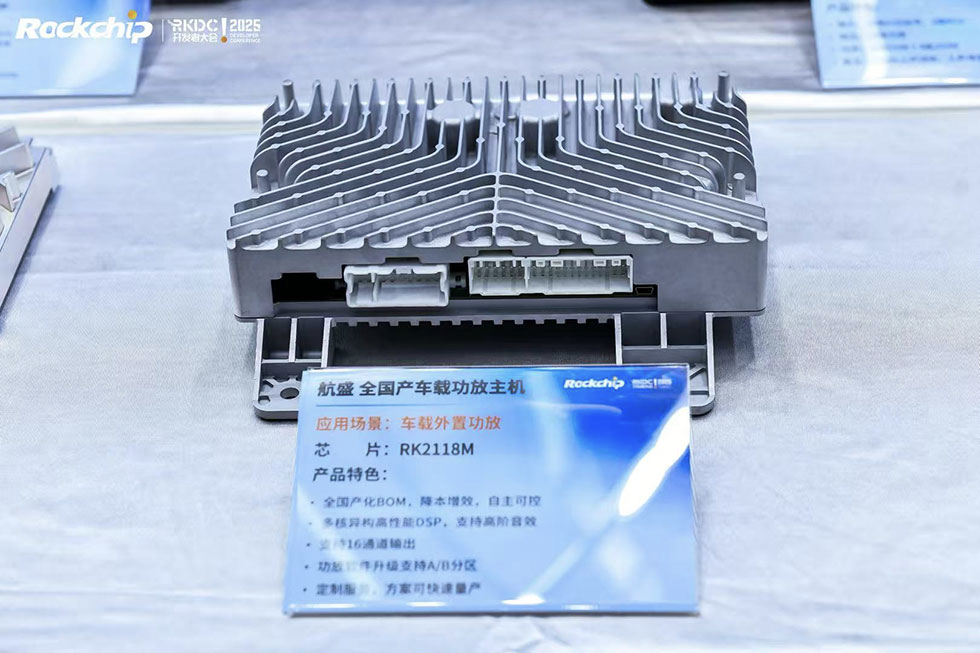
The latest generation DSP-RK2116M was released, which has streamlined architecture and IP compared to RK2118M, while adding a new 4TX4RX Audio Codec, and the software is highly compatible with RK2118M, allowing for seamless migration.
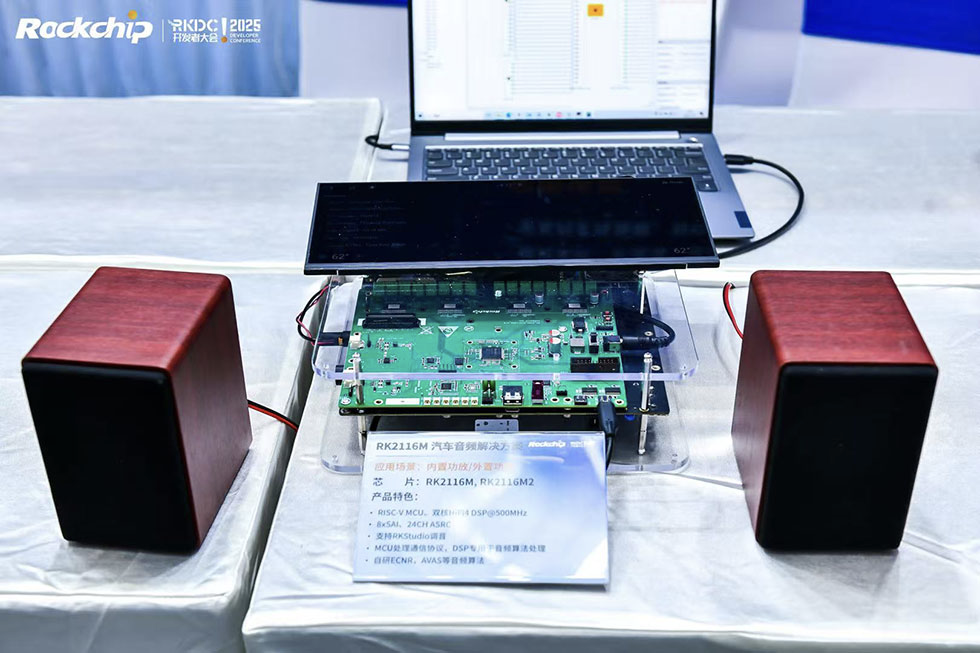
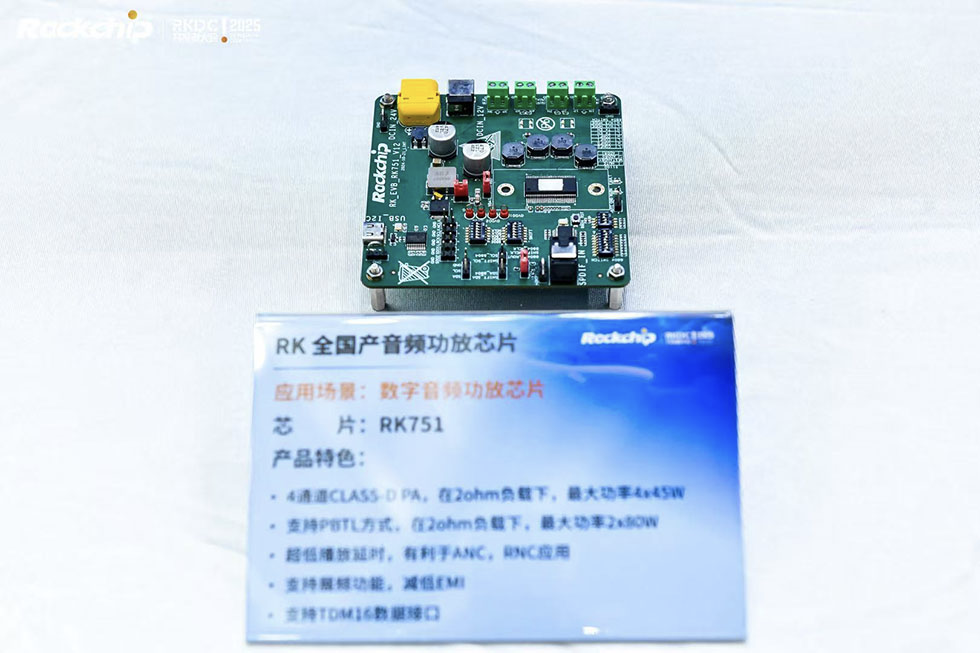
The audio solutions for the cockpit cover Codec-RK730M, PA-RK751M. The high-performance four-channel Class D digital amplifier RK751M has a high signal-to-noise ratio, and the low-latency RK73X series Audio Codec form a complete product set, providing customers with a “power + intelligence” one-stop AI digital acoustic system solution.
Full LCD instruments
Continuous iterations of urban NOA and highway NOA are reshaping the form and function of automotive instruments, with large full-color screens and 3D-SR becoming standard for the new generation of intelligent cockpit instruments. Independent instruments, based on advantages such as cost, stability, flexibility, and later maintenance, are still seeing an increase in market scale.
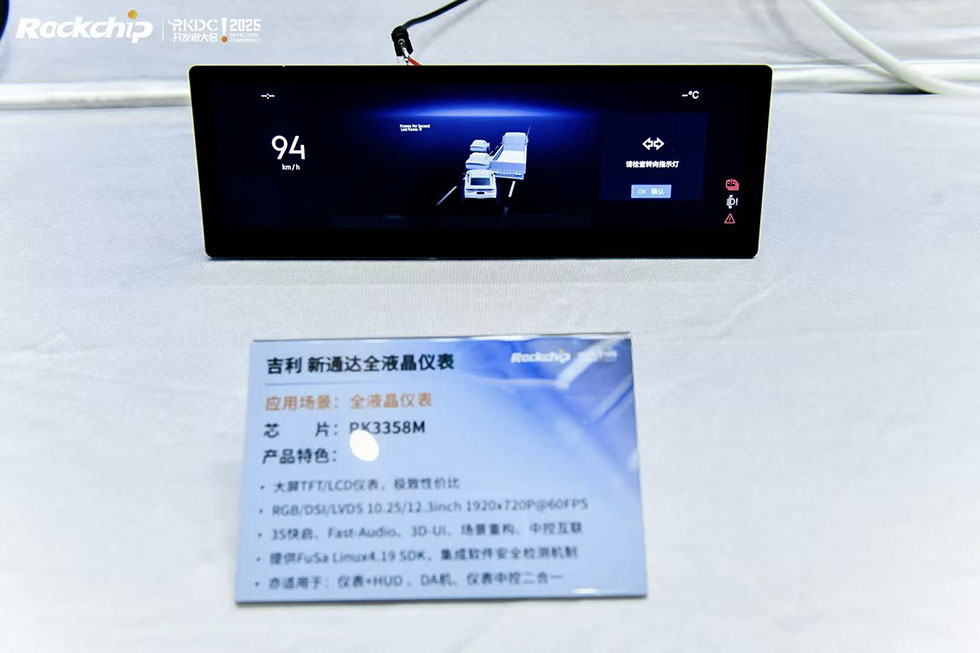
Rockchip’s RK3358M as a high-performance, high-security, and cost-effective digital instrument SoC is equipped with a customized FuSa-Linux SDK, and has been mass-produced for several leading automotive companies. The system solution supports 3 seconds fast cold start, 3D-UI, 3D-SR, safety features, 1920×720P HD display, dual-screen expansion HUD, and overall ASIL functions.
In-vehicle vision
The in-vehicle vision system is the core of the vehicle’s perception of the environment. Rockchip, with its deep accumulation in the field of machine vision, continues to iterate the RV series chips, supporting: multi-camera input, AI-ISP, 2D image processing, NPU, simultaneous encoding and decoding, and screen display.
The heterogeneous architecture combined with the deeply customized Car-DVR Linux SDK can achieve: rapid snapshot in hundreds ms, 1s boot time, and sentinel mode. In scenarios such as AI Car-DVR, MDVR, AEBS, CMS, integrated machines, dual warnings, DSSAD, etc., various pre-installed commercial vehicles have been implemented, serving operations, supervision, tracking, tracing, OTA and other vehicle networking services.
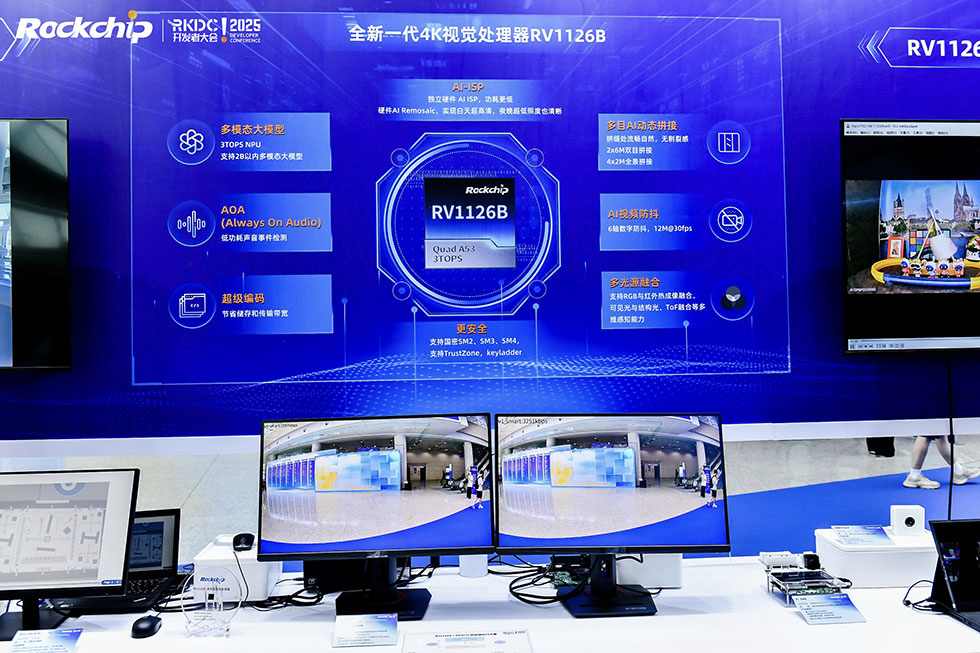
RV1126BM is Rockchip’s fifth-generation in-vehicle vision chip, with performance improvements of over 50% in CPU, bandwidth, encoding, etc., compared to RV1126, and adds: 12M30 AI-ISP, 3TOPS NPU, hardware anti-shake module, dual MCU, etc., and a full-featured automotive-grade version will be launched later. In the direction of new in-vehicle applications, products and solutions for automatic braking, palm vein unlocking, EIS motion anti-shake, edge large models, AOV/AOA sentinel mode have been showcased.
Interface chips
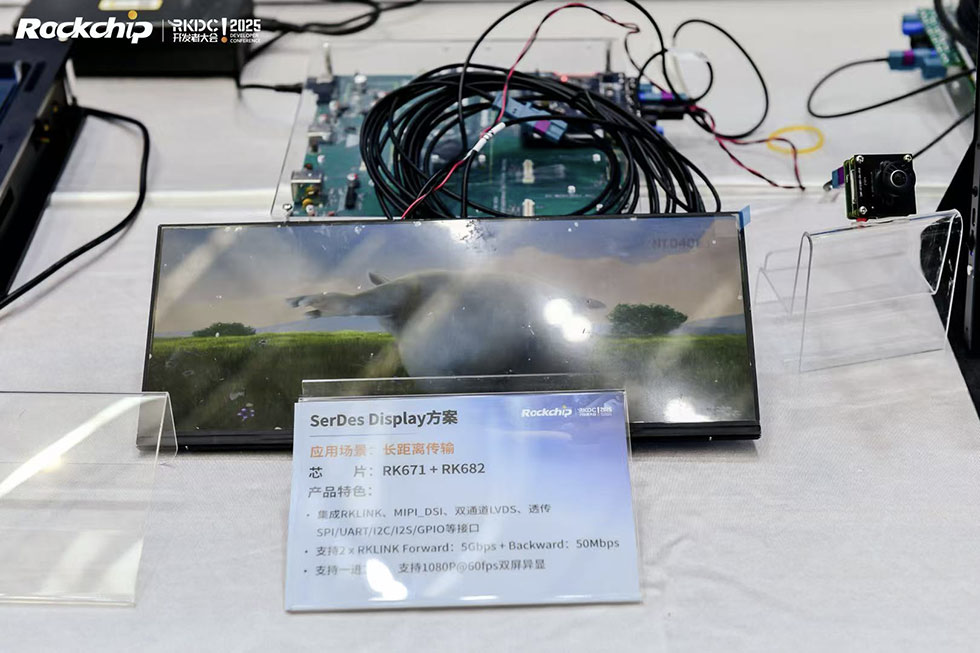
With the accelerated development of automotive intelligence, the number of in-vehicle cameras and displays has surged, and traditional transmission solutions can no longer meet the high bandwidth and long-distance transmission needs. Rockchip has launched multiple interface chips, including a single camera 2M60fps camera serializer RK671M and dual 1080P 60fps screen asynchronous input screen serializer RK681M, as well as a deserializer supporting dual cameras and dual screens RK682M.
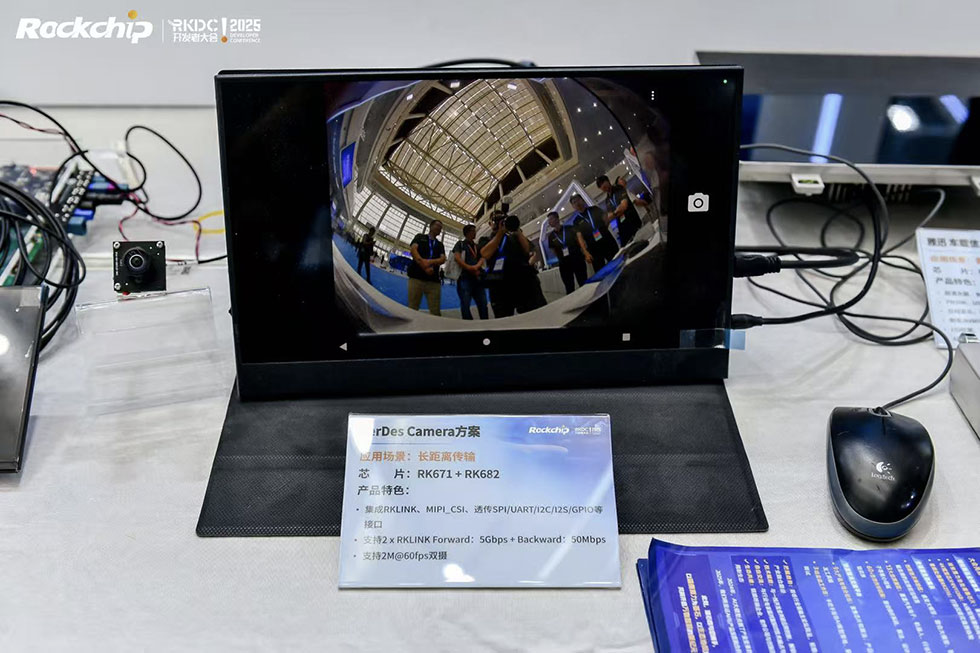
Based on its own RKLINK-I protocol, Rockchip’s long-distance transmission solution supports transmission rates of up to 5Gbps, achieving long-distance transmission through COAX and STP/UTP, supporting: BIST self-check, link status diagnosis, packet retransmission, I2S audio transmission, low-speed interface pass-through, and other functions. Typical application scenarios include: multi-camera systems, multi-screen display systems, mixed transmission scenarios (video + audio + control signal composite transmission), etc.
 Chip Technology Independent R&D CapabilityCONTENT
NPU: The three main focuses of AI are voice processing, image processing, and language processing, all moving towards Transformer-like technical architectures, and we will gradually see more AI models implemented. The bottom layer of AI is mainly the NPU responsible for computation inside the chip, and Rockchip has self-developed NPU and related algorithms, toolchains, etc., covering computing power from 0.5–6TOPs, with some supporting Transformer models, image generation models, object detection models, etc., empowering various specific scenarios for edge or edge-side applications.
ISP: Rockchip’s ISP architecture not only possesses traditional image signal processing capabilities but also integrates AI algorithms for semantic enhancement. It is particularly suitable for image optimization in complex scenes such as low light and backlight; synchronous processing of multiple cameras for in-vehicle surround view, security monitoring, etc.
Video codec engine: Supports H.265/H.264/VP9 and other mainstream formats, supporting hardware decoding up to 8K@60fps. It has low-latency encoding capabilities, suitable for remote collaboration and real-time monitoring.
Case Study – 2025 New AI visual chip RV1126B
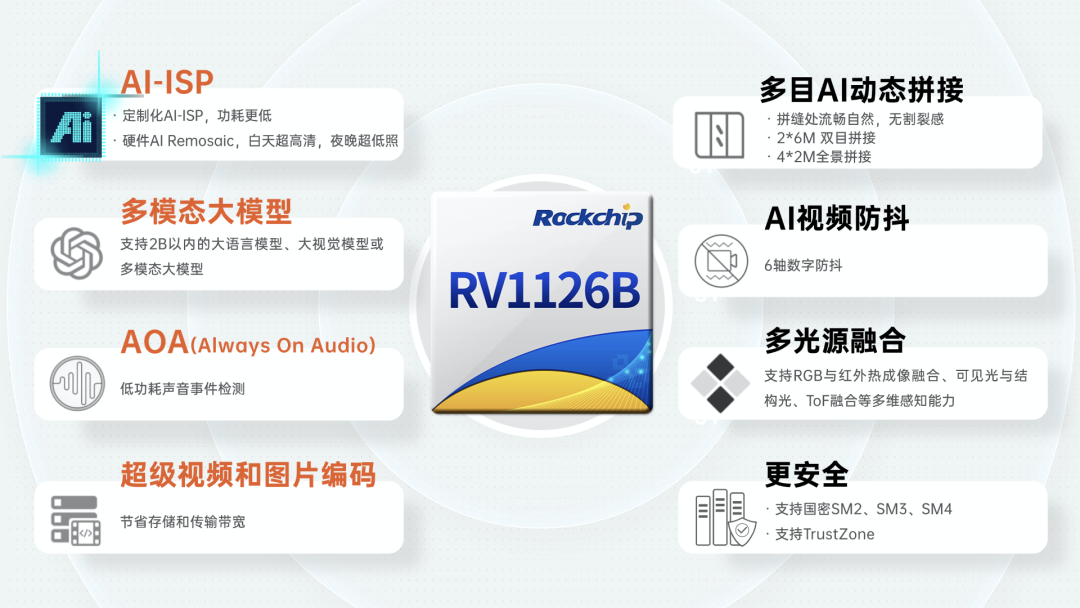
RV1126B boasts strong computing power of 3TOPs, a customized AI-ISP architecture, dynamic stitching, anti-shake, super encoding technology, and hardware-level security, providing high-performance solutions for intelligent security, industrial vision, robotics, and intelligent in-vehicle applications in the AIoT field, promoting the upgrade of terminal devices from being able to see clearly to being able to understand.
*Four major technologies redefine AI visual chips:
-
3TOPS computing engine opens up multi-modal: RV1126B is equipped with a quad-core Cortex-A53 CPU architecture, with performance exceeding that of similar chips by more than 2 times, and integrates self-developed NPU with computing power up to 3T, supporting weight sparsity, W4A16/W8A16 mixed precision quantization, and Transformer optimization technology, capable of smoothly running large language models and multi-modal models with parameter scales within 2B.
This feature endows devices with powerful image semantic understanding capabilities, enabling precise identification of target objects in complex scenes and achieving cross-modal information fusion.
-
AI-ISP + AOV3.0 reconstructs visual perception: RV1126B integrates dedicated AI-ISP hardware, which does not occupy 3T NPU during operation, significantly reducing bandwidth and power consumption. Combined with AI Remosaic technology, it achieves day and night dual-mode adaptability: presenting ultra-clear quality during the day and still clear imaging under low light at night.
AOV3.0 introduces low-power audio event wake-up, capable of real-time detection of abnormal sound sources such as barking dogs, glass breaking, and gunshots, with standby power consumption as low as 1mW, supporting 7×24 hours of audio and video monitoring. The hardware-level 6-DOF digital anti-shake eliminates high-frequency jitter, enhancing the smoothness of moving images; dual-eye/ four-eye dynamic stitching technology avoids screen tearing, providing an ultra-wide field of view.
-
Super encoding engine enhances storage efficiency: For data-intensive scenarios such as video surveillance, RV1126B integrates an intelligent encoding engine, supporting 800 million pixels 45FPS ultra-high-definition encoding, saving 50% of the bitstream compared to traditional CBR mode, allowing for double the recording duration in the same storage space. While ensuring the integrity of image details, it significantly reduces storage costs and transmission bandwidth pressure.
-
Hardware-level security system upgrades protective barriers: In response to the information security needs of intelligent terminals, RV1126B has a built-in national secret-level security scheme, supporting SM2/SM3/SM4 encryption algorithms, integrating TrustZone security isolation technology and keyladder key management system, protecting data from collection to storage, as well as AI algorithm models, further meeting the high security requirements of application scenarios.
Case Study – 2022 Flagship Chip RK3588
RK3588 is Rockchip’s new generation flagship high-end processor, featuring high computing power, low power consumption, super multimedia capabilities, and rich data interfaces. It is equipped with an octa-core A76+ and four-core A55 CPU and ARM G610MP4 GPU, with a built-in 6TOPs computing power NPU.
*It has five major technical advantages:
-
Built-in various powerful embedded hardware engines, supporting 8K@60fps H.265 and VP9 decoders, 8K@30fps H.264 decoders, and 4K@60fps AV1 decoders; supporting 8K30fps H.264 and H.265 encoders, high-quality JPEG encoder/decoder, dedicated image pre-processing and post-processing units.
-
Built-in 3D GPU, compatible with OpenGL ES1.1/2.0/3.2, OpenCL 2.2, and Vulkan 1.2. The special 2D hardware engine with MMU maximizes display performance and provides a smooth operating experience.
-
Built-in Rockchip’s self-developed 48M pixel ISP, supporting numerous algorithm accelerators such as HDR, 3A, LSC, 3DNR, 2DNR, sharpening, dehazing, gamma correction, etc.
-
High-performance NPU supports INT4/INT8/INT16/FP16 mixed operations, with its strong compatibility easily converting network models based on TensorFlow / MXNet/PyTorch/Caffe and other frameworks.
-
High-performance 4-channel external memory interface LPDDR4/LPDDR4X/LPDDR5, capable of supporting demanding memory bandwidth.
Case Study – 2025 New AI audio processing chip RK2118G
RK2118 series chips adopt 22nm process technology, high integration and low power consumption, built-in high-bandwidth HiFi 4 DSP and large-capacity SRAM, using Rockchip’s self-developed audio NPU, achieving high performance “ multi-core heterogeneous“ technology architecture integration, which has been commercialized in various consumer audio products and in-vehicle audio products, including Soundbar speakers, mixing consoles, conference pickup devices, in-vehicle amplifier products, etc.
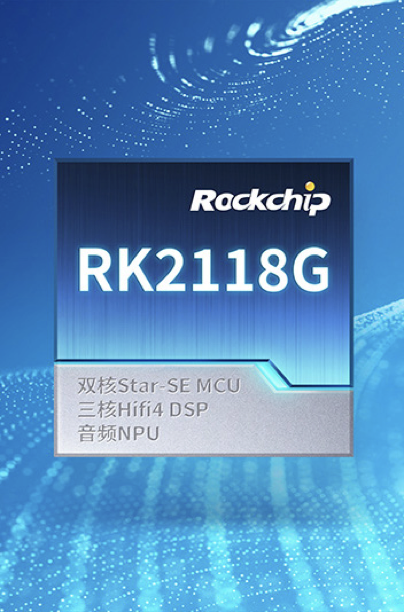
*RK2118 chip’s three major technologies:
-
Supports multiple mainstream high-end audio decoding technologies: Dolby Digital +, Dolby TrueHD, Dolby MAT, etc., outputting up to 9.1.6 channel audio playback, better adapting to different product application forms.
-
High audio detail restoration: Even in 32 channel dense object audio information storms or organ, electronic music, and other high transient signal sound waves, it still maintains stable sound field positioning, accurately restoring every sound detail.
-
Lossless channel switching experience: Based on advanced object-based audio rendering algorithms, the chip can precisely control the height and position of sound, allowing users to switch from stereo to Dolby Atmos experience, feeling the sense of direction and surround sound instantly.
Chip Support Project CasesCONTENT
RK3588M chip
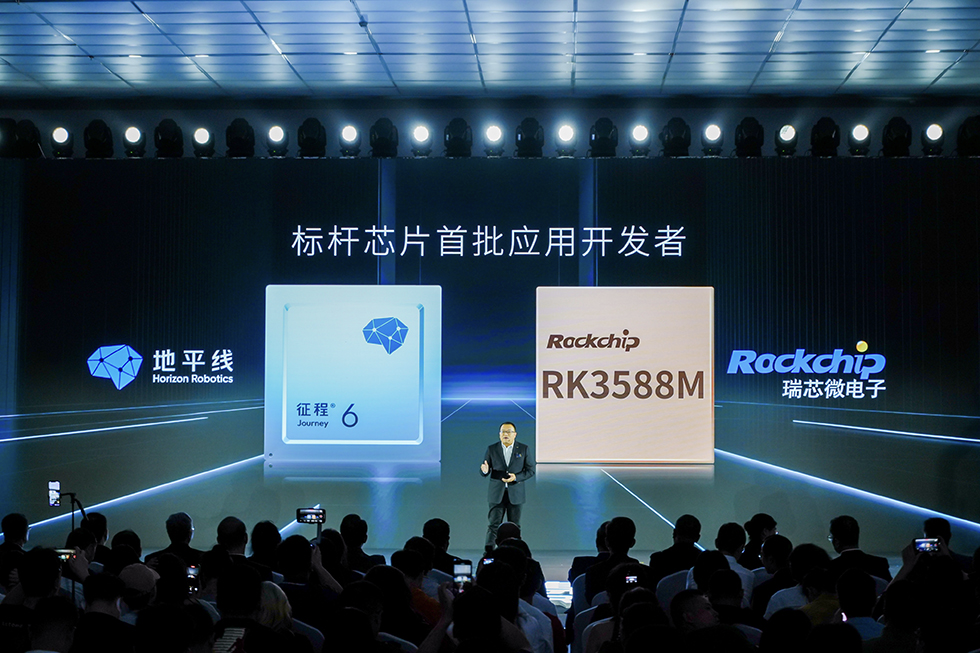
In April 2025, at the GAC Technology Day, Rockchip, as a core chip partner, attended the event, where both parties signed a strategic cooperation agreement for the automotive chip application ecosystem co-construction plan. As a benchmark first batch application developer for GAC Group, Rockchip has developed and mass-produced multiple cockpit products in cooperation with GAC Group and has launched several hot-selling models, with more new models equipped with RK3588M to be released this year.
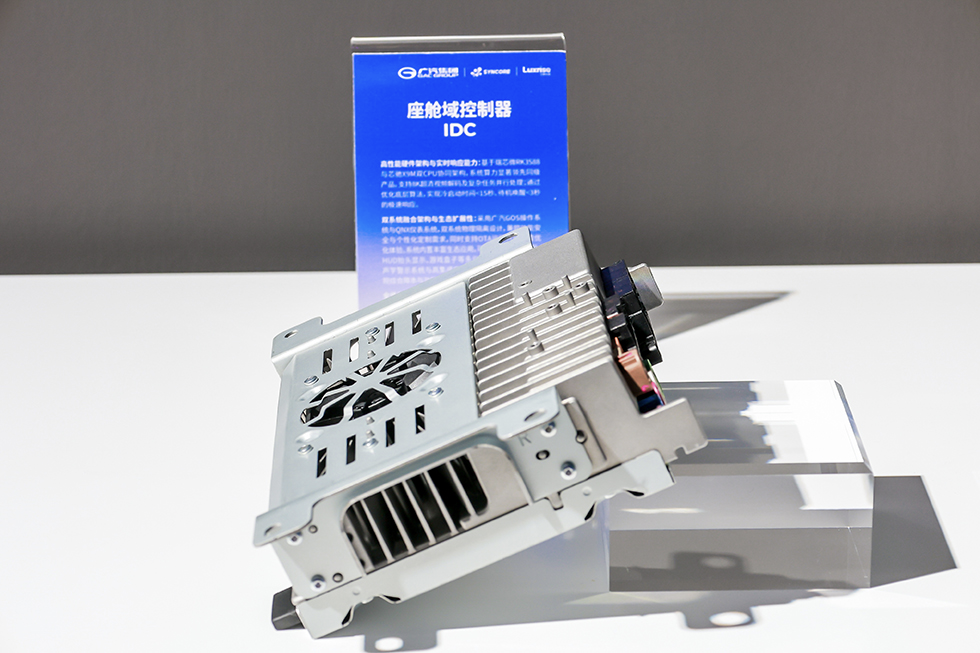
GAC showcased the “cockpit domain controller IDC” developed in cooperation with Rockchip, using Rockchip’s RK3588M intelligent cockpit flagship chip, with high-performance hardware architecture and real-time response capabilities, equipped with 6TOPS system AI computing power, supporting 8K ultra-clear video decoding and complex task parallel processing, achieving cold start time <15 seconds, standby wake-up <3 seconds for rapid response.
In December 2024, the BlackBerry QNX 2024 Annual Developer Conference was held in Shanghai. Rockchip’s automotive business leader Zhu Liang introduced Rockchip’s strategic layout in the intelligent automotive field, with 10k to 100k computing power covering the control needs of high, medium, and low intelligent cockpit domains SoC platform series, from RK3588M flagship automotive-grade chip to the industry’s highly innovative architecture integrating AI processing units of high-performance audio DSP processors RK2118M series.
With Rockchip’s leading self-developed NPU computing power, ecosystem, and scenario advantages in the AIoT industry, it provides the industry with a safe and reliable, mid-to-high-end, and verified intelligent cockpit domestic chip platform. The automotive-grade RK3588M has been launched since early 2023 and has been applied in numerous leading automotive manufacturers, with more than 10 mass-produced models.
Zhuhong Technology showcased its innovative intelligent cockpit system, supported by a RK3588M chip, including three screens: central control, instrument, and co-driver screen, with extremely high computing performance, image processing capabilities, and AI inference capabilities; the central control integrates 3D Unreal HMI technology, smoothly running 320,000 vehicle models and 80,000 VPA, elevating the in-vehicle interface from flat interaction to an immersive virtual reality experience.
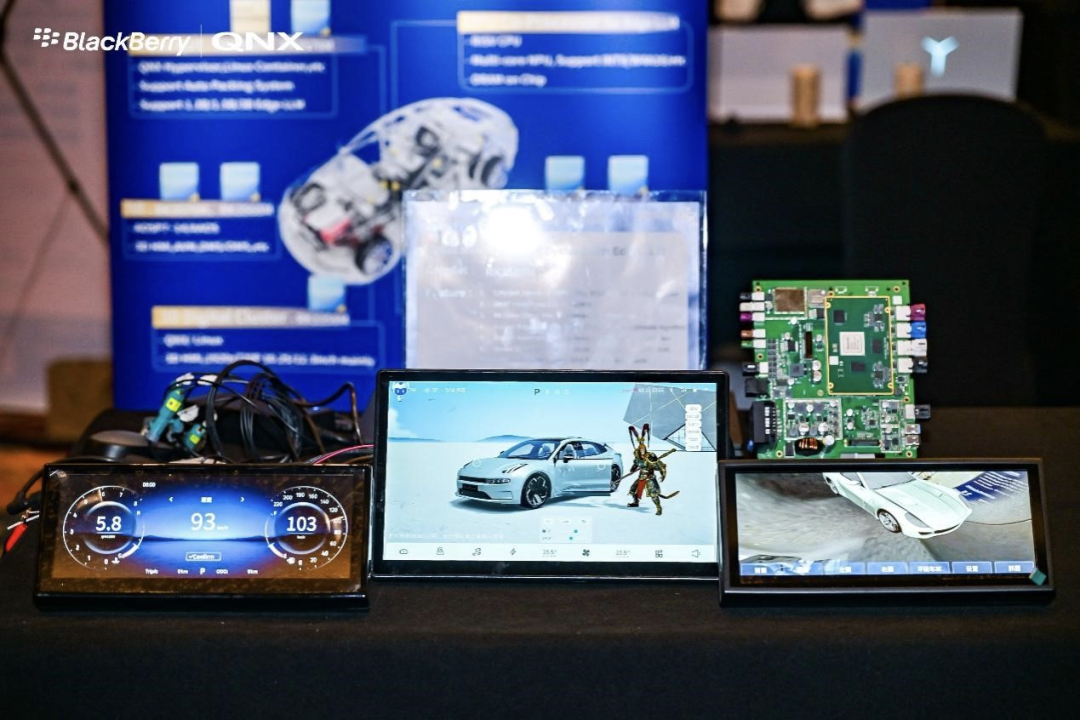
Yuran Industrial showcased its QNX+Android virtualization cockpit domain control system jointly developed with Zhongsun Software, based on RK3588M, equipped with a 3D desktop HMI system, supporting 2.5K central control screen and two 2K instrument and co-driver screens, achieving multi-screen linkage and differentiated distribution of information display. With the core design concept of “ one mirror all the way,” it supports seamless switching of 3D vehicle models between multiple functional modules, bringing users an unprecedented interactive experience.
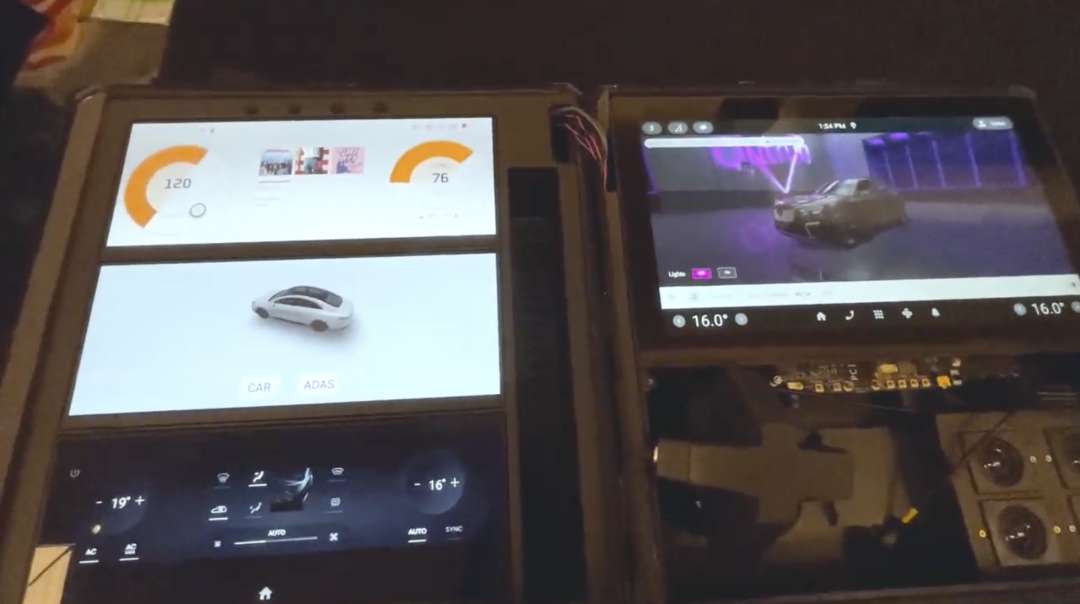
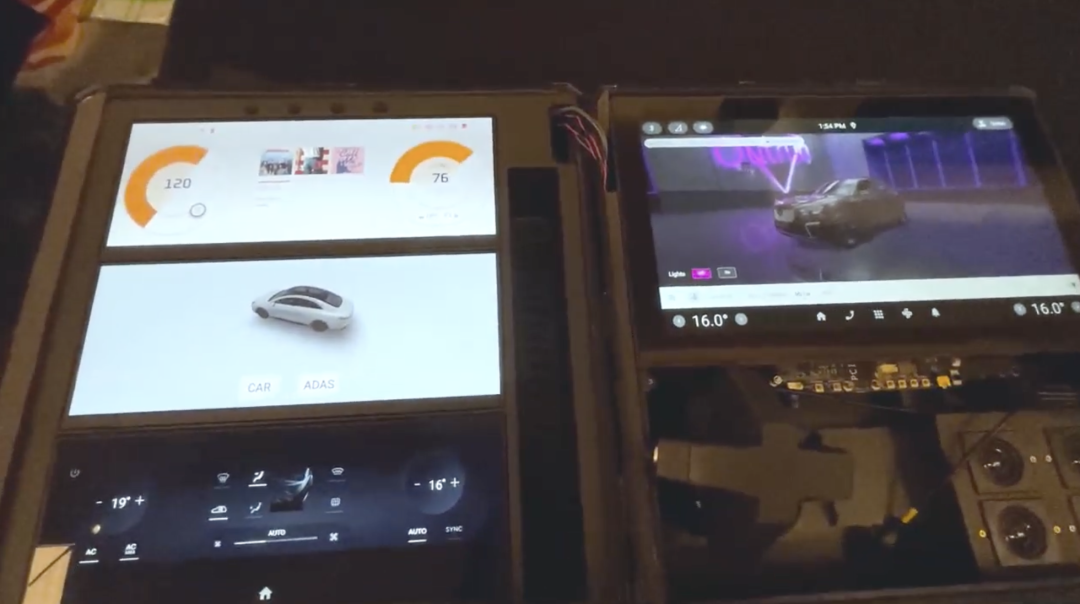
Qt Group and Rockchip jointly launched a one-chip four-screen digital cockpit solution, which is also highly anticipated. This solution is based on Rockchip’s RK3588M flagship automotive-grade chip and integrates QNX virtualization technology, perfectly integrating 3D digital instruments, 3D infotainment system IVI, intelligent parking system, and HVAC system into four screens. Among them, the digital instrument runs on a stable and efficient QNX system, while the IVI and HVAC systems are adapted to Android Automotive, bringing a smooth interactive experience to the cockpit.
RK3562J chip
Rockchip RK3588J as a high-performance industrial-grade SoC is gradually penetrating into multiple key application fields. From image processing to data gateways, from AGV robots to medical display control systems, it supports the real-time response and stable operation of complex scenarios with powerful computing power and multimedia capabilities.
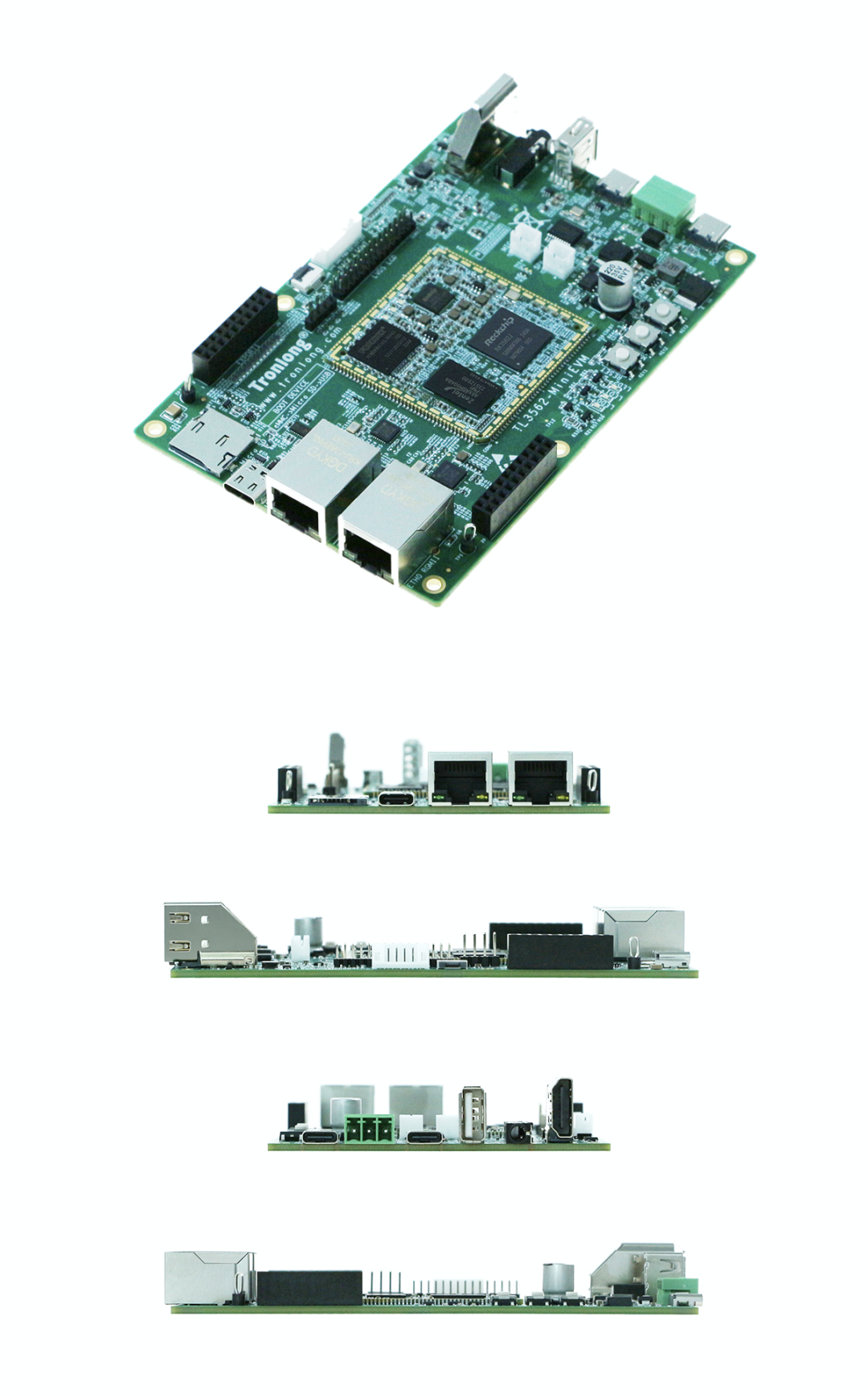
In lightweight embedded applications, Chuanglong Technology launched the TL3562-MiniEVM evaluation board based on RK3562/RK3562J platform, meeting the rapid development needs of industrial cameras, motion controllers, communication management machines, etc., with high integration and rich interfaces. The two are positioned as high-computing edge nodes and low-power control terminals, building a broad and layered intelligent hardware ecosystem to support the technological implementation in fields such as industrial automation, in-vehicle systems, and energy management.
Rockchip RK3562J integrates a high-performance ISP image signal processing module, designed specifically for industrial-grade vision applications. Its ISP features linear correction, noise reduction, automatic white balance, and automatic exposure control, capable of restoring clear and detailed image details in complex optical environments.
Through the accompanying RKISP2.x Tuner tool, developers can calibrate and optimize the IQ parameters of images captured by the camera, making the image colors realistic and rich in detail, significantly enhancing visual effects. This platform has been widely applied in industrial cameras, target recognition, machine vision, and other scenarios.
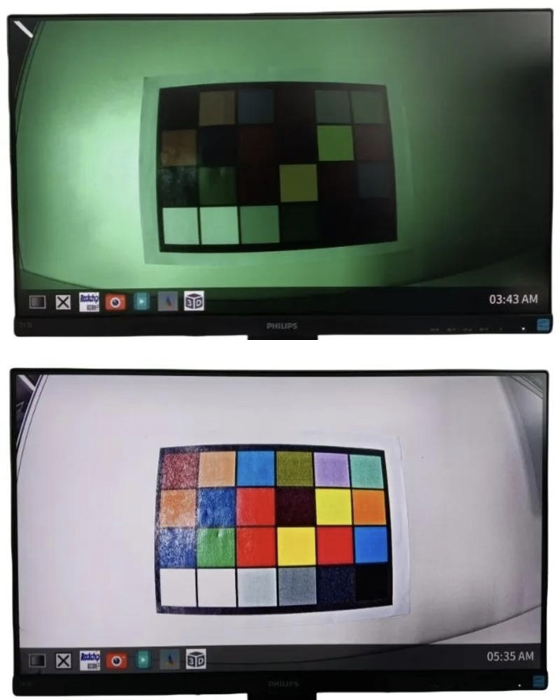
The original image display effect is shown in the upper image; the display effect after ISP image processing is shown in the lower image.
Rockchip is deeply empowering automotive intelligence innovation with a solid chip architecture, an evolvable product series, and an open system capability. Its RK-M series automotive-grade SoCs expand horizontally into applications such as central control, entertainment, and parking, while vertically delving into the AIoT industrial chain extension, demonstrating broad product adaptability and ecological driving force. It is foreseeable that as Rockchip continues to deepen its in-vehicle product layout and collaborate with the industry chain for joint evolution, it will bring a more efficient, integrated, and open intelligent foundation to the automotive industry, accelerating the true arrival of the era of smart mobility.
Recommended Reading
What is TPU? Comparison of TPU, CPU, GPU, NPU
Technical Solutions and Development Trends of Vehicle Networking SoC Chips
The Industrial Process and Product Technology of Domestic GPU Star Company Biran Technology
Analysis of Shortage Models and Replacement Solutions for Domestic Automotive-grade Chips
As Automotive MCUs Become More Like SoCs, How Can Xinchip Empower Smart Cars?
The Path of Bosch’s Chip R&D Under Chip Shortages
—end—