Understanding Waveforms in 3 Minutes: Actuators and CAN Bus Analysis
Understanding Waveforms in 3 Minutes: Actuators and CAN Bus Analysis

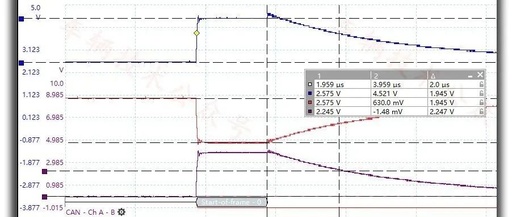
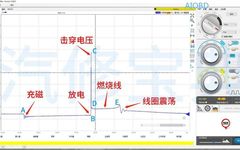
In the last article, we explained the major categories of sensors and waveforms. Today, we will discuss the waveforms of actuators and the CAN bus. 01Ignition Waveform Working Principle: When the ECM controls the primary (low voltage) winding, the primary winding magnetizes the core (charging) and stores it; When the primary winding is disconnected, as … Read more

Understanding D-PHY Camera in Depth with CSI-2 Protocol Layer

Understanding D-PHY Camera in Depth with CSI-2 Protocol Layer

Prerequisite: A few days ago, a colleague asked me about Camera issues, specifically how to test Camera signals. Since we communicated over the phone, I thought that simply discussing D-PHY wouldn’t be very effective, as D-PHY is just a physical layer specification. The signal transmission of the Camera is based on the CSI-2 protocol layer; … Read more

Fun with Circuits: Colorful Waveforms

Fun with Circuits: Colorful Waveforms

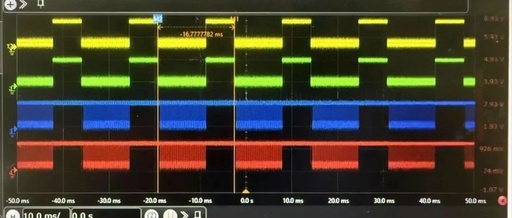
◆ ◆ ◆ ◆ Fun with Circuits: Colorful Waveforms — A Report on the “Multisim” Software Training Event ◆ ◆ ◆ ◆ On Saturday, May 25, 2019, at 9 AM, the Student Electronics Association of the School of Electronic Information held a “Circuit Simulation Software Training” event in Room 107 of the Hongyuan Building. This … Read more

Understanding the Need for 120 Ohm Termination Resistors in CAN Bus Systems

Understanding the Need for 120 Ohm Termination Resistors in CAN Bus Systems

Friends in “Vehicle Technology” should know that the CAN bus requires two 120 Ohm termination resistors at both ends, making the total line resistance 60 Ohms. This is a piece of knowledge that almost everyone knows, but very few can explain clearly. In most cases, we have the experience that adding a 120 Ohm resistor … Read more

How to Use the Reference Waveform Function on Oscilloscope?

How to Use the Reference Waveform Function on Oscilloscope?

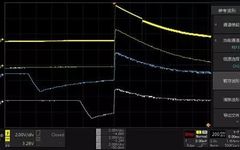
The ZDS2022 oscilloscope’s hundred technical exchange meetings are still in full swing. Through communication with a certain customer, it was learned that one of their samples may have abnormal waveforms at the moment of power-up. Today, we will use the ZDS2022 to capture the power-on signal multiple times and observe the real-time comparison of multiple … Read more

Using the Oscilloscope: A Comprehensive Guide

Using the Oscilloscope: A Comprehensive Guide

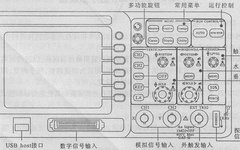
The oscilloscope is one of the most important testing instruments in modern electronics, and its applications are also very broad in other fields. The main use of an oscilloscope is to observe and measure the waveforms of electrical signals. Additionally, using its image display function, users can directly measure parameters such as the amplitude, frequency, … Read more

Common Sensor Waveform Analysis: Everything You Need in One Article!

Common Sensor Waveform Analysis: Everything You Need in One Article!

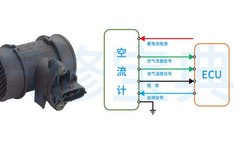
(Warm reminder: The article is quite long, totaling 3300 words; it is recommended to bookmark it for later reading.) During automobile maintenance, oscilloscopes are extremely useful, especially when performing non-disassembly diagnostics, troubleshooting analysis, and bus diagnostics, making them indispensable. When combined with other diagnostic tools (such as diagnostic computers, test lamps, multimeters, etc.), they can … Read more