Essential Insights for Embedded Engineers: Protocol Design is More Than Just Connectivity

As embedded engineers, we deal with “protocols” almost every day. From reading sensor data to coordinating multiple devices, any communication between devices relies on protocols. Many people think that protocol design is simple, merely involving the creation of a message format. However, in real projects, even simple scenarios often lead to issues like “devices cannot … Read more

An Overview of the BLE Protocol Stack (Part II)

An Overview of the BLE Protocol Stack (Part II)

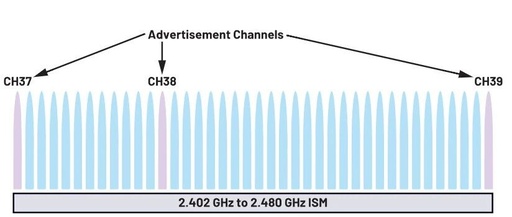
The previous article briefly introduced the host layer of the BLE protocol stack.An Overview of the BLE Protocol Stack (Part I)This article will provide a brief introduction to the controller layer, which mainly includes the link layer and the physical layer. Physical Layer The physical layer primarily implements data transmission and reception in the 2.4 … Read more

Understanding the Physical Layer Implementation of the CAN Protocol

Understanding the Physical Layer Implementation of the CAN Protocol

A comprehensive analysis of the CAN bus physical layer based on ISO11898 and ISO11519 1 CAN Hardware Control Layer CAN communication[1] is an asynchronous communication method, differing from synchronous communication methods like I2C and SPI that rely on clock signals. CAN communicates through a pair of differential signal lines, <span>CAN_H</span> and <span>CAN_L</span>, using differential signals … Read more

MIPI DSI-2 v2.2: Overview of DSI Physical Layers

*Unauthorized reproduction, excerpting, or secondary creation for publication on public platforms or commercial activities is prohibited. If sharing is necessary, please be sure to credit this public account. *This article references the MIPI Specification for Display Serial Interface 2(DSI-2)_v2.2, organized for learning reference only. 5.1 DSI Physical Layer for D Option 5.2 DSI Physical Layer … Read more

Overview of CAN Bus Related Knowledge

Overview of CAN Bus Related Knowledge

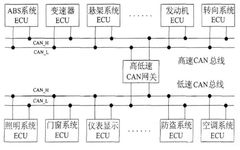
▍Overview CAN (Controller Area Network) is a serial communication network that enables distributed real-time control. When thinking of CAN, one must think of Bosch, the German company that developed it (along with Intel). CAN has many excellent features that allow it to be widely used. For example: a maximum transmission speed of 1 Mbps, a … Read more