Modular Programming: Building Your PLC Programs Like LEGO

In industrial automation programming, have you ever faced the dilemma of increasingly lengthy programs, with logic becoming more complex, making debugging feel like navigating a maze? When devices need modifications or functionalities need to be expanded, a small change can trigger unpredictable issues? After years of practice and reflection, I have found an efficient solution—modular … Read more


Discussion on the Method of Creating Standardized Function Blocks for PLCs

Discussion on the Method of Creating Standardized Function Blocks for PLCs

“The Path of an Excellent Engineer in Three Stages” 1. Basic Stage: Boto PLC technology. 2. Intermediate Stage: Boto and C# advanced language technology. 3. Advanced Stage: Standardized programming methods for PLCs. The Path to Standardization! An engineer asked me about the method of creating function blocks, which has probably puzzled him for a long … Read more

Considerations for Using Function Blocks (FB) in PLCs

Considerations for Using Function Blocks (FB) in PLCs

1. Considerations for Using Function Blocks (FB) with Enable Inputs (EN/ENO) Function Blocks with EN/ENO behave more “intelligently” but are also more complex, requiring attention to their execution mechanism. 1. Understand the meaning of “not executing” Core note: When EN = FALSE, the internal code of the FB is completely skipped and not executed at … Read more

Understanding the Differences Between Static and Temp Variables in PLCs

Understanding the Differences Between Static and Temp Variables in PLCs

Hello everyone, I received a submission from a fan asking me to explain the differences between Static and Temp variables. Newcomers in the field may find these two concepts a bit difficult to understand. In this article, I will clarify the differences between Static and Temp variables through a few simple examples, along with an … Read more

Standardization of Mainstream PLC Socket TCP Client Communication

Standardization of Mainstream PLC Socket TCP Client Communication

1. Overview of PLC Socket TCP Client Communication: In socket TCP client communication, the client first calls a system function to create a TCP socket, then initiates a connection request to the server at a specified IP address and port. A reliable connection is established through a three-way handshake. The communication protocol can be customized … Read more

PLC Control with ST: Learning Notes on Version 3 – Utilizing Subroutines, Function Blocks (FB), and Functions (FC) Effectively!

PLC Control with ST: Learning Notes on Version 3 - Utilizing Subroutines, Function Blocks (FB), and Functions (FC) Effectively!

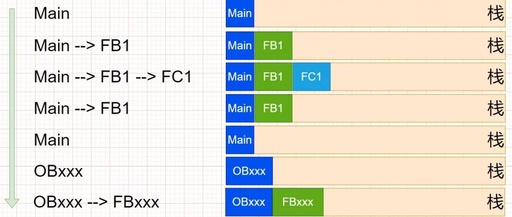
Previously, we discussed textual programming, where the most important aspect is structuring, similar to writing an article that needs to be divided into chapters, sections, and paragraphs. For ST programming, we also need to appropriately apply subroutines, function blocks (FB), and functions (FC) to break down the program, making it more organized and clear! Chapter … Read more

Understanding PLC Instruction Systems and Their Classifications

Understanding PLC Instruction Systems and Their Classifications

The entire set of instructions possessed by a PLC is referred to as the PLC’s instruction system. The instruction system represents the performance or functionality of the PLC. Generally speaking, a PLC with strong functionality and good performance will have a rich instruction system, not only with a variety of instruction types but also with … Read more

PLC: Low Ladder Diagram Programming Efficiency? Master These 5 Function Blocks to Double Your Development Speed!

PLC: Low Ladder Diagram Programming Efficiency? Master These 5 Function Blocks to Double Your Development Speed!

Hello everyone, I am Xiao Chen. Today, let’s discuss a common issue that many PLC beginners encounter: why does a large number of ladder diagrams make the program seem bloated and difficult to maintain?In fact, while ladder diagrams are intuitive, programming purely with basic instructions is indeed inefficient.Mastering Function Block programming can make your PLC … Read more

Intermediate PLC Programming: Modular Encapsulation Reduces Code Maintenance Costs by 50%!

Intermediate PLC Programming: Modular Encapsulation Reduces Code Maintenance Costs by 50%!

🔥 The Nightmare of Traditional Code Development: Endless Pain Points of Difficult Maintenance and Expansion Is your PLC program becoming increasingly bloated? Does a slight change in logic cause the entire system to crash? When customers propose new requirements, does your mood shift from “I can add some features” to “This code is unchangeable”? Don’t … Read more

Implementation of Interconnectivity Technology in PLC Intelligent Manufacturing System Function Block Programming

Implementation of Interconnectivity Technology in PLC Intelligent Manufacturing System Function Block Programming

Click the blue text to follow! Old Li Talks About PLC Function Block Programming: Making Devices “Understand Each Other” A few days ago, Xiao Wang asked me: “Old Li, why can’t our new Siemens PLC connect with that Japanese Mitsubishi one? I followed the manual, but it seems like the devices can’t ‘understand’ each other.” … Read more