ESP32 Storage System

ESP32 Storage System

🧠 1. Physical Storage Structure On-Chip Memory IRAM (Instruction RAM) 192KB (ESP32 classic version), with the first 64KB fixed for dual-core CPU cache, and the remaining space used for high-speed execution code (such as interrupt functions). DRAM (Data RAM) 328KB, used for global variables and stack data. About 64KB will be occupied by the protocol … Read more

Introduction to C++ for Beginners – A Detailed Explanation of Destructors

Introduction to C++ for Beginners - A Detailed Explanation of Destructors

01 What is a Destructor A destructor is a member function of a class, named with a tilde followed by the class name, has no return value, and does not accept parameters. A class can only have one destructor. When an object is created, the system automatically calls the constructor for initialization, and similarly, when … Read more

Memory Management in Embedded Development with FreeRTOS

Memory Management in Embedded Development with FreeRTOS

1. Concept of Memory Management Memory management is a critical function in computer systems, responsible for managing memory resources within the system. The goal of memory management is to ensure that all programs in the system can access the required memory without issues such as memory conflicts or memory leaks. Memory management includes operations such … Read more

How to Handle Memory Overflow Issues in Embedded Systems

How to Handle Memory Overflow Issues in Embedded Systems

Follow【Plain Embedded】,Exciting content delivered first Memory overflow is one of the most common and dangerous issues in embedded system development, which can lead to system crashes, data corruption, and even security vulnerabilities. This article will delve into the types, hazards, and systematic preventive measures for memory overflow in embedded environments. Major Types of Memory Overflow … Read more

An Introduction to Operating Systems for Beginners

An Introduction to Operating Systems for Beginners

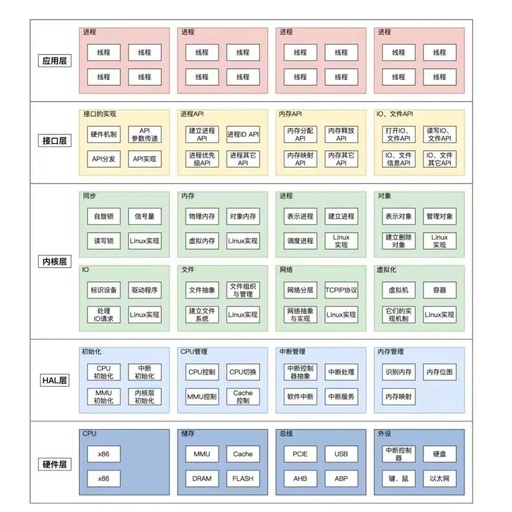
Source: Fresh Date Classroom Original Author: Little Date Jun We use operating systems every day. Windows, Linux, Android, and iOS are all classic operating systems. With them, we can better utilize hardware terminal devices like computers and smartphones. So, what is the essence of an operating system? What functions and features does it have? What … Read more

Segment Definition and Linking in Modular Assembly Language Programming

Segment Definition and Linking in Modular Assembly Language Programming

Relationship Between Modular Program Structure and Segments In the 8086/8088 architecture, memory is managed in segments. Therefore, when a complex program consists of multiple modules, each module may contain several segments. The linker needs to combine these scattered segments into a final executable program. Basic Concepts of Module Linking: Source Module: Can be written in … Read more

Examples of Using std::allocator in C++ Memory Management

Examples of Using std::allocator in C++ Memory Management

In the last article, we introduced how containers use std::allocator. But what if we want to use std::allocator directly?Typically, we do not use std::allocator methods directly, but rather through a utility class (pseudo code below, Code Example 1): // Code Example 1 namespace std { template<class Alloc> struct allocator_traits { // Alloc is usually template<class … Read more

C++ unique_ptr Exclusive Ownership Management

C++ unique_ptr Exclusive Ownership Management

C++ unique_ptr Exclusive Ownership Management In modern C++, memory management is an important topic. Traditional manual memory management can easily lead to issues such as memory leaks and dangling pointers. To simplify this process, C++11 introduced smart pointers, among which <span>std::unique_ptr</span> is a very useful tool that provides exclusive ownership features. What is unique_ptr? <span>std::unique_ptr</span> … Read more

A Guide to Avoiding Pitfalls in Modern C++: Reflections on Unspoken Truths in Documentation

A Guide to Avoiding Pitfalls in Modern C++: Reflections on Unspoken Truths in Documentation

Introduction: The Double-Edged Sword Effect of Language Evolution When faced with frequent questions from novices about whether they should learn C++, I often analyze it from the perspective of career development value. As a developer with over a decade of experience, my understanding has undergone a transformation. The uniqueness of C++ stems from its compatibility … Read more

The Nightmare of C++ Developers: Null Pointer Issues During Google Cloud Outage

The Nightmare of C++ Developers: Null Pointer Issues During Google Cloud Outage

This article is based on a thorough review of relevant authoritative literature and materials, forming a professional and reliable content. All data in the article is verifiable and traceable. Special note: The data and materials have been authorized. The content of this article does not involve any biased views and objectively describes the facts with … Read more