HttpClient vs RestSharp: Which One Should You Choose in .NET?

HttpClient vs RestSharp: Which One Should You Choose in .NET?

In .NET projects, whenever you need to call a REST API, you cannot avoid these two names: HttpClient and RestSharp. They can both send requests, retrieve data, and handle responses, but the experience of using them is completely different—one feels like a “manual transmission,” while the other feels like an “automatic transmission.” Which one should … Read more
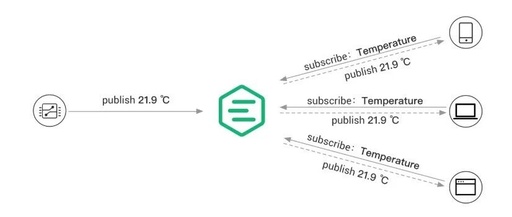
Differences Between MQTT Version 3 and Version 5

Differences Between MQTT Version 3 and Version 5

MQTT (Message Queuing Telemetry Transport) is a lightweight communication protocol for the Internet of Things. Version 3 (primarily referring to V3.1.1) and Version 5 are two significant versions. V5 adds a wealth of features on top of V3 to meet the needs of more complex IoT scenarios. Below are the core differences between the two: … Read more

Introduction to C++ for Beginners: Limiting Input Error Attempts (6)

Introduction to C++ for Beginners: Limiting Input Error Attempts (6)

After learning about if…else… statements and while loops, we will further improve the program here. If the number of input errors (non-compliant inputs) exceeds the set limit of 3, the program will exit. This is a common operation, primarily for safety reasons. Related Articles: Elementary School Students’ Introduction to C++ Programming, a detailed guide on … Read more

Common Pitfalls in Python: A Guide to Safely Removing Elements from Sequences

In Python or other programming languages, traversing and deleting elements from a sequence can easily lead to accidental deletions, missed deletions, or even program exceptions. Let’s look at a Python example: my_list = [1, 2, 3, 4, 5]for x in my_list: if x > 1: my_list.remove(x) # Expected output: [1], Actual output: [1, 3, 5]print(my_list) … Read more

7 Essential Crates to Instantly Enhance Your Rust Projects

Introduction In Rust development, choosing the right third-party libraries (crates) can significantly improve project efficiency. This article introduces 7 crates that can greatly enhance the quality and development efficiency of Rust projects, covering core areas such as error handling, serialization, asynchronous programming, HTTP requests, parallel computing, logging, and database access. Each crate is accompanied by … Read more

Compile-Time Magic: C++23’s std::expected and the Limits of Compile-Time Computation

Today, let’s talk about a “black magic” tool brought by C++23—std::expected. It is not just an upgraded version of error handling; it can perfectly combine with compile-time computation (constexpr), allowing you to handle “expected values” or “unexpected errors” at the compilation stage. Imagine calculating complex expressions during code compilation, returning error messages directly if something … Read more

Understanding HTTP Status Codes: A Must-Know for Both Frontend and Backend Developers

Oh no, it happened again! “Teacher, what does this error mean?”, “Teacher, where is the mistake?”, “Teacher, I don’t understand this error…”, “What is the difference between 400 and 404?”, “I just got a 400 error, and after I changed it, it became a 500 error, why is that?” Whether debugging interfaces on the frontend, … Read more

Which Version of Python is Best in 2025?

First, the conclusion:For personal development, it is recommended to use 3.12; for enterprise development, it is recommended to use 3.11 (LTS)​The current mainstream Python versions are as follows: Python 3.14: Released in October 2025, ecosystem compatibility is still being improved. It features the introduction of free threading (disabling GIL), template strings, and significant performance improvements; … Read more

C++ Monadic Interface

1 Overview 1.1 Monadic Interface In functional programming languages, the Monadic interface is a fundamental concept or mechanism for abstracting computational logic, expressing side effects, and controlling flow. This is because functions cannot produce side effects, such as IO, state modification, or throwing exceptions. However, in certain cases, such as reading and writing files, error … Read more

Mastering Rust’s Super Useful Syntax Sugar in 30 Days

Overview The design of the Rust language places a strong emphasis on developer experience, which is why it includes many practical “syntax sugars”. These “syntax sugars” make the code more concise and readable while maintaining the language’s power and flexibility. 1. String Interpolation String interpolation allows us to embed the values of variables or expressions … Read more