The 52-Year Development History of Flash Memory Technology

The 52-Year Development History of Flash Memory Technology

Source: Semiconductor Industry Observer Compared to many computer technologies, the development history of flash memory is relatively short, but it can be said to have rapidly grown in response to the demands of a huge and rapidly changing storage market.Originating in the late 1960s, the concept was proposed in the early 1980s, and it has … Read more
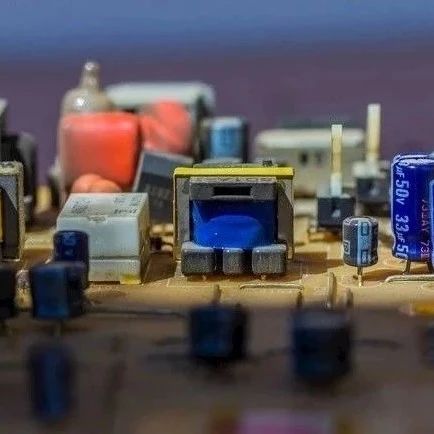

6 Ways to Identify PCBA Hardware Versions via Software

6 Ways to Identify PCBA Hardware Versions via Software

PCBA (Printed Circuit Board Assembly) refers to the process of mounting electronic components on a printed circuit board (PCB) to form a complete electronic product.PCBA is fundamental to the electronics industry, as nearly all electronic devices are composed of PCBA. The quality and performance of PCBA directly affect the lifespan, speed, stability, and reliability of … Read more

AT28C64B-15PU (ATM) Idle Chip Factory Channel: 64Kbit Electrically Erasable Parallel EEPROM

AT28C64B-15PU (ATM) Idle Chip Factory Channel: 64Kbit Electrically Erasable Parallel EEPROM

AT28C64B-15PU is a classic 64Kbit electrically erasable parallel EEPROM launched by ATM, packaged in a DIP28 form factor. This chip features a 150ns access time and provides an 8K×8 bit storage structure. As a fundamental product of electrically erasable memory, the AT28C64B-15PU supports in-system electrical erasure and programming, boasting high reliability and long lifespan characteristics. … Read more

Setting the Homing Reset Mode for Modbus RTU Communication Servo Control

Setting the Homing Reset Mode for Modbus RTU Communication Servo Control

1. First, set to “Modbus RTU protocol” through [Pr.PC71].Set the “Control Mode Selection” of [Pr.PA01] to program control mode.2. Set the homing reset mode at address 6098H (for example, the commonly used return method with DOG search).3. Save the manufacturer-defined parameters in EEPROM at address 1010H, then power off and restart.4. In Point Table Mode, … Read more

Understanding Flash and EEPROM in Embedded Systems

Understanding Flash and EEPROM in Embedded Systems

“ Mastering storage means mastering embedded systems!” It is well understood by all engineers engaged in embedded development that storage plays a very important role in technology and products. Common storage types include RAM, Flash, and ROM. RAM is primarily used to store runtime programs and data, which needs no further explanation. 01 — Flash … Read more

Understanding I2C Device Addressing for 24LC04

Understanding I2C Device Addressing for 24LC04

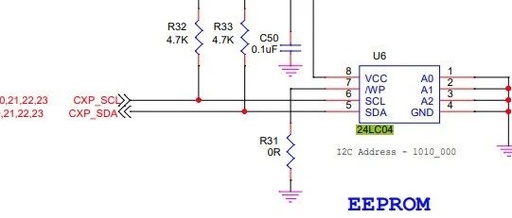
Description I2C supports N-2-N on the bus, so addresses are needed to distinguish devices. A complete transmission always starts with a START signal followed by the device address and the read/write flag. Device Address So how do we view and define the device address? The device address corresponds to the first BYTE’s BIT7-BIT1, with BIT … Read more

Video Tutorial | How to Set Up I2C Communication Using RX Smart Configurator

Video Tutorial | How to Set Up I2C Communication Using RX Smart Configurator

– Click to view the video – The video demonstrates how to read and write EEPROM using RX Smart Configurator in e² studio. Related Resources: • Knowledge Base: RX Smart Configurator API call procedure https://en-support.renesas.com/knowledgeBase/21392758 0:00:00: Introduction 0:00:12: Topic 0:00:19: References 0:00:29: Hardware Setup 0:00:47: Program Overview 0:01:13: Writing to EEPROM 0:01:28: Reading from EEPROM … Read more

Differences Between EEPROM, FLASH, NAND FLASH, and NOR FLASH

Differences Between EEPROM, FLASH, NAND FLASH, and NOR FLASH

Memory is divided into two main categories: RAM and ROM, with a focus on ROM here.ROM was originally non-programmable, meaning whatever content it had when it left the factory was permanent and inflexible.Later, PROM was developed, which could be written once; if a mistake was made, the chip had to be replaced, leading to unfortunate … Read more

ESP32 RTC RAM EEPROM: Methods for Persistent Data Storage in Deep Sleep, Saving Your Flash Memory

ESP32 RTC RAM EEPROM: Methods for Persistent Data Storage in Deep Sleep, Saving Your Flash Memory

Introduction In embedded development, the persistence of stored data is crucial. The ESP32 offers various storage options, with flash memory being the most commonly used medium. However, flash memory has a limited number of write cycles, and frequent writes can shorten its lifespan. In particular, the EEPROM implementation of the ESP32 stores data in the … Read more

A Detailed Explanation of the I2C Bus Protocol and Timing: Making It Easy for Beginners

A Detailed Explanation of the I2C Bus Protocol and Timing: Making It Easy for Beginners

▼For more exciting recommendations, please follow us ▼In daily life, we often encounter situations where devices lose power, such as mobile phones, smart wristbands, and computers; however, the stored information does not get lost, such as phone numbers, text messages, notes, WeChat, QQ messages, etc., which are all preserved. These items only disappear after a … Read more