Understanding Oscilloscope Sampling Rate
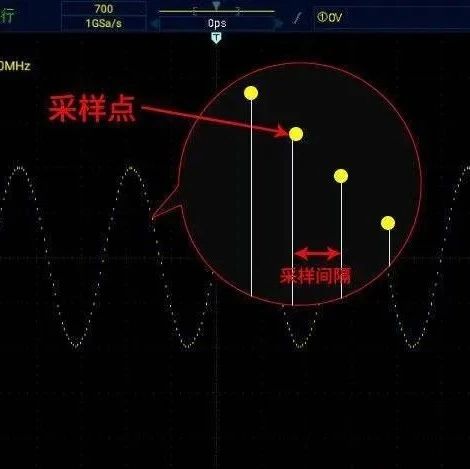
Understanding Oscilloscope Sampling Rate

Follow+Star Public Number, Don’t Miss Exciting Content Editor | strongerHuang WeChat Public Account | Embedded Column The principle of an oscilloscope is simply an ADC conversion, which displays the collected different voltages on the screen. Today, we will discuss what the oscilloscope sampling rate is all about. Example Describing Sampling Rate 1. Storage Depth Imagine … Read more
Digital Signal Processor (DSP) Overview

Digital Signal Processor (DSP) Overview

Click the blue text to follow us (The following content is organized by the Beijing Integrated Circuit Society) Definition and Basic Concepts A Digital Signal Processor (DSP) is a microprocessor specifically designed for digital signal processing. It primarily processes digital signals, which can be various forms of discrete-time signals such as audio, video, communication signals, … Read more

DSP Video Tutorial Episode 11: DSP Interpolation Algorithms and Curve Fitting

DSP Video Tutorial Episode 11: DSP Interpolation Algorithms and Curve Fitting

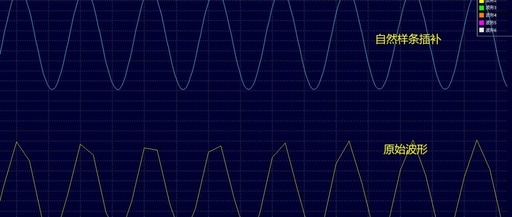
The DSP video tutorial hasn’t been updated for a while. Currently, the DSP library has been separated from the CMSIS software package and is being updated very frequently. Therefore, this episode of the video tutorial will first give a brief introduction to the new DSP version, and then provide a detailed introduction to the basic … Read more

Understanding Time Domain, Frequency Domain, FFT, and Windowing

Understanding Time Domain, Frequency Domain, FFT, and Windowing

Learn about the time domain and frequency domain of signals, Fast Fourier Transform (FFT), windowing, and how these operations deepen your understanding of signals. Understanding Time Domain, Frequency Domain, FFT The Fourier Transform helps to understand common signals and how to identify errors within them. Although the Fourier Transform is a complex mathematical function, understanding … Read more

Extreme Sea G32R501 Real-Time Control MCU: A New Realm in Cross-Domain Control

Extreme Sea G32R501 Real-Time Control MCU: A New Realm in Cross-Domain Control

The first real-time control MCU based on Arm® Cortex®-M52 dual-core architecture from Extreme Sea—G32R501—was officially launched at the Extreme Sea Channel Partner Conference.This new series is based on advanced 40nm process technology, supports efficient dual-core collaboration, integrates high-performance perception, rich control peripherals, and a flexible peripheral interconnection system. It is a high-performance real-time control MCU … Read more

Development Process and Detailed Introduction of PET Digital Technology

Development Process and Detailed Introduction of PET Digital Technology

1. Development Process of PET Digital Technology In the initial PET systems, energy, position, and time information were converted into digital signals using photomultiplier tubes (PMT), front-end analog circuits, and subsequent analog-to-digital converters (ADC/TDC) for event matching and image reconstruction. Due to the relatively backward chip technology at that time, the analog-to-digital conversion unit could … Read more

Communication Experiment 1: FPGA Implementation of BPSK Modulator and Demodulator

Communication Experiment 1: FPGA Implementation of BPSK Modulator and Demodulator

IntroductionThe author has previously been learning communication algorithms through MATLAB simulations and has recently started to learn how to implement the communication systems constructed in MATLAB simulations using FPGA. Due to the significant differences between MATLAB simulation code and Verilog code, and the unfamiliarity with FPGA implementations of communication systems, the author decided to write … Read more

FPGA Digital Signal Processing: Communication I/Q Signal Generation

FPGA Digital Signal Processing: Communication I/Q Signal Generation

I/Q Principles and Advantages For those in communication, optical communication, and RF fields, it is known that in signal processing, the input signal needs to be divided into two paths (I and Q), also known as quadrature modulation signals. Typically, RF signals require shifting low-frequency baseband signals to high-frequency carrier signals for transmission, traditionally achieved … Read more

Running Median Filter on Microchip 8-bit MCU

Running Median Filter on Microchip 8-bit MCU

Introduction Recently, I discovered a “treasure”: Microchip’s AN4515 application note, which explains how to run several classic digital signal processing (DSP) algorithms on its AVR® EA 8-bit microcontroller (MCU) along with examples: Figure 1 Microchip AN4515 Application Note, Source [1] This article introduces the basic usage and the first example — the Median Filter. Subsequent … Read more

Authoritative Guide to ARM Cortex-M4 and DSP Applications

Authoritative Guide to ARM Cortex-M4 and DSP Applications

Dot Product Operation and Multiply-Accumulate The dot product operation is a fundamental operation in DSP applications, commonly used in filter and transformation algorithms. The ARM Cortex-M4 provides efficient multiply-accumulate (MAC) instructions for rapid execution of dot product operations. Example Code int32_t dot_product(int32_t *a, int32_t *b, uint32_t length) { int32_t result = 0; for (uint32_t i … Read more