Low Power Design in Embedded Systems
Low Power Design in Embedded Systems

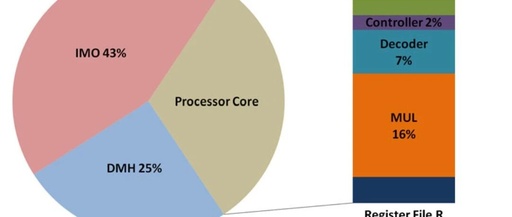
Abstract This article briefly describes the main classifications and sources of power consumption in embedded systems, as well as how to achieve low power design from both software and hardware perspectives. The low power design methods mentioned in this article are relatively simple, as the most critical parts of instruction cache and data cache are … Read more
Understanding the ‘Heartbeat’ of MCUs – Clocks as the Ultimate Key to Performance and Power Consumption

Understanding the 'Heartbeat' of MCUs - Clocks as the Ultimate Key to Performance and Power Consumption

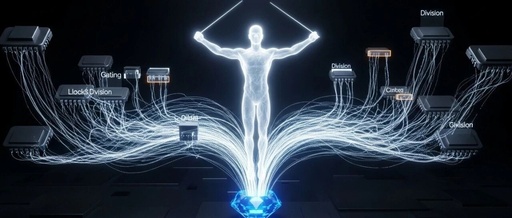
This article elaborates on the core components and importance of the clock system in microcontrollers (MCUs). It points out that the performance and power consumption of an MCU fundamentally depend on its clock system. This system is based on a clock source (external crystal oscillator or internal RC oscillator) and distributes signals to various modules … Read more

In-Depth Comparison of ESP8266 and ESP32: Which Development Board Should You Choose?

In-Depth Comparison of ESP8266 and ESP32: Which Development Board Should You Choose?

In the field of IoT development, Espressif’s ESP series chips hold a significant market share. Among them, the ESP8266 and ESP32 (along with their derivatives) are the most notable products. This article will compare them across multiple dimensions, including technical specifications, functional features, and applicable scenarios, to help you find the best choice for your … Read more

Building a Cost-Effective Home Server with 7-Bay HP ML30 Gen9

Building a Cost-Effective Home Server with 7-Bay HP ML30 Gen9

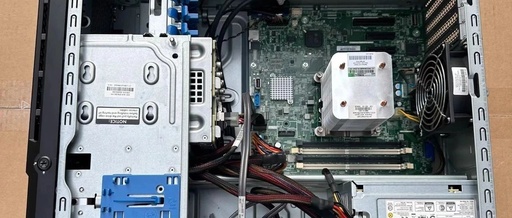
Brothers in the backend, contact me. I have plenty of space at home and I’m not afraid of taking up space. I want to build a stable multi-bay NAS at the server level. The requirements are low cost and many bays. If you want to talk about this, then I think you must use the … Read more

Why Do Cameras Use MIPI Interfaces Instead of Convenient USB? A Detailed Explanation of the Differences Between MIPI and USB Interfaces

Why Do Cameras Use MIPI Interfaces Instead of Convenient USB? A Detailed Explanation of the Differences Between MIPI and USB Interfaces

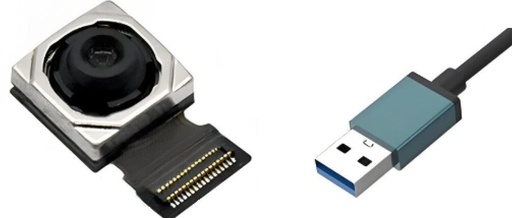
The USB interface, with its plug-and-play versatility and strong compatibility, has almost become the connection bridge for all electronic devices, from keyboards and mice to external hard drives and webcams. However, almost all high-resolution cameras use the MIPI interface instead of the convenient USB. Wouldn’t it be easier to connect all peripherals through a HUB … Read more

An Analysis of the Differences Between MCU and MPU

An Analysis of the Differences Between MCU and MPU

MCU (Microcontroller Unit) and MPU (Microprocessor Unit) are the core chips of embedded systems, but they have significant differences in design goals, architecture, and application scenarios. The main differences are as follows: 1. Core Design Philosophy MCU (Microcontroller Unit) Integrated System on Chip: Integrates CPU, memory (RAM/Flash), and peripherals (GPIO, ADC, UART, etc.) all on … Read more

Why Do Some Microcontrollers Operate at 3.3V While Others Use 5V? Can’t We Standardize?

Why Do Some Microcontrollers Operate at 3.3V While Others Use 5V? Can't We Standardize?

Some may have noticed that the voltage standards for microcontrollers vary; some operate at 3.3V while others use 5V. Why isn’t there a unified standard? Is this a historical legacy issue or an inevitable result of technological evolution? Today, we will explore this question. 1. The Aftermath of the TTL and CMOS ‘Cold War’ The … Read more

ASIC Chips: Professional Analysis and Practical Value Discussion

ASIC Chips: Professional Analysis and Practical Value Discussion

In today’s rapidly developing information technology era, integrated circuits, as the core components of electronic devices, are of paramount importance. Among the various types of integrated circuits, ASICs (Application-Specific Integrated Circuits) are increasingly becoming the preferred solution for high-end electronic products due to their outstanding performance and efficiency. ASICs are integrated circuits designed specifically for … Read more

A Revolutionary MCU

A Revolutionary MCU

Follow and star our public account for direct access to exciting content Source: Online materials Source: Content compiled from eenewseurope. The Dutch company Innatera has launched the first commercially available microcontroller based on a neuromorphic architecture, suitable for sensor applications. The Pulsar chip employs a heterogeneous architecture that combines analog and digital neuromorphic modules with … Read more

Revolutionary MCU with Dramatic Power Reduction

Revolutionary MCU with Dramatic Power Reduction

Remember to star this public account ⭐️ to receive timely updates. Source: Content from spectrum. By simulating the way the brain operates, neuromorphic processors can significantly reduce energy consumption in certain application scenarios compared to traditional technologies. Now, the Dutch company Innatera has launched what it claims to be the world’s first commercially available neuromorphic … Read more