Considerations for Connecting Dual Clock Domains in FPGA

Considerations for Connecting Dual Clock Domains in FPGA

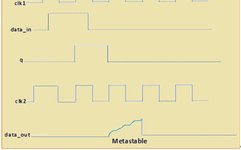
Today, while studying the asynchronous FIFO read and write clock synchronization in FPGA, I noticed an issue: when connecting two different clocks, it is challenging to achieve complete synchronization. As a result, at a certain moment, the edge of the high-precision clock may appear in the middle of the edge of the low-precision clock, leading … Read more
Understanding the ‘Heartbeat’ of MCUs – Clocks as the Ultimate Key to Performance and Power Consumption

Understanding the 'Heartbeat' of MCUs - Clocks as the Ultimate Key to Performance and Power Consumption

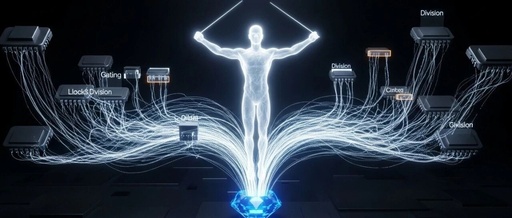
This article elaborates on the core components and importance of the clock system in microcontrollers (MCUs). It points out that the performance and power consumption of an MCU fundamentally depend on its clock system. This system is based on a clock source (external crystal oscillator or internal RC oscillator) and distributes signals to various modules … Read more

Summary of Multi-Clock Domain Processing Methods in IC Design

Summary of Multi-Clock Domain Processing Methods in IC Design

In ASIC or FPGA system design, we often encounter the issue of data transmission across multiple clock domains, and timing issues become increasingly severe as the system grows more complex. Cross-clock domain processing technology is a crucial part of IC design. We need to learn and apply some common processing methods to enhance the stability … Read more