MCU (Microcontroller Unit) and MPU (Microprocessor Unit) are the core chips of embedded systems, but they have significant differences in design goals, architecture, and application scenarios. The main differences are as follows:
1. Core Design Philosophy
-
MCU (Microcontroller Unit)
-
Integrated System on Chip: Integrates CPU, memory (RAM/Flash), and peripherals (GPIO, ADC, UART, etc.) all on a single chip.
-
Goal: To achieve a compact, low-power, low-cost single-chip solution suitable for controlling simple tasks.
-
Typical Scenarios: Appliance control, sensor nodes, motor drivers, etc.
-
MPU (Microprocessor Unit)
-
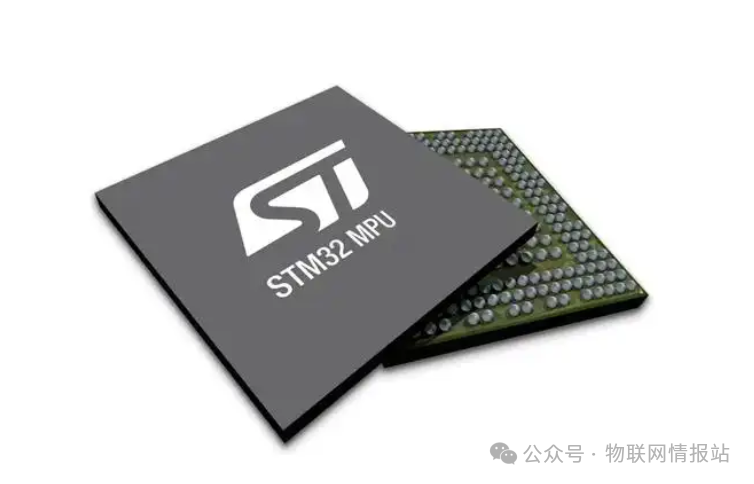
CPU Core Focused on Computation: Contains only the processor core, requiring external memory, storage, and peripheral chips (such as RAM chips, Flash chips, power management ICs, etc.).
-
Goal: To provide high-performance computing capabilities, supporting complex operating systems and applications.
-
Typical Scenarios: Smartphones, industrial computers, robotic main controls, etc.
2. Memory Architecture
| Feature | MCU | MPU |
|---|---|---|
| Memory | On-chip integrated SRAM/Flash (smaller capacity) | Requires external DRAM/SDRAM (capacity can reach GB level) |
| Storage | Usually has built-in Flash, can run programs directly | Requires external eMMC, SD card, or NAND Flash |
| Boot Method | Boots directly from internal Flash | Requires external Bootloader to initialize hardware |
3. Performance and Power Consumption
-
Performance:
-
MCU: Lower clock frequency (typically < 500 MHz), suitable for real-time control tasks.
-
MPU: Higher clock frequency (1 GHz to multi-core GHz level), supports multitasking, graphics processing, and other complex computations.
-
Power Consumption:
-
MCU: Extremely low power consumption (μA level in sleep mode), suitable for battery-powered devices.
-
MPU: Higher power consumption (watt level), requires active cooling or power management optimization.
4. Peripherals and Expandability
| Feature | MCU | MPU |
|---|---|---|
| Peripheral Integration | High (ADC, PWM, I²C, etc. directly integrated) | Low (relies on external IC for expansion) |
| Expansion Capability | Limited (fewer pins, simple interfaces) | Powerful (supports PCIe, USB 3.0, high-speed Ethernet) |
| Development Complexity | Simple (single chip + basic circuitry) | Complex (requires designing memory bus, power tree, etc.) |
5. Software Ecosystem
-
MCU:
-
Runs RTOS (such as FreeRTOS, Zephyr) or no OS (bare-metal programming).
-
Development Tools: Keil, IAR, PlatformIO.
-
MPU:
-
Supports full operating systems (Linux, Android, Windows IoT).
-
Development Tools: GCC cross-compilation toolchain, Yocto Project, Android SDK.
6. Typical Application Scenarios
| Type | MCU | MPU |
|---|---|---|
| Examples | – Pedometer in smart bands– Air conditioner remote control– Industrial PLC modules | – Smart home hub– In-car entertainment system– Industrial HMI touch screens |
7. Representative Products
-
MCU:
-
STM32 series (ST), ESP32 (Espressif), PIC (Microchip), Arduino (Atmel)
-
MPU:
-
Raspberry Pi (Broadcom BCM2711), i.MX series (NXP), Rockchip RK3399, TI AM62x
8. Cross-Category Models (Blurred Boundaries)
In recent years, some hybrid chips (such as MCU+MPU) have emerged, for example:
-
NXP i.MX RT series: MPU-level performance (1 GHz) + MCU’s on-chip Flash.
-
ST Micro STM32MP1: Dual-core Cortex-A7 (MPU) + Cortex-M4 (MCU) heterogeneous architecture.
Conclusion: Selection Recommendations
| Requirement | Recommended Choice |
|---|---|
| Low power, real-time control, small systems | MCU |
| Complex calculations, multitasking, operating systems | MPU |
Understanding the core differences between the two (Integration vs Expandability, Power Consumption vs Performance) can more accurately match project requirements. When selecting, factors such as cost, development cycle, and ecosystem support should also be considered.
For more IoT information, please click the link below and follow us!