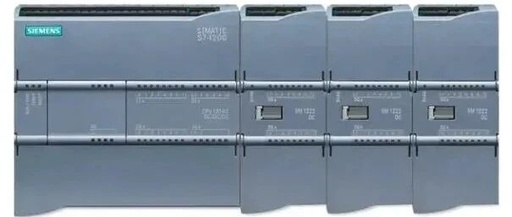
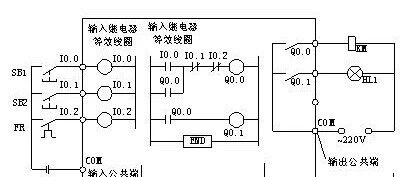
Working Principles of Classic PLCs and Sensors Illustrated

Working Principles of Classic PLCs and Sensors Illustrated

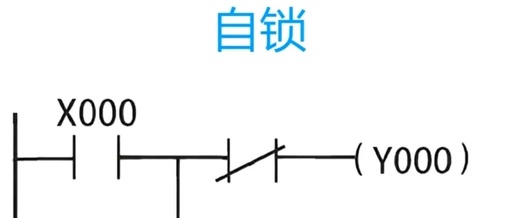
PLC Animation PLC Sequential Control PLC Forward and Reverse Control Button Switch ☟ Power-off Delay Timer Relay ☟ Roller Type Limit Switch ☟ AC Contactor ☟ Thermal Relay ☟ Timer Relay ☟ Speed Relay ☟ Sensor Working Principle Animation Pneumatic Diaphragm Valve Electrical Contact Pressure Gauge Venturi Flow Meter

Common Faults in PLC Control Systems: A Comprehensive Analysis!

Common Faults in PLC Control Systems: A Comprehensive Analysis!

In the realm of industrial automation, the PLC control system is hailed as the “smart brain” of equipment, precisely directing the operation of each machine. However, just like any powerful “brain,” a PLC can occasionally experience discomfort, and it inevitably encounters various faults during actual operation. If not addressed promptly, this can lead to production … Read more

Development Plan for Fire Detection Mobile Robot

Development Plan for Fire Detection Mobile Robot

Abstract:This article presents a development plan for a mobile robot. The robot is based on the Arduino Mega 2560 R3 and uses a single-layer robot platform as its chassis, along with a 400-point unallocated MB-102 breadboard. The robot is equipped with the following sensors: ultrasonic sensor HC-SR04, KY-033 line sensor, flame sensor KY-026, infrared thermal … Read more

MATLAB Basic Practices

MATLAB Basic Practices

MATLAB Basic Practices 1. Basic Operations in MATLAB 1.1 MATLAB Interface 1.2 Common MATLAB Commands 1.3 Numerical, Comparison, and Logical Operations 1.4 M-files 1.5 Live Scripts and Live Editor 1.6 Step Signals and Impulse Signals 2. MATLAB Plotting 2.1 Basic Plotting 2.2 Handle Graphics 2.3 Interactive Plotting some topics 3. Time Domain Analysis of Continuous-Time … Read more

Fundamental Knowledge You Must Know About Robots

Fundamental Knowledge You Must Know About Robots

The history of robots is not long; it truly began in 1959 when Engelberger and Devol created the world’s first industrial robot. Engelberger studied servo theory in college, which is a theory that studies how motion mechanisms can better track control signals. Devol invented a system in 1946 that could “replay” the recorded movements of … Read more

Recommended Article | New Breakthroughs in PMSM Vector Control Technology Based on Domestic FPGA

Recommended Article | New Breakthroughs in PMSM Vector Control Technology Based on Domestic FPGA

Design and Implementation of PMSM Vector Control Technology Based on FPGA Bao Chaowei1, Fan Wei2, Xiong Gengfan2, Tang Wantao1 (1. Unisoc Tongchuang Electronics Co., Ltd.; 2. College of Engineering, Huazhong Agricultural University) Abstract: In response to the current issues of dynamic accuracy and poor portability of complex vector control algorithms widely used in Permanent Magnet … Read more

In-Depth Analysis of Industrial Robot Structures, Drives, and Technologies

In-Depth Analysis of Industrial Robot Structures, Drives, and Technologies

1. Common Kinematic Configurations 1. Cartesian Manipulator Advantages: Easily implemented through computer control, achieving high precision. Disadvantages: obstructs work, occupies a large area, low movement speed, and poor sealing. ① A series of tasks such as welding, handling, loading and unloading, packaging, palletizing, depalletizing, inspection, flaw detection, classification, assembly, labeling, coding, (soft modeling) spraying, target … Read more

Understanding PID: An Introduction to Motors and Drivers

Understanding PID: An Introduction to Motors and Drivers

When learning and using PID, there are many motor options available. However, the PID parameters used for different motors can vary significantly. Therefore, we need to understand motors and drivers. 1 Types of Motors 1.1 Introduction to Motors A motor is a device that can convert electrical energy into mechanical energy and vice versa. Generators … Read more

PID Control Principles, Case Analysis, and MATLAB Implementation

PID Control Principles, Case Analysis, and MATLAB Implementation

1. Introduction to PID Control The PID (Proportional-Integral-Derivative) controller is the most classic feedback control algorithm in industrial control. It generates the control quantity through a linear combination of the proportional (Proportional), integral (Integral), and derivative (Derivative) parts of the error signal, achieving precise control of the system. Mathematical Model of PID Controller: 2. Case … Read more