On the evening of September 21, Zhou Hongyi, the founder of 360 Group, appeared in a live stream to discuss with Yang Jiancheng, the founder and chairman of Xianglu Robotics.
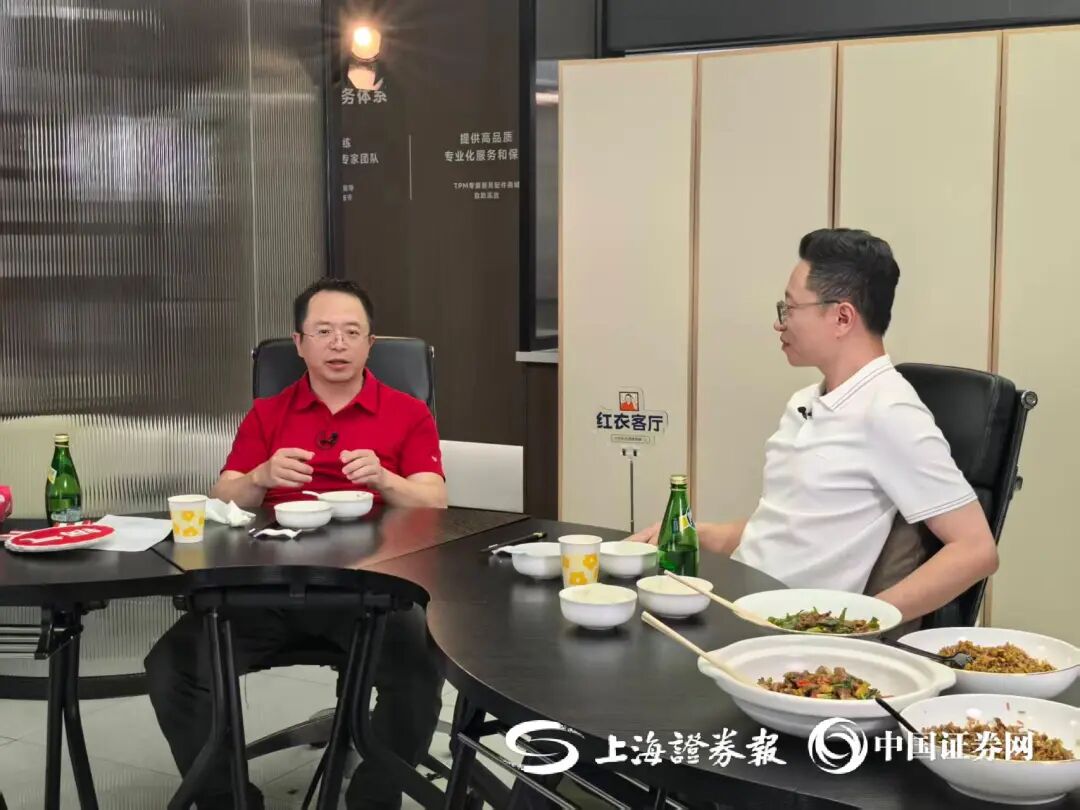
Zhou Hongyi at the live stream, Photo by Liu Xuan, Shanghai Securities Journal
By placing prepped ingredients into the machine, the operator only needs to press “Start Cooking” and is responsible for plating and serving once the cooking is complete. The entire process is fully automated, with the ingredients controlled by the chef, and it takes only a few minutes.
“I think it has a strong wok flavor! As someone who is particular about food, I can’t tell whether it was cooked by a robot or by hand,” Zhou Hongyi commented while tasting the dishes that evening.
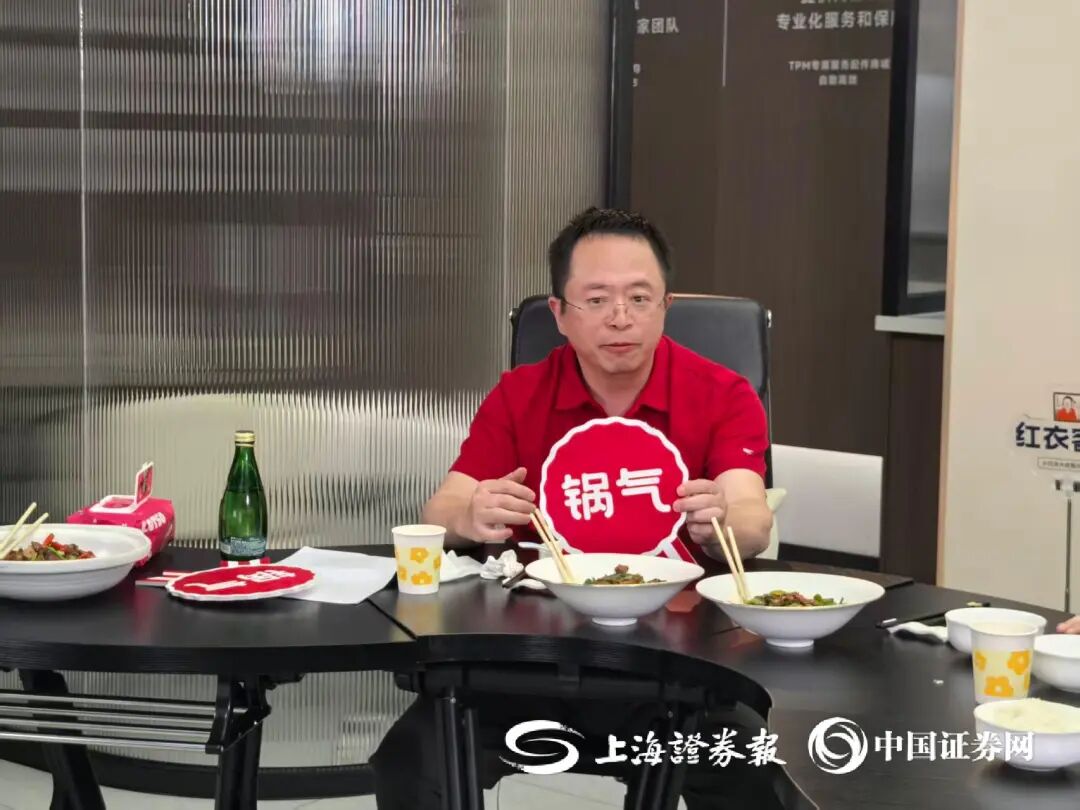
Zhou Hongyi’s comment on the “strong wok flavor”, Photo by Liu Xuan, Shanghai Securities Journal
In an interview with the Shanghai Securities Journal, Zhou Hongyi stated that cooking robots can effectively address several challenges currently faced by the Chinese restaurant industry: first, consumers want freshly cooked hot dishes; second, many restaurants lack the resources and experience to hire or retain good chefs, and the culinary profession itself is facing a labor shortage.
The reporter noted that this is not Zhou Hongyi’s first encounter with cooking robots. Recently, he experienced a cooking robot at the 2025 World Robot Conference.
Currently, cooking robots are rapidly being adopted in the restaurant industry, achieving efficient meal output, standardized operations, and reduced labor costs in commercial settings.Companies like JD.com are promoting the large-scale deployment of cooking robots. For example, by the end of 2023, JD.com invested tens of millions in Xianglu Robotics; in July 2024, Xianglu Robotics received nearly 200 million in investment from JD.com.
Public information shows that Xianglu Robotics was established in 2021, and its cooking robots have gradually entered corporate dining, hotel kitchens, and other sectors. The company states that its current shipment volume of cooking robots is around 10,000 units.
Yang Jiancheng told the Shanghai Securities Journal that AI cooking robots will help propel the Chinese restaurant industry into the era of ten thousand stores.
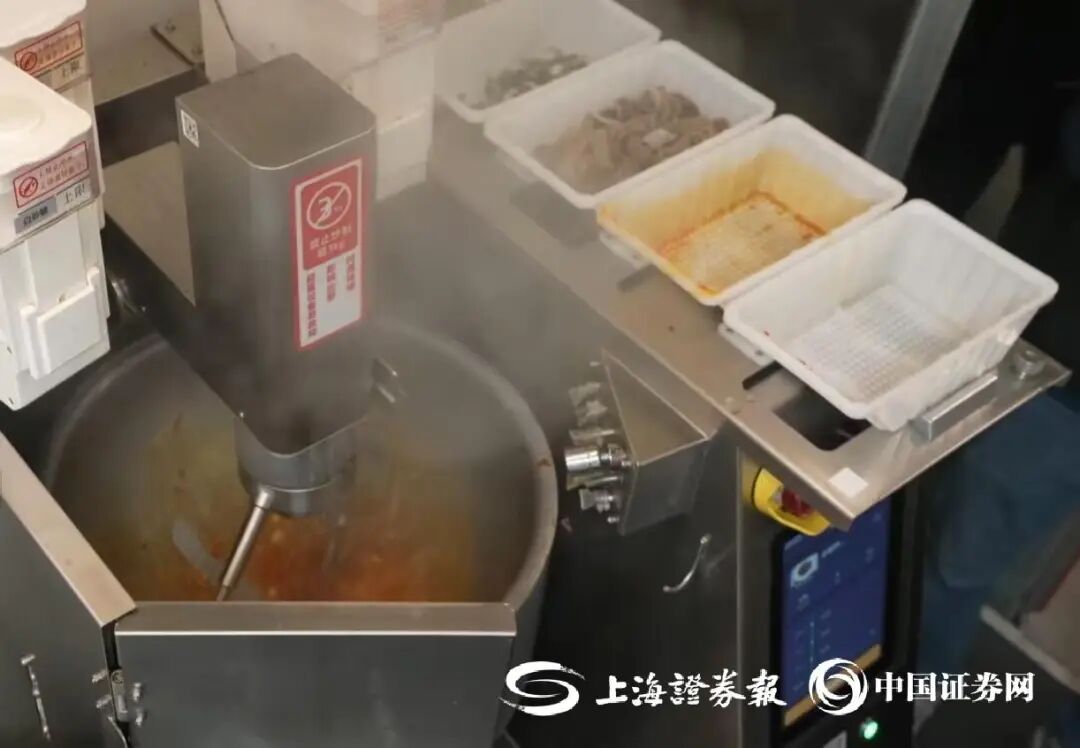
Cooking Robot, Photo by Liu Xuan, Shanghai Securities Journal
In Yang Jiancheng’s view, by 2025, the industry will have entered a stage of large-scale application. “In the past year, over 1,240 customers have signed contracts for the company’s cooking robots, most of which are leading restaurant chain brands, covering 179 cities nationwide. This data marks a critical point in the industry’s acceptance of such equipment.”
Yang Jiancheng believes that the current core driving forces in the industry are mainly reflected in economic efficiency and technological maturity. “In terms of economic efficiency, Xianglu Robotics has achieved effective human-machine collaboration. One cook can operate two machines, producing output and efficiency equivalent to three chefs. This saves a significant amount of expenses for restaurant businesses amid rising labor costs and effectively alleviates labor shortages.”
Regarding the development trends for the next three years, Yang Jiancheng predicts two major trends: scenario differentiation and deep AI integration. “Scenario differentiation means that more robot models will emerge to adapt to different types of dining scenarios. For instance, fast-food restaurants need efficient and quick cooking robots, while high-end restaurants may focus more on the cooking precision and customization capabilities of the robots.”
The “World Cooking Robot Industry Development Report” indicates that the market size for cooking robots is expected to exceed 3.7 billion yuan by 2025 and may surpass 10 billion yuan by 2030.
In light of the market prospects for cooking robots, some opinions suggest that while robots can replace repetitive labor, the emotional dimensions such as the “taste of home” are still difficult for machines to replicate.
In response, Liu Zhenze, a master’s supervisor at the School of Communication Engineering, Jilin University, told the Shanghai Securities Journal that the essence of cooking robots is the extension of industrial logic into the cooking scene. The core value is not to replace human labor but to use technology to address the pain points of the restaurant industry, such as “insufficient standardized production capacity” and “high labor costs.” In B-end chain restaurants and group dining scenarios, they can solidify mature recipes through algorithms, avoiding the randomness of manual operations, achieving uniformity in the taste of hundreds of dishes, which is an efficiency advantage that human chefs find hard to match.
Liu Zhenze further analyzed that the difficulty in replicating the “taste of home” is fundamentally due to the emotional and non-standardized experiences that are unquantifiable: the intuition of “adding half a spoon of salt” or the experience of “cooking for two more minutes” in home cooking comes from long-term awareness of family members’ tastes. These emotionally attached variables far exceed the technical boundaries that current algorithms can cover, such as “dynamic fire control.”
He admitted that for cooking robots to penetrate the C-end market in the future, cost reduction and algorithm iteration are fundamental, but the core still needs to return to their “tool attributes.” “They can become efficient assistants in home kitchens but cannot replace human chefs’ flavor innovations based on life experiences.”
Liu Zhenze believes that the ultimate industry ecosystem should see machines taking on repetitive labor while humans preserve the soul of “perception and creation” in cooking, forming a complementary rather than opposing relationship.
Author: Liu Xuan