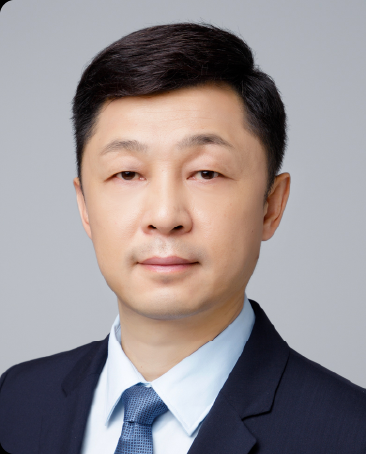
 Zhao Lidong
Founder, Chairman, and CEO of Suiruan Technology. Bachelor of Electronic Engineering from Tsinghua University, Master of Electronics and Computer from Utah State University, USA. Before founding Suiruan Technology in March 2018, he served as Vice President of Tsinghua Unigroup Co., Ltd. Zhao Lidong has worked in Silicon Valley for over 20 years, deeply engaged in chip R&D, serving well-known chip companies such as AMD, and returning to China to participate in the establishment of the AMD China R&D Center. He is the Chairman of the AI Committee of the All-China Federation of Industry and Commerce, Vice President of the Shanghai Integrated Circuit Industry Association, and Chairman of the AI Special Committee of the Shanghai Integrated Circuit Association. He has received honors such as “Oriental Talent (Leading Entrepreneurial Talent)”, “Haiju Talent · Haibao Cup Entrepreneurial Silver Award”, and “Shanghai Business Leaders”.

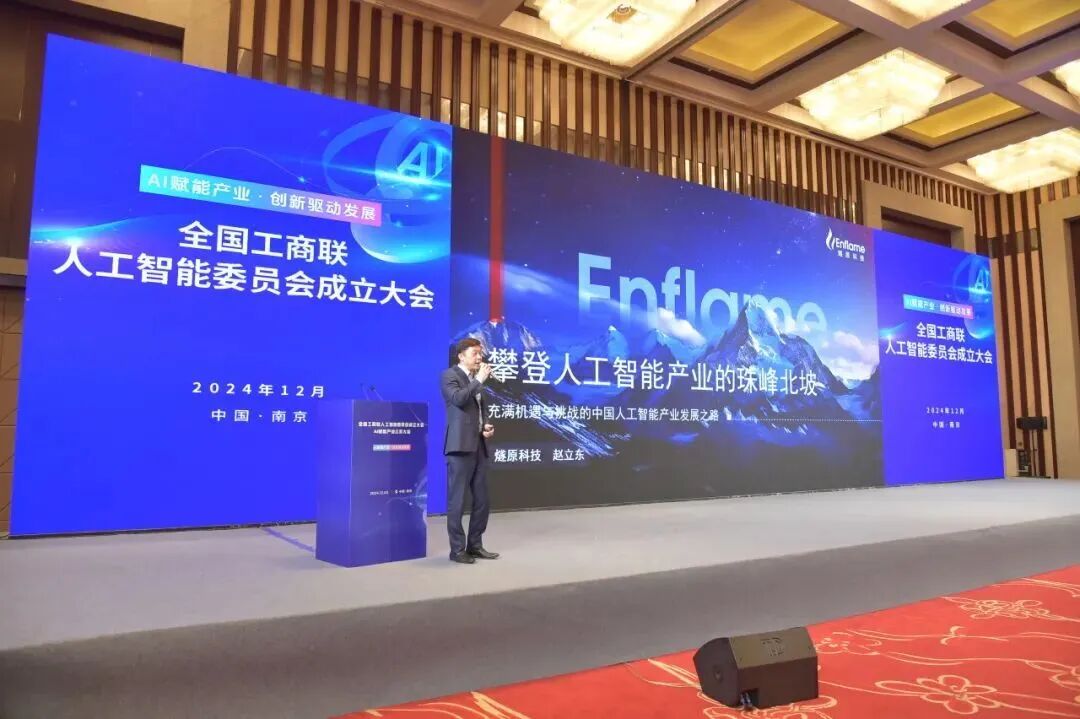
In December 2024, Zhao Lidong was elected as the Chairman of the AI Committee of the All-China Federation of Industry and Commerce and delivered a keynote speech.
At the end of December 2024, the “2024 China Computing Valley Digital Industry Development Conference” was grandly held in Qingyang City, Gansu Province, the national hub node of the integrated computing network, with the theme of “AI Empowering Industrial Transformation and Urban Transformation”, showcasing the development achievements of the “East Data West Computing” project over the past three years, and the domestic WanKa inference cluster equipped with Suiruan Technology’s “Suiruan S60” was officially completed and released. This also reflects the seven-year entrepreneurial journey of Suiruan Technology—from breaking through with a single chip to the “flame of innovation” of the WanKa computing cluster.
 Tsinghua Gene: The “Core” of Class EE85Fire Inheritance
In 2018, when Zhao Lidong and his former AMD colleague Zhang Yalin founded Suiruan Technology in a temporary office in Zhangjiang, Shanghai, they chose a difficult path of ascent: to develop China’s own cloud AI training chip.
This decision was backed by the shared belief in hard technology among the Tsinghua EE85 class. This class produced leading figures in the chip industry such as Yu Renrong (Weir Shares), Zhu Yiming (Zhaoyi Innovation), and Ren Zhijun (Xinhenghui). Having worked in Silicon Valley for 20 years, Zhao Lidong experienced the technical battles between AMD and Intel, recognizing that challenges also present opportunities. With a sense of responsibility as a Tsinghua alumnus, he took on the mission of promoting the country’s high-tech self-reliance and named “Suiruan” to signify that “the spark of innovation can ignite a prairie fire”, vowing to ignite the flame of domestic computing through original innovation.
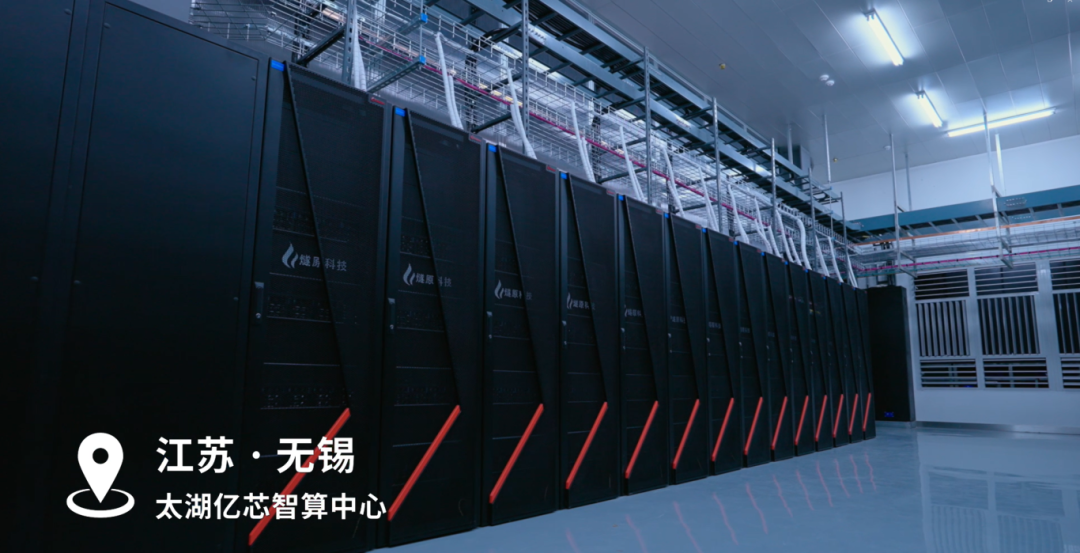
Taihu Yixin Smart Computing Center
The initial decision was “unexpected”: while most domestic chip companies chose to enter the market with lower technical barriers of inference chips, Suiruan Technology targeted the most challenging training chips. This is because Zhao Lidong clearly recognized that “targeting data centers and developing AI training acceleration chips” is a blue ocean market, where competition is based on technical strength rather than price. The entrepreneurial original intention of “making large chips and competing in hard technology” is a perfect reflection of the Tsinghua spirit of “self-improvement and virtue”.
 Disruptor in the Technological Wave: Innovation Compass of Suiruan from the Perspective of Computing Power Reform
Upholding Tsinghua’s school motto of “action speaks louder than words”, Suiruan Technology does not follow the trend in the technological wave but instead takes independent innovation as the entry point, accurately laying out in the key computing power track. With the rise of large models, Suiruan Technology keenly captures that the demand for AI computing power is undergoing comprehensive changes.
On the training end, AI computing power is developing towards ultra-large scale, with foreign clusters already reaching hundreds of thousands of cards, and the US “Stargate” even reaching a million cards. Meanwhile, on the inference end, with the emergence of domestic open-source models represented by DeepSeek, AI applications are experiencing explosive growth, and the demand for high-performance inference computing power is becoming mainstream. Zhao Lidong explained, “The surge in demand for computing power not only raises the technical threshold but also spurs disruptive technological changes. The ultra-large-scale clustering of AI computing power infrastructure means comprehensive competition in systems and ecosystems.”
As the systematization and clustering of computing power undergoes transformation, technological integration and innovation give rise to new paradigms. Firstly, the development of customized chips is rapid. While Nvidia’s market value reaches $4 trillion, Broadcom has also achieved a market value breakthrough of $1 trillion through customized chip orders from companies like Google, Meta, and Amazon.
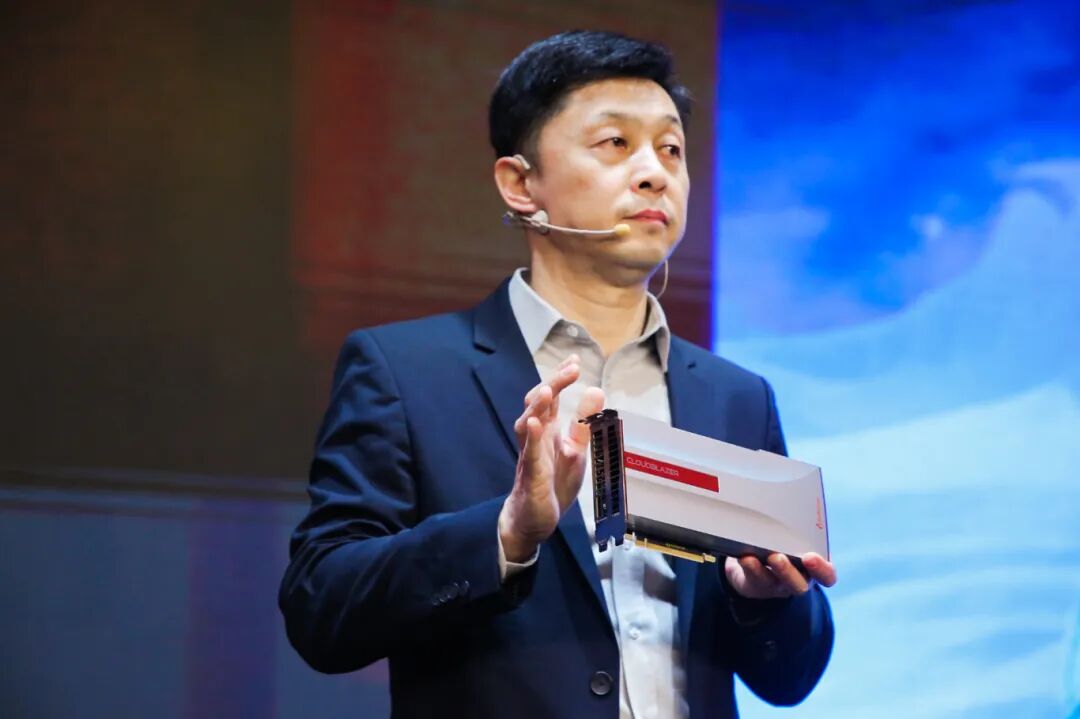
Suiruan Technology releases its first generation training product
“As a startup, the first step is to achieve a closed loop of technology products, and the second step is to achieve a closed loop of commercialization, thereby self-sustaining and continuously iterating products and improving the ecosystem to achieve long-term sustainable development,” Zhao Lidong stated.
At the same time, hardware and software have never existed in isolation. If the AI chip matrix is a precision “computing power engine”, then the accompanying instruction set, compiler, operator library, programming model, and toolchain are the “nervous system” that enables the engine to operate efficiently. The collaboration between hardware and software is key to building a complete AI computing power ecosystem.
In this computing power revolution, localization is not only a commercial demand but also a strategic demand for national science and technology. Suiruan Technology always harbors the ideal of serving the country through technology, taking on the mission of self-reliance and self-improvement in technology, and is committed to becoming a driving force for industrial development in the era of general artificial intelligence.
 Strategic Layout for Future Tracks: Refining Innovation through Business Practice
For chip companies, transitioning from technology R&D to commercial profitability is a life-and-death test. Zhao Lidong pointed out, “The competition in AI chips is not only a technical battle but also a long-term battle of business models.” To this end, the company has adopted a “dual-wheel drive” strategy: on one hand, deeply engaging with the customized needs of internet giants like Tencent, refining products through multiple national-level AI application scenarios; on the other hand, deeply participating in the national strategy of “East Data West Computing”, validating overall solution capabilities in projects like the Qingyang Smart Computing Center. Zhao Lidong emphasized, “The value of the Qingyang WanKa cluster is not only in chip sales but also in proving that domestic computing power systems can support national-level projects.” This marks Suiruan Technology’s evolution from a technology supplier to an industry enabler.
In the future, the company will also look towards emerging international markets, embedding Suiruan Technology’s technical solutions and standards into regional markets through participation in local computing power center construction. “The future competition in AI computing power is not only a comparison of chip performance but also a game of ecosystems and standards.” This strategic foresight allows Suiruan Technology to find its development coordinates in the balance between localization and internationalization in the Chinese AI chip industry.
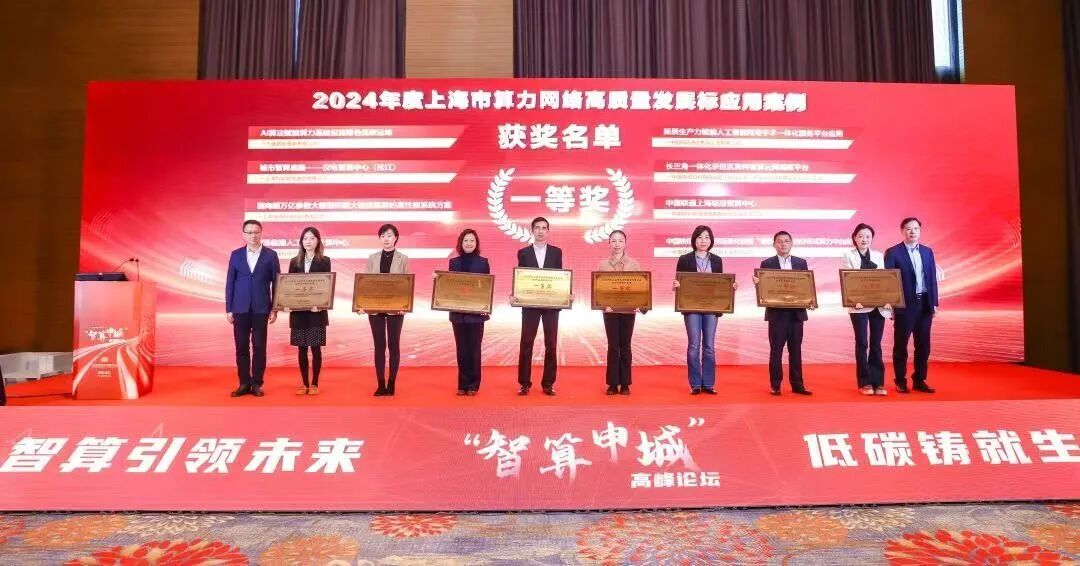
Suiruan Technology wins the first prize for the benchmark application case of high-quality development of the computing power network in Shanghai in 2024
Suiruan Technology is also accelerating its capital layout with a clear goal: to use capital to accelerate technological breakthroughs, quickly transitioning from “blood transfusion” to “self-sustaining” in the long-term AI chip industry. However, Zhao Lidong emphasized, “Financing and IPO are just a stage of development; our ultimate goal is to leverage these steps to expand resources and markets, achieving profitability and sustainable development.” Ultimately, fulfilling the original intention of the company’s establishment—making large chips and competing in hard technology.
In adhering to the entrepreneurial original intention, the Tsinghua spirit is an indispensable element. This spirit of inheritance has also transformed into a practical technical collaboration network. In the field of computing power center operations, Suiruan Technology collaborates with Wuwen Chip Dome incubated by Tsinghua’s Department of Electronics to achieve deep optimization of computing power network performance; in the field of distributed computing, it co-builds a distributed software architecture with Qingcheng Jizhi incubated by Tsinghua’s Department of Computer Science; in the network construction of the WanKa cluster, it collaborates with Jiliu Technology incubated by Tsinghua’s Department of Automation, filling the last piece of the puzzle in Suiruan Technology’s large-scale network operation and maintenance with practical experience. The school motto of “self-improvement” and the culture of “action speaks louder than words” have long been internalized into the shared spiritual quality of Tsinghua people, building a foundation of mutual trust and pragmatic efficiency for cooperation, and becoming a powerful driving force for everyone to work together in pursuit of top-notch innovation.
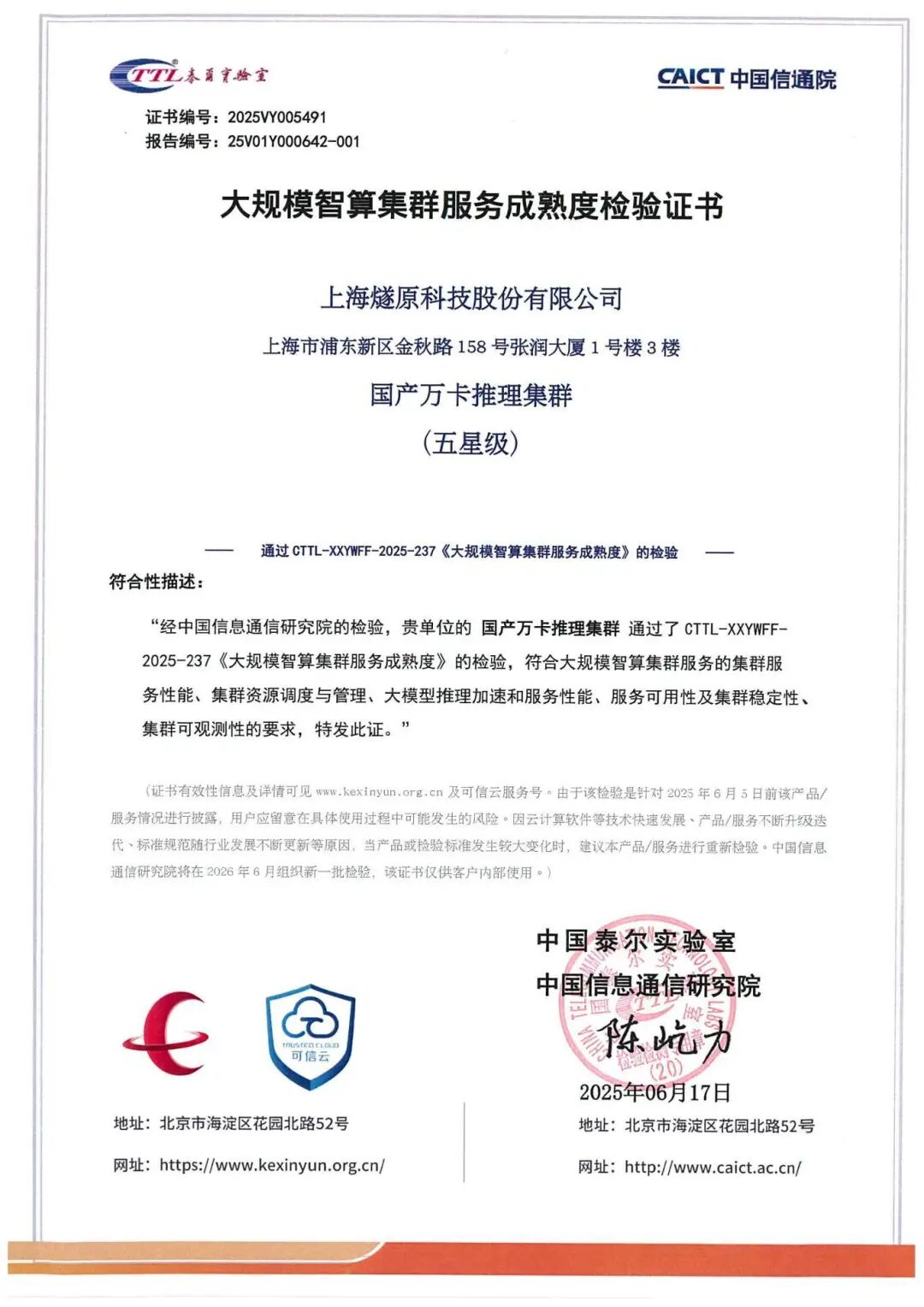
Suiruan Technology’s domestic WanKa cluster is the first to pass the authoritative inspection of the China Academy of Information and Communications Technology and obtain the highest rating.
Climbing the “North Slope of Everest” of AI computing power chips is a long and challenging road. But as Zhao Lidong said, “The development path of China’s intelligent computing industry is arduous, but we cannot shirk our responsibility. We must seize opportunities, work together, and create a new pattern of intelligent computing industry with technological openness, commercial competitiveness, and industrial standardization, paving the way to the ‘North Slope’ of China’s AI industry peak, contributing to the development of China’s artificial intelligence and integrated circuit industry.”
As China’s AI computing power faces the dual challenges of “bottleneck” and industrial upgrade opportunities, Suiruan Technology decodes the path to breakthrough with Tsinghua genes, writing the path of advancement with independent innovation, and is painting a hopeful future for the rise of China’s chip industry.
Written by | Zhan Yuan, Ma Bowen, Zhu Yilin
Full text published in the 134th issue of “Shuimu Tsinghua” AI Special Edition

Tsinghua University is one of the earliest universities in China to carry out teaching and research in artificial intelligence. Since the 1970s, the university has accumulated a wealth of experience in talent cultivation and scientific research in artificial intelligence, always emphasizing the deep integration of theoretical research and practical application. Many Tsinghua alumni have become the backbone of promoting scientific innovation and industrial development in the field of artificial intelligence in China.
Published in August 2025,“Shuimu Tsinghua” AI Special Edition(2025, 3-4 issue combined), particularly reports nearly 50 influential AI companies and platforms founded by Tsinghua alumni, as well as insights and suggestions from academicians, professors, and industry experts on the multidimensional aspects of the artificial intelligence era, showcasing the important role and contributions of Tsinghua people in leading intelligent transformation and empowering innovative development in the economy and society.
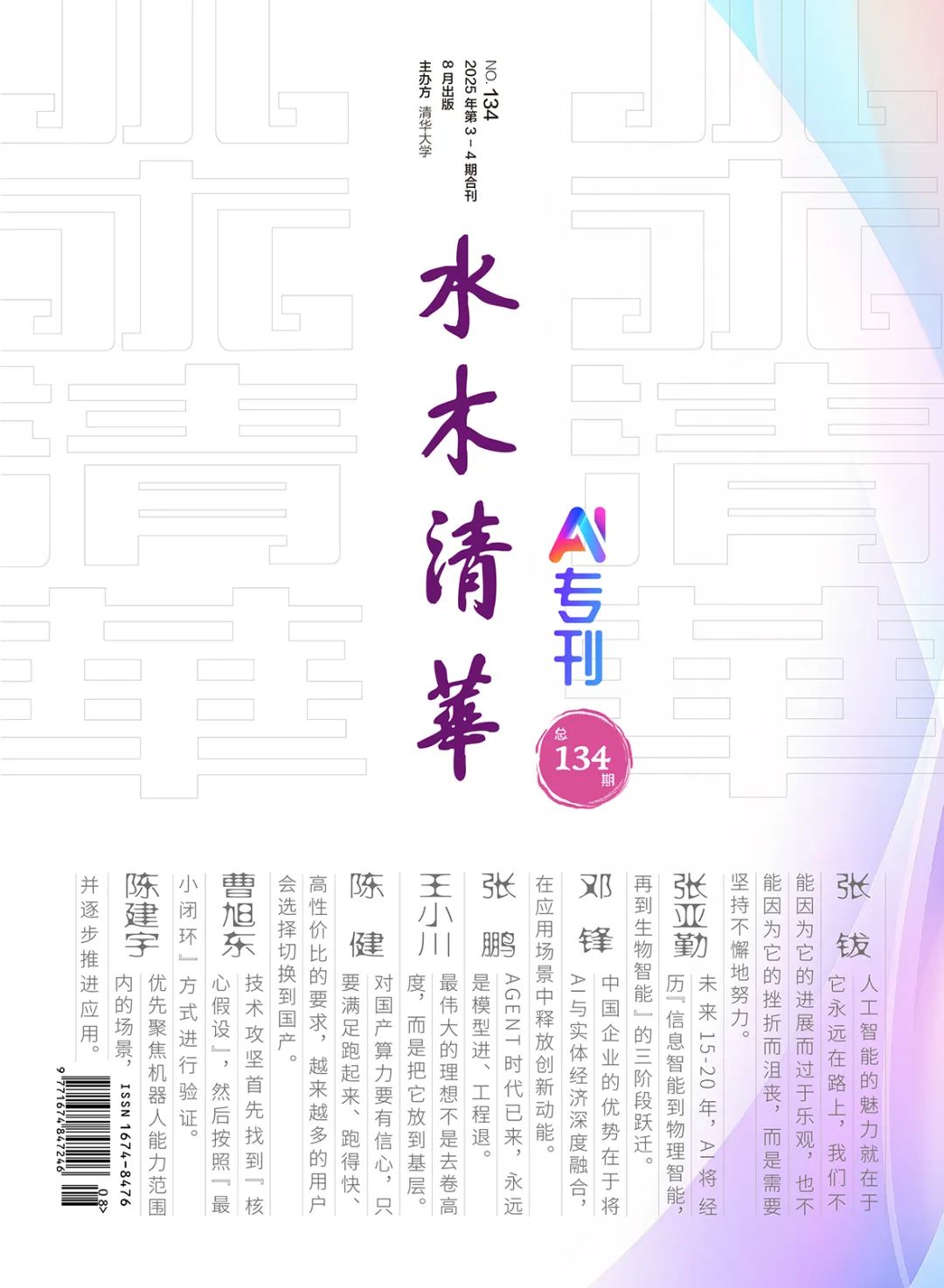
Welcome to Subscribe
“Shuimu Tsinghua” AI Special Edition Subscription Method
[Subscription Price] 40 yuan/copy
Certified alumni of the “Tsinghua People” mini-program can subscribe online through [Alumni Services—Journal Subscription] (Highly Recommended);You can also visit the Tsinghua Alumni Association official website(www.tsinghua.org.cn)→Media Platform→I want to subscribe, to see more details of offline subscription methods.
[Postal Remittance] Payee: Tsinghua Alumni Association, Address: Tsinghua University, Haidian District, Beijing (100084)
[On-site Subscription] Address:Room 1903, Building C, Tsinghua Science Park, No. 1 Zhongguancun East Road, Haidian District, Beijing
[Corporate Subscription] Please call the publishing phone for consultation
[Publishing Phone] 010-62797716
Recommended Reading
- Xue Lan | Innovative Governance, Global Cooperation, and Chinese Solutions in the Era of Artificial Intelligence
- Ruilai Wisdom | Tian Tian: Building a Trustworthy Intelligent Future on Dual Tracks of AI Safety and Innovation
- Power Law Intelligence | Tu Cunchao: Serving 1 million enterprises with legal professionals