Smart Home Chips: Transition from General-Purpose to Specialized
In the rapidly advancing technology landscape, the smart home sector is undergoing a profound transformation, one of the core driving forces of which is the shift of smart home chips from general-purpose to specialized.
Previously, general-purpose chips held a significant position in the smart home field due to their wide applicability and strong versatility. Much like the common central processing unit (CPU), it acts as a versatile “jack of all trades,” capable of handling various tasks, from basic arithmetic operations to complex logical controls. In the early stages of smart home development, the flexibility of general-purpose chips allowed them to adapt to various application scenarios, meeting the initial demands for diverse functionalities in smart home devices. Whether it was the voice interaction capabilities of smart speakers or the image capture and transmission functions of smart cameras, general-purpose chips could provide basic computational support.
However, with the rapid development of IoT technology, the smart home market has experienced explosive growth, with various smart devices such as smart locks, smart air conditioners, and smart curtains flooding into people’s lives, leading to increasingly rich and diverse application scenarios. This has gradually exposed some limitations of general-purpose chips. Different smart home devices have significant differences in functional and performance requirements; for instance, smart security devices need to possess strong real-time data processing capabilities to quickly identify anomalies, while smart lighting devices focus more on low power consumption and cost control. General-purpose chips struggle to meet all functional requirements while also accommodating the specific demands of different devices regarding power consumption, cost, and size.
In this context, specialized chips have emerged. Specialized chips are designed for specific tasks or applications, akin to “custom weapons” tailored for different smart home devices. For example, artificial intelligence (AI) chips are specifically used for processing deep learning and neural network tasks, and their performance and energy efficiency often surpass that of general-purpose chips when executing related tasks. In smart homes, AI chips can enable smart voice recognition, image recognition, and other functions, allowing users to easily control devices in their homes through voice commands or enabling smart cameras to accurately identify family members and strangers, significantly enhancing the intelligence and security of smart homes.
Current Development Status of Smart Home Chips
 Technical Features and Architecture
Modern smart home chips integrate various advanced technologies to meet the diverse needs of smart home devices. Low power consumption design is one of their key features, as many smart home devices, such as smart sensors and smart locks, rely on battery power, and low power consumption ensures long-term stable operation of the devices, reducing the frequency of battery replacements. For instance, some smart home chips designed with low power consumption can have standby power consumption as low as microampere levels, greatly extending the device’s battery life.
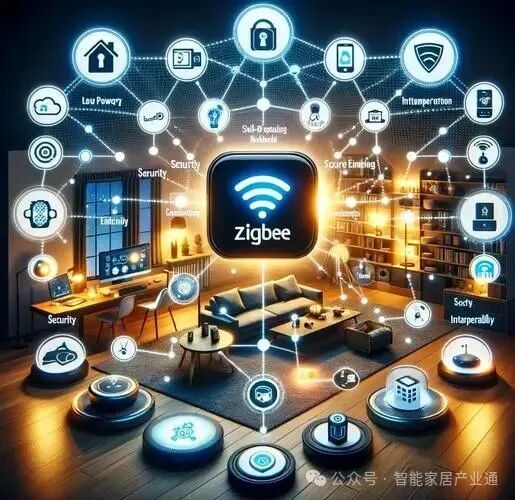
Multi-protocol support is also an important characteristic of smart home chips. The smart home ecosystem encompasses various communication protocols, such as Wi-Fi, Bluetooth, and Zigbee. Chips with multi-protocol support capabilities allow seamless connectivity and data exchange between different devices. For example, a smart home chip that supports both Wi-Fi and Bluetooth protocols can connect to the home network via Wi-Fi for data transmission with cloud servers while also communicating with mobile devices like smartphones via Bluetooth, enabling users to control devices through mobile apps.
Edge computing capabilities are also increasingly valued in smart home chips. With edge computing, devices can quickly process data locally, reducing latency in data transmission to the cloud and improving response speed. For instance, when a smart camera detects an anomaly, it can immediately perform image analysis and recognition using an edge computing chip, quickly determining whether it is an intrusion and issuing an alert without waiting for the image data to be uploaded to the cloud for processing.
Additionally, some high-end smart home chips integrate AI acceleration engines, endowing devices with powerful learning and decision-making capabilities. Such chips can quickly process complex AI algorithms, enabling functions like smart voice recognition and intelligent scene perception. For example, AI chips in smart speakers can recognize and understand user voice commands in real-time and accurately execute corresponding actions, such as playing music or checking the weather.
In terms of architecture, the latest smart home main control chips often adopt ARM Cortex-M series or RISC-V architecture. The ARM Cortex-M series architecture, with its high performance, low power consumption, and rich software ecosystem, has been widely applied in the smart home field. Meanwhile, RISC-V architecture, as an open-source instruction set architecture, offers high flexibility and customizability, attracting more and more chip design companies to adopt it, providing new ideas and directions for the innovative development of smart home chips.
Comprehensive Penetration of Application Scenarios
The application scenarios of smart home chips have comprehensively penetrated various aspects of home life. In the smart speaker domain, voice recognition chips are core components. They can accurately recognize user voice commands, convert voice signals into digital signals, and analyze and process them through algorithms to achieve intelligent interaction functions. For instance, when a user says, “Play a song by Jay Chou,” the voice recognition chip can quickly capture the command and transmit it to the main control chip of the speaker to initiate music playback.
Smart locks rely on security encryption chips to ensure user safety. These chips employ advanced encryption algorithms to encrypt user fingerprints, passwords, card information, etc., preventing data theft and cracking. Additionally, security encryption chips also feature anti-violence opening detection and abnormal alarm functions, providing comprehensive protection for home security.
Data acquisition chips in environmental sensors can monitor indoor temperature, humidity, air quality, and other environmental parameters in real-time. These chips convert environmental information into electrical signals through built-in sensor components, perform digital processing, and then transmit the data to the central controller of the smart home system. Users can view this environmental data in real-time through mobile apps and adjust the indoor environment based on actual conditions, such as turning on the air conditioner to regulate temperature or activating air purifiers to improve air quality.
In home appliance control, the main control chip plays a crucial role. It is responsible for controlling various functions of home appliances, such as temperature adjustment and wind speed control of smart air conditioners, and temperature settings and ingredient management of smart refrigerators. Through interconnectivity with the smart home system, the main control chip of home appliances can achieve remote control, scheduled switching, and intelligent scene linkage. For example, on the way home from work, users can use mobile apps to turn on the smart air conditioner in advance, ensuring a comfortable temperature upon arrival.
Market Scale and Competitive Landscape
With the rapid development of the smart home market, the market scale for smart home chips is also showing strong growth. According to relevant reports, the global smart home chip market reached a considerable figure in 2023, and it is expected to continue growing at a certain average rate in the coming years, reaching even higher levels by 2029. In China, the smart home chip market is also developing rapidly, with the market capacity in 2023 reaching a significant scale and occupying an important share in the global smart home chip market.
The global smart home chip market is highly competitive, with major companies including Broadcom, Nanjing Bouffalo, Amlogic, MediaTek, NORDIC, Silicon Labs, Marvell, WinnerMicro, and TI. These companies have their advantages in technology research and development, product performance, and market share. Broadcom has a deep technical accumulation in the communication chip field, and its Wi-Fi and Bluetooth chips are widely used in the smart home market; Amlogic excels in smart audio and video SoC chips, with its products adopted by numerous smart TV, smart set-top box, and smart speaker manufacturers.
In recent years, domestic smart home chip companies have also been rising, gradually emerging in the market with technological innovation and cost advantages. Companies like Unisoc and Rockchip have increased their R&D investments, launching a series of high-performance, low-power smart home chip products covering various fields from low-power sensor node chips to high-performance smart appliance main control chips, gaining widespread application in smart appliances, security, and lighting markets.
The smart home chip market is in a rapid development stage, with continuous technological innovation, increasingly rich application scenarios, expanding market scale, and a constantly changing competitive landscape. In this opportunity-filled and challenging market, companies need to continuously enhance their technological strength and innovation capabilities to remain competitive.
How AIoT Chips are Reshaping the Smart Home Industry
 Technological Breakthroughs: Reconstructing Underlying Logic
The emergence of AIoT chips has brought a series of technological breakthroughs to the smart home industry, fundamentally reconstructing the development model of smart homes.
The rise of edge intelligence is one of the significant transformations brought by AIoT chips. Traditional smart home devices often rely on the cloud for data processing and decision-making, which not only leads to data transmission delays but also poses privacy and security risks. AIoT chips with edge computing capabilities can quickly process and analyze data locally, achieving “unconscious interaction.” For example, Qualcomm’s QCS6490 and other edge AI chips can compress device response latency to under 50ms, enabling directional sound field control technology that follows the user. Qingting Acoustics embeds AI algorithms into audio devices, allowing sound to be tracked in real-time according to the user’s position, automatically suppressing public broadcast interference during movie watching in the living room and projecting directional surround sound. In security monitoring scenarios, edge intelligent cameras can analyze video footage in real-time, immediately issuing alerts upon detecting anomalies such as intrusions or fire smoke, without waiting for data to be uploaded to the cloud for processing, significantly improving response speed and safety.
The development of generative AI has also brought a new experience to smart homes. By integrating generative AI with smart home devices, scene adaptive functions can be realized. When a user says, “I want to throw a party,” the smart home system equipped with generative AI can automatically dim the lights, activate ambient lighting, play a custom playlist, and adjust smart curtains to regulate indoor lighting. Haier’s Uhome large model has achieved the ability to recommend lighting modes based on user emotions, such as automatically switching to warm light and playing white noise when detecting user fatigue. This dynamic scene generation capability allows the home environment to automatically adjust according to user needs and scene changes, truly becoming a “thinking space” that provides more personalized and intelligent services to users.
Breakthroughs in multimodal interaction technology have also broken the limitations of traditional single interaction methods in smart homes. By integrating various interaction methods such as voice, gestures, and eye movements, users can interact with smart home devices more naturally and conveniently. Huawei’s HarmonyOS integrates multimodal input through distributed capabilities, allowing users to wake devices with just a glance. In kitchen scenarios, users can control the range hood speed with gestures while also adjusting the steam oven temperature with voice commands, and the system can automatically match cooking curves. This cross-modal interaction method greatly enhances operational efficiency, especially in complex cooking and fitness guidance scenarios, providing users with a smoother and more efficient smart home experience.
Scene Revolution: From Spatial Intelligence to Humanized Services
The application of AIoT chips has driven a revolution in smart home scenes, achieving a transition from spatial intelligence to humanized services.
In health management scenarios, AIoT chips turn homes into “micro health management centers.” Millimeter-wave radar technology enables non-contact health monitoring, achieving a 99% accuracy rate in detecting falls among the elderly. Smart mattresses can sense heart rate, breathing rate, and other data, automatically adjusting air conditioning and humidifiers based on environmental temperature and humidity. When detecting that a user has entered a light sleep phase, the system automatically activates the aroma machine and plays sleep-inducing music. These smart devices, interconnected and coordinated through AIoT chips, can monitor the health status of family members in real-time and provide personalized health management plans, reducing the costs of chronic disease management and safeguarding the health of family members.
The energy management scenario is also an important application area for AIoT chips. For example, in Tesla’s Powerwall and other home energy storage systems linked with photovoltaic devices, AI predicts dynamic electricity price peaks and valleys to schedule electricity usage. In a pilot community in Zhejiang, this “photovoltaic + energy storage + smart appliances” collaborative model reduced household electricity costs by 22% and allowed excess electricity to be uploaded to the grid for profit. AIoT chips enable household energy management systems to monitor and analyze household electricity usage in real-time, automatically adjusting the operating time and power of electrical devices based on electricity price fluctuations and user habits, optimizing energy utilization while also providing households with additional economic benefits, giving rise to a new business model for household carbon asset management.
In the scenario of elderly care transformation, AIoT chips provide more thoughtful care and services for the elderly. The “Peipei” emotional companion robot introduced by the Chongqing First Social Welfare Institute uses generative AI technology to recreate photos and voices from the elderly’s youth, providing dialect chat, intellectual games, and other services. This robot can recognize eight emotional states and proactively initiate interactions when detecting loneliness in the elderly, reducing the depression rate among elderly residents by 28%. With the help of AIoT chips, smart devices can better understand the needs and emotional states of the elderly, providing them with emotional companionship and life assistance, filling the emotional service gap in the “silver economy,” allowing the elderly to enjoy a more convenient, comfortable, and dignified life in their later years.
Business Transformation: Ecological Reconstruction of a Trillion-Dollar Market
The development of AIoT chips has triggered a business transformation in the smart home industry, driving the ecological reconstruction of a trillion-dollar market.
The value of the industrial chain is shifting from hardware to services. The smart home industry chain is transitioning from “device manufacturing” to “scene operation.” SanYingNiao integrates the appliance, home, and home decoration industries into a unified ecosystem through its “design – implementation – life” full lifecycle service. Its integrated retail stores have seen annual growth rates exceeding tenfold, validating the business logic of “scene as product.” This model shifts the source of enterprise profits from hardware price differences to software subscriptions, with leading companies’ service revenue accounting for 25%. As AIoT chip technology continues to develop, the functionalities of smart home devices are becoming increasingly powerful, while user demand for collaborative work between devices and scene-based services is also growing. By providing one-stop scene solutions and continuous software services, companies can better meet user needs, enhance user stickiness, and maximize commercial value.
The competition for standard-setting authority has become a key factor in the smart home industry’s competition. The emergence of the Matter protocol has broken down brand ecological barriers, promoting the interconnectivity of smart home devices. By 2025, over 70% of devices supporting the Matter standard are expected, with companies like Xiaomi and Huawei promoting protocol popularization through open-source communities, increasing the success rate of cross-platform device linkage from 60% to 92%. This standardization process has given rise to a new profession of “smart home designers,” allowing users to freely combine devices like building blocks, reducing the customization cost for single scenes by 40%. Unified standards help lower product development costs, improve market compatibility, and promote the healthy development of the smart home industry. Companies that master standard-setting authority will dominate market competition and lead the direction of industry development.
The monetization of data assets has also brought new business opportunities to the smart home industry. Haier’s smart home data platform analyzes user behavior data to generate health reports and energy optimization plans, providing services to insurance companies and energy enterprises. This “data + scene” business model allows the annual data value of a single household to exceed 2000 yuan. With the development of privacy computing technology, which ensures data is “usable but invisible,” the potential of data factors is further released. Smart home devices generate a large amount of user data during operation, which contains rich value. By deeply mining and analyzing this data, companies can provide more personalized services to users while also converting data assets into commercial value, collaborating with other industries for mutual benefit.
Challenges and Response Strategies for Smart Home Chips
Challenges
Despite significant progress in smart home chips, they still face numerous challenges during development. Firstly, the lack of unified standards is a prominent issue. Currently, the smart home industry lacks a unified standard, and the chip standards used by different brands and types of smart home devices vary, leading to poor compatibility and interconnectivity between devices. Users often encounter difficulties in coordinating different brand devices when building a smart home system, significantly hindering further development of the smart home market. For example, a user who purchases smart speakers and smart lighting devices from different brands may find that they cannot directly control the lights through the smart speaker and need to use multiple apps for operation, which is very inconvenient.
Data security and privacy protection are also significant challenges faced by smart home chips. Smart home devices collect a large amount of users’ private data daily, such as home addresses, living habits, and personal preferences. If this data is leaked, it can pose serious security risks to users. Smart home devices may be vulnerable to hacker attacks during data transmission and storage, leading to data theft or tampering. Some malicious individuals may invade smart cameras to obtain real-time footage of users’ homes, infringing on users’ privacy. Additionally, some smart home chips have vulnerabilities in security protection, making them susceptible to exploitation by attackers, further exacerbating data security risks.
The reliability requirements in different scenarios also pose challenges for smart home chips. Smart home application scenarios are rich and diverse, with each scenario having different performance and reliability requirements for chips. In smart security scenarios, chips need to possess high stability and real-time processing capabilities to ensure timely and accurate detection of anomalies and issue alerts. If a chip malfunctions or experiences processing delays, it may lead to security incidents. In smart health monitoring scenarios, chips need to have high-precision data collection and analysis capabilities to provide accurate health data. If the reliability of the chip is insufficient, it may yield incorrect health diagnosis results, affecting users’ health management.
Response Strategies
In response to these challenges, chip developers have adopted a series of strategies. To address the issue of non-unified standards, the industry is actively promoting standard formulation and unification efforts. Some industry organizations and companies have come together to jointly formulate relevant standards for smart home chips, promoting compatibility and interconnectivity between devices. For example, the emergence of the Matter protocol aims to establish a unified smart home connectivity standard, enabling seamless connection and interoperability between smart home devices of different brands and types. By adhering to the Matter protocol, smart home chip developers can ensure their products work in harmony with other devices that comply with the protocol, providing users with a more convenient and unified smart home experience.
In terms of data security and privacy protection, chip developers have strengthened security technology research and development. They employ advanced encryption algorithms to encrypt data, ensuring its security during transmission and storage. Additionally, they enhance identity authentication and access control to prevent unauthorized access and data leakage. Some smart home chips utilize hardware encryption technology, integrating encryption algorithms into the chip itself to improve encryption security and efficiency. Furthermore, chip developers continuously update and improve the security firmware of the chips, promptly fixing security vulnerabilities and enhancing the security protection capabilities of the chips.
To meet the reliability requirements in different scenarios, chip developers focus on customized chip design. They develop targeted chip solutions based on the characteristics and needs of different application scenarios. In the smart security field, they develop chips with high reliability and low latency to meet the demands for real-time monitoring and rapid response; in the smart health monitoring field, they develop chips with high-precision data processing capabilities to ensure the accuracy of health data. Through customized design, chips can better adapt to the requirements of different scenarios, improving the performance and reliability of smart home devices.
Future Outlook
The transition of smart home chips from general-purpose to specialized, along with the reshaping of the industry by AIoT chips, is leading the smart home sector into a new development stage. In this process, technological innovation, scene expansion, and business transformation intertwine, bringing infinite development potential to the smart home industry.
As 5G and AI technologies continue to mature, smart home chips will usher in broader development space. The high speed, low latency, and large connectivity characteristics of 5G technology will provide stronger support for the interconnectivity of smart home devices, enabling real-time data transmission and collaborative work between devices. The continuous advancement of AI technology will empower smart home chips with stronger learning and decision-making capabilities, achieving more intelligent and personalized home services.
In the future, smart home chips are expected to achieve higher integration and lower power consumption, further reducing device size and extending battery life. Meanwhile, with the continuous optimization and innovation of artificial intelligence algorithms, smart home chips will be able to perform more complex tasks, such as smart health diagnostics and smart energy management, providing users with a more comprehensive and convenient smart home experience.
In terms of the market, as consumers’ awareness and acceptance of smart home products continue to increase, the market scale for smart home chips will continue to expand. It is expected that in the coming years, the global smart home chip market will maintain a high-speed growth trend, bringing enormous business opportunities to chip developers and related enterprises.
Disclaimer: Images and materials are sourced from publicly available resources on the internet, and this compilation is intended solely to convey industry information. If there are any inaccuracies, please feel free to correct them. If there are any infringements, please add the author’s WeChat to delete the article.