1
A Discussion on Bull’s Key Initiatives in the Lighting and Electrical Industry in Recent Years
Bull’s Q3 2025 financial report was released, still excellent, but facing the dilemma of sluggish growth.In today’s construction materials industry environment, it is difficult for any enterprise to stand alone, and Bull has not shown the previous performance of running wildly.
All major construction material giants are facing such difficult challenges, and the situation of small and medium-sized enterprises can be imagined.
In contrast, Bull’s layout in the lighting and electrical sector in recent years has mainly focused on two areas: one is to fully develop the no-main-light segment (Muguang); the other is to vigorously promote the 4.0 flagship store.
Bull’s Muguang no-main-light has likely not met expectations, possibly due to two reasons: one is product style issues, and the other is product positioning issues.The lighting industry has complex product categories, diverse styles, and prices constantly hitting new lows, making it very difficult for cross-industry companies to enter the lighting industry. Midea and TCL have faced these issues.
Although the lighting industry is large, there are only a few influential players on the channel side, and the flow of information is extremely fast. Therefore, for enterprises entering the lighting industry, the initial stage is very important, the first battle is the decisive battle. If the initial stage fails, it will have a huge negative impact on the entire market. Everlight in the LED era suffered from this loss.
Bull’s other major project is the vigorous construction of the 4.0 flagship store. In the lighting industry, building stores requires retail capability, and home lighting products are key to supporting the retail business of stores. According to merchants feedback, Bull’s electrical and bathroom heater products are very competitive; however, the styles of home lights have encountered significant problems, with severe product lag, failing to keep up with the market’s expected pace. In home lighting, Opple has always been far ahead, and many companies in Zhongshan later wanted to be the second, but today it still hasn’t appeared, which shows the difficulty.
Bull’s strategic direction is undoubtedly correct; for the lighting and electrical sector, the future growth points will definitely come from the no-main-light (commercial lighting) and smart home two major segments. Delixi introduced senior executives from Opple in the second half of the year, also seeing the bottleneck in the traditional electrical market, hoping to break through through lighting and smart segments.
2
Bull’s Choice of Intelligence
Bull’s layout for intelligence actually started very early, whether it was the initial zero-line solution, or later fully acquiring small and then the single-fire solution.
Bull has never given up on the path of intelligence, but the road has been very bumpy.
Recently, the Mijia smart ecosystem has been exceptionally popular in the construction materials industry, with smart switch companies like Ping Tou Xiong and Ling Pu emerging, causing ripples in the calm electrical industry.
Old Liang has received many fan messages asking me to talk about Bull’s Mijia smart issues. First of all, Bull will definitely launch Mijia products soon, because Mijia Baike already has Bull products. This time, Old Liang mainly analyzes Bull’s choices and challenges in facing Mijia smart.
1. Mijia Ecosystem: Fully embrace or just scratch the surface?
Bull’s first problem in entering the Mijia system is whether to fully embrace the Mijia ecosystem or to cooperate superficially. This is a very important question.
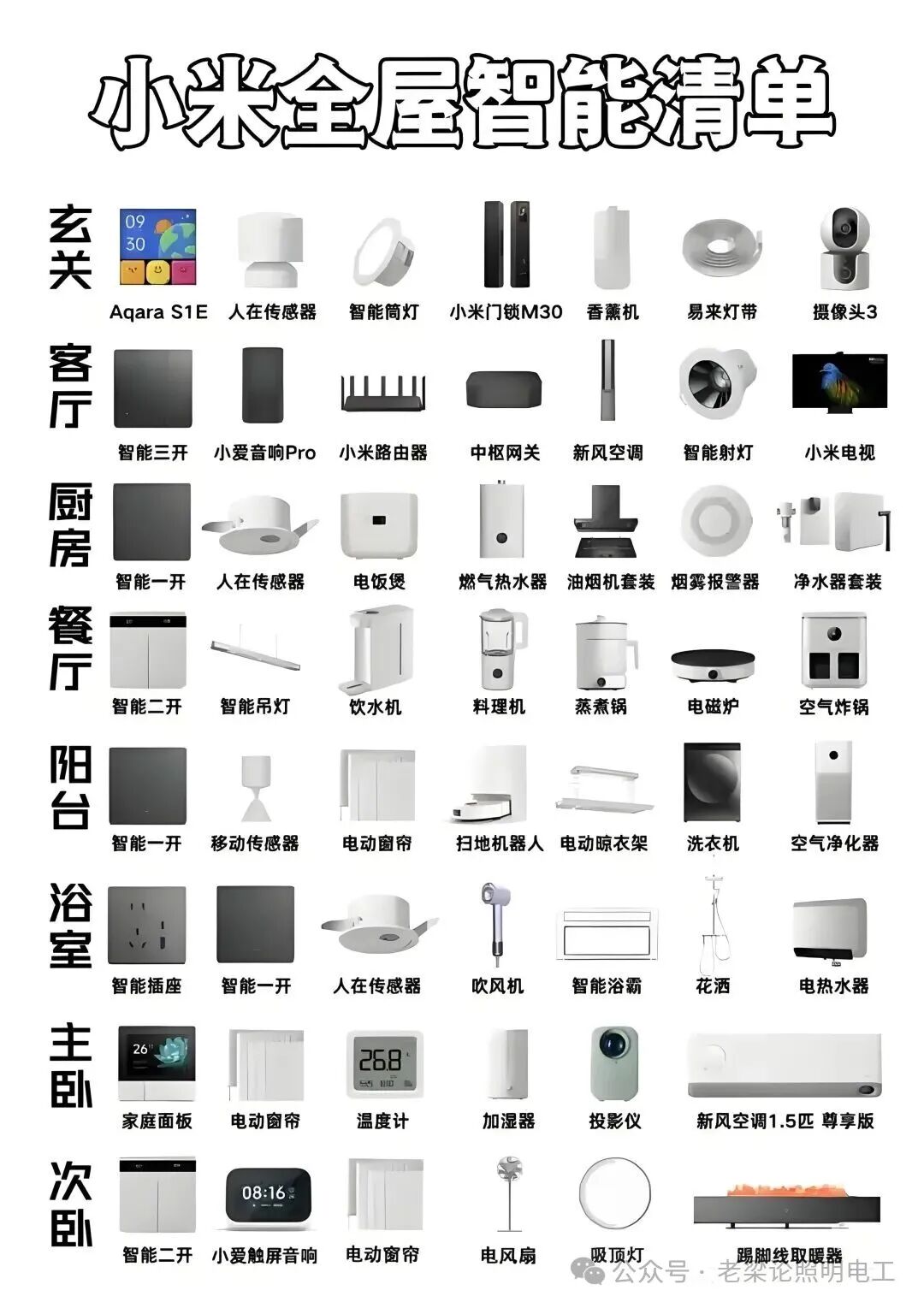
Some believe that Bull cannot fully embrace the Mijia ecosystem in the smart home field because of past grievances with Xiaomi in the power strip field. Old Liang believes this is nonsense. In business, there are no eternal friends or enemies, only eternal interests.
If Bull fully embraces the Mijia ecosystem, abandoning its original system and only acting as a hardware provider, would Bull be willing? Would such cooperation affect Bull’s brand status? Would it not have an impact?
If Bull chooses to cooperate superficially with Mijia, while also embracing multiple system platforms in the smart home field, could this lead to its energy being too scattered, missing opportunities, and even leaving the channel side at a loss?
Leishi Lighting launched “Xiao Lei Yi Jia” this year, but it seems to have not achieved the expected results on the channel side.
To fully embrace or to have multiple choices? This is a strategy, it is a big question.
2. Product Layout: Only switches or a product matrix?
The second question is also crucial, regarding product choices. Bull’s new Mijia switch should be an extension of the existing product platform. So, will the subsequent Mijia products be upgrades of traditional products, or will they develop entirely new products? Will they manufacture themselves or choose excellent suppliers to jointly launch?
Currently, the electrical industry divides switches into four types: traditional wall switches, sensor switches, voice-controlled switches, and display switches. The iteration of Mijia products is very fast, whether it is display products, sensing products, or millimeter-wave products, they are all more complex compared to traditional products. For traditional enterprises just entering, there will be certain barriers.
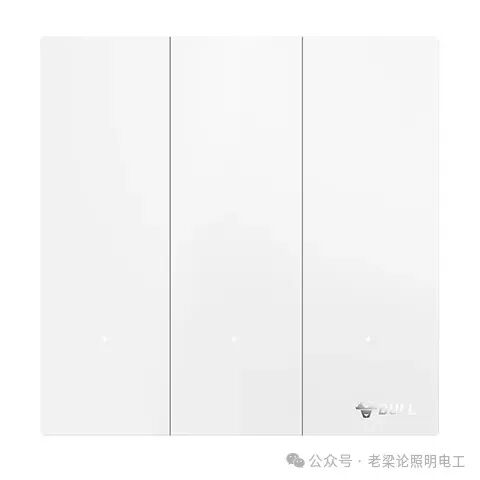
(This image is from “Mijia Baike”, if there is infringement, please contact for removal!)
First is the industry’s concern about the thickness of switches. According to “Mijia Baike”, Bull’s latest Mijia switch is 6.4 mm thick. However, the general central control screen is 6.9 mm, and smart switches may not be better just because they are thinner. Of course, this is a subjective issue.
Mijia products may need to install the switch and screen together, requiring aesthetic consistency. The Mijia smart ecosystem products are rich, and launching only one switch is far from enough, and subsequent products with displays will definitely be needed.
In the Mijia smart ecosystem, currently, the main sales are switches and lighting. Bull must do well in Mijia smart, and subsequently must also have smart lighting products. So, will Bull choose to manufacture in its Huizhou base or collaborate with suppliers? These are all questions, as smart lighting products are more complex.
In the Mijia smart ecosystem, smart electrical products are the most eye-catching, with new players like Ping Tou Xiong and Ling Pu emerging. The electrical industry has not seen anything fresh for a long time. The emergence of Ping Tou Xiong and Ling Pu has finally brought new topics and vitality to the stagnant electrical industry.
In the future, smart switches will definitely replace part of the traditional switch market, so Bull’s Mijia smart strategy cannot afford any mistakes.
3. Channel Construction: Existing channels VS Professional service providers? Online VS offline?
With the end of the golden era of real estate, the construction materials industry is undergoing a brutal reshuffle from “incremental” to “stock”, and then to “reduction”. Traditional dealers who once sat firmly on their thrones now have to face a reality: the past model cannot continue.
Sales have dropped by more than 35%, and profits have been halved. This is no longer an isolated phenomenon, but a true reflection of the current traditional construction material dealer group. Smart upgrades are the only way for traditional construction material dealers.
Bull’s Mijia smart channel layout also tests the wisdom of enterprises, and every step must be correct.
If Bull allows existing channel dealers to fully access Mijia, and undergo smart upgrades, it would be the simplest and most convenient solution. However, smart homes have a service attribute, and for traditional dealers who are just getting into smart, there are certain challenges, requiring a learning and familiarization process. This may start quickly, but the final development may be slower.
Another channel approach is for Bull to choose to develop new professional smart service providers. In recent years, in the Mijia smart ecosystem, a batch of comprehensive and professional smart service providers have emerged. These service providers, whether from Tuya or Mijia; from Green Rice, Ping Tou Xiong,, Lin Pu, or online channels, have already gained a certain voice in the Mijia smart ecosystem, and are new forces in the electrical industry. However, this greatly harms the existing channels, and Old Liang believes Bull will not do this.
If Bull chooses to protect offline channels, and does not embrace these professional service providers, then there is another path: to vigorously develop e-commerce channels. It is well known that Mijia smart products have more than half of the market share in online channels, which is the development path of Ping Tou Xiong, Ling Pu, and many white-label companies in Wenzhou. Of course, enterprises focusing on e-commerce channels, will also severely impact offline channels. This is another contradictory issue.
In the Mijia smart ecosystem, currently, Bull has only prepared one switch product, and it is very difficult to promote through offline channels. Therefore, focusing on online channels may be Bull’s Mijia smart channel strategy going forward. Let’s wait and see.
3
Traditional electrical companies should quickly embrace the Mijia ecosystem.
This year, there are some new dynamics in the lighting home channel: in the Fujian market, among every 10 customers entering the store, 3 will actively inquire about “smart products”; if the customer is young, this ratio rises to 60%.
In home specialty stores, smart products have quietly accounted for 15%-20% of sales. This indicates that the construction materials market is not without demand, but the demand has changed.
In the application scenarios of smart homes, the number of devices is large and the density is high, and wireless communication systems, due to their efficiency, convenience, have become the ideal choice. Therefore, the characteristics of wireless communication make it naturally suitable for smart home environments.
In the future, everyone will view wireless methods as the first solution for smart homes, the Mijia ecosystem will hold a monopoly position. More importantly, the Mijia ecosystem has built a huge consumer-grade AIoT platform after more than a decade of deep cultivation.
In contrast, on the brand side, there are currently three types in the smart home (construction materials industry) field: the first type is pure smart brands, such as Xiaomi, Green Rice, and Yilai; the second type is pure Mijia brands mainly based on e-commerce, such as Ping Tou Xiong, Ling Pu, and white-label companies in Wenzhou; the third type is traditional enterprises that have transformed to launch smart products, such as Hongyan, Leishi, and Opple.
Therefore, traditional electrical brand enterprises should quickly embrace this era of intelligence, and quickly embrace the Mijia smart ecosystem. Because we are all at the same starting line.
This is a race where the early birds get the worm. The future is here; do you think Bull will miss this great era of smart homes?