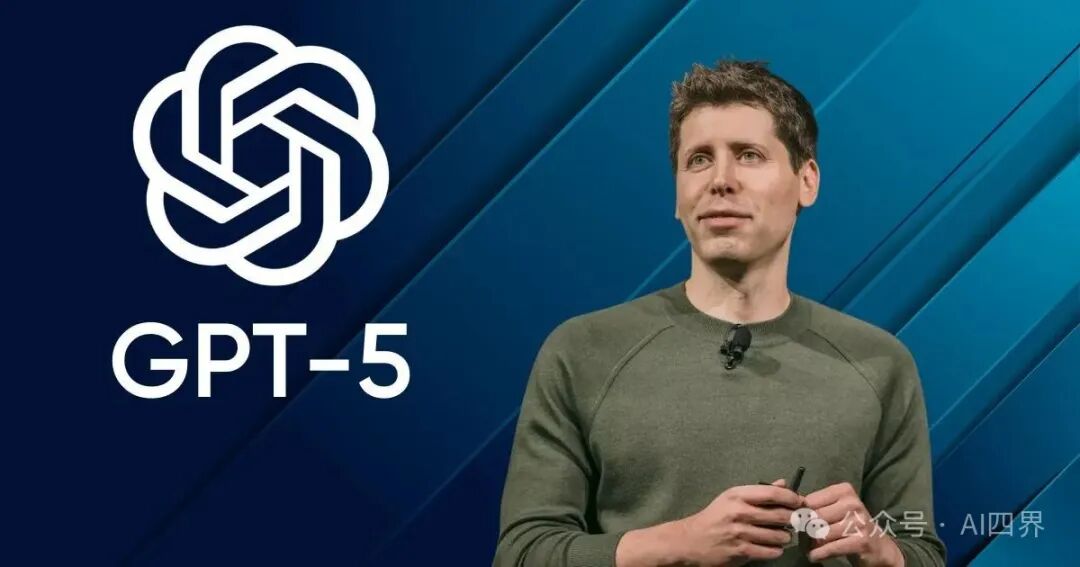
On August 8, 2025, OpenAI released GPT-5, a significant upgrade that redefines the boundaries of artificial intelligence capabilities. Its qualitative changes in complex reasoning, seamless multi-modal integration, and autonomous agent capabilities will reshape the AI application layer, especially exerting structural pressure on the hotly contested agent sector, presenting both opportunities and challenges.
One of the highlights of GPT-5 is its highly evolved Mixture of Experts (MoE) architecture. This architecture continues the ideas of GPT-4 but with a more sophisticated mechanism. It is not merely a simple accumulation of parameters; instead, it constructs a dynamic processing engine composed of numerous “expert” subnetworks specialized in specific tasks and an intelligent “routing system”.
When a task is input, the routing system quickly assesses and activates only a few of the most relevant expert networks to work together. This “on-demand activation” model enhances the efficiency of computational resource utilization while maintaining the performance of a large, dense model, laying the architectural foundation for GPT-5 to uniformly process multi-modal data (text, images, videos, and even 3D modeling).
As a result, merely comparing the total number of model parameters is gradually losing significance. The key indicators determining the inference cost and efficiency of a model have shifted to the actual number of active parameters engaged in processing specific tasks. The power of GPT-5 fundamentally stems from the “cleverness” of its architectural design rather than the “size” of its scale. The vast and multi-modal training data (estimated to exceed 50 trillion tokens) provides a solid foundation for this “cleverness”.
GPT-5’s powerful native reasoning and tool-calling capabilities make it a cornerstone of a “super agent”. This will trigger a supply-side transformation in the AI agent market and demand-side integration.
The market for numerous single-function, “static knowledge base + fixed process” primary agents will be squeezed. Whether it is standard Q&A customer service, article summarization tools, or basic code generation assistants, their core value is being directly covered by the GPT-5 API. Vertical agents that previously required months of development by startup teams can now be efficiently implemented through simple GPT-5 API calls, often with better performance. As the technical barriers are significantly lowered, AI application startups lacking deep moats will face survival challenges, leading to a short-term market chill.
For high-level scenarios requiring persistent state management (such as tracking cross-month projects), complex game strategies (such as multi-party supply chain negotiations), and off-chain execution with physical world interactions (such as controlling smart factory equipment), relying solely on the GPT-5 API will be insufficient. These scenarios still require external agent frameworks to support: undertaking complex goal decomposition, long-term storage of task progress and key information, secure calls to external APIs and physical executors, and coordinating multi-agent collaboration. This will give rise to a new hybrid technology stack of “GPT-5 + lightweight agent layer”—where GPT-5 acts as the brain (understanding, reasoning, strategy generation), and the lightweight framework serves as reliable hands and coordinators (execution, connection, workflow construction). This architecture will quickly become mainstream in high-value fields such as finance, high-end manufacturing, and scientific research.
In the face of the reshuffle brought about by GPT-5, domestic AI agent entrepreneurs should move away from the “arms race” at the basic capability level and shift towards three higher-value in-depth areas:
1. Deep coupling with industry know-how: Focus on specific vertical fields (such as chemical materials, legal practices, architectural design) to deeply integrate the powerful capabilities of GPT-5 with the unique knowledge graphs, private databases, and core business processes of that industry. The real moat lies in profound insights into industry pain points and the exclusive datasets and workflows built from them.
2. Building efficient execution frameworks: Specialize in developing more reliable, secure, and user-friendly agent execution and coordination frameworks, enabling them to robustly harness GPT-5 as a “super brain” and seamlessly integrate into existing IT ecosystems to tackle complex state management and off-chain interaction challenges.
3. Exploring complex multi-agent systems: Bet on ultra-complex tasks completed through the collaboration of multiple AI agents (such as automated scientific experiment platforms, dynamic scheduling of distributed energy networks, virtual organization governance, etc.). These high-value systemic problems that large models struggle to solve alone represent valuable innovation space for startups.
The birth of GPT-5 marks a transition in artificial intelligence from the basic “capability generation” era to a higher stage of “capability emergence and autonomous task execution”. For the AI agent entrepreneurial ecosystem, GPT-5 is not a terminator but a ruthless reshuffler and a powerful enabler. It ruthlessly eliminates low-level, replicable innovations at the application layer with higher efficiency standards while simultaneously laying an unprecedented foundation for constructing higher-order AI solutions with real social and economic value. Entrepreneurs must accurately identify value coordinates and deeply cultivate in-depth demands to seize opportunities in this profound restructuring wave.