👉 Follow “Mr. Power” for insights on switch-mode power supplies 👈

1
/ Introduction /In the previous article [Discovering a Strange Phenomenon | Why the BOOST Chip LM5155 Lacks an EN Pin?] we shared many instances of BOOST chips lacking an EN pin.As some friends mentioned, this article continues to share that many BOOST chips, even with an EN pin, cannot actually turn off the output.
2
/ Reasons /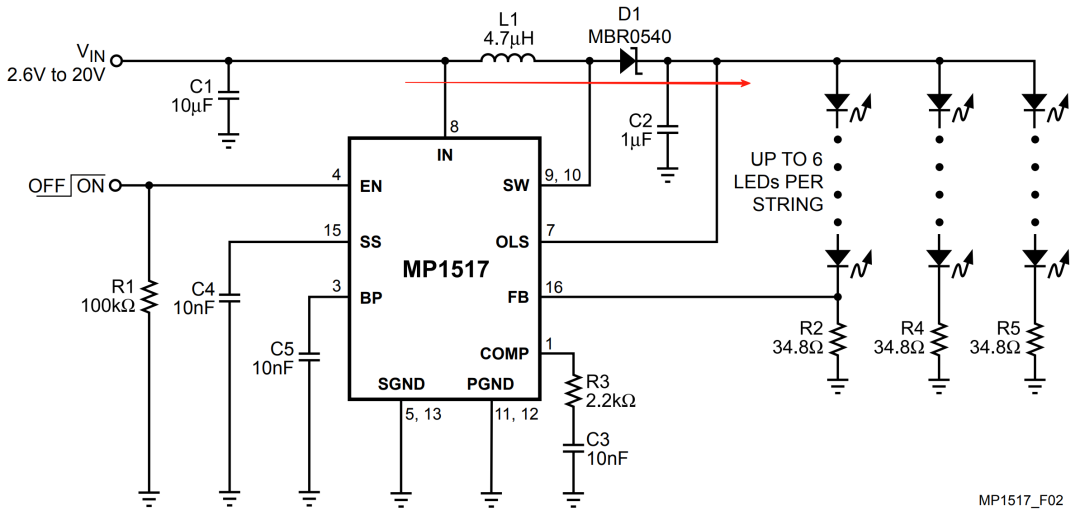 The image above shows a typical application of the non-synchronous BOOST chip MP1517, where the inductor and diode are between the input VIN and output VOUT. These two components cannot achieve a cutoff of the power transfer path from input to output, which is determined by thenon-synchronous BOOST topology.
3
/ Can Synchronous BOOST Do It? /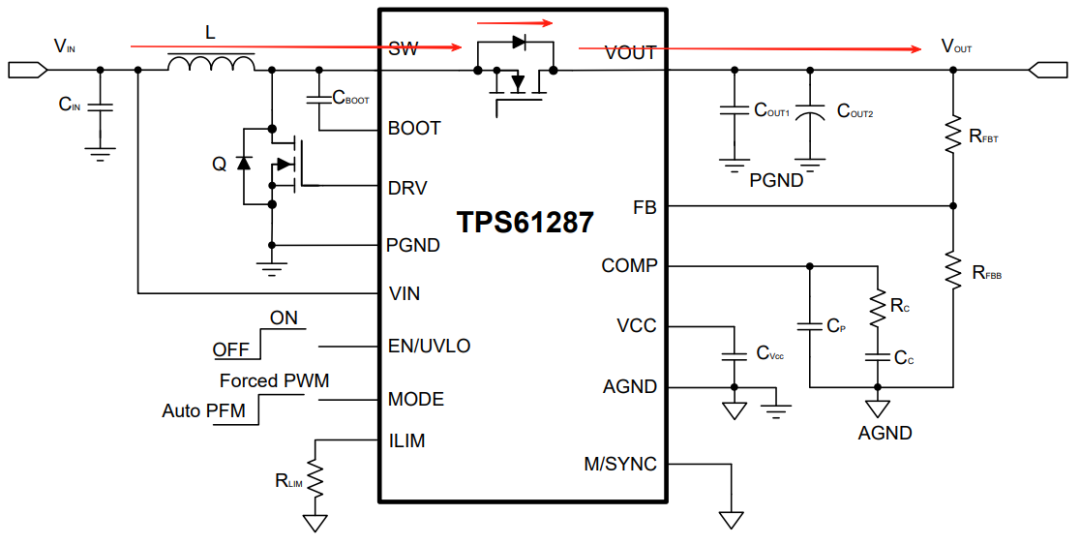
The image above shows the TPS61287 synchronous boost converter, which integrates a high-side synchronous rectifier MOSFET and uses an external low-side MOSFET to provide a high-efficiency, compact solution.
It seems that the internal high-side MOSFET can be used to cut off the power transfer path from input to output, but there will still be a power inductor and the body diode of the high-side MOSFET creating a power transfer path from input to output, which cannot achieve a true cutoff.
Question 1️⃣: When designing the chip, why not place the internal high-side MOSFET D at the SW pin and S at the VOUT pin? This should achieve a true cutoff, right?
Question 2️⃣: Why is it necessary to use an external low-side MOSFET to provide high efficiency & compact size?
Leave comments for discussion, and we will share in the next issue.
4
/ BOOST Chips with True Cutoff /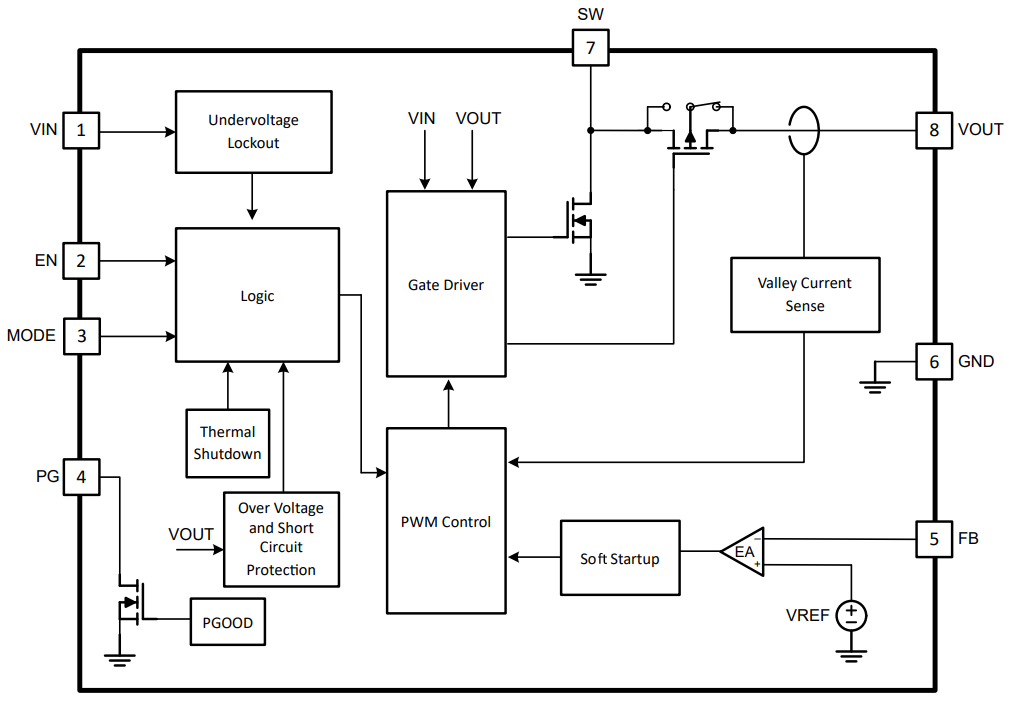
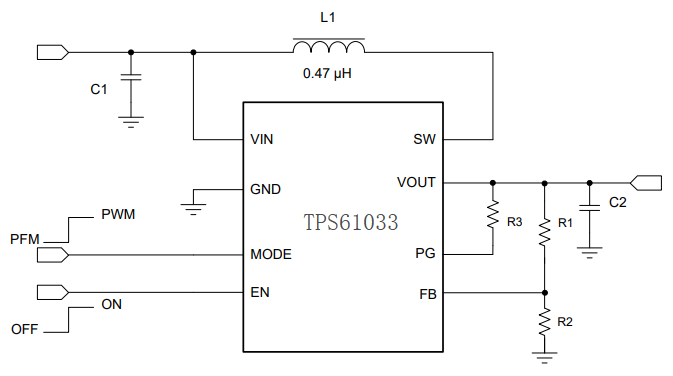
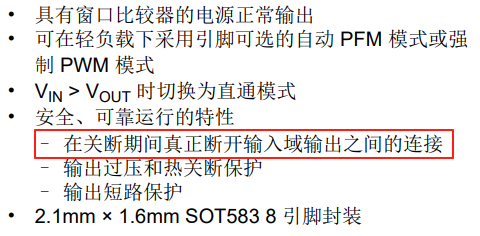 TPS61033 is a fully integrated synchronous boost converter with output discharge capability, rated at 5.5V 5.5A 2.4MHz, where the MOSFET between SW and VOUT can truly disconnect the power transfer path between input and output.Question 3️⃣: How does the MOSFET between SW and VOUT achieve a true disconnection of the power transfer path between input and output?Leave comments for discussion, and we will share in the next issue.Indeed, the more knowledge one acquires, the more questions arise. The young are not afraid of tigers; the ignorant are fearless. Sometimes, ignorance may not be a bad thing, as it can alleviate many worries.
 Recommended Reading

Discovering a Strange Phenomenon | Why the BOOST Chip LM5155 Lacks an EN Pin?Value of Inductance in BOOST Circuits | Can it be determined solely based on formula calculations?Derivation of Peak Current Formula for DCM Mode in BOOST Circuits | Based on Duty Cycle Method
Subscribe for free [ Switching Power Supply Handbook ][ Designing BUCK from 0 to 1 ] Collection, paid [ Voltage Parameter Collection ][ Current Parameter Collection ][ Power Parameter Collection ]…
“Recommended”“Forward”“Leave a message”With friends“Share”Your World⇘⇘