With the explosive growth of smart homes, industrial IoT, and wearable devices, deploying AI models on resource-constrained microcontrollers (MCUs) or memory-limited SoCs has become a core challenge for developers. This article systematically reviews the current mainstream model training tools and deployment strategies in light of the latest technological developments in 2025, helping you achieve efficient AI inference on low-power devices.
1. Lightweight Training Frameworks: The “Core Engine” of Embedded AI
1. TensorFlow Lite for Microcontrollers
Official link for TensorFlow Lite for microcontrollers:
https://www.tensorflow.org/lite/microcontrollers?hl=en
-
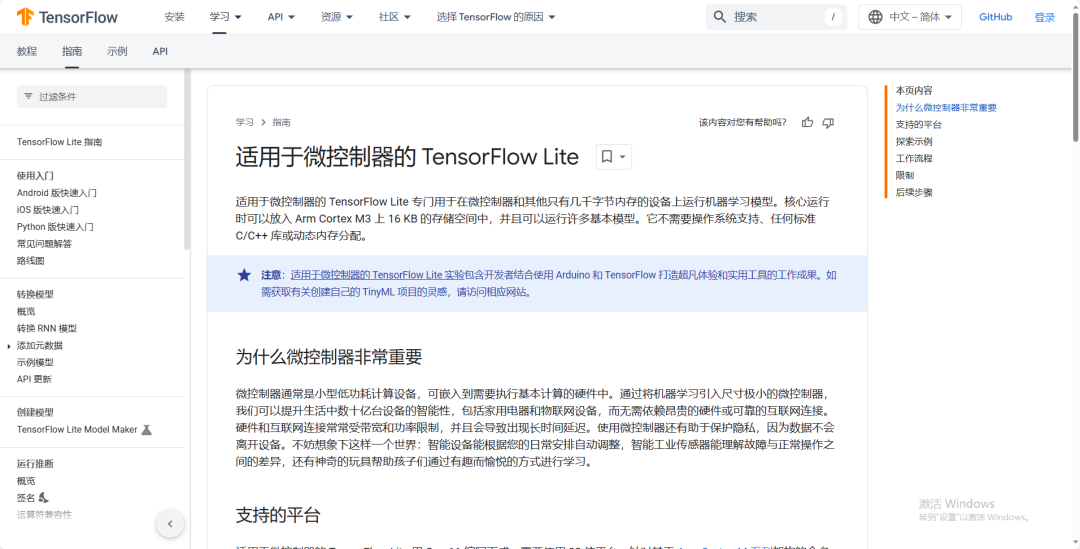
Core Capability: Supports 8-bit integer quantization, compressing models to the KB level, compatible with mainstream MCUs like ESP32 and STM32.
-
Development Process: Train on PC using TensorFlow, then convert to quantized format using TFLite Converter, generating C++ code for deployment on MCU.
-
Case Study: Silicon Labs implemented low-power voice wake-up based on the EFR32 series MCU, with the model occupying only 20KB of memory.
2. Edge Impulse
Official link: https://edgeimpulse.com/
-
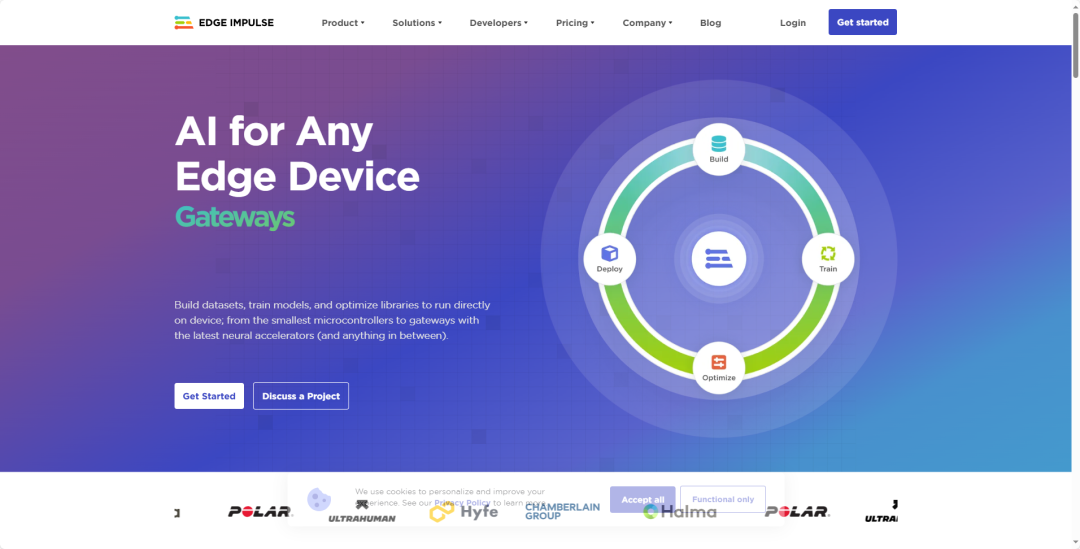
All-in-One Platform: Integrates data collection, model training, and deployment, with a no-code interface that lowers the development barrier, supporting hardware like STM32 and Infineon PSoC.
-
Highlights: Built-in sensor data processing templates, shortening the development cycle to 1 hour in predictive maintenance scenarios for industrial equipment.
3. MicroTVM (Apache TVM Subproject)
-
Cross-Platform Advantage: Optimizes compatibility with MCUs through compiler optimizations, supports automatic tuning for TensorFlow and PyTorch models, and is compatible with FPGA acceleration.
-
Typical Application: A research team achieved image classification on a RISC-V microcontroller, tripling inference speed.
2. Vendor-Specific Toolchains: Deep Collaboration of Hardware and Algorithms
1. STM32Cube.AI (STMicroelectronics)
-
Core Feature: Automatically converts ONNX/TensorFlow models to STM32 optimized formats, evaluates Flash/SRAM resource requirements online.
-
Case Study: In a facial recognition access control system, model inference latency is under 50ms, with power consumption controlled below 5mW.
2. NXP eIQ Toolkit
-
Ecological Integration: Integrates NVIDIA TAO API, supports end-to-end processes for image classification and object detection, compatible with i.MX series processors.
-
Scenario: In the perception layer of autonomous driving, model inference frame rate increased to 30FPS.
3. Renesas Reality AI Tools
-
Signal Processing Optimization: Reduces model complexity based on feature extraction algorithms, deeply integrated with the e² Studio development environment, suitable for automotive electronic control.
3. Innovation Driven by Open Source Communities
1. uTensor
-
Memory Management Breakthrough: Adopts static memory allocation strategy to avoid memory fragmentation in MCUs, reducing memory usage of temperature and humidity prediction models by 40%.
2. CMSIS-NN (ARM Cortex-M Specific)
-
Operator-Level Optimization: Efficiency of operations like convolution and pooling improved by 2 times, with voice recognition response time in smart home scenarios reduced to 200ms.
3. Hugging Face Transformers Fine-Tuning
-
NLP Lightweighting: Combining 8-bit distillation technology, BERT model memory usage on MCUs reduced to 50MB, supporting localized semantic analysis.
4. Key Technologies for Model Optimization
Quantization and Pruning: TensorFlow Lite’s QAT (Quantization Aware Training) reduces model size by 75%, controlling accuracy loss within 1%.
Dynamic Memory Allocation: uTensor uses memory pool management technology to run multitasking models on MCUs with 256KB SRAM.
Hardware Acceleration: Silicon Labs’ EFM32 series supports hardware DSP acceleration, improving matrix computation efficiency by 10 times.
5. Tool Selection Strategy
1. Resource-Sensitive Projects: Prioritize TensorFlow Lite Micro or CMSIS-NN, keeping the quantized model under 20KB.
2. Rapid Prototyping: Edge Impulse no-code platform automates the entire process from data to training to deployment.
3. Complex Task Scenarios: Combine MicroTVM compiler optimizations for efficient inference across hardware (e.g., RISC-V + FPGA).
Future Trends: Three Major Transformations in Edge AI
1. TinyML Popularization: ABI Research predicts that by 2026, the edge AI chip market will exceed $10 billion, driving further lightweighting of toolchains.
2. Toolchain Integration: Collaboration between vendors and open-source communities (e.g., Infineon + Edge Impulse) accelerates ecological standardization.
3. On-Device Training Breakthrough: Open-source models like DeepSeek-R1 support device-side fine-tuning, reducing reliance on cloud computing power.
Conclusion
From ST’s cloud AI development platform to DeepSeek’s open-source revolution, embedded AI tools are evolving towards lower barriers and higher efficiency. Whether in industrial control or consumer electronics, choosing the right toolchain will be key for developers to succeed in the era of edge intelligence.