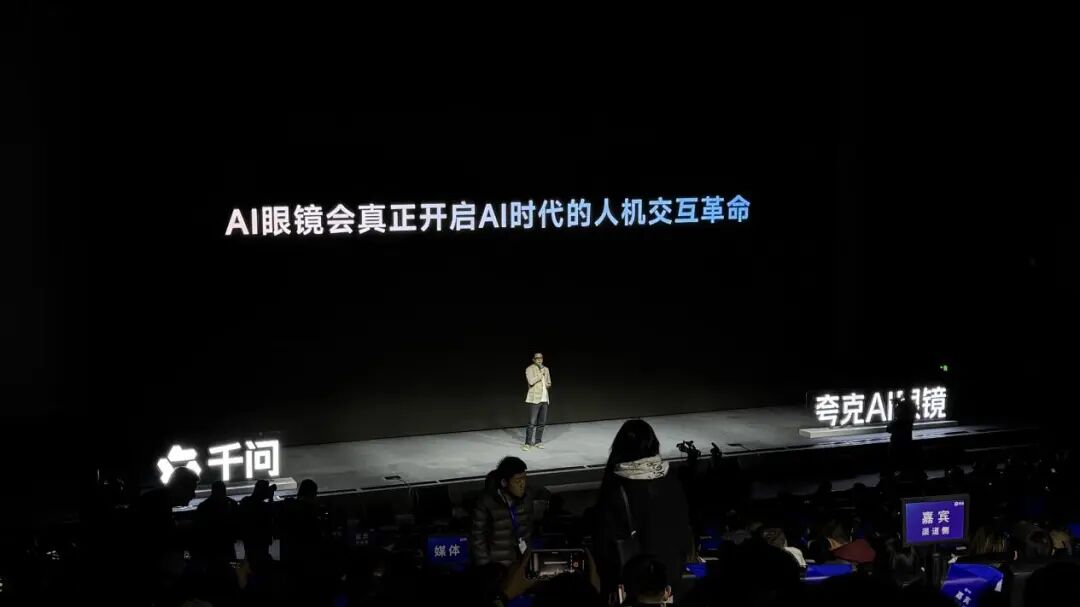
As the core move in Alibaba’s strategy of “AI + Physical World”, the first AI glasses from Quark have finally arrived. Although they have already achieved the highest sales of AI glasses during this year’s Double Eleven pre-sale, Quark and Alibaba must remain cautious in their subsequent actions given the somewhat pessimistic market outlook.
In 2024, the global penetration rate of consumer-grade AR glasses is less than 3%, primarily due to the hardware form of related products being detached from everyday usage scenarios; they are either too heavy or lack social features, and balancing battery life and performance is challenging, with heavy usage relying on external power sources. Most importantly, the AI capabilities and ecological services are disconnected, leading to a trend of becoming mere toys with piled-up functions.
The Quark AI glasses seem to target these industry issues, aiming for a design close to ordinary glasses, full-scene AI interaction, and deep integration with Alibaba’s ecosystem as core selling points, attempting to bridge the last mile from niche tech products to essential daily tools.
1Innovative Hardware, Ecological Services
The hardware design is the core highlight of the Quark AI glasses, achieving a dual breakthrough in performance and experience under the constraints of a form factor close to ordinary glasses, especially in terms ofthinness and integration inthe design.
The width of the S1 series temples is only 7.5 millimeters, making it the narrowest among similar products globally; the frame thickness is 3.3 millimeters, which is 25% thinner than mainstream products in the industry.
This breakthrough is attributed to two key technologies: first, the industry’s first 7-layer flexible circuit board (FPC) technology, which compresses core components such as the mainboard, chips, and batteries into the slender temples through a high-density stacking process, making the outer frame over 40% thinner than competing products of the same level;
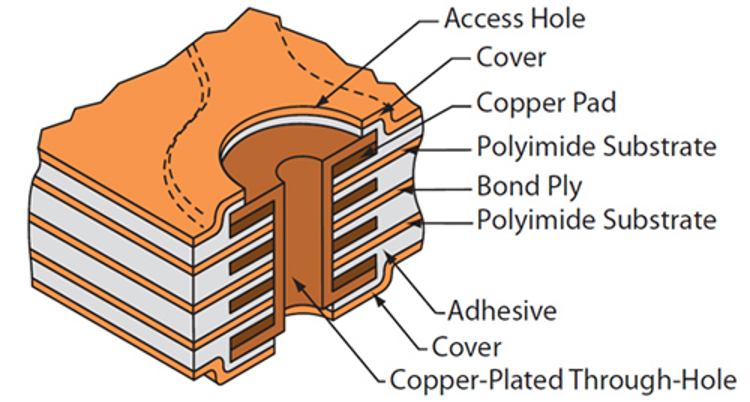
Second, the titanium alloy integrated dual-material injection molding process, combined with a skin-friendly PU paint coating, enhances wearing comfort while ensuring structural strength.
After achieving thinness, the issue of integration arises; fitting chips, batteries, microphones, and speakers into such a small space is a significant challenge.
Moreover, to address the battery life issue, Quark has innovatively introduced a dual-battery hot-swappable design.
The battery module is integrated into the temples, with a single battery providing a comprehensive battery life of up to 7 hours, and with a battery swap station, it can achieve all-day use. This design not only alleviates the battery anxiety of smart wearable devices but also extends the product’s lifecycle. After battery aging, users only need to replace the battery module instead of the entire device, reducing long-term usage costs.
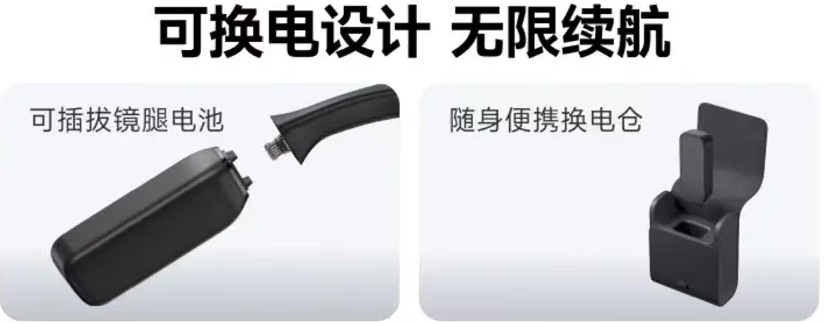
However, objectively speaking, there is room for optimization in its charging method: the product does not use a universal Type-C interface and requires a dedicated charging clip to hold the metal contacts for charging, necessitating the carrying of an additional charging clip when going out, slightly reducing convenience.
The display system is a core highlight of the S1 series. It adopts a dual optical machine dual-eye display scheme, equipped with Micro-LED micro light machines and a two-dimensional expansion grating, with an eye brightness of up to 4000 nits, ensuring that text and icons remain clear even in bright outdoor conditions at noon.
In terms of core hardware configuration, the dual flagship chip setup ensures smooth AI interaction, avoiding delays and stuttering during large model operations.
The perception system employs a combination of “five microphone arrays + bone conduction technology”, utilizing multi-microphone noise reduction algorithms and the sound transmission characteristics of bone conduction to accurately capture voice commands even in environments with noise levels exceeding 60 decibels, without the need to raise the volume intentionally.
The imaging system achieves the migration of mobile phone-level technology. With a rapid capture time of 0.6 seconds and 3K video recording, it can output 4K resolution content after processing with super-resolution and super-frame algorithms; the industry’s first Super Raw low-light enhancement technology, combined with a dual anti-shake system, improves shooting quality in low-light environments by over 40%, addressing the industry pain point of “blurry night shooting” in smart glasses.
All hardware components have found a balance between thinness and performance,with the S1 series weighing about 52 grams with clear lenses, and the G1 series even as low as 40 grams.Of course, these achievements are not solely due to Quark; the value of the ecosystem partners in the group photo at the launch event is also increasing.
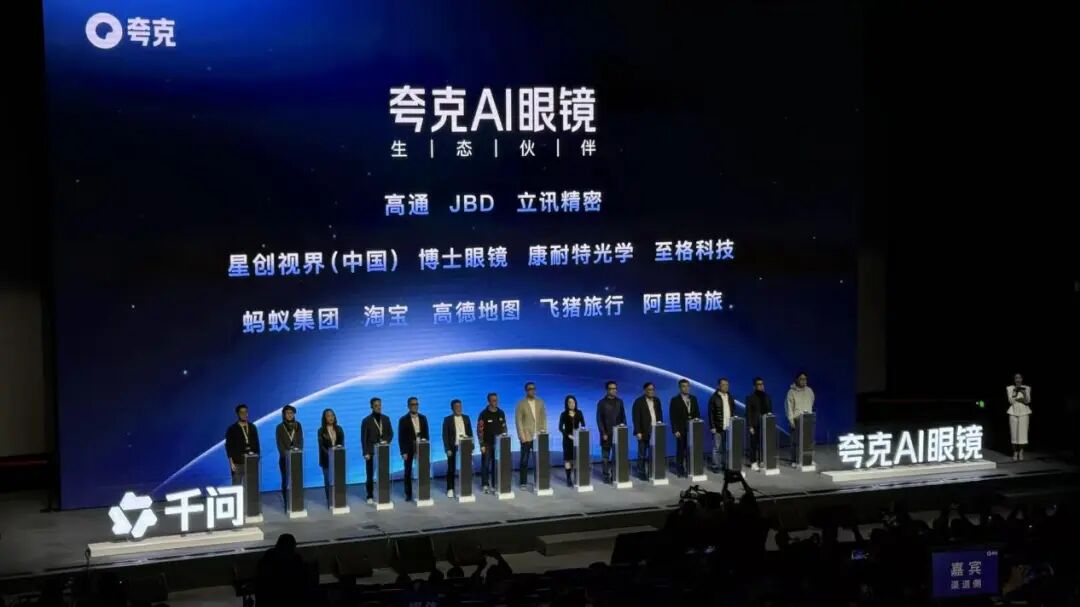
The stacking of hardware ultimately serves the scenarios; Quark’s functional design for the AI glasses revolves around the positioning of “full-scene AI assistant”,which simply means interacting based on the Qianwen large model while integrating Alibaba’s ecological services to find more practical and high-frequency scenarios for the AI glasses.
Users can invoke the Qianwen large model through three methods: voice wake-up, touch operation, and gesture commands, with voice interaction supporting continuous dialogue without wake-up for up to 15 minutes of multi-turn communication.
Notably, its interaction logic fully considers the first-person perspective characteristics: during navigation, route guidance is overlaid in real-time in the field of view, and turn prompts accurately match actual road conditions; the real-time translation function supports mutual translation of 12 languages, with spoken dialogue delays of less than 1 second, and the translation results are presented as floating subtitles, not affecting normal visual communication.
Alibaba’s resource advantagesare reflected in the ecological linkage functions of the AI glasses.
Currently, the Quark AI glasses have deeply integrated core ecological services such as Alipay, Amap, Taobao, Fliggy, and Alibaba Business Travel..Users can perform operations such as invoking Alipay payment codes, real-time navigation with Amap, product price comparisons on Taobao, and flight bookings on Fliggy through voice commands without switching devices.
The expansion of third-party services further enriches the usage scenarios. The product has already partnered with QQ Music and NetEase Cloud Music to support voice song requests and playlist switching; collaboration with Flight Butler has enabled real-time flight updates and boarding gate change notifications.
Jin Xian, head of Alibaba’s Intelligent Information Business Group and smart hardware products, revealed that in the future, the MCP protocol will be opened to developers, allowing third-party developers to access the product, which means that functionalities for more scenarios such as education, healthcare, and office will gradually be implemented, but the current ecological completeness is still in its early stages, with a limited number of available third-party applications.
2Why Quark?
When Alibaba ventures into AI glasses, a question in the industry is why choose Quark instead of core business lines like Alibaba Cloud or Taobao.
If we consider multiple factors such as business positioning, technical genes, ecological synergy, and strategic trial and error, Quark may be Alibaba’s best choice in the AI hardware race.
Since its establishment, Quark has always focused on “intelligent search + tool platform” as its core positioning, with its user base concentrated among tech enthusiasts seeking efficiency and youthfulness, which aligns closely with the product positioning of AI glasses as “full-scene intelligent tools”.
Especially compared to Taobao’s e-commerce attributes and Alipay’s financial attributes, Quark’s tool attributes are more neutral and universal, avoiding user resistance to scenario binding.
Quark’s core users are already accustomed to solving practical problems through the intelligent tools it provides..Whether it is file conversion, plagiarism checking, intelligent summarization, or question bank analysis, Quark has accumulated a large amount of real-time, scenario-based user interaction data.
This data overlaps significantly with the usage scenarios of AI glasses, such as the translation and information query functions needed by users while wearing glasses.
This continuity of user demand allows Quark to accurately hit pain points in the functional design of AI glasses, avoiding the piling up of functions “for the sake of intelligence”.
More importantly, Quark’s business boundaries naturally possess expandability.
As a relatively independent innovative business unit within Alibaba, Quark does not have to bear the performance pressure of core businesses like Taobao e-commerce transactions or Alipay financial security, allowing it to explore new scenarios of AI + hardware more flexibly.
Quark’s long-term accumulation in AI technology is the core confidence for undertaking this project.
As early as 2023, Quark launched its self-developed large model, forming technical accumulation in natural language processing, image recognition, and real-time translation..These technologies happen to be the core capabilities required for AI glasses. For example, the speech recognition accuracy and real-time translation speed of Quark’s large model have reached industry-leading levels after years of optimization, which can be directly migrated to the glasses product, reducing the cost of technical adaptation.
In terms of hardware integration capabilities, although Quark is not a traditional hardware manufacturer, it has formed mature software + hardware integration experience through deep cooperation with the supply chain.
Previously, Quark’s browser had technical accumulation in smart device adaptation and hardware interaction optimization, providing a foundation for the form design and interaction logic of AI glasses. More critically, the Quark team’s breakthroughs in lightweight design are based on a deep understanding of users’ daily wearing scenarios..
To achieve the goal of “changing the physical world” with AI glasses, ecological services support is essential, and Quark’s business characteristics make it a natural hub for integrating Alibaba’s ecosystem.
Quark itself does not possess core service capabilities such as e-commerce, payment, or navigation, but can serve as an entry point to connect resources such as Taobao shopping, Alipay payments, Amap navigation, and Alibaba Cloud computing power, forming a closed loop of hardware entry + ecological services.
The advantage of this hub role is that, on one hand, Quark will not compete with core business lines, but rather can bring new traffic increments to them..Behaviors such as payments, shopping, and navigation completed through the glasses will ultimately drive traffic to platforms like Alipay, Taobao, and Amap, achieving an ecological synergy effect of 1 + 1 > 2;
On the other hand, Quark’s neutrality allows it to more flexibly integrate third-party resources, such as collaborations with external partners like QQ Music and Flight Butler, without being limited by conflicts of interest with Alibaba’s core businesses.
The AI hardware track is still in the exploratory phase, with market demand, technical routes, and profit models not yet fully defined, presenting high uncertainty. Choosing Quark as the pioneer, rather than directly utilizing core resources like Taobao or Alibaba Cloud, reflects Alibaba’s strategic caution in taking small steps to test and iterate quickly.
Quark’s business scale is relatively small; even if the AI glasses project initially underperforms, it will not significantly impact Alibaba’s overall performance. However, once the product gains market recognition, Alibaba can quickly invest more resources to scale up, achieving strategic benefits from small investments. This low-cost trial and high-reward layout aligns with the development rules of emerging tracks.
3Conclusion
The launch of Quark AI glasses is an important attempt by Alibaba in the AI + physical world track, showcasing core advantages of lightweight form, full-scene interaction, and deep ecological integration, specifically addressing long-standing pain points in the industry, and demonstrating clear product logic and strategic intent.
From the product itself, its hardware innovation is commendable, and the deep empowerment of the Alibaba ecosystem gives it competitive barriers that are difficult for other products to replicate.
However, objectively speaking, the Quark AI glasses still face multiple challenges..
At the hardware level, the lack of Type-C charging, the need for optimization in backlight shooting effects, and the need for continuous improvement in software stability;
At the ecological level, the third-party developer ecosystem is still in its early stages, and there is significant room for improvement in the richness and depth of application scenarios;
At the market level, the high-end positioning of Apple’s Vision Pro, the ecological accumulation of Huawei smart glasses, and the cost-performance advantages of Xiaomi products will all exert pressure on its market share.
Additionally, as smart glasses are first-person perspective devices, user privacy protection will also become a long-term focus. Balancing data collection and privacy security is a challenge that Quark needs to continuously address.
For Alibaba, the launch of Quark AI glasses is just the beginning. Regardless of how this product ultimately performs in the market, it has accumulated experience in AI hardware R&D, operations, and ecological integration for Alibaba, laying the foundation for the subsequent launch of more “AI + physical world” products.
For consumers, the emergence of Quark AI glasses makes the imagination of a “second brain” more tangible. It may not be a perfect product, but it undoubtedly provides a new direction for the development of smart wearable devices.
Disclaimer: This article is based on publicly available information or information provided by interviewees, but Decode and the article’s author do not guarantee the completeness or accuracy of such information. Under no circumstances does the information or opinions expressed in this article constitute investment advice to anyone.
For cooperation or reprints, please add WeChat:wangxinyu11011