





AI


</>
AISmart Campus Community


·Introduction·


Hello everyone! I am Liu Tianxin from Class 10, Year 2.
In early 2025, a large model product called DeepSeek launched by a Chinese AI company shocked the world. It not only triggered intense changes in the global AI industry but also accelerated the integration of cutting-edge AI technology into everyday life, even becoming a learning tool for students.
My parents and I tried using DeepSeek and Doubao, and we were immediately captivated by their magical features—it really felt like a super comprehensive encyclopedia!
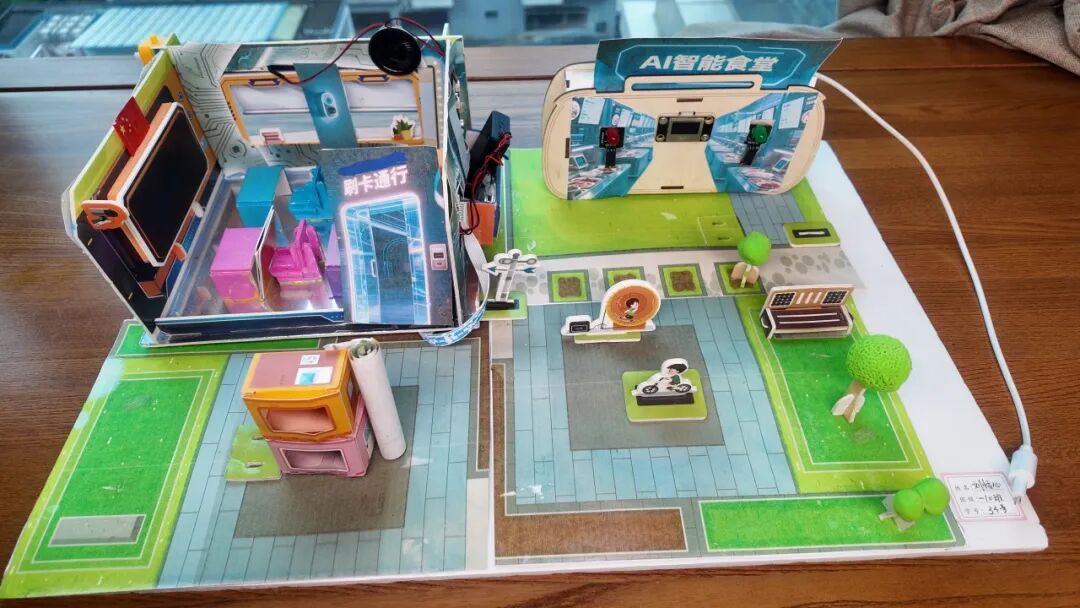
Seeing the rapid development of AI technology in our country, I suddenly thought: Can schools upgrade using these technologies?Without hesitation, I decided to combine my previous project on the “Smart Classroom” model and build a campus community model that includes two major sections: “Smart Classroom” and “Smart Canteen”—AI Smart Campus Community.



Science Program




Project Exploration: Creating the AI Smart Campus Community


Materials
AI Smart Classroom System
– Basic Assembly Materials: KT board parts, silver cloth, EVA foam, background display board, cardboard, stickers, ultra-light clay, foam glue, double-sided tape, dot glue, PVC
– Circuit Components: Smart classroom mainboard, LED string lights, projector, light-sensitive circuit board, battery box, battery, small light, motor, speaker, 8-pin wire, iron shaft
– Access Control Circuit Components: Access card 1, card reader, smart access control mainboard, access card 2
– Voice Module Blocks, etc.
AI Smart Canteen System Core Electronic Components
Arduino UNO R3, Turbidity Sensor V2 (liquid sensor), 16×2 character LCD (display), Φ5mm high-brightness LED (red/green, LED warning light), 3mm acrylic board (shell material)
Steps
AI Smart Classroom Production
1) Overall Model Planning
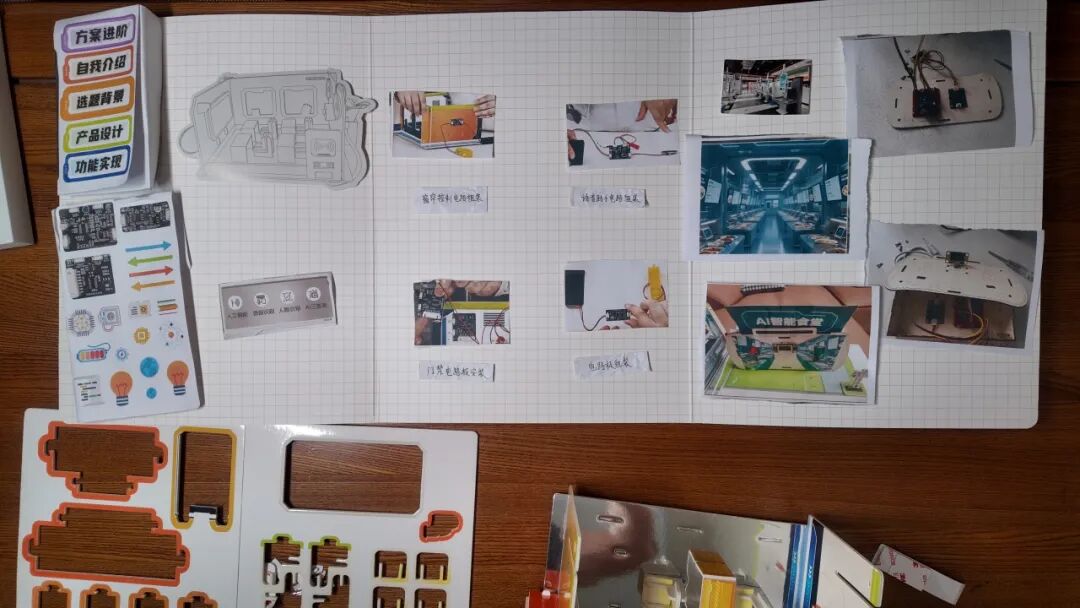
Mind Map
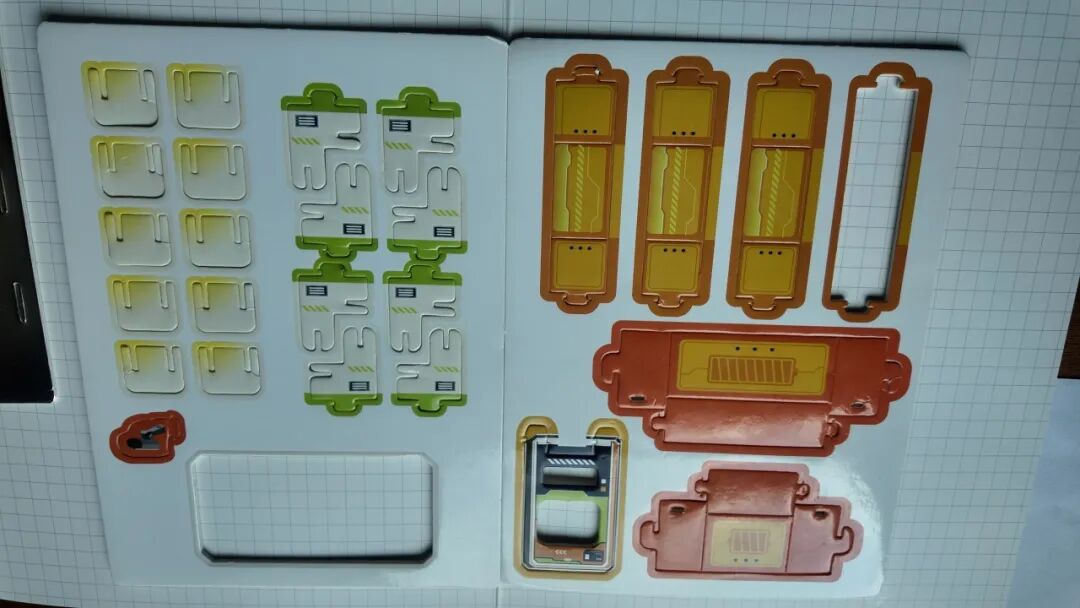
KT Board Disassembly
2) Circuit Assembly
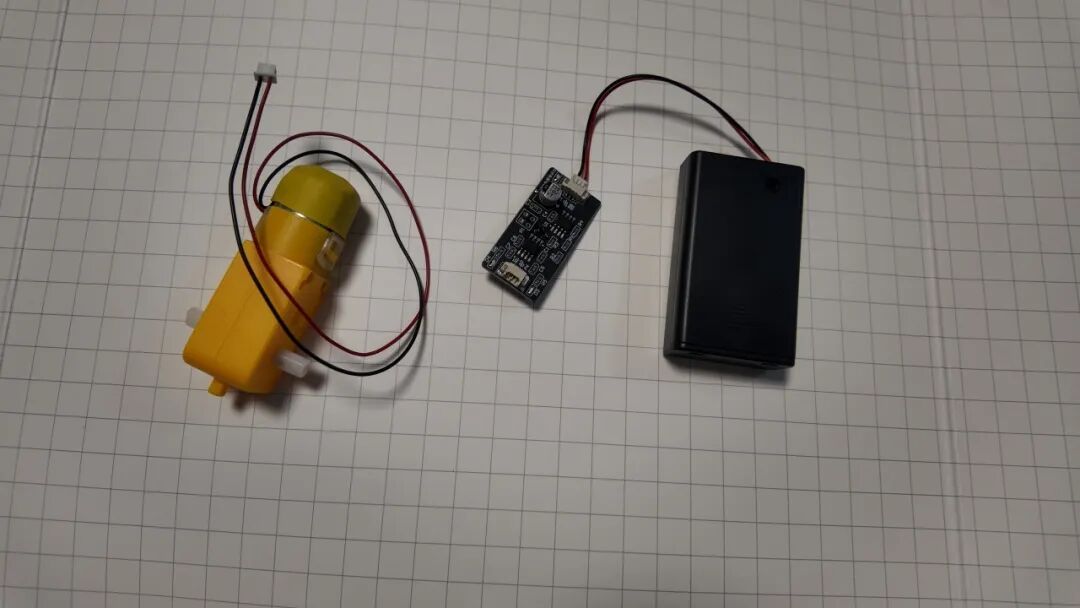
Battery Installation
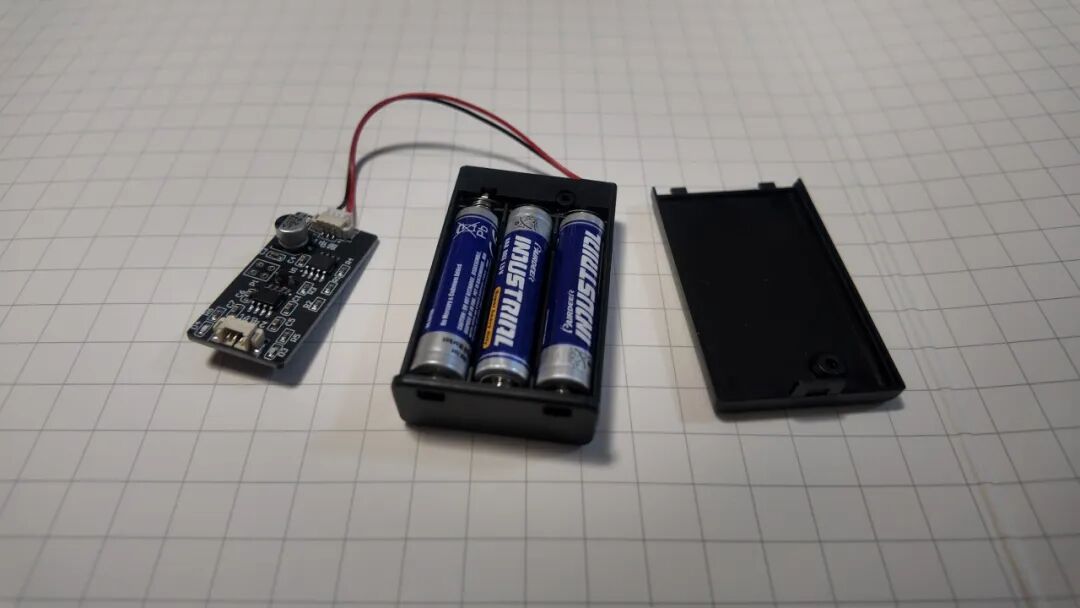
Circuit Board Assembly
3) Assembly with Classroom
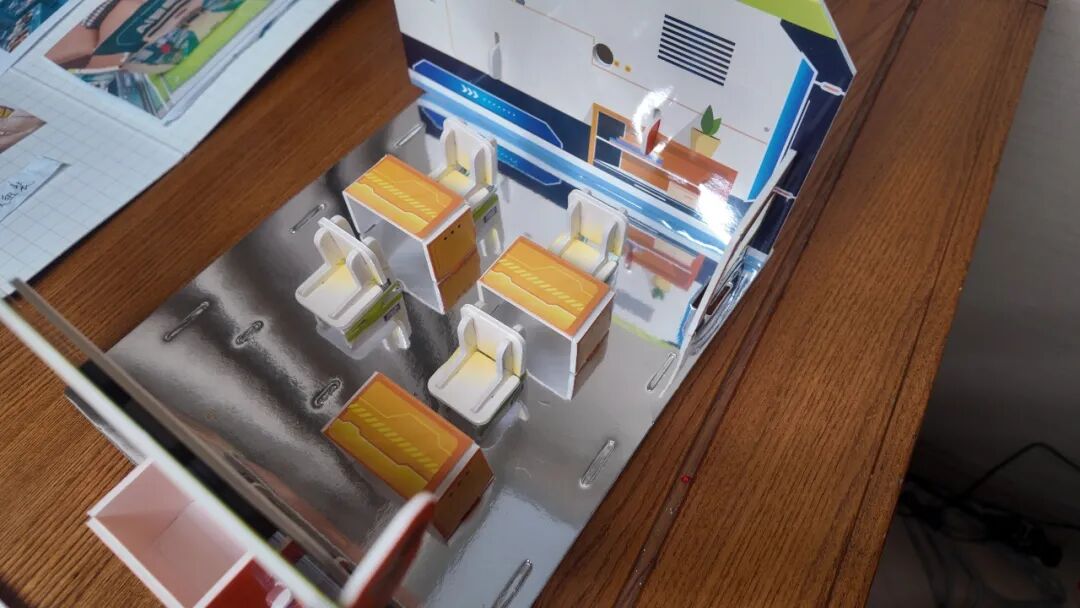
Assembly of Seats and Walls
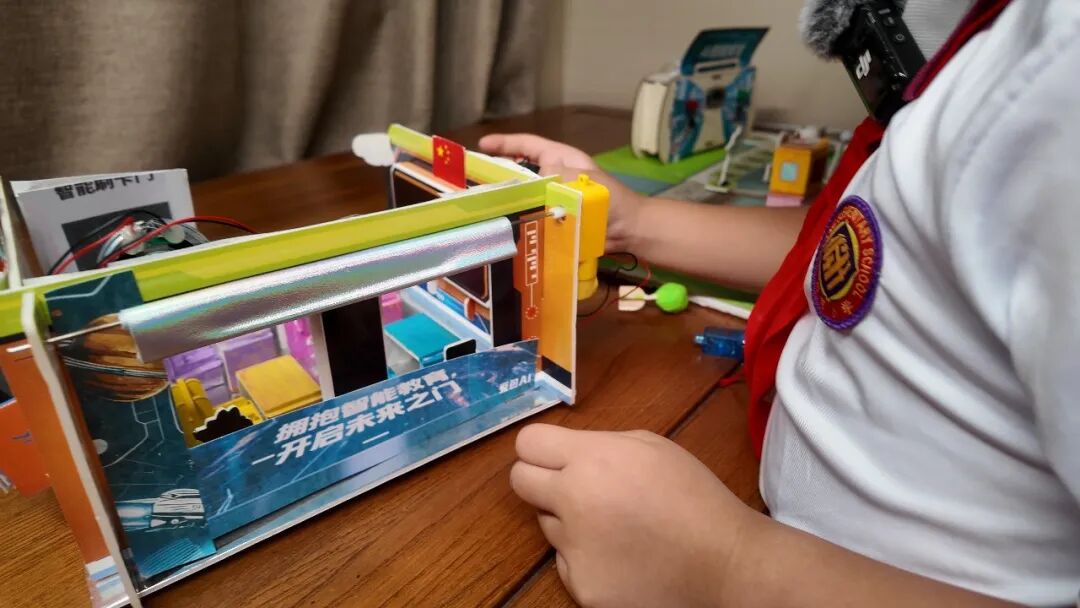
Curtain Control Circuit Assembly
4) Voice Module Assembly and Layout
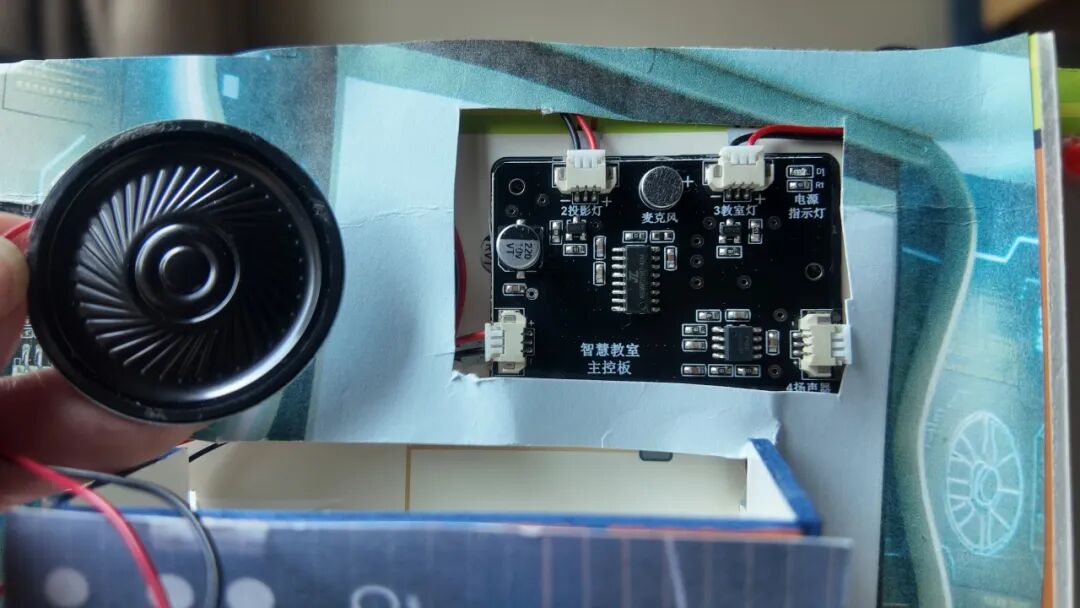
Voice Assistant Circuit Assembly
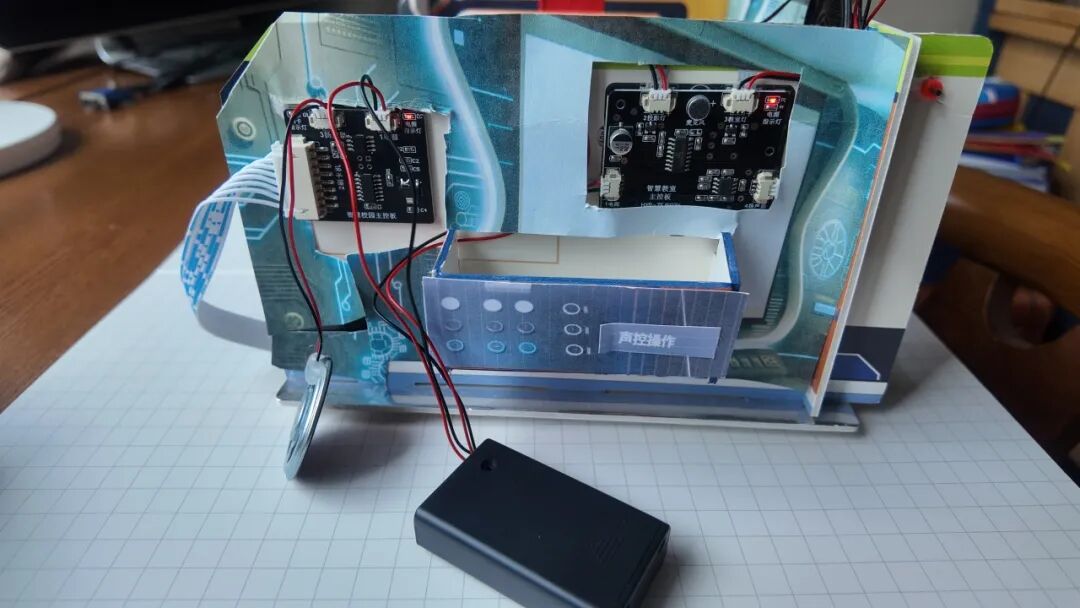
Connection Assembly and Debugging
5) Access Control Circuit and Card Reader Module
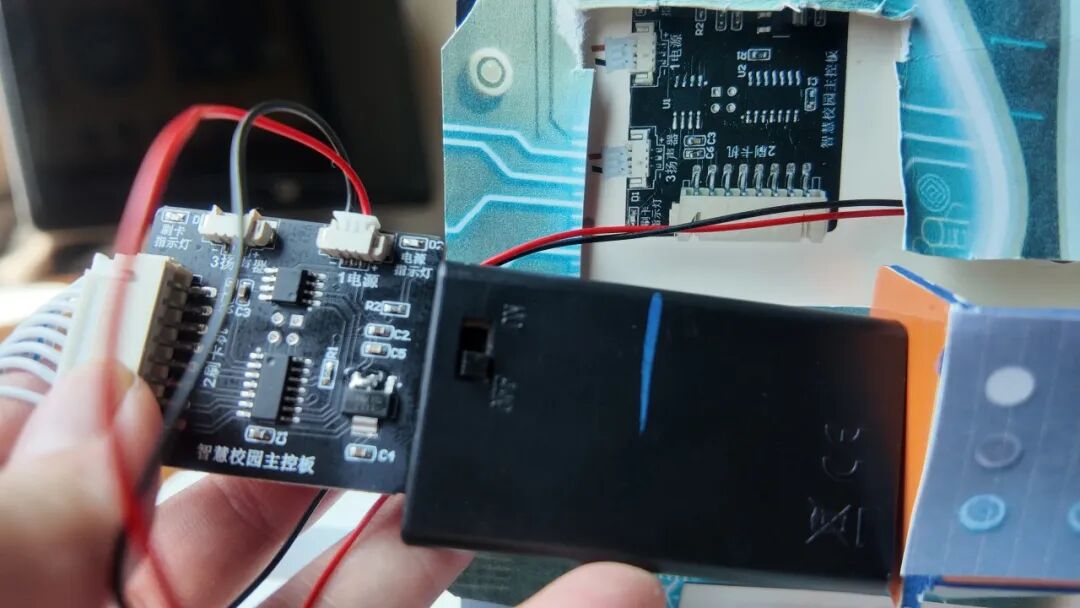
Access Control Circuit Board Installation
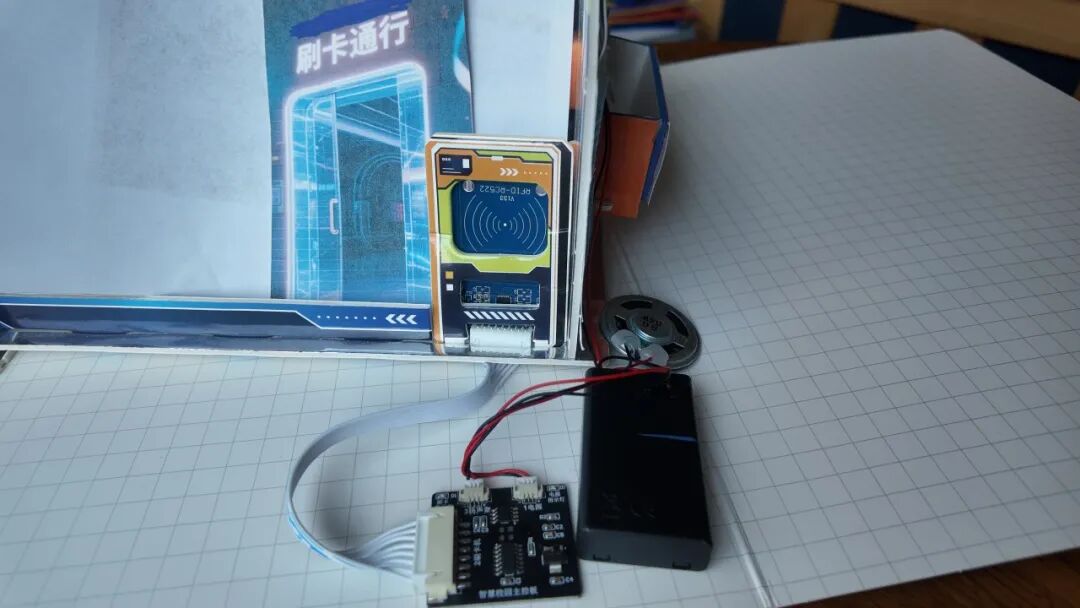
Card Reader Module Installation
AI Smart Canteen Model Production
1) Circuit Assembly: Using modular wiring
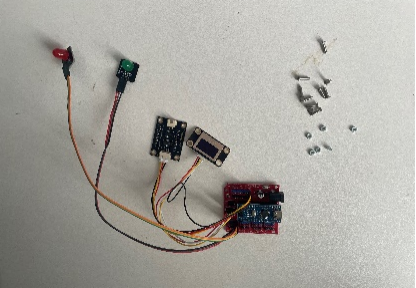
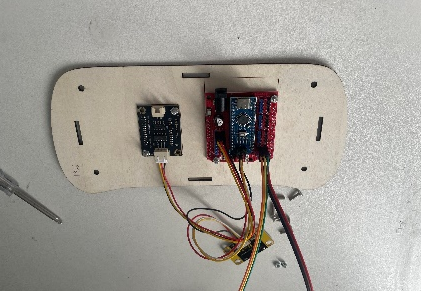
2) Assembly Decoration
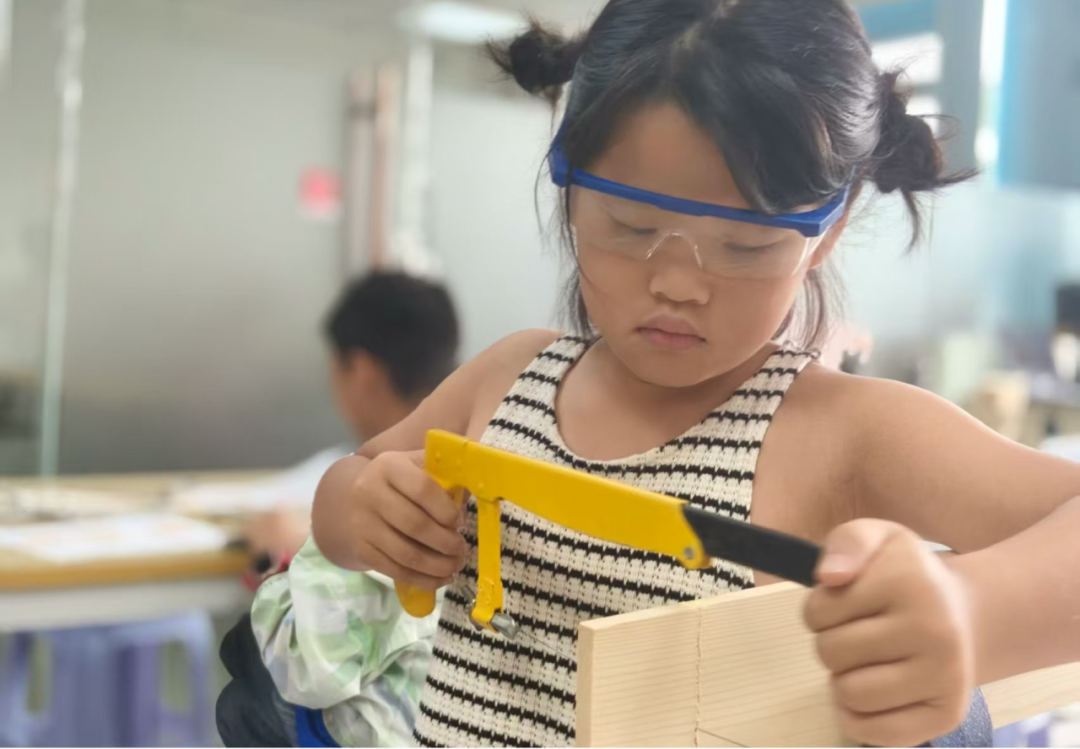
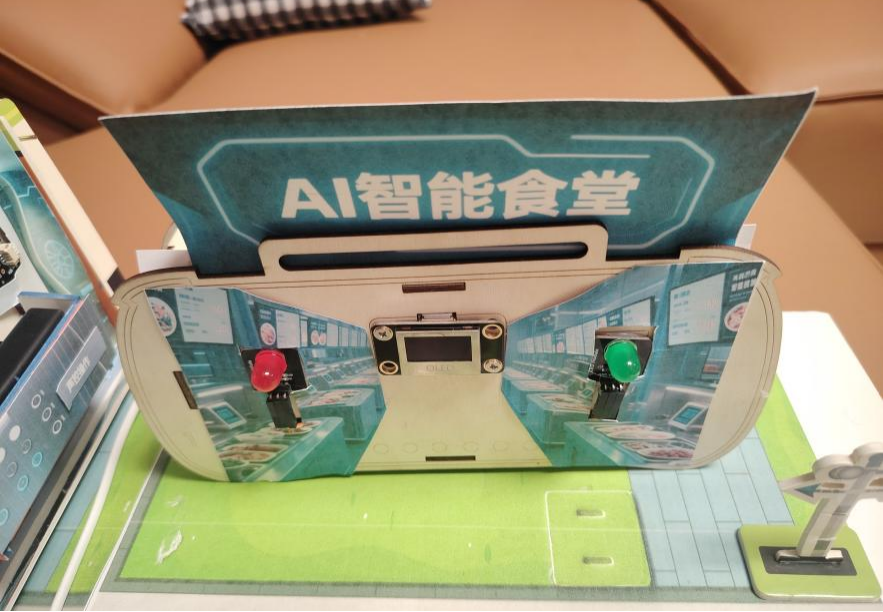
Final Overall Decoration
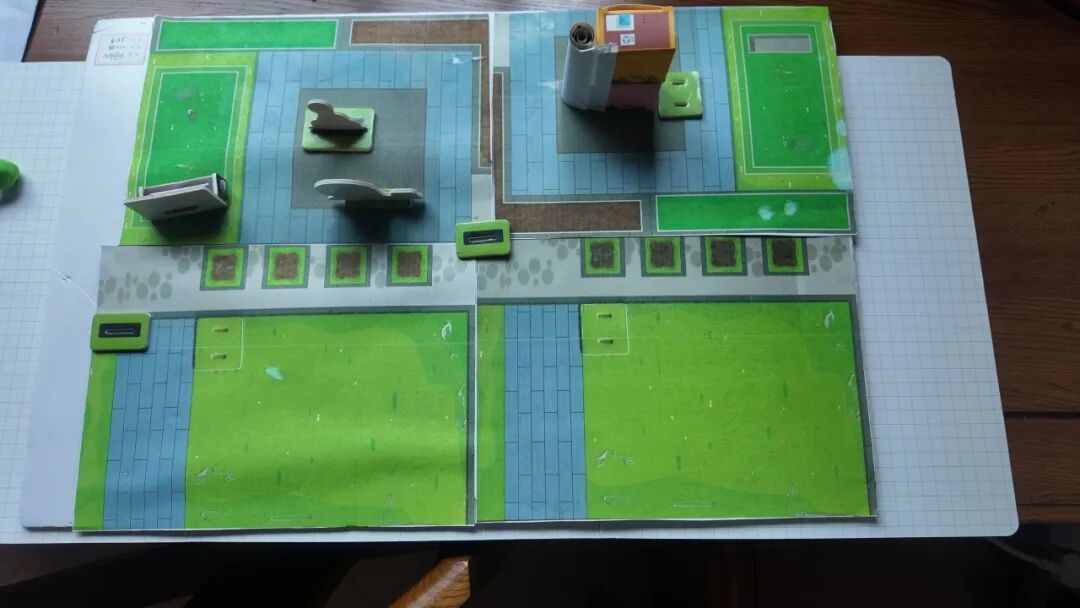
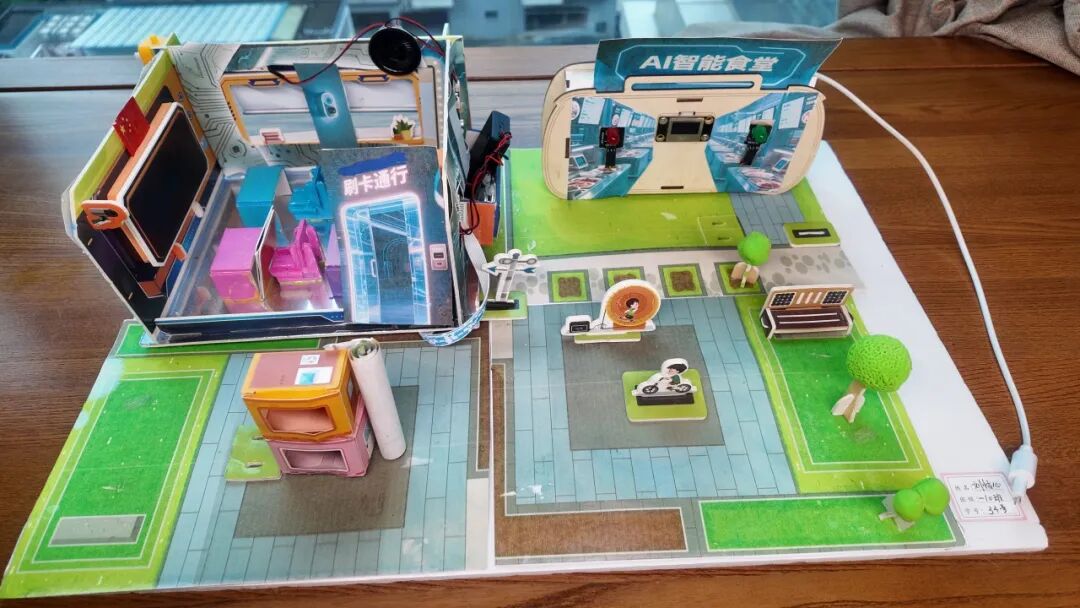
Principle
AI Smart Classroom system’s overall principle is: to achieve intelligent operation through various technologies working together. Among them, the smart projection system uses light-sensitive sensors to capture the brightness of the projector, and the central controller coordinates the curtains and lights (closing the curtains and dimming when the projector is on, and vice versa when off), achieving millisecond-level coordination of devices based on the MQTT protocol; the smart voice assistant system collects teacher voice through a microphone array, recognizes it through ASR, processes it with NLP, matches it with the command library, and then controls related devices via Wi-Fi/Bluetooth; the smart facial recognition access control system uses the FaceNet algorithm, where the camera captures faces and extracts features to compare with the campus database, opening the door if the similarity exceeds a threshold (e.g., 95%), while unauthorized personnel trigger an alarm and are photographed; the intelligent learning recommendation system collects student attendance, homework, and other data, analyzes learning weaknesses and health status through collaborative filtering algorithms and knowledge graphs, and generates personalized plans to push to students.
AI Smart Canteen system’s overall principle is: to achieve food safety monitoring and management through a multi-level technology architecture. The perception layer uses an array of sensors (including near-infrared spectroscopy technology) to collect parameters of water and oil, converting analog signals to digital signals via the ADC module for transmission to the main control board; the processing layer (Arduino UNO main control board) receives sensor data, compares it with national standard limits, triggers alarms in case of anomalies, and stores data on an SD card while uploading it to the cloud; the interaction layer displays data in real-time on an LCD screen, drives LED and buzzer alarms in case of anomalies, marks abnormal indicators on the screen, and provides suggestions via pop-up prompts, supporting touch screen queries for historical records; the expansion layer reserves an ESP8266 interface, supporting Wi-Fi, Bluetooth, etc., and connects to the campus IoT platform via the MQTT protocol, with future integration into market supervision platforms.
·Functions and Significance of the AI Smart Campus Community·

“Smart Campus System” design deeply integrates cutting-edge technologies such as sensors, artificial intelligence, and big data analysis, with three core goals: improving campus management quality, upgrading teaching quality, and enhancing safety assurance, focusing on building smart classrooms and smart canteens as two major innovative modules.
In the field of smart classrooms, through intelligent device interconnection, voice interaction upgrades, facial recognition security, and personalized learning recommendations, the classroom becomes smarter and teaching more precise;
the smart canteen system achieves precise monitoring of key food indicators and full-process traceability through dual-parameter fusion detection technology, dynamic adaptive calibration systems, and modular chip architecture, establishing a technological defense line for the dietary safety of teachers and students.
The overall design empowers campus scenarios with technology, responding to the practical needs of campus operations while highlighting the practical value of cutting-edge technologies.


·Conclusion·


During the creation process of the “Smart Campus Model”, issues such as debugging the smart curtains and faults in the water and oil display device arose continuously. I kept trying to solve them while seeking help from teachers and parents. They patiently accompanied me in troubleshooting, explaining principles, and testing repeatedly. When I saw the curtains smoothly rising and falling and the display device operating accurately, the sense of achievement was overwhelming.



Presenter: Liu Tianxin
Instructor: Teacher Gong Qilun
Material Organizer: Haiying (Liu Tianxin’s mother)
Editor: Haiying (Liu Tianxin’s mother), Teacher Kuang Ziying
Reviewer: Teacher Huang Xiaoyu