On November 19, a themed event titled “Linking Brightness, Win-Win in the Bay Area” focusing on “Empowering Industrial Manufacturing with Artificial Intelligence and Solving Supply Chain Challenges” was held at the Digital Industrial Innovation Center of Guangming Science City in Shenzhen. The event was guided by the Guangming District Bureau of Industry and Information Technology and co-hosted by Sifangwei, the Guangming Science City Industrial Development Group Co., Ltd. (hereinafter referred to as “District Science and Technology Development Group”), the Digital Innovation Center, Siemens, and Oshi Electronics.
Representatives from various parties, including the Guangming District Bureau of Industry and Information Technology, the District Science and Technology Development Group, Siemens, Sifangwei, flexible sensing companies, and AI hardware innovation teams, shared and discussed topics such as computing power layout, industrial policies and ecosystems, digital transformation, sensor technology, and component selection management. They aimed to find a closed-loop path for “Industry + AI” on the manufacturing-intensive land of Guangming, covering “infrastructure—technology platform—application scenarios—supply chain assurance”.
“The combination of large models and edge computing power will help humanoid robots enter households in about ten years.”
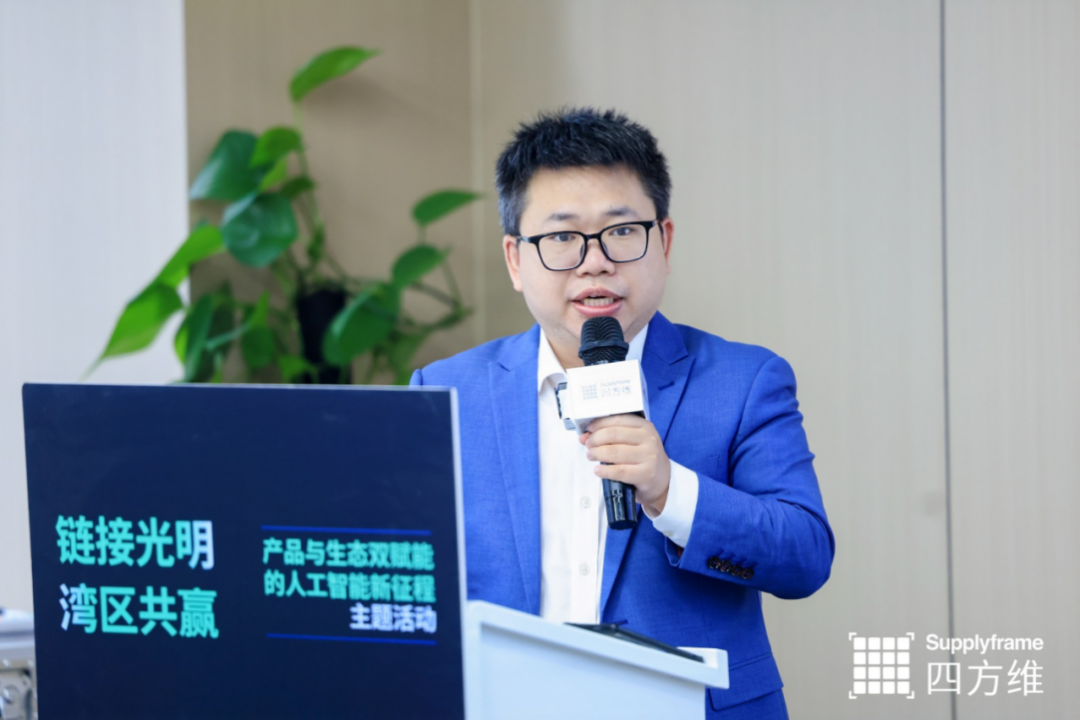
Senior industry analyst Li Jian from Yufei Network.
The technical sharing session was opened by Li Jian, a senior industry analyst from Yufei Network. At the meeting, Li Jian provided observations on the new wave of robots, using the “humanoid robot industry chain” as an entry point.
In his view, the current wave of humanoid robots is driven by at least three forces: first, the maturity of AI technology represented by large models, which makes intelligent control that can “see, hear, and plan” possible; second, major economies, including China, are facing an aging population, leading to a rapid increase in demand for “humanoid” labor in manufacturing, healthcare, and elder care; third, the overlap of policy and domestic substitution windows has led to humanoid robots being included in national and local industrial plans, with pilot scenarios and funding concentrating rapidly in this field.
Li Jian stated that it will take about ten to twenty years for elder care and rehabilitation robots to truly enter institutions and households. However, compared to ten years ago, key components such as computing power, algorithms, sensors, and actuators have transitioned from a “bottleneck” state to a “compatible” stage, providing a realistic foundation for humanoid robots to move from laboratories to factories and service scenarios.
At the enterprise level, he compared three representative manufacturers: UBTECH, Tesla Optimus, and Figure. UBTECH started with educational and service robots, covering research, education, and industrial scenarios; Tesla aims to transfer its mature supply chain, FSD vision system, and Dojo computing power platform from the automotive era directly to humanoid robots, hoping to reduce the overall cost to under $20,000, “making humanoid robots mass-produced like cars”; Figure, on the other hand, is more like a company originating from AI, with typical application scenarios focused on warehousing and retail. Behind these three paths is a variety of attempts to transition from traditional robots to AI-native robots.
From an industrial chain perspective, Li Jian categorized humanoid robots into three levels: perception, decision-making, and movement. The upstream includes sensors such as 3D vision, six-dimensional force torque sensors, flexible tactile “electronic skin”, and IMUs; the midstream consists of main control chips and large model inference platforms; the downstream includes joint modules, end-effectors, and complete machine integration. Sensors, motors, and reducers currently account for the highest cost proportion, making them the focus of the most investment and rapid progress by domestic manufacturers.
He cited examples where six-dimensional force torque sensors are responsible for sensing contact forces and torques at critical points like the wrist and ankle of humanoid robots, preventing falls and damage to objects. The challenges lie in the design of elastic structures, decoupling algorithms, and high-precision sampling, making it a system engineering problem that integrates hardware and software. In the field of dexterous hands, dozens of high-power density hollow cup motors, reducers, and sensing units are integrated within limited spaces to achieve complex grasping modes similar to human hands. “Only humanoid robots equipped with ‘eyes and skin’ can truly complete high-difficulty operational tasks.”
In terms of motion systems, Li Jian systematically sorted out three types of reducers: harmonic, RV, and planetary, as well as the reliability issues of ball screws in high-load frequent movements. He pointed out that frameless torque motors and integrated joint modules will become the “standard components” for future humanoid robots, with domestic manufacturers nearing or even matching overseas leaders in some scenarios.
When discussing computing power and software stacks, Li Jian predicted that future humanoid robots will be a combination of “large models and edge computing power, rather than simply pre-programmed actions”: by running multimodal large models on edge main control chips, robots will be able to “see, hear, and autonomously decompose tasks”, combined with dedicated operating systems and data collection factories to achieve continuous learning from simulation environments to real scenarios.
Flexible “electronic skin”: AI sensing new infrastructure from industry to healthcare.
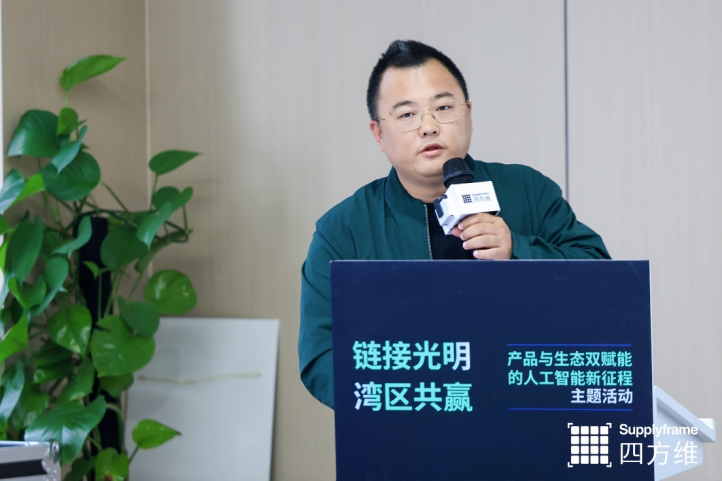
Meng Qingyu, Chairman of Shenzhen Dashen Sensing Technology Co., Ltd.
In the technical innovation sharing session, Meng Qingyu, Chairman of Shenzhen Dashen Sensing Technology Co., Ltd., filled in another key link of industrial AI from the perspective of “materials and sensing”—high-sensitivity, large-area deployable sensing substrates.
This company was founded by several shareholders with overseas work and research backgrounds, and the core team returned to China in 2018, possessing over 20 years of experience in flexible material research. They have established a key laboratory for sensors in Guangzhou and are preparing for a provincial-level sensor center.
The company initially started with industrial optoelectronic sensing, providing highly integrated, low-cost sensing chip solutions for leading manufacturing companies such as Foxconn and BYD in scenarios like equipment safety protection and machine vision. Based on this, the team collaborated with universities in Guangdong to develop carbon fiber capacitive flexible sensing materials for human-computer interaction and gesture recognition, which can be embedded in wearable devices to accurately monitor hand movements and pressure changes. In stage performances and humanoid robot application scenarios, these flexible materials are used to collect facial expression data, providing richer “expression input” for human-like interactions.
Battery safety is another major application direction for flexible sensing. The company collaborates with several battery manufacturers to attach flexible sensing materials to battery surfaces, monitoring temperature and stress distribution in real-time during operation to provide early warnings for safety risks such as thermal runaway, and to assess battery life and health status. Especially in new technology routes like solid-state batteries, this type of “patch sensing” is expected to become a key means of enhancing safety, with relevant solutions already starting small-scale introduction in production processes.
In medical scenarios, the company uses flexible materials to create “electronic skin” that can be attached to the skin, combined with algorithm models to quantitatively monitor the range of motion and muscle strength changes in postoperative rehabilitation patients. By attaching sensing patches at standard joint positions, the system can distinguish subtle differences in muscle stress under different movements to assess rehabilitation training effectiveness. In the case of comatose patients, such sensing systems can monitor the overall muscle state, providing earlier quantitative evidence for rehabilitation treatment. Currently, related products have been mass-produced in some medical institutions.
Compared to traditional carbon fiber materials, this generation of flexible sensing materials has significantly improved sensitivity under both static and dynamic conditions, maintaining high precision across a wide frequency range. The company is promoting multimodal fusion, introducing dimensions such as humidity on top of existing force, temperature, and pressure, and systematically exploring different material and size combinations starting from “atomic-level arrangement” in material engineering, hoping to leverage Guangming’s highly concentrated research and manufacturing area to continuously refine technological maturity in broader industrial and medical scenarios.
AI hardware “6S store”: shortening the distance from an idea to mass production.
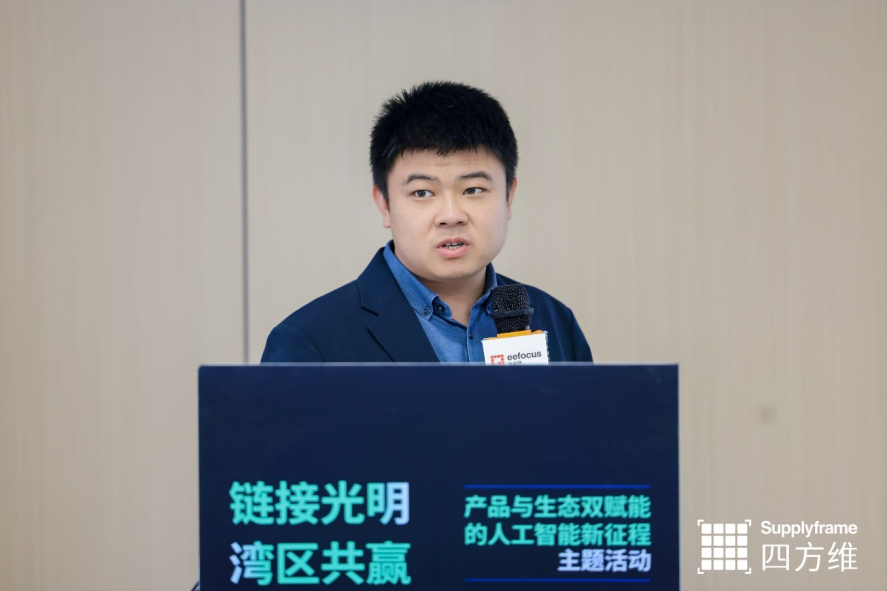
Guo Jingwei, Deputy General Manager of Taober Open Source (Shenzhen) Technology Co., Ltd.
If flexible sensing is about “digitizing the state of the world in more detail”, then the hardware innovation team aimed at consumer-level AI terminals and intelligent agents is thinking about how to bring these capabilities to ordinary users faster.
Guo Jingwei, Deputy General Manager of Taober Open Source, introduced that the team hopes to leverage Shenzhen’s complete supply chain system and large developer and hardware engineer community to integrate the scattered ideas, software capabilities, and hardware capabilities across various links of the industrial chain through a “front store and back factory” model, thereby lowering the innovation threshold and trial-and-error costs, allowing “a good idea” to grow faster into “a mass-producible product”.
This “6S store” proposes six dimensions of operational philosophy: the front space serves as a display, sales, training, and community function, open to maker teams, AI application developers, and brands; the back end connects solution design, supply chain integration, quality management, and incubation support, forming a one-stop path from idea validation, small-batch trial production to large-scale mass production. The “four trees” space imagery designed in the store corresponds to hardware, software, industrial design, and data, symbolizing the evolution process of an intelligent agent from the combination of technical elements to a complete product form.
In terms of product direction, Guo Jingwei believes that the most likely scalable market forms of “intelligent agents” in the short term will mainly focus on emotional companion AI toys and wearable smart devices, such as AI glasses, rings, and watches, which are closer to “jewelry” terminal forms. These products are highly integrated with daily life and can carry multimodal interactions and personalized assistant AI capabilities, making it easier to quickly validate the market through e-commerce and offline channels.
In contrast, humanoid robots still have a long way to go before “entering thousands of households”: even if hardware costs continue to decline in the coming years, the unit price may still remain at tens of thousands of dollars in the foreseeable future, making them high-value durable goods for ordinary families. In his view, industrial clusters like Guangming are more likely to fully validate humanoid robots in industrial and professional service scenarios before gradually penetrating the consumer field.
Siemens: Bridging IT and OT with Industrial Foundation Models and Low-Code Tools.
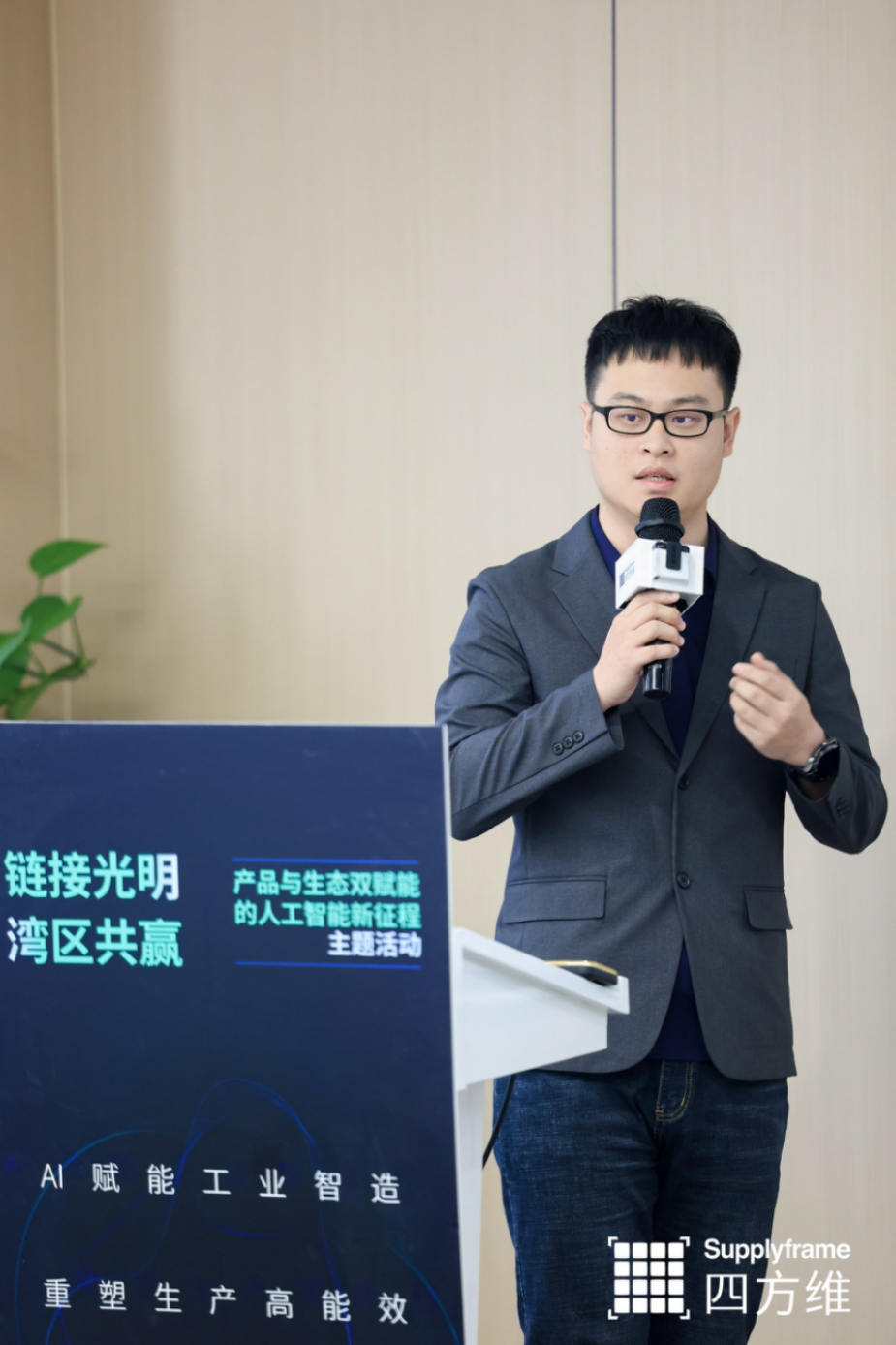
Song Yuanming, AI and Digital Solutions Expert at Siemens.
In terms of industrial software and AI implementation, Song Yuanming, an AI and digital solutions expert at Siemens, showcased its technical path in the field of industrial AI from the perspective of “industrial foundation models” and “IT/OT integration”.
Leveraging its long-standing accumulation of industrial software and automation foundations, Siemens has developed a foundational model GTT for time series data, which is currently in its 2.0 version, with a parameter scale of about 1 billion and training data reaching hundreds of billions, covering scenarios in construction, energy, discrete manufacturing, and process industries. GTT is mainly used for fault diagnosis, time series prediction, anomaly detection, and “soft measurement” tasks in environments where it is difficult to deploy sensors.
In a practice within the automotive industry, Siemens provided predictive maintenance solutions for a leading automotive company’s specialized electrical and robotic equipment by modeling periodic and peak changes in motor vibration signals, achieving early warnings for gear meshing anomalies, helping customers more reasonably schedule spare parts replacement and maintenance plans while ensuring 24-hour uninterrupted production, thus reducing unplanned downtime.
In the field of energy management, Siemens utilized the GTT model to predict the energy consumption of large water-cooled units. By modeling historical observation values and setpoint data, the system can provide short-term energy consumption predictions (quickly fine-tuning the model with on-site data) and pre-training solutions based on longer cycle data, and the prediction results can be fed back into the control system to achieve feedforward optimization of future load changes, enhancing overall energy efficiency.
To address the common issue of “IT systems and OT devices speaking different languages” in industrial enterprises, Siemens launched the “Gongyi Magic Cube” software, abstracting the functions of OT devices such as PLCs, robots, and conveyor lines, as well as IT systems like MES, ERP, and WMS into visual functional blocks. Engineers can build workflows by dragging and dropping, embedding algorithm models including GTT as functional modules.
In a circular economy project in Beijing, the “Gongyi Magic Cube” was applied in the PCB board recycling scenario, unifying visual algorithms, robotic arms, and feeding equipment into the same workflow. On-site engineers only need to adjust a few parameters when new materials are launched to quickly complete “re-teaching”, significantly shortening the debugging cycle. In the flexible production line upgrade project of Aobo Robotics, this platform was also used to integrate risk control and flexible unit scheduling across multiple production lines, reducing the complexity of on-site custom development.
For regions like Guangming, which are based on manufacturing, such tools are expected to become a practical path for small and medium-sized enterprises to access industrial AI: they do not need to build data teams and algorithm teams from the start, but can gradually accumulate digital assets through configuration and secondary development on mature platforms.
Siemens Xcelerator: From “Consumer-Level AI” to “Industrial Foundation Models”.
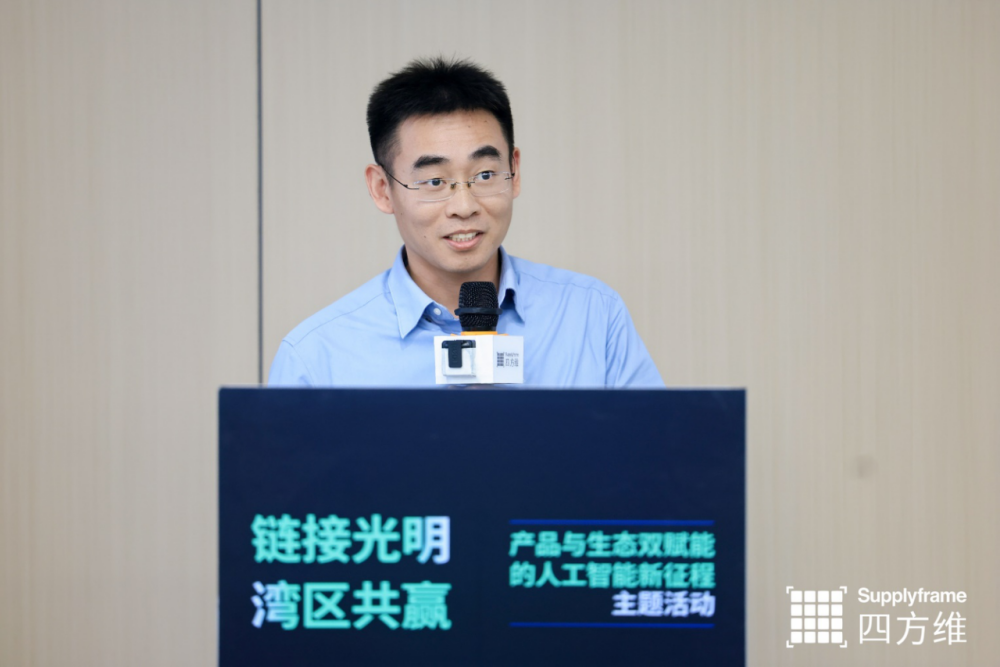
Shi Yaoliang, Operations Manager of Siemens Xcelerator Offline Center.
Shi Yaoliang, Operations Manager of Siemens Xcelerator Offline Center, discussed from a somewhat “technically calm” perspective how to bring AI from the consumer end to the industrial end. In his view, the AI boom driven by large language models over the past two years has surged in the consumer end, while in the industrial field, the real large-scale implementation has just begun.
“Consumer-level AI can occasionally make mistakes, which people can understand or even self-correct, but in industrial scenarios, many links require safety and reliability, which means we cannot tolerate similar errors.” Shi Yaoliang pointed out that industrial-grade AI must handle more complex physical mechanisms and processes, as well as highly structured “engineering languages” involving multidisciplinary simulation, manufacturing processes, and quality control, thus requiring the reconstruction of models based on industrial data and engineering knowledge.
He introduced that Siemens did not suddenly go “all in” on AI, but has undergone long-term investment and multiple application iterations. Starting in 2025, Siemens officially incorporated “Industrial Foundation Models” into its core strategy, aiming to train large models for industrial scenarios based on existing software design and simulation tools (covering multiple physical fields such as mechanics, electricity, and fluid), production automation control (PLC, SCADA, drives, etc.), and its engineering practices, and then build dedicated spaces and systems for different industries and applications on top of that.
“Siemens has industry knowledge and industry data.” He emphasized that it is this integration of software and hardware, from design to manufacturing, that gives industrial foundation models the opportunity to understand the logic of equipment, production lines, and processes “close to the mechanism”, rather than simply transferring general large models into factories.
To shorten the distance between technology and customers, Siemens is opening up its industrial AI capabilities to more partners and users through the Xcelerator platform, which is positioned as “technology + ecosystem”. On one hand, the platform integrates various model capabilities and computing resources, supporting partners in training, hosting, and calling their own AI models; on the other hand, Xcelerator serves as both a technology platform and an “industrial e-commerce” and “solution marketplace”, connecting end-user needs, solution supply, and commercial monetization processes through online platforms and offline centers, attempting to build a closed loop from technology development, solution combination to sales delivery.
In his view, the large-scale implementation of industrial AI relies on such an accelerator role that “understands both engineering and ecology”: it must help industrial enterprises find digital and intelligent products that are “appropriate in performance and price”, while also helping companies that develop these products find suitable customers, “allowing those who do AI to truly sell products and those who use AI to buy suitable solutions”.
Component Selection and the “Chip Shine Plan”: Reshaping Supply Chain Resilience with Data.
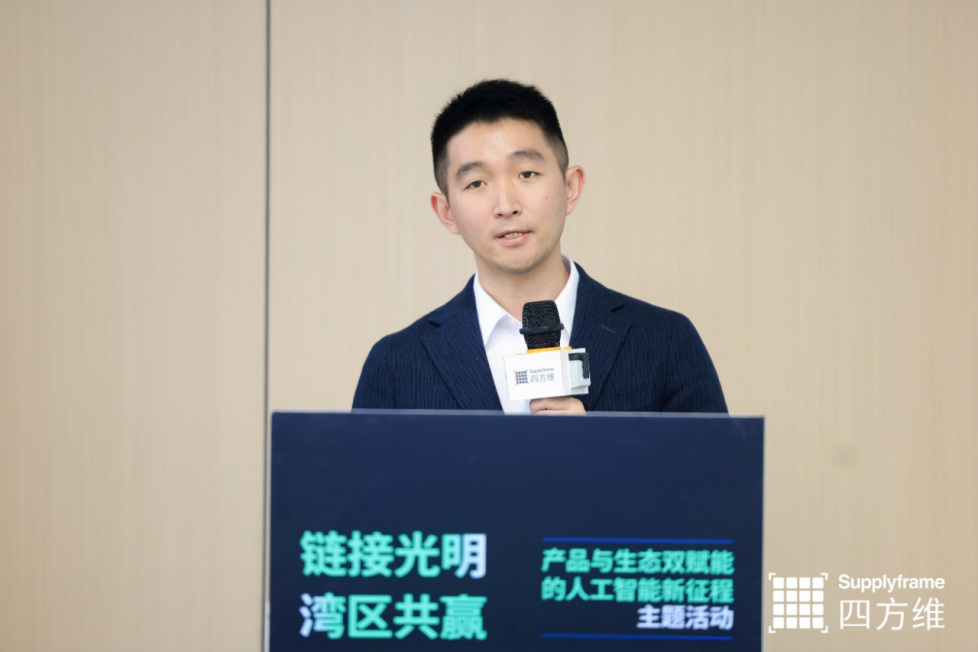
Yuan Wenbin, SaaS Sales Director of Sifangwei.
If computing power, algorithms, and software platforms constitute the “logical world” of industrial AI, then electronic components are the “physical world” that enables intelligent hardware to land. Sifangwei’s sharing brought the topic back to the real issues many enterprises face daily—component selection and procurement management.
Yuan Wenbin, SaaS Sales Director of Sifangwei, pointed out that with the rapid development of industries such as new energy vehicles and robotics, the proportion of electronic components in the overall machine cost continues to rise, but many enterprises are still relying on “personal experience” for component management. New products require collaboration among R&D, engineering, procurement, and quality departments from concept to mass production. Without a systematic component asset library and process support, once faced with supply interruptions or lifecycle changes, they can easily respond passively, even facing the risk of production line shutdown.
In his view, building an enterprise-level “electronic material asset library” has become a consensus among leading manufacturing enterprises:
On one hand, every component selection should be documented as a retrievable and reusable data asset, forming a long-term accumulation of key material costs, alternative solutions, and historical issues;
On the other hand, it is necessary to connect with procurement platforms and supplier systems to continuously monitor price fluctuations and supply-demand changes, reducing structural risks brought by single suppliers or single production areas.
Supplyframe was established in 2003 and is headquartered in the United States. It officially merged with Siemens in 2021. The company has long been deeply involved in the semiconductor and electronic supply chain field, providing component data, industry application solutions, and procurement services to approximately 12 million engineers and procurement personnel through over 70 global websites. Its core technology base covers approximately 600 million components’ parameters and application information, regarded as one of the “largest component information platforms” in the industry.
On this basis, Sifangwei launched the “Chip Shine Plan” in China, hoping to leverage platform traffic and data capabilities to help more local semiconductor and electronic component brands go global, allowing overseas manufacturing enterprises to more easily access components and solutions from Chinese suppliers during selection.
Based on this, Supplyframe has formed three major business segments: one is an industry information and design solution platform serving engineers’ design selection and technical reference; the second is engineering tools services such as data manuals and ECAD models; the third is a procurement platform for component search, price comparison, alternative material recommendations, and inquiries, while also providing business analysis around component application trends and popularity.
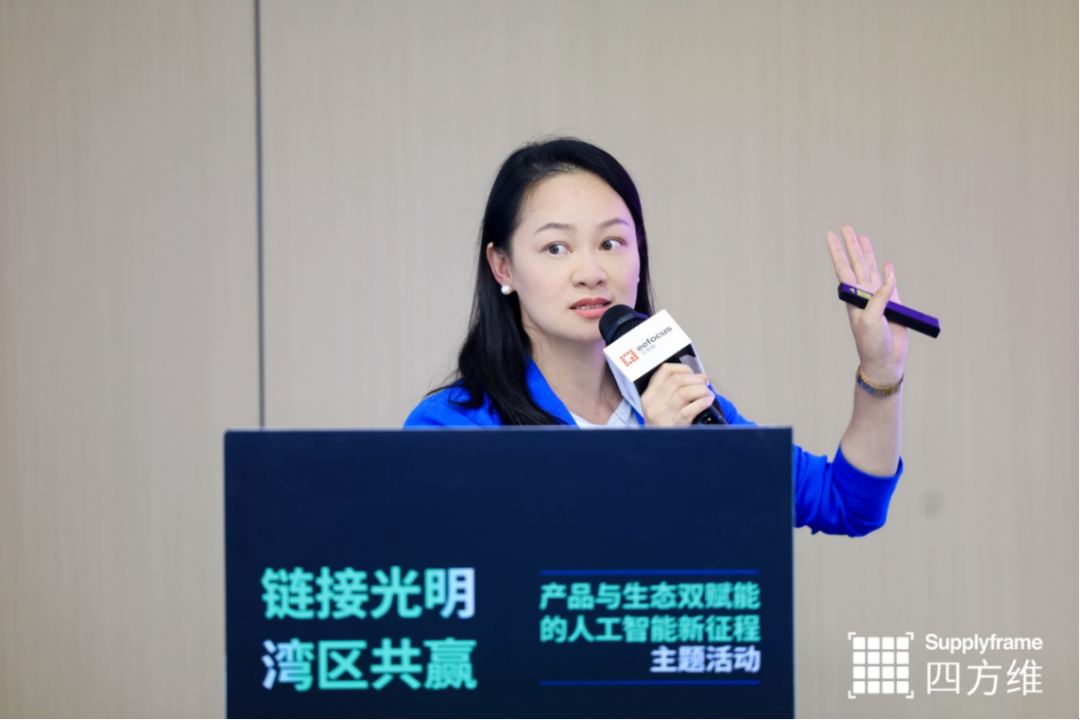
Yuan Qian, Supplyframe China Representative.
Yuan Qian, Supplyframe China Representative, introduced that the “Chip Shine Plan” has become one of the company’s top-level strategies in the Chinese market, aiming to gather thousands of high-quality components from China on the platform, accelerating the domestic substitution and internationalization process, and providing richer and more resilient supply options for the new generation of electronic systems, including industrial AI.
She stated that the “Chip Shine Plan” has been elevated to a top-level strategy in the Chinese market, with a direct goal—systematically enhancing the presence and conversion efficiency of local component brands in the global digital selection and procurement chain, allowing “more excellent Chinese products to be seen, studied, and ultimately procured by global manufacturing enterprises”.
Aiming at this goal, the “Chip Shine Plan” has designed a three-step path: being seen, being studied, and being procured. In the “being seen” phase, Supplyframe will utilize its complete digital standard system and AI tools to help Chinese enterprises complete the standardization modeling of component data, allowing them to enter global query platforms; at the same time, it will build a free English section for local enterprises, effectively creating a “second official website” on its platform to present brand qualifications, product matrix, and typical applications.
In the “being studied” phase, Supplyframe will rely on global website traffic and technical capabilities to provide “Chip Shine” enterprises with alternative material relationship configuration and free modeling services for ECAD models—industry experience shows that components with complete ECAD models have a significantly higher probability of being selected by engineers, “data availability encourages engineers to try your components in their designs”. Additionally, by accurately linking domestic components to the “main material numbers” of international major manufacturers on overseas platforms, the opportunities for Chinese brands to appear as “alternative options” in engineers’ views will be enhanced.
The final “being procured” phase will be advanced through two paths: first, integrating the products of “Chip Shine” enterprises into Supplyframe and its associated procurement software and indexing platforms, directing online traffic to the enterprise’s official website or authorized distribution channels; second, leveraging the interface capabilities provided by Siemens to allow component data to enter Siemens’ EDA and PLM software in API form, enabling more industrial customers to see and choose these local components during the design phase.
“Many European customers have limited public information available when selecting Chinese suppliers, and they often directly ask us whether this enterprise is in the database.” Yuan Qian believes this is both a shortcoming in brand building for Chinese enterprises and an opportunity for Supplyframe and Siemens to jointly build an ecosystem—by combining technical data and digital marketing, allowing “good products to go abroad” without relying solely on offline exhibitions and personal connections.
Oshi Electronics: Workplace Anxiety and Optimistic Outlook Brought by AI.
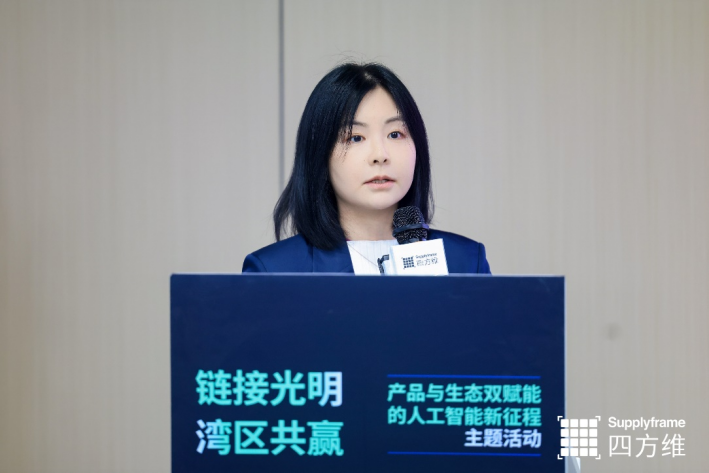
He Xu, Business Development Manager at Oshi Electronics (RS Components).
Finally, He Xu, Business Development Manager at Oshi Electronics (RS Components), briefly introduced the background of Oshi Electronics: the company was founded in 1937 and listed in London in 1967, mainly engaged in the distribution of electronic components and industrial products. It has 23 distribution centers globally, covering 36 countries and regions, with approximately 800,000 stock products and about 3 million non-stock products; a product is shipped every two seconds. In China, Oshi has warehouses in Hong Kong, Shanghai Free Trade Zone, and Shanghai Non-Free Trade Zone, all shipped via SF Express.
In terms of ESG, Oshi has achieved EcoVadis “Platinum Level” certification, a level reached by less than 1% of companies globally; its website features about 30,000 “Better World” products, helping enterprises with export needs enjoy certain policy conveniences in meeting EU green regulations.
When discussing the impact of AI on various functions within enterprises, He Xu provided an “end-to-end” perspective: in the production operation phase, AI has been widely used for predictive maintenance, defect identification, quality control, and supply chain optimization; in the marketing and sales phase, enterprises have shifted from “salespeople running to customers” to analyzing user behavior in digital channels through AI, recommending products and solutions intelligently, and even providing emotional value and technical support to customers through “24/7 online chatbots”.
Human resources and finance/legal functions are also significantly affected: intelligent resume screening, online training content generation, employee engagement analysis, anomaly transaction identification, and anti-fraud models have all significantly reduced repetitive manual work. “If I graduated 20 years later, I might not even get a job in translation and basic design,” she joked.
In the creative and design fields, she admitted that entry-level industrial drawing, visual design, greeting card and copywriting can now be completed with one-click through various generative AI tools, and enterprises no longer need to configure complete design teams; in programming, many engineers also consider AI assistants as “standard equipment”. Thus, AI is indeed reshaping the working methods and even existence of many positions.
However, she also raised concerns about “data privacy and algorithm bias” in AI applications—ranging from mobile push content to internal forum public opinion monitoring, if there is a lack of transparency mechanisms, employees find it hard to truly trust these systems; in recruitment, if HR itself is a black box algorithm, “do job seekers have the right to know how this model screens resumes?”
In a specific case, she mentioned that a relative of hers suffered a heart attack in a county town, and it was precisely because the local hospital had just introduced an interventional surgical robot a month ago that timely stent surgery was completed— in such emergency scenarios, robot-assisted surgery compensates for the lack of experience of grassroots hospital doctors with its high efficiency and stability. She also mentioned that some of Oshi’s clients have adopted remote robotic solutions in high-risk scenarios such as nuclear power plant maintenance.
On the product side, Oshi is concentrating on showcasing a series of AI hot products, including NVIDIA development kits and the new Qualcomm platform products on its official website’s AI special page, while relying on the DesignSpark engineer community to output technical articles and project cases. Enterprise customers can integrate Oshi’s products and data into their procurement and R&D processes through PunchOut, e-content, procurement management tools, and API interfaces, achieving more efficient selection and replenishment.
“AI has arrived and will accelerate its arrival. Rather than waiting to be replaced, it is better to learn how to use it well as soon as possible.” He Xu’s summary reflects the complex mentality of many traditional positions facing AI—both anxious and compelled to embrace it.
Conclusion: From Policies to Scenarios, from Technology to Ecology, Guangming Aligns the “Full Chain” of Industrial AI.
This industrial AI-themed event held in Guangming Science City focused on the entire chain of “computing power—models—platforms—components—scenarios”: upstream, there are Guangming District’s AI industrial policies, computing power layout, and the Digital Industrial Innovation Center’s “7+2+1” service platform; midstream, there are Siemens’ industrial foundation models and low-code tools, local digital service agencies, and AI hardware 6S store’s intelligent agent exploration; downstream, there are flexible sensing and “electronic skin” applications, the demand for sensors, actuators, and main control chips in humanoid robots, as well as Sifangwei Supplyframe’s “Chip Shine Plan” practices in component selection, alternative materials, and global digital channels.
For Guangming, which is building a combination of “manufacturing + scientific devices + innovation ecology”, this is not just a project roadshow, but a rehearsal to bring research institutions, manufacturing enterprises, and platform companies to the same table: the consensus is that the opportunities in industrial AI lie not only in “smarter machines” but also in “more resilient supply chains” and “more efficient collaborative ecosystems”. How to truly connect these elements locally into a “usable, affordable, and durable” closed loop will be the key to continuously assessing the effectiveness of future activities.
About the Digital Industrial Innovation Center of Guangming Science City
To assist in the high-quality construction of Guangming Science City and accelerate the digital transformation and upgrading of high-end manufacturing, the Guangming District Government has guided the investment and operation of the Digital Industrial Innovation Center by the Guangming Science and Technology Development Group. The project integrates Siemens’ globally leading digital twin technology, operator communication technology, local digital service capabilities, and research institute resources, building seven industrial software platforms, two rapid prototyping laboratories, and one industrial ecosystem base, providing enterprises with a one-stop digital transformation public service platform that integrates technology experience, resource sharing, diagnostic consulting, and seminar training.
About Siemens in China
Siemens AG (headquartered in Berlin and Munich) is a technology company focused on industrial, infrastructure, transportation, and healthcare sectors, committed to continuously driving innovation and co-creating every day with technology. By integrating the real and digital worlds, Siemens empowers customers to accelerate digital and sustainable transformation, making factories more efficient, cities more livable, and transportation more sustainable. As a pioneer and innovator in industrial AI applications, Siemens relies on its deep industry expertise to actively promote the implementation of artificial intelligence technologies, including generative AI, to serve various industry customers and create profound value. Siemens holds a majority stake in Siemens Healthineers, a medical technology company leading breakthroughs in the healthcare industry. Since entering China in 1872, Siemens has consistently provided comprehensive support for China’s development with innovative technologies and outstanding solutions and products for over 150 years. Siemens has become a part of Chinese society and economy, sincerely cooperating with China to achieve sustainable development.
About Sifangwei
Sifangwei (Supplyframe Inc.) is positioned as the “information hub for the component industry”, deploying over 70 component query websites globally, synchronizing technical parameters and real-time market dynamics of approximately 600 million components, and providing early warnings for procurement risks in different dimensions for high-tech manufacturing. Since its establishment in 2003, Sifangwei has built three core businesses: advertising marketing, e-commerce traffic diversion, and component procurement management software, serving over 12 million electronic engineers and procurement personnel annually, influencing component design and procurement decisions worth hundreds of billions of dollars. Sifangwei is headquartered in Pasadena, California, USA, and has offices in China, France, the UK, and Serbia. In May 2021, Sifangwei became an important part of Siemens’ Digital Industries Software division. Please visit cn.supplyframe.com and follow our LinkedIn, Twitter, Instagram, and YouTube channels.
END
Welcome to leave comments and exchanges in the comment area!
Industry Community