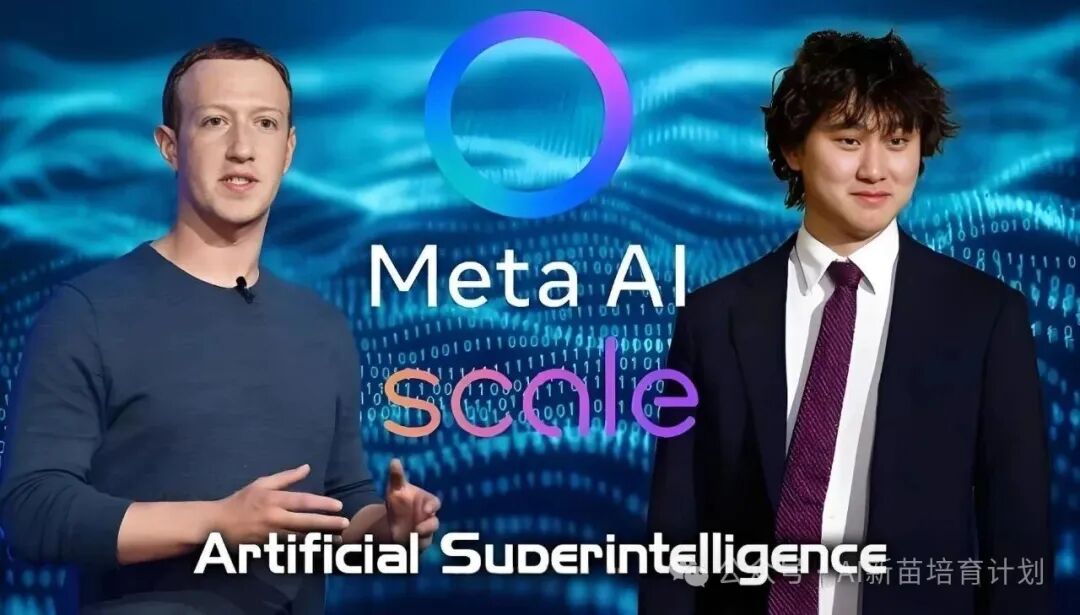
AI researchers earn over 100 million yuan, surpassing NBA players? In today’s rapidly advancing technology landscape, we seem to be witnessing the birth of a brand new era of “superheroes”—not athletes soaring through the air on the basketball court, but young researchers coding at their keyboards and training the next generation of AI models. Recently, news broke that Meta (formerly Facebook) signed a contract worth 250 million USD with a 24-year-old AI researcher, shocking the global tech community. This figure not only breaks our traditional understanding of “high-paying jobs” but also makes us exclaim: AI talent is now worth far more than top NBA stars! This event not only reveals the intense “talent war” in the AI industry but also forces us to reconsider: should children’s future education start with “AI enlightenment”? 1. Top AI talent earns over 100 million, comparable to sports stars 1.1 Tens of millions in annual salary has become the norm, with top talent signing bonuses reaching hundreds of millions In Silicon Valley, AI researchers have long been synonymous with high salaries. According to a report by the New York Post, Meta offered a young researcher a four-year contract worth 250 million USD, averaging an annual salary of 62.5 million USD. This figure far exceeds the annual income of NBA superstar LeBron James (approximately 40 million USD) and even surpasses that of top players in professional football and baseball leagues worldwide.
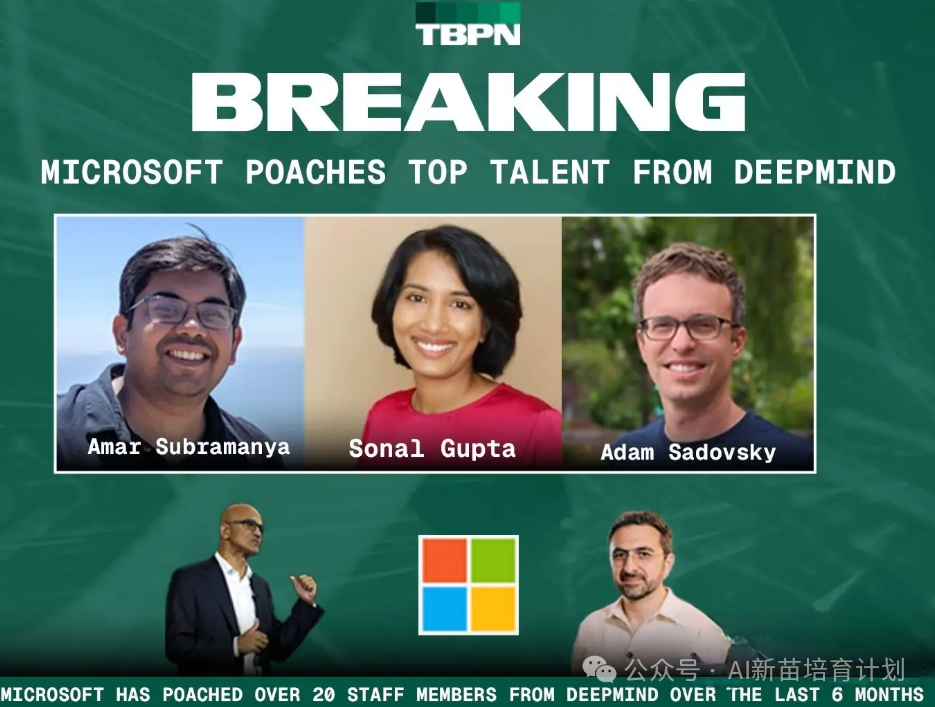 Moreover, other tech giants like OpenAI, Google DeepMind, and Anthropic are also making significant investments in the “AI talent war.” Reports from Axios and upstartsmedia.com indicate that OpenAI has even introduced a “free agent system,” offering top AI scientists compensation packages of up to 100 million USD per year and 300 million USD over four years, akin to the treatment of sports stars.
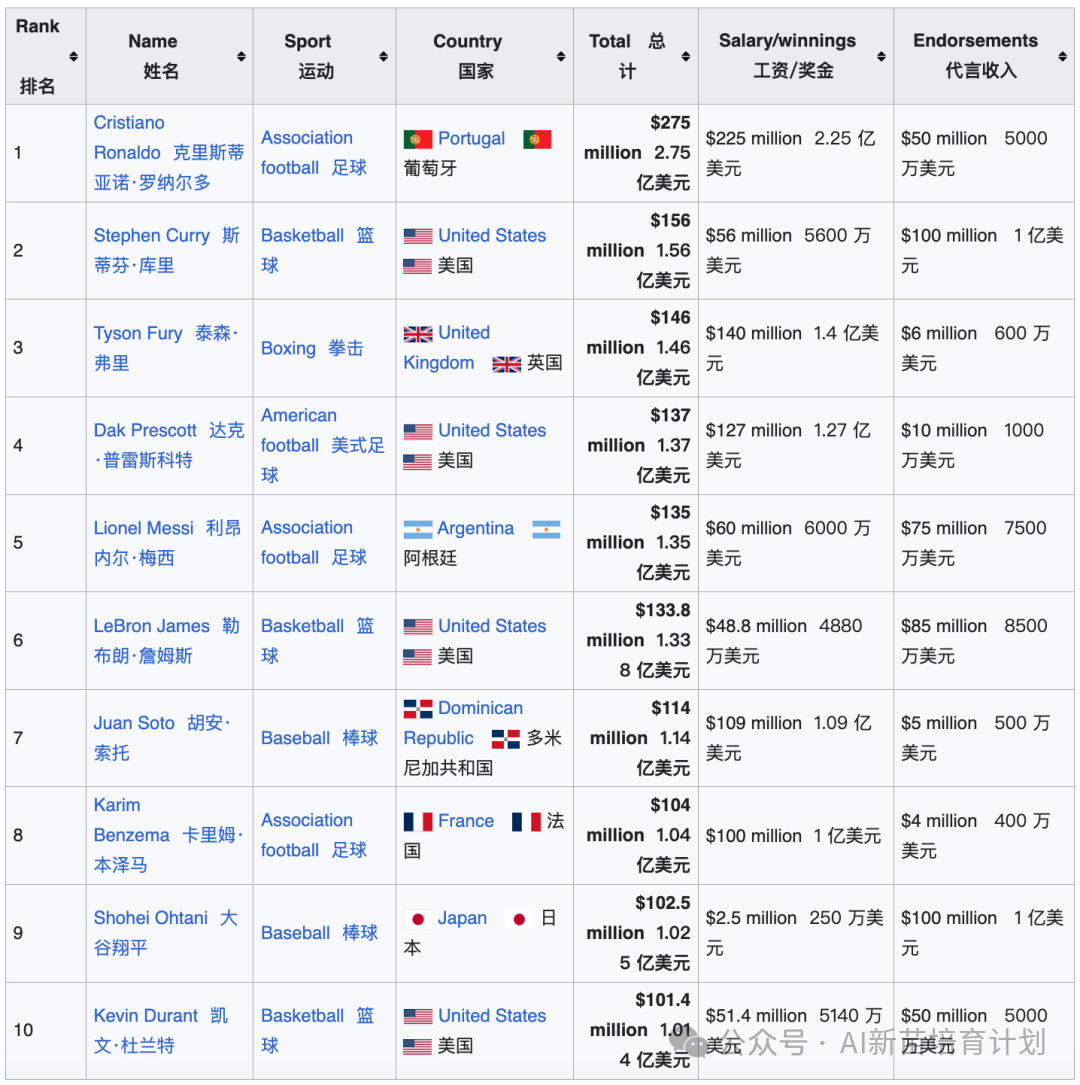 2025 Global Top 10 Highest-Paid Athletes
 NBA Salary Rankings
1.2 Behind the high salaries: AI talent is scarce and irreplaceable Although the salary levels in the AI industry are astonishing, not all practitioners can enjoy such treatment. In reality, there may only be about 50 to 300 AI talents globally who can command such “billion-yuan salaries” (data from Reddit). These individuals often possess strong algorithm design capabilities, foundational model development experience, and have even directly participated in the training and optimization of current mainstream large models (such as GPT-4 and Llama 3).
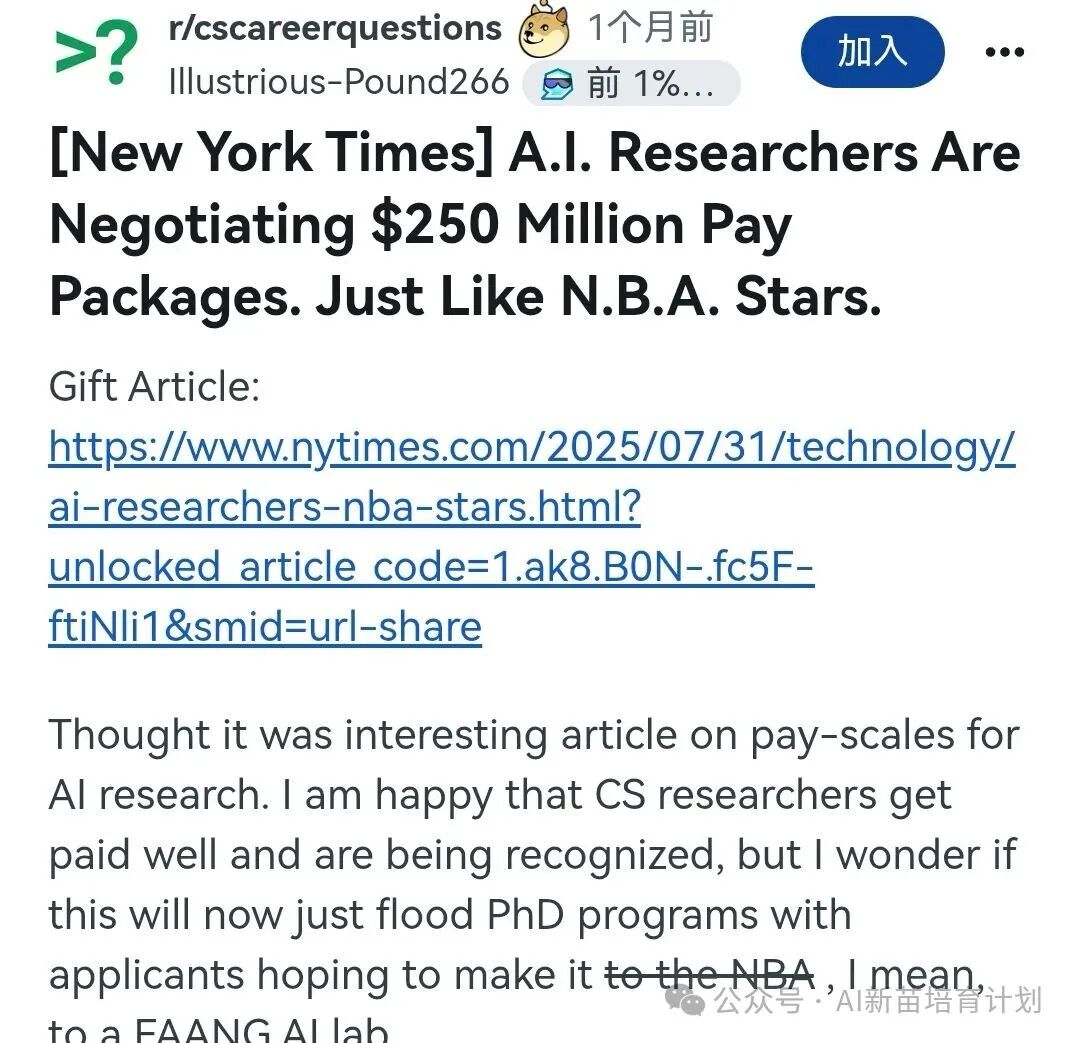
According to AI Buzz statistics, over 70% of new AI PhD graduates choose to enter the industry rather than continue in academic research. However, even so, those who can obtain top salaries remain a tiny fraction of the total. 1.3 Non-salary benefits are also generous: paid parental leave, health insurance, and remote work options AI positions not only offer high pay but also have less workload and better benefits. According to a research report from arXiv, many tech companies provide AI positions with benefits such as paid parental leave, global health insurance, and priority remote work rights. These non-salary benefits not only enhance employees’ quality of life but also make AI positions significantly more attractive than traditional tech roles. Additionally, the average salary for these positions is 12%-20% higher than similar roles, further illustrating the scarcity and irreplaceability of AI talent in companies. 1.4 Historical comparison: From “scientist poverty” to “AI researcher wealth” If we look back to the 1940s, physicist Oppenheimer, who led the “Manhattan Project,” earned only 10,000 USD (approximately 190,000 USD when adjusted for current inflation). Today, an AI researcher’s annual salary can easily reach tens of millions of dollars, even into the hundreds of millions. This comparison not only reflects the value shift in the tech industry but also highlights the strategic position of AI in contemporary society. If the 20th century was the century of nuclear physics, the 21st century is undoubtedly the century of AI. 2. Why is AI talent so highly valued? 2.1 Talent scarcity: Only a few hundred top AI experts globally Despite the widespread application of AI technology across various industries, the number of experts capable of driving breakthroughs in foundational models, algorithm architectures, and training optimizations is no more than a few hundred worldwide. These individuals often possess deep backgrounds in mathematics, computer science, and engineering, bridging the gap between AI foundational theory and practical applications. For example, the creators of the Transformer architecture and the main developers of the GPT series models belong to this category of scarce talent. Their research results directly determine the performance, efficiency, and application scenarios of AI systems. 2.2 Huge market expectations: The commercial potential of AGI and superintelligence Currently, the tech community generally believes that breakthroughs in Artificial General Intelligence (AGI) and superintelligence (ASI) will occur within the next 10-30 years. Once AGI is realized, its commercial value could reach trillions of dollars. This expectation has prompted major tech companies, venture capital funds, and government agencies to invest heavily in the competition for AI talent, hoping to gain an advantage in the future intelligent era. As Investopedia points out: “AI talent is no longer just technical personnel; they are the ‘strategic assets’ of the new era.” 2.3 “Tech team” strategy: Companies compete for AI talent like NBA teams compete for stars The competition for AI talent among tech companies is no longer a simple “salary comparison” but a strategic “talent game.” Just as NBA teams spare no expense to sign superstars to win championships, tech companies are using huge salaries, equity incentives, and project leadership to attract top AI talent. For instance, OpenAI, DeepMind, and Meta offer top researchers independent research teams, decision-making authority, global resource allocation capabilities, and even allow them to lead the company’s technology strategy for the next five years. 2.4 The “talent funnel” phenomenon in government and academia In the battle for AI talent, government and academic research institutions are clearly at a disadvantage. Many universities and research institutions not only offer salaries far below those in the industry but also lack sufficient data resources, computing power, and engineering support. According to Axios, an increasing number of AI scholars are choosing to transition from academia to industry, leading to a severe talent drain in foundational research fields. Some experts have even warned: “If we do not take action soon, future AI foundational research will be entirely dominated by enterprises.” 3. Should children start learning AI in elementary school as a ‘required course’ for the future? 3.1 Early cultivation to adapt to the future tech society AI technology has permeated various fields such as education, healthcare, finance, transportation, and art. Future children will not only need to learn how to use AI tools but also understand the principles, logic, and operation of AI. Cultivating children’s “algorithmic thinking,” “data literacy,” and “machine learning enlightenment” from a young age can help them better adapt to future society. For example, through programming enlightenment, robotics courses, and mathematical modeling training, children can establish a basic understanding and interest in AI technology. 3.2 A core competency that benefits for a lifetime AI is not just a technology; it is a way of thinking. Learning to analyze problems, solve problems, and create value from an AI perspective will become a “core competency” in future society. For instance, a child with a foundational understanding of AI may find it easier to comprehend automated systems, predict market trends, design intelligent products, and even participate in AI ethics and policy-making. These skills will help them stand out in the future job market. 3.3 High return on investment: Early investment, long-term benefits Although not every child will become an AI researcher earning millions or even tens of millions, cultivating an interest and ability in AI from a young age is a sound investment in itself. It can enhance children’s logical thinking, mathematical abilities, and creativity, as well as strengthen their understanding and control of technology. As the New York Post pointed out: “Instead of waiting until children grow up to ‘fix the problem,’ it is better to open the door to the tech world for them early on.” 3.4 Balanced education: Values are equally important beyond technology While encouraging children to learn AI, parents should also focus on cultivating their sense of social responsibility, ethical awareness, and humanistic qualities. The power of AI technology lies not only in its capabilities but also in how it is used. As OpenAI founder Sam Altman said: “We want to cultivate AI talent with a sense of mission for society, not just mercenaries pursuing money.” Therefore, educating children to understand the positive and negative effects of AI and guiding them to think about “how AI can benefit humanity” is an important part of family education. 4. Current status and future trends of global AI talent 4.1 Case 1: Meta signs a high-paying contract with a 24-year-old genius researcher In 2023, Meta announced a four-year contract worth 250 million USD with 24-year-old researcher Matt Deitke. This event not only shocked the tech community but also became a benchmark for salary levels in the AI industry. Matt Deitke has participated in research on multimodal AI models, and his contributions have been crucial to Meta’s breakthroughs in AI image recognition and semantic understanding. 4.2 Case 2: Startups aggressively poach AI talent In addition to tech giants, some AI startups are also fiercely competing in the “AI talent war.” For example, the San Francisco-based Memory.ai offered an AI engineer a salary of 2 million USD per year, along with options and equity incentives. These startups often emphasize research freedom and project leadership, making them highly attractive to AI talent. 4.3 The rise of AI talent agencies: A new profession akin to sports agents With the explosive growth in demand for AI talent, a new profession is emerging—AI talent agents. These individuals specialize in finding high-paying positions for AI experts and assisting them in negotiating salaries and benefits with companies. This phenomenon is similar to the agent teams behind NBA players. According to Compete Network, several AI talent agency platforms have launched to serve this emerging market. 4.4 Comprehensive upgrades in AI job benefits: From health insurance to paid parental leave As mentioned earlier, the non-salary benefits of AI positions are extremely rich. According to research data from arXiv, AI positions generally offer global health insurance, paid parental leave, remote work privileges, and other benefits, allowing AI talent to pursue career development while enjoying a high quality of life. 5. How can parents guide children to embark on the path of AI enlightenment? 5.1 Choose suitable AI enlightenment courses Parents can start from the following aspects: – Online programming platforms: such as Code.org, Scratch, and Khan Academy, which offer introductory programming courses suitable for children. – Robotics courses: using hardware platforms like LEGO robotics and Arduino to allow children to practice hands-on and understand the basics of AI and automation. – Data thinking training: teaching children how to collect, analyze, and visualize data to cultivate their logical thinking and problem-solving abilities. 5.2 Encourage children to practice hands-on and participate in AI projects Interest is the best teacher. Parents can encourage children to participate in AI competitions, programming challenges, and open-source projects to experience the charm of AI through practical operations. For example: – Kaggle Youth AI Challenge – Google Code-in – Youth AI Innovation Competition These competitions not only enhance children’s technical skills but also foster their teamwork and innovative spirit. 5.3 Emphasize values education and cultivate “mission-driven AI talent” While teaching children AI technology, parents should also guide them to think about: – What can AI technology be used for? – How to avoid the misuse and bias of AI? – How to ensure AI serves society rather than creating inequality? Through these guides, help children establish the right values and become responsible AI talent in the future. 5.4 Balanced development to avoid “technical bias” Although AI is an important direction for the future, children’s growth should not revolve solely around technology. Parents should encourage children to develop comprehensively: – Master foundational subjects like math, English, and science; – Cultivate soft skills such as writing, expression, and art; – Pay attention to physical exercise and mental health. A well-rounded child will be able to navigate the future AI era with ease. 6. Conclusion and call to action: The AI era has arrived, and educational investment should be made early AI technology is changing the world at an unprecedented speed. The value of AI talent is also being redefined in ways we could not have imagined. AI researchers earning more than NBA players are not only symbols of technical elites but also represent the “new aristocracy” of future society. In light of this trend, parents should proactively consider how to ensure their children take the initiative in the AI era? The answer may lie in the seemingly simple action of “starting to learn AI in elementary school.” This is not just to ensure that children can become “billion-dollar AI geniuses” in the future, but to equip them with the core skills and ways of thinking needed in future society. As the article concludes: “Your child may not become the next billion-dollar AI genius, but he/she can become a future creator who understands ‘how to think about AI’ and possesses innovative potential and moral responsibility.” Starting early is the key to aligning technology with responsibility, which is the true investment worth making.Conclusion: The future of AI is not a distant science fiction but a reality that is happening now. We cannot predict the future, but we can prepare our children for it. Starting to learn AI in elementary school is an investment in the future and a revolutionary educational endeavor about hope.
More topics:
The Ministry of Education’s “Guidelines for General Education in Artificial Intelligence for Primary and Secondary Schools (2025 Edition)” has been officially released!
The Ministry of Education’s “Guidelines for General Education in Artificial Intelligence for Primary and Secondary Schools (2025 Edition)” has been officially released!
MIT’s official high-priced AI course is available for free! Middle and primary school students can learn top-level AI courses from scratch (with a complete guide)
In-depth analysis | OECD’s global “Empowering Learning to Embrace the AI Era: Framework for AI Literacy Education in Primary and Secondary Schools” (AILit Framework)
NOIP Informatics Olympiad has become the fastest channel for cultivating technical elites in the AI era
What should AI mean to us
The Ministry of Education aims to popularize AI education in primary and secondary schools by 2030; will it be included in the high school entrance examination?
A treasure trove of free resources for elementary school students’ AI enlightenment revealed!
Welcome to follow the AI Seedling Training Program’s WeChat public account
More AI education insights shared